


FW
Puma Q3 sales up 16%, margins drop 46%
For the third quarter Puma’s sales increased by 16 per cent. Gross profit margin decreased to 46 per cent. Operating expenses increased by 25 per cent. Operating result improved by 12 per cent. Net earnings improved by one per cent.
Despite all the global uncertainties the third quarter was again a very good quarter for the company and was the best quarter in Puma’s history.Improved product availability due to a more stable supply chain, better than expected sell-through and Puma’s continued global brand momentum overcompensated all the negative external factors.
The Americas region recorded a strong sales growth of 18 per cent. Sales in EMEA were up 18 per cent, driven by strong growth across almost all key markets in Europe. The Asia/Pacific region recorded sales growth for the first time this year. While Covid-related lockdown measures still impacted the business in Greater China, other key markets in Asia/Pacific delivered strong growth. Sales in footwear were up 33 percent and apparel grew nine per cent driven by continued strong demand for performance categories like running and training, teamsports and basketball as well as for sportstyle. Sales in accessories were down ten per cent because of a softer leg- and bodywear-business, especially in North America.
Malaysia gets a taste of Indya
Indya has opened an exclusive brand outlet in Malaysia. This is the brand’s first exclusive outlet both in Malaysia and outside of India.
It is a franchise store and it retails Indya’s range of everyday kurtas and sets as well as occasion wear and accessories. The aim is to increase and strengthen the brand’s reach in international markets, bringing differentiated ethnic occasion wear at affordable price points to the Indian diaspora.
The brand is looking at opening stores in regions with strong NRI communities such as the US, Canada, South Africa, and the Middle East. The plan is to make international a key channel for the business and increase its contribution to revenue to 25 per cent by next year.
Indya mixes classic Indian aesthetics with modern styling to appeal to a range of age groups. Indya, a part of New Delhi-based fashion house High Street Essentials, was born out of a thought to modernize ethnic fashion by considering the evolving lifestyle and needs of the new-age woman.
Indya has since grown to become one of India’s leading omnichannel fashion brands. Besides retailing in the country through its website, online marketplaces, 400 shop-in-shops and 32 exclusive brand stores, the brand also serves a robust international market that currently contributes to 18 per cent of its total revenue.
Jeanologia 2021 turnover up 55 per cent
Jeanologia’s turnover increased by 55 per cent in 2021 compared to that in 2020. As a result of its improved performance, the company repaid the funding sought in fiscal year 2020 and restored the equity balance of its Italian subsidiary, which had generated losses during the pandemic.
In 2021, the company committed to strengthening its Eco line and presented new solutions for reducing water consumption in garment dyeing as well as a new model for on-demand production and a tool for measuring sustainability in denim.These results have brought Jeanologia close to pre-pandemic levels, albeit still short of them as the health crisis had a major impact on production volumes and the company’s financial statements.
Founded in 1993, Jeanologia specialises in laser and sustainable technologies for textile finishing and employs 250 people across its ten subsidiaries. Exports of its machines and services account for 90 per cent of its turnover and 35 per cent of the 5,000 million jeans manufactured each year in the world employ its technologies. Jeanologia has developed an innovation laboratory to transform physical stores into digital and sustainable experience centers for consumers.The company has worked together with top brands and retailers in a new in-store model focused on eco-efficiency, personalization, and digitalization.
Coats solution helps hike efficiency
Dice Sports and Casual Wear has streamlined its production lines by using Coats Digital’s GSDCost solution.
This has enabled Dice Sports to achieve a 16 per cent efficiency increase on its production lines and reduce its core style Standard-Minute-Values (SMVs) by 11 per cent. Dice adopted GSDCost at the beginning of 2022 to help it overcome a series of costing, planning and manufacturing inefficiencies.
The company found that capacity planning and subsequent order cost quotations were not founded on accurate data but were instead based on historically recorded experiences via Excel spreadsheets and emails. Without a standardised benchmark to record accurate SMVs on the production floor, Dice, consequently, had no way of ascertaining whether its plan/cost targets reflected the reality of its manufacturing processes.The lack of a standardised method across all its manufacturing units consequently resulted in lower productivity which negatively impacted both ODTP targets and overall profitability.
Dice Sports and Casual Wear is an Egyptian knitted garment manufacturer. Coats Digital is the software business of Coats, the world’s leading industrial thread company and a trusted industry player. GSDCost is the international standard for establishing and optimising accurate method-time-cost benchmarks for sustainable garment cost optimisation and manufacturing excellence.
Egyptian Cotton Hub joins ITMF
Egyptian Cotton Hub (ECH) has joined ITMF as corporate member. The ITMF and all ITMF members can benefit from ECH’s unique expertise and experience both in Egypt and the region as well as around the world.
ECH is a subsidiary company of the Cotton and Textile Industries Holding Company (CTIHC). These factories have been merged into nine companies located across Egypt. ECH is the marketing and sales arm of CTIHC. The company manufactures a wide range of products covering everything from yarns to finished garments including medical cotton. Furthermore, it also owns two different brands, Nit and Mehalla, to serve a wide range of customers with a variety of products.Egypt’s first public sector factories and companies were established in the 1920s. This then grew to a total of 33 factories. Each factory has a rich history and a deep heritage, with more than a century of textile experience.ITMF founded in 1904 is the international forum of the global textile value chain from fiber to finished products. Its members are from textile and apparel-producing countries representing approximately 90 per cent of global production.ECH looks forward to being an active partner of ITMF since ITMF produces a wide range of informative publications, statistics, and surveys that help companies to better navigate through the ups and downs.
Inditex sells Russian stores to Daher
Inditex plans to sell its stores in Russia to the UAE-based Daher Group.
The terms of the deal will allow a substantial number of jobs to be preserved as the transaction includes the transfer of most store lease contracts. Inditex closed its over 500 stores in Russia in March following the invasion of Ukraine and subsequent western sanctions.
The Lebanese Daher family runs the Beirut-headquartered retail company Azadea, which has had a partnership with Zara in the Middle East since 1998 and works with other major global brands.The Kremlin considers the United Arab Emirates and a number of other Gulf and Asian nations as friendly countries whose companies are encouraged to do business in Russia. Inditex added that the 216 million euro provision for Russia and Ukraine made in the first half of 2022 substantially covers the impact of the group's cessation of activity in the Russian Federation.
Days after the war began, Inditex decided to close its 502 shops in Russia, its second largest market after Spain, with more than 9,000 employees, and to suspend online sales in the country as a result of the Russian invasion of Ukraine. Of the 502 stores, 86 were Zara shops.Russia accounts for around eight per cent of the group's global net operating income.
India: Century Q2 profit up 59 per cent
For the second quarter Century Textiles and Industries had a 59 percent rise in consolidated net profit.
Building upon the momentum initiated in the previous quarter, the company performed even better in this quarter, especially due to increased market demand during the festive season, favourable impact of the single-use plastic ban as well as several cost-reduction initiatives implemented across its production facilities.
Founded in 1897, Century Textiles, a part of Aditya Birla, specialises in textiles including cotton textiles, yarn, denim, and viscose filament rayon yarn.The manufacturing businesses, in particular, witnessed a strong turnaround on the back of continuous drive towards product innovation, customer centricity and better financial management. The textile business saw a strong demand in the bed linen segment. The business is expected to accelerate between August to December this year, in both the domestic as well as the export markets.
The pulp and paper business performed well in the quarter due to a strong demand from the tissue and board segments. The real estate business posted a significant jump in collections along with a steady leasing income.
Adidas Q2 profit down 28 per cent
Adidas’ operating profit fell 28 per cent in the second quarter.
The German-based apparel brand has trimmed its yearly profit outlook for the second time in three months, citing a deterioration of traffic trends in Greater China as well as a significant inventory build-up linked to lower consumer demand in Western markets as of September.Adidas, the world’s second-largest sports apparel manufacturer after Nike, is battling a unique series of challenges.
The company’s shares are down 65 per cent since January.Against a challenging macroeconomic market backdrop, the company is diligently focusing on all factors it can to maintain its growth momentum in western markets and to accelerate growth in Asia-Pacific. Now, for the third quarter, Adidas is reporting a preliminary four per cent rise in revenue. However, net income for the quarter is expected to drop 63 per cent from the same period a year ago.Adidas is finding itself saddled with excess inventory stemming from last year’s supply chain snags and foresees higher promotional activity during the remainder of the year to free up space for new merchandise. It is currently offering up to 65 per cent off on thousands of shoe and clothing styles.
The athletic footwear market as a whole is in a tough spot from shifting consumer preferences, softening demand and higher costs.
Bangladesh eyes technical textiles to expand RMG portfolio
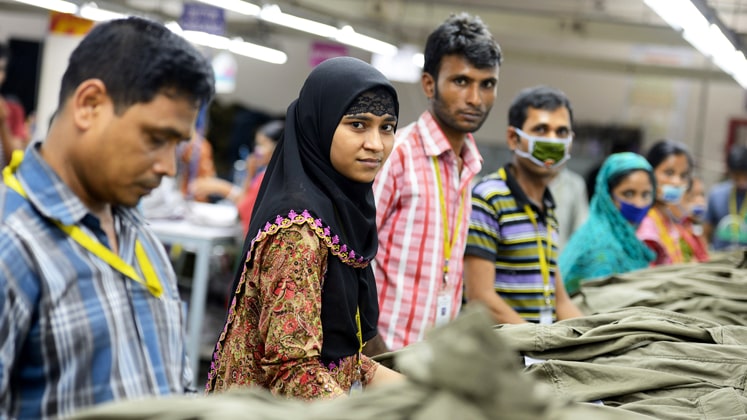
Second only to China, Bangladesh carved out an awe-inspiring success story in the global RMG supply. Exports worth $42 billion last year contributed 83 per cent to its total export volume. Whilst the RMG sector continues its growth, the two-year long pandemic and drop in demand for RMG imports from the West thereafter created an economic crisis for the nation. The Bangladesh Garment Manufacturers and Exporters Association (BGMEA) have targeted the $100 billion mark of export by 2030. After the hit it took in the last two years, Bangladesh is keen to diversify its RMG portfolio.
Technical textiles the way forward
This is where technical textiles present an opportunity. Futuristic technical textiles used in planes, cars, and firefighters’ uniforms and protective clothes are not what comes to mind in the RMG sector but this category represents a huge potential for Bangladesh’s diversification plan. Textile technology has become increasingly commercially viable and is experiencing rapid increase in demand. Garments made of technical textiles can offer many qualities which traditional garments cannot; they can be antibacterial, insect repellent, flame retardant, odorless and much more, allowing the wearer to reduce risks and bodily harm.
Manufacturers of technical textiles use both natural and manmade raw materials. Manmade materials, which currently account for 40 per cent of total fiber consumption across the entire textile industry, include items like viscose, nylon, acrylic and polypropylene. The global market for technical textile is projected to reach $208.5 billion by 2024 from $178.92 billion in 2020. The market is expected to reach $298.1 billion by 2030. Europe represents the largest regional market for technical textiles, accounting for an estimated 28.8 per cent share of the global total.
Asia Pacific lead market
Asia Pacific dominated the technical textile market with a share of 45.9 per cent in 2019. China is the largest exporter of technical textile products with 24 per cent share; followed by the US, Germany and Republic of Korea with 10 per cent, 9 per cent and 4 per cent share respectively.
Within the Asia Pacific region, China and India are two leading countries in the technical textile sector. India is the world second largest polyester producer and its market size is $19 billion. India has set up a scheme within an average growth rate of 15-20 per cent to increase their domestic market size of technical textiles to $40-50 billion at 2024; through market development, technological development, international technical collaborations, marketing and investment promotion.
Bangladesh has its work cut out as they venture into the technical textile segment. In 2010, the Bangladeshi technical textiles consumption market value was worth $281.1 million and production value was $252.2 million. Whilst the pandemic may have been doom and gloom for Bangladesh’s RMG sector, the silver lining came in the form of technical textiles as demand for gloves, mask, PPE kits, etc, grew. During this production process, Bangladesh realised it lacks the infrastructure, research facilities and skilled labor to compete significantly in the global market. The government of Bangladesh has launched various conduct schemes and policies for technical textile manufacturers to make them globally competitive.
As global garment sector regains post-pandemic,US to lead America market
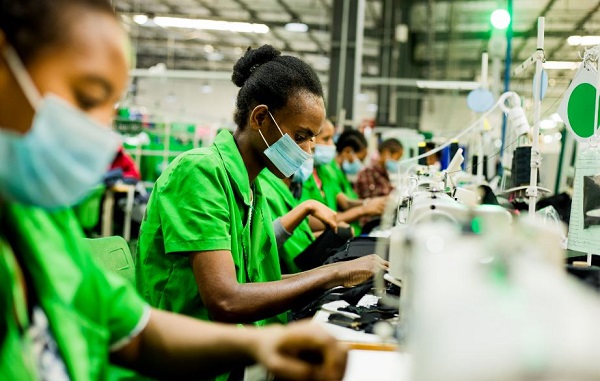 Worldwide, the value of the apparel market was worth nearly $527.1 billion in 2020, with a decline in CAGR by 0.6 per cent since 2015. Of course, it was expected as the Covid-19 pandemic had created a socio-economic upheaval that included disruption of supply chains, loss of consumer intent and an unpredictable future. However, 2022 is an indication that the sector is slowly coming back in to the game. Recovery and growth are forecasted to reach $842.7 billion by 2025 and $1,138.8 billion by 2030.
The US to be key growth driver
Forecast has it that the US will be the largest textile market for the North Americas as it continues to be the largest producer of cotton, largest exporter of raw cotton and the largest importer of raw textiles. The fashion sector in the US will contribute significantly as fast fashion with its online channel approach is also experiencing rapid growth. The emerging popularity of smart textiles will also play an important role and this particular niche segment will continue using optical fibers, metals, and various conductive polymers to interact with the environment.
Major companies are responding to increasing awareness and demand for sustainability by restructuring business models and investing in manufacturing practices that target sustainable products. For instance, DuPont’s plant-based pretend fur for performance fashion attire and Eastman’s usage of discarded carpet into new material is anticipated to open new growth avenues over the forecasted time-frame. The pandemic had acted as a restraint to the world market. International trade restrictions because of breakdown of supply chain and decline in textile product consumption amid the pandemic had a negative market impact. However, the market is anticipated to witness a powerful recovery throughout the forecasted time-frame because of government support and increasing public awareness concerning effective precautionary measures.
Cotton will remain number one
Cotton continues its pole position and accounting for nearly 40 per cent share of the world textile revenue in 2021. Cotton being the world’s most significant fiber is attributed because of its superior property like high strength, absorption, and color retention. China, India, and the US are the main producers of cotton and cotton-based merchandise within the world. Chemical-based textiles also play a vital role within the entire textile producing sector. Chemicals are definitely harmful for the environment but will continue to be used as mercerizing agents, neutralizers, leveling agents, binders, thickeners, and stain-removers within the textile trade. The reason is clear – substitutes that are as efficient are still under development. Wool-based textile accounted for 13.3 per cent of the market in terms of revenue in 2021. Wool primarily composed of H, carbon, sulfur, and gas, is extensively used to manufacture insulation merchandise like winter wears, blankets, carpeting, upholstery, and others. Alternative raw materials employed in the manufacturing of textiles are silk, minerals like glass fibers and asbestos, and other man-made material. Silk finds intensive use within the production of garments, surgical suture, parachutes, silk comforter, and numerous others having high strength and physical property is anticipated to drive the section growth over the forecast time-frame.
As the forecast shows a streak of positive growth, the manufacturing sector is bounding back with confidence.











