


FW
Good clothes, fair pay campaign triggers action on living wages
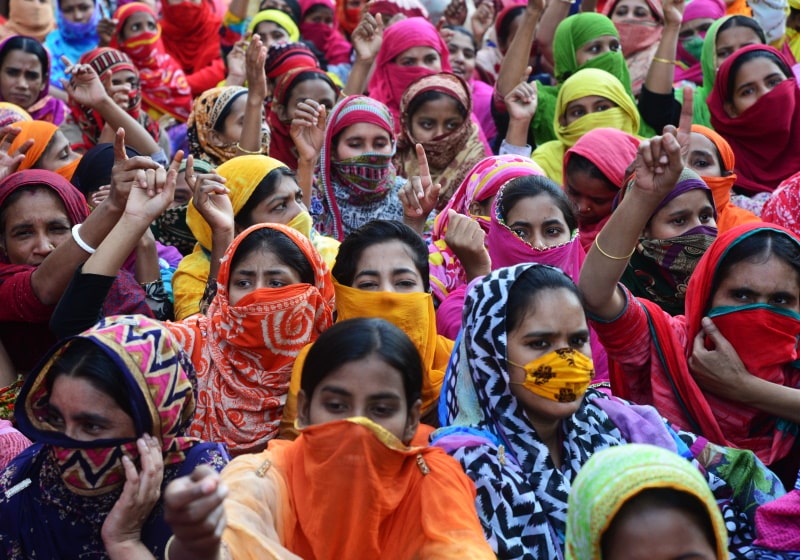
Good Clothes Fair Pay is a campaign, by European Citizens’ Initiative for living wages in the fashion supply chain, demanding legislation that helps achieve fair pay for textile and garment workers around the world. The campaigners believe the millions of workers in global textile, garment and footwear manufacturing industries are not paid enough in most cases to eke out a decent living to fulfill their basic needs. What makes it worse, according to campaigners, is that a vast majority of such workers are women. They remain trapped in poverty while big fashion companies continue to profit from their hard work.
It is a deeply unfair and exploitative system, and the campaigners demand better. The pandemic has deepened wage insecurity for the people who make our clothes, leaving workers without any social safety net, struggling to pay for food, healthcare and shelter. As the campaign has hit the ground running and is rapidly approaching a million signatures from EU citizens that will ensure the EU Parliament pays heed, a large number of global garment groups have swung into action, liaising with the European trade unions for introducing a time-bound action to close the gap between actual and living wages.
Demand for legislation to implement on entire supply chain
An excerpt from the campaigners’ open letter the European Commission clearly states “While garment brands and retailers have seen their revenues and profits grow over the past decade - most even remained profitable during the Covid-19 pandemic - workers in garment production countries have not experienced a similar growth in their purchasing power.”
The initiative called on European Commission to implement specific legislation that would require garment brands and retailers importing into the EU market to put in place, implement, monitor, and publicly disclose a time-bound and target-bound plan to close the gap between actual and living wages. It is a tall order at the moment but with the 40 global groups onboard, the European Commission is bound to pay attention and move forward with data and specifics as the manufacturing hubs are not only spread across South and South East Asia, but also North America (Mexico), Central and South Americas where legalities are most often ignored and manufacturing hubs are controlled by often violent mafia.
What the European Citizens’ Initiative wants
The scope covers brands and retailers who want to trade in the EU, independently of whether they are based in the EU or elsewhere. It puts particular emphasis on requiring brands to identify risk groups that are particularly hard hit by low wages, such as women and migrant workers. The proposal includes measures such as the companies’ pricing, costing and overall purchasing practices, ensuring that workers do not have to rely on excessive overtime to meet their basic needs. This legislation would be the first living wage legislation at the EU level for garment workers worldwide.
Better laws and regulations in Europe can make sure that companies all over the world do their part in ensuring that the workers in their supply chains are paid fairly. This will be the single biggest EU campaign on living wages in the garment sector to date. If successful, the legislation will be a groundbreaking step in building a fairer fashion system where brands are held accountable for the people who make their clothes. We believe that proactive policy like this is crucial for safeguarding millions of workers in the fashion supply chain, and that the EU can lead the way for positive change.
Dhaka Set to Host BIGTEX 2023
The highly anticipated 7th Bangladesh International Garment & Textile Machinery Expo (BIGTEX) 2023 is set to be held in Dhaka from October 26 to 28. In an agreement signed between the Bangladesh Garment Manufacturers and Exporters Association (BGMEA) and Redcarpet Global Ltd, the former will serve as a partner for the event.
BIGTEX, targeting the entire garment and textile industry of Bangladesh, features three concurrent exhibitions: Bangladesh International Fabric & Yarn Expo, Bangladesh International Dyes, Pigments and Chemicals Expo, and Bangladesh International Printing, Packaging and Signage Expo.
These exhibitions provide valuable opportunities for visitors, buyers, exhibitors, and professionals in the industry.
Expo will have approximately 200 stalls featuring products from at least 12 countries, including Asia and Europe. Recognizing the apparel sector as the backbone of Bangladesh's economic growth, Ahmed emphasized the importance of networking platforms like BIGTEX in upholding the country's growth and economy.
SAC Revives China Manufacturer Forums
Sustainable Apparel Coalition (SAC) is relaunching its Manufacturer Forums, starting with the first event in China on 25 July. These action-oriented gatherings bring together industry leaders and stakeholders to explore the use of the Higg Index tools and programs, aiming to enhance sustainability in global supply chains.
The inaugural Manufacturer Forum, themed "Catalyst for Change," will be held later this month at the Sheraton Shenzhen Futian Hotel. It will cover policy, supply chains, decarbonization, and data collection standardization.
Attendees will learn how SAC member organizations collaborate to improve the apparel industry and gain insights into using the Higg Index tools. Updates like the upcoming launch of FEM 4.0 and the new decarbonization program will be discussed. Jeremy Lardeau, SAC's VP of the Higg Index, emphasized the Forum's value in understanding SAC's work and using their tools to develop sustainable strategies.
The SAC is committed to transformative initiatives and collaborative partnerships to tackle industry challenges. The second Manufacturer Forum is scheduled for 4 December 2023 in Bangalore, India. In May, Higg Inc rebranded as Worldly, introducing a solution for tracking sustainability programs and Scope 3 targets with third-party validation. Earlier this year, SAC hosted Planet Textiles, a gathering of industry leaders at ITMA 2023, dedicated to driving sustainability in global supply chains.
France promotes sustainable fashion repair
In a bid to combat the harmful effects of fast fashion and reduce waste, France has introduced an initiative that seeks to subsidize clothing and shoe repairs. The Guardian reports that France discards approximately 700,000 tons of clothing annually, with two-thirds of it ending up in landfills.
The project, unveiled by Bérangère Couillard, the secretary of state for ecology, involves providing discounts for repairs ranging from 6 euros ($7) to 25 euros ($28), depending on the complexity of the fix. Couillard believes that this program will encourage individuals who own high-quality shoes or ready-to-wear items from reputable brands to opt for repair instead of disposal.
The implementation of this initiative falls under the responsibility of Refashion, an organization dedicated to supporting the collection, repair, and reuse of clothing, household linen, and shoes sold in France. Refashion also collaborates with brands to promote eco-design practices and contributes to the development of the recycling industry within the country.
In addition to the repair subsidies, Couillard plans to introduce new clothing labeling regulations in 2024 to further promote sustainability. These regulations will require companies to disclose the environmental impact of their products, including factors such as water consumption, microplastic emissions, and the use of chemicals during production.
The labels will also specify the item's country of origin and material composition, providing consumers with increased transparency. By fostering a circular economy and encouraging responsible consumption, France aims to reduce the environmental footprint of the textile industry. This industry is projected to contribute approximately 25% of global greenhouse emissions by 2050. The project will receive funding as part of the government's commitment to supporting sustainable initiatives.
APTMA urges action on high energy costs
Pakistan's textile industry has seen a troubling 26% decline in cotton yarn and cotton cloth segments, while the apparel sector has grown impressively by 13% in April 2023 and 26% in the 11-month period of FY2023.
Multiple factors, including economic challenges and raw material price fluctuations, contribute to the decline in cotton production. In contrast, the success of the apparel industry is attributed to the depreciation of Pakistan's currency, making labor cheaper and attracting international buyers.
The All-Pakistan Textile Mills Association (APTMA) raises concerns about high energy costs, accounting for 30-40% of production expenses. APTMA demands separate power tariffs that exclude losses and cross-subsidies to enhance competitiveness. Meeting this demand could boost textile exports to $50 billion by FY2027.
Recent data shows a 14.37% year-on-year decrease in the Large-Scale Manufacturing Index (LSMI) in May 2023 and an overall decline of 9.87% in the 11-month period of FY2023. Textiles, automobiles, food, pharmaceuticals, petroleum products, cement, and tobacco contribute to this decline, but wearing apparel and furniture sectors show positive growth.
Comprehensive measures are needed to address challenges faced by the textile industry and leverage the strengths of the apparel sector. Collaboration between the government, industry stakeholders, and policymakers is crucial to enhance productivity, reduce costs, and improve competitiveness, leading to a robust manufacturing sector in Pakistan.
Shein faces lawsuit over copyright infringement racketeering
Fast fashion retailer Shein is facing a lawsuit alleging that its aggressive copyright infringement practices amount to racketeering under the Racketeer Influenced and Corrupt Organizations Act (RICO).
The lawsuit, filed by three fashion designers in the U.S. District Court for the Central District of California, claims that Shein has engaged in a long-standing pattern of racketeering to unlawfully profit from individual infringements.
By employing a complex corporate structure, Shein allegedly copies designs from various designers as part of its coordinated illegal operation, producing thousands of new items daily. This legal action is the latest in a series of challenges for Shein.
In May, lawmakers urged the Securities and Exchange Commission to halt Shein's initial public offering until the company verified that it did not exploit forced labor from the Uyghur population. The current lawsuit asserts that Shein has produced, distributed, and sold exact replicas of the designers' copyrighted work.
The designers seek unspecified damages and injunctions to prevent further racketeering activities. Shein has not yet responded to the allegations. Reports suggest that the company plans to raise funds for a potential U.S. listing this year.
Despite Shein's claims of transparency, a recent Congressional report criticized the company, along with another Chinese retailer, for their alleged use of forced labor in their supply chains.
Hailed as Twitter-killer, what does Threads hold for brands?
Facebook Meta, cloned Twitter to launch its own micro-blogging platform Threads on July 5. This was met with unexpected enthusiasm. Today, Threads has over a 100 million users already, as the Instagram community for its sign-ups which gives it an advantage due to the massive two billion strong users that Instagram has. There’s another clever catch – to ensure their following doesn’t drop, Instagram users who have signed up for Threads can’t delete their Threads account without deleting their Instagram account.
Riding on Instagram’s success
For advertisers, this means their communication gets the advantage of their content getting the opportunity to be seen at least twice, on Instagram and Threads. This can translate to cost-efficient advantage for brands and retailers, particularly those who are solely dependent on advertising in the popular social media sites. The question being asked is how advantageous is Threads in combination with the already established Instagram for brands and retailers and which categories benefit most?
Surprisingly the big names who instantly jumped into Threads from day one were big international media companies like CNN, CNBC, ABC, Vogue, etc. Are they on an exploratory mode as each of these media giants has huge follower bases on Twitter? It turns out, a quick research has pointed out that Thread within its first week of being has already won the war against Twitter in terms of follower engagement. Threads is not only growing fast but also has an user engagement rate of 0.45 per cent over Twitter’s user engagement rate of 0.02 per cent.
Are brands hesitant with Threads phenomenon?
Nothing is more attractive than a social media platform that’s flooding the world at an unbelievable rate and showing promising engagement rate for brands and retailers alike. Media and entertainment companies like Netflix and Amazon Prime have already started their Threads accounts. Sports leagues like the NFL and WWE are also on the app. McDonald’s has set up over two dozen accounts coordinating with the countries it operates in. Of the top five most popular consumer brands (M&M, Band-Aid, Ziploc, Dawn, Reese’s, according to YouGov.com), only Reese’s has activated their Threads account. What’s holding these popular consumer brands back? Rihanna herself hasn’t activated her Threads account but her companies including Fenty Beauty, Savage X Fenty and Fenty Skin are.
So what is keeping lifestyle and fashion brands from creating their account? Only Nike has stepped into the world of Threads. Gucci, Chanel, Prada, Burberry, Louis Vuitton, Fendi, Dolce & Gabbana, Saint Laurent, Ralph Lauren have stayed away so far. Is Threads being perceived with the same question mark over its image like TikTok a few years ago? However, the big retailers across the US with the exception of Costco, are already on Threads. Is it a more suited platform for retailers than brands?
Many have joined Threads with good results
One reason so many big brands have been quick to leap on to Threads is because of its tight integration with another of Meta’s massive social networks, Instagram. Threads users can only sign in with an Instagram account, and when you do, you immediately have the option to follow all of the same accounts you follow on Instagram. Likewise, when users sign in for the first time, they’re prompted to follow any brands they already do on Insta. Consequently, companies with big Instagram followings can go from zero to millions of Threads followers in no time. Netflix US already has 1.7 million Threads followers. Nike has almost 500,000, ASOS over 200,000. All this over a day after the service was launched.
Understanding the reaction so far
It’s easy to see why companies are being cautious. Threads is a new and brands are undoubtedly waiting to see what Threads turns into before they commit to it. Even retailers already present on Threads are not posting a lot, waiting to see where consumers land. Walmart has three million followers on Instagram but less than 60,000 on Threads so far.
In fashion, it’s mostly American brands that are more active but not everyone has joined in. Besides Nike, major brands like Coach, Abercrombie, Calvin Klein and Michael Kors have activated their accounts but Tommy Hilfiger and Levi’s have not.
As a general rule, most brands and retailers want to be second, especially in technology. They want to see someone else jump in and succeed before they commit. The risk for them is that social media becomes even more political than it is already. There is a trend evolving where the medium defines your political views and now that’s extending to social media too. One member of Congress has already said they’re sure Threads is “a Marxist style social media experience” that will be used to “steal elections.”
The big question is what will happen to social media in the foreseeable future? Will Threads become a threat to Twitter and become the electronic public square they both aspire to be? Will Twitter become a right-wing medium and Threads a left-wing medium? Will Threads fail? No one knows but the uncertainty explains brands’ and retailers’ behavior so far.
If Threads is successful, brands and retailers have to be there. Since Threads is linked to Instagram, a handle can only be used the owner of the Instagram account. Brands may feel they’re not in a hurry to commit to it and are waiting to see how it shakes out. The worst outcome for brands/retailers is if Threads and Twitter go the opposite way politically then they’ll have to be on both media.
The best outcome is for outrage and vitriol to simmer down but that seems the least likeliest outcome. So far it looks like Threads has high potential to threaten Twitter’s market position and that may mean changes to brands’ and retailers’ marketing channels and strategies. Threads isn't just growing fast—its users are also more engaged than on Twitter.
USDA predicts global cotton decline in production
The US Department of Agriculture (USDA) predicts a decline in global cotton production for the year 2023-24, estimating it to be around 116.84 million bales of 480 pounds/218 kg. This projection represents a decrease from the previous year's production of 117.97 million bales.
The USDA's July 2023 World Agriculture Supply and Demand Estimate (WASDE) report also reveals expectations of increased global cotton consumption, larger opening and closing stocks, and a rise in global exports.
According to the report, global cotton consumption is anticipated to reach 116.45 million bales, showing growth from the previous year's figure of 109.77 million bales. The opening stock for the upcoming year is estimated at 93.95 million bales, compared to 86.04 million bales last year.
The closing stock is projected to be 94.52 million bales, slightly higher than the 93.95 million bales recorded in the previous year. Global cotton exports are expected to rise to 43.51 million bales, an increase from the 37.56 million bales reported last year. The USDA report highlights specific country projections as well. India's opening stock is expected to increase to 11.6 million bales in 2023-24, while cotton production is estimated to decline slightly to 25.50 million bales.
India's consumption is projected to rise to 24.50 million bales, and exports may increase to 2.20 million bales. China, on the other hand, is forecasted to experience a decrease in cotton production to 27 million bales from the previous year's 30.70 million bales.
As a result, its imports could rise to 9.75 million bales. China's consumption is also expected to increase to 37 million bales. In contrast, the United States may witness growth in cotton production, with an estimated increase to 16.50 million bales from last year's 14.47 million bales.
US cotton exports may also see an upward trend, potentially reaching 13.75 million bales compared to the previous year's 12.90 million bales.
World Fashion Convention:Global Fashion Unites in Philadelphia
Philadelphia, Pennsylvania is set to host the prestigious 38th World Fashion Convention from October 23-25, 2023. Organized by the International Apparel Federation (IAF) and the Sewn Products Equipment & Suppliers of the Americas (SPESA), this annual event brings together global brands, retailers, and suppliers to tackle the industry's pressing challenges and develop practical strategies.
Distinguished by its comprehensive global supply chain perspective, the World Fashion Convention stands out among industry events.
Rather than mere pledges and predictions, the convention focuses on fostering collaboration across the supply chain to ensure successful solutions. The IAF and SPESA jointly expressed their conviction that tackling industry issues without this collaborative approach is bound to fail. This year's convention will delve into critical topics such as sustainability and circularity, aiming to foster a greener and more profitable apparel industry.
IAF president CemAltan emphasized the importance of shared investments across the supply chain to drive change and nurture a responsible industry. Digitalization, transparency, consumer market development, legislation, and sourcing models based on shared risk and reward will also be explored in educational sessions featuring major brands, retailers, and manufacturers from around the world. Michael McDonald, president of SPESA, highlighted the convention's dual purpose of providing global perspectives on industry issues while showcasing the unique challenges and opportunities within the host country.
This year, the agenda will address regionalized supply chains and sourcing in the Western Hemisphere to cater to the interests of US suppliers, brands, and retailers. Attendees can expect a diverse range of educational offerings, including panel discussions, case studies, and keynote presentations.
The convention will commence with an address by Tom Glaser, a highly regarded former executive of VF Corporation and Tapestry. Additionally, numerous networking opportunities and engaging activities will be available for participants and guests. The 38th World Fashion Convention is poised to be an exceptional platform for industry professionals to collaborate, exchange ideas, and shape the future of the global fashion landscape.
US Dominates Plus Size Market
The US has captured a significant 40% share in the plus size clothing sector, becoming the leader in 2023. This achievement is primarily attributed to the country's large population grappling with obesity and increased spending on plus size apparel. The market's growth is further driven by the rising calorie intake in middle and high-income households, which creates a demand for inclusive clothing options.
Additionally, the market benefits from fashion-forward trends and a strong emphasis on body positivity, generating a desire for fashionable plus size fashion. Projections indicate a 5.7% compound annual growth rate (CAGR) for the plus size clothing market. By 2032, it is estimated to reach a value of US$1,044.3 billion compared to US$601.7 billion in 2022.
Despite the initial impact of the COVID-19 pandemic, which resulted in a decline in sales due to labor shortages, production issues, and reduced consumer spending, the demand for plus size clothing is expected to rebound. Sales in this segment are predicted to experience the fastest growth rate during the forecast period, driven by the increasing need for high-quality and luxurious products catering to customers of all sizes.
Retailers are actively responding to the surging demand by launching new plus size apparel lines. Walmart, for example, introduced its Terra and Sky plus-size brand in 2018 to expand its customer base. Other notable retailers, including River Island, Marks & Spencer, and New Look, have also expanded their plus size offerings to meet the growing market demand.
The upward trajectory of the plus size clothing market is supported by factors such as the rising prevalence of obesity and overweight issues, the growing desire for fashionable plus size apparel, and the positive influence of celebrity endorsements and media representation.











