FW
Apparel and textile sourcing show expands to Miami
A comprehensive trade show and conference, the Apparel Textile Sourcing Miami (ATS-M) trade show will take place from May 21 to 23, 2018, at the Mana Wynwood Convention Center in Miami. The event will bring to Florida hundreds of international apparel and textile manufacturers from countries worldwide including, China, India, Bangladesh, the US, Turkey, Pakistan and Mexico. And as Moishe Mana, Miami-based billionaire developer and CEO of Mana Group says, “We are committed to making Miami the nexus for commerce between Asia, North America, and Latin America.
We’re excited to have ATS Miami join this initiative as the fashion and apparel industry is one of our core verticals.” The ATS brand has established itself internationally with Apparel Textile Sourcing Canada, held every August in Toronto. In 2017 the event grew by over 50 per cent in attendees and international exhibits. The same formula of success is the basis for ATS-Miami. “The expansion of the ATS Brand to Miami is a direct response to the market demand and fills a significant gap for the US-&-Latin American markets,” said Jason Prescott, CEO of JP Communications, organiser of the event and parent company to TopTenWholesale.com and Manufacturer.com, the most expansive network of business-to-business sourcing platforms in the US. Millions of international members use these brands to locate wholesalers and manufacturers. ATS-Miami provides a unique opportunity for apparel and textile importers and retailers to intersect and access the most current importing information from the top industry insiders. The producers are coming from Asia to Miami.
ATS-M will feature three days-worth of seminars, panels and runway shows featuring acclaimed industry and government experts, covering topics from trade agreements to best practices with an eye on the changing Latin American market, as well as tips on how to choose overseas producers, plus new approaches on succeeding in the US market.
Morocco Style Fashion and TEX 2018 begins from March 28
The 4th edition of the Morocco International Fashion, Textile and Accessories Fair will open doors on March 28, 2018 at the Casablanca International Fairground, Morocco. The Morocco Style is becoming trendy following collaboration with Pyramids International and AMITH, Morocco's only textile Federation. Thousands of buyers from each region of Morocco and over 400 exhibitors will be part of Morocco Style to display their products for the African market.
Morocco, which has an FTAs with the EU and the US, provides many advantages to textile exporters. The country’s economy is growing every year following International trade and textile products are among the largest import items. Morocco Style is the best platform to enter into this market and participants will be able to take an advantage of all these opportunities with the buyer delegations and professional visitors from over 18 countries; mainly from neighbouring countries such as, Tunisia, Algeria, Portugal and Spain.
Casablanca, being the biggest city and port of Morocco, holds 80 per cent of Moroccan Trade in terms of volume. Morocco’s — whose fabric import is exempt from tax — imports high volume of fabrics which accelerates the export of ready-to-wear. This platform allowed national and international companies of different industry sectors to show and promote their skills, meet partners and find international brands from several countries. Thus ‘Morocco Style’ contributed to the consolidation of the Moroccan expertise in this area, consolidating the competitiveness of the Kingdom and making it an international reference hub.
At the 3rd edition over 312 exhibitors from 11 countries such as, Morocco, Turkey, Spain, France, Portugal, France, China, India, Italy, Pakistan, Tunisia along with 12,443 professional visitors from Morocco and 37 foreign countries from West and South Africa, North Africa, Middle East and Gulf countries, European countries such as Italy, Germany, Spain, Portugal, France, Belgium, Greece, Netherlands, England and America contributed the success of the expo.
Iran’s apparel sector exports on the rise
The date released by Iran’s customs administration reveal, Iran exported over 3,000 tons of apparel worth $39 million in the first nine months of the current fiscal year (started March 20, 2017. Afghanistan, Iraq, Turkmenistan, Tajikistan, Kyrgyzstan, Pakistan, United Arab Emirates, Turkey, Oman, Azerbaijan, Kuwait, Armenia, Georgia, Yemen, Germany, Netherlands, Canada, United Kingdom, Lebanon, India, Norway, Japan, Spain and Australia were among the destinations of the country’s apparel exports.
Officials put the value of Iran’s apparel market at $11 billion. The Islamic Republic exported 3,800 tons of apparel worth $46.2 million in the last fiscal year (ended March 2017), up 2.6 per cent in volume and 3.9 per cent in value when compared to the previous year. Almost 1,500 industrial units with 30,000 employees are active in clothing sector, with 340,000 tons of producing capacity. The output currently reaches 300,000 tons of clothing items per year.
According to Iranian officials, only 10 per cent of Iran’s clothing import is legal, while 90 per cent of it is smuggled. Some experts believe that the abundance of foreign brands, which flaunt cheaper price tags, has eroded the competitiveness of domestic producers, as renowned foreign brands employ strong advertisement campaigns worldwide.
India’s cotton is now threatened by bollworms
Unreliable Bt cotton seeds, perennially low cotton prices, a political regime that does not seem to care and of late the pink bollworm pest. A cotton farmer dejectedly says “Before the pink bollworm fiasco, we used to produce 800 kg per bigha (2.5 bigha is equal to 1 acre), now we produce only 500-600 kg. Now I am experimenting with chickpeas.” Other farmers are experimenting with onion. A team of cotton researchers admit that the pink bollworm is now resistant to genetically engineered Bt cotton. It is partly because farmers do not follow the advisories, they add. “We prescribe a number of measures to tackle the pink bollworm. But farmers in Saurashtra have become too casual,” says Dr Dhaduk of the Cotton Research Station housed inside the state-run Junagadh Agriculture University. “We prescribe measures to tackle pink bollworm. But farmers in Saurashtra have become casual. Research by government and private companies is on to discover BT with new genes. Maybe, that will tackle this pest,” the good doctor added.
Most farmers in Saurashtra, like in other cotton growing states, fear the pink pest may eventually slash cotton production in India. With 351 lakh bales per year (1 bale is equal to 170 kg). 2016-17 data of the Rajkot-headquartered Saurashtra Ginners Association reports that India is at the world’s leading cotton producing nations; Gujarat, with 95-100 lakh bales, is the leading state in India. Saurashtra accounts for nearly 70 per cent of Gujarat’s total production, besides housing 625 ginning mills handling 65 lakh bales of cotton.
The Indian Council of Agricultural Research (ICAR) met last month to find a solution to the pink menace. The issue resurfaced when Germany’s Bayer recently bought Monsanto. Radha Mohan Singh, Union Minister of Agriculture and Farmers Welfare admitted, during the past 2-3 years, resistance of BT cotton to fight pink bollworm has broken down. And farmers have been advised to follow certain steps. Reports say spurious seeds and pesticides are affecting farmers as well as the price of cotton has remained very low for the last two years. Not many farmers can afford to stock cotton and wait for a higher price. Brokers, traders and those who have the capacity to do so are making money in Saurashtra. The cotton bonanza in this district in the last 15 years has seen many exporters began growing to millionaires — that was till the little wiggly pink bollworms ‘Frankenstein’ emerged from their eggs and munched through the lovely cotton lint and chewed on the seeds.
Bangladesh: Garment exports to India soared 66.41 per cent in first six months
On the back of demand from Western brands operating in the neighboring country and closure of some small- and medium-scale factories garment exports to India soared 66.41 per cent in the first six months of the fiscal year between July and December last year. Garment shipments to India fetched $111.33 million, reveals data from the Export Promotion Bureau, Bangladesh.
The reason for the spike, is global retail giants like H&M and Walmart have started sourcing apparel from Bangladesh for Indian consumers. The shuting of a horde of small and medium factories all over India for their failure to maintain strict compliance requirements and pay higher wages over the last two years also played a part in the surge in shipments from Bangladesh.
Abdul Matlub Ahmad, President of India-Bangladesh Chamber of Commerce and Industry says the cost of importing garment items to India from other countries is high, due to which Western retailers have started sourcing apparel from Bangladesh in big volumes. Siddiqur Rahman, President of the Bangladesh Garment Manufacturers and Exporters Association says apart from Western retailers, some Indian retail giants have also been sourcing garment in big volumes from Bangladesh.
Although the majority of Bangladeshi goods enjoy duty-free benefit in the Indian market, garment exports to India did not rise much over the last few years due to the imposition of 12.5 per cent countervailing duty on items from Bangladesh. Bangladeshi exporters also face provincial taxes and non-tariff barriers in India, which has an apparel market worth nearly $40 billion. Nevertheless, garment exports to India have shown signs of pickup compared to 2017.
Egypt announces creation of biggest textile and garment city
The government of Egypt has announced a plan for the construction of the largest textile and garment city in Egypt which will cover an area of 3.1 million sq. mt. in Sadat City, located in the Monufiya governorate. Trade and industry minister, Tarek Qabil, recently announced the project, which will begin from this March and include 568 factories with a paid-up capital of $2 billion, 87 per cent of which is foreign investments, while the remaining 13 per cent is local investments.
The $2 billion will be pumped in over a period of seven years and the city would provide direct employment to around 1,60,000 people, with a total annual production valued at $9 billion. The city is one of the major projects planned in Egypt and will include all necessary services and a training school on the latest technology in the spinning and weaving industry, said Qabil.
The project will be implemented in five stages and the first phase is planned for 2020 and includes 57 factories with total investments of $230 million. The fifth phase of the project will be completed in 2024. Egypt's President Abdel Fattah al-Sisi expressed their willingness to participate in financing the project by 50 per cent and that the project implementation period would be reduced from seven years to one and a half years. The number of factories registered in the region were 632 with a total investment of £24.5 billion in the sectors of spinning, weaving and building materials such as iron, steel, ceramics, porcelain, glass, chemical industries, engineering industries such as electrical appliances, automotive components and food industries.
China to host Cinte Techtextil in September
Cinte Techtextil China will be held from September 4 to 6, 2018 at the Shanghai New International Expo Centre. Cinte Techtextil China is Asia’s leading biennial trade fair for technical textile and nonwoven products. China is the world’s largest producer of manmade fibres. In 2016, the country’s output of manmade fibres was 49.44 million tons, accounting for over 70 per cent of global output.
Cinte Techtextil China covers 12 areas of application which comprehensively span the entire gamut of potential uses of modern textile technologies. At Cinte Techtextil China 2016, 59 per cent of buyers were from the technical textile manufacturing sector, representing strong purchasing potential for textile raw materials.
China, the leader in manmade fibre industry China currently accounts for 65 per cent of world market share of manmade fibres, with demand in the wider Asian region expected to grow due to growing populations and rising living standards in China and emerging Asian countries. The key drivers are not only clothing, but also new applications such as the filtration, construction, protection and transportation industries.
AEPC seeks government intervention
With increasing competition from Bangladesh and Vietnam, textile and garment companies, which are labour-intensive, are looking at incentives such as additional allocation to upgrade technology and interest subvention (subsidy) in the forthcoming Union Budget. The Apparel Export Promotion Council has sought a number of interventions from the government which include more incentives, continuation of the duty-free import of speciality fabric up to 1 per cent of export value of garments, round-the-clock customs clearance, withdrawal of GST on air-freight and duty-free import of samples.
The export of garments and textiles, which contributes 13 per cent to the overall shipments, fell by 3 per cent in December 2017 to $2.99 billion although in the April-December 2017 period it recorded a growth of 2 per cent at $26.13 billion. While apparel exports have grown at a slow pace following severe competition, yarn exports also remained tight due to the fall in demand from China including India losing market share in the Chinese market.
Budgetary allocation for the Technology Upgradation Fund (TUF) Scheme was cut by 23 per cent to Rs 2,013 crore in 2017-18 as against Rs 2,610 crore in 2016-17, much lower than 2014-15 period. Subsidies under the TUF scheme are key drivers for investment in the textile sector. Hence, lowering the allocation constrains the pace of capacity addition.
Analysts say a higher allocation for TUF scheme for 2018-19 would prop up investments in the downstream segments, facilitate value addition and result in a higher contribution by the sector to the country's GDP/forex. Apparel exports can go up significantly if raw material and intermediaries that are currently being exported get processed further into apparels. This has the potential to double the cotton-based apparel exports and increase total textile exports from the country by 50 per cent in terms of value, analysts noted.
Researchers develop a greener alternative to ‘denim blue rivers’
Researchers at the University of California, Berkeley are striving to make the process of making blue jeans greener by engineering bacteria to produce the indigo dye responsible for jeans’ characteristic hue. John Dueber, a professor of bioengineering who co-led the research, recently published in the journal Nature Chemical Biology informs, “Indigo dying for denim is unfortunately a pretty dirty process.” The vast majority of jeans are dyed with synthetically produced indigo which is similar to the colour of the dye extracted from the Indigofera plant.
However, synthesising indigo dye requires a number of toxic chemicals, including formaldehyde, the dying process also follows suit. This creates a hydra headed monster which create enormous amount of pollution. In some parts of the world, ‘denim blue rivers’ contaminate and kill fish and affecting the health of the rivers/workers/residents. With production of over 40,000 tons of indigo each year, this is a major issue.
John and his team wanted to create an indigo that requires fewer chemicals to synthesise and doesn’t need to have as many chemicals added to it during the dying process. “In order to do that, we took inspiration from how plants actually naturally synthesise indigo,” he revealed. The team engineered a strain of E. coli bacteria to become a chemical factory and produce an indigo precursor. The precursor is stable and can be stored and used as and when needed.
Unlike traditional synthetic indigo, which requires chemical treatment to reduce and solubilise the indigo so it can crystalize in the cotton fibre, the E. coli-produced precursor only needs the addition of an enzyme. The final result is identical to traditional synthetic indigo dying, John disclosed. “We feel pretty confident that we could scale the process to larger volumes,” Dueber says. “But there’s always work to be done going from the lab scale to an industrial scale.”
Some eco-minded manufacturers are returning to natural indigo dye, which needs fewer chemicals but has not been used due to cost and scale constrains. In Tennessee, a company called Stony Creek Colors is encouraging farmers to grow indigo instead of tobacco, in hopes of a natural indigo revival.
Product innovation & time to market – key to retailers’ growth
"Retailers need to give an ever-increasing thrust on product development, differentiation and value addition, to break the cycle of low margins and costs, and the associated problems with it, finds a recent report by Kurt Salmon Associates, ‘From cost focus to true value creation’. Heavy discounts, markdowns plague the retail industry today, and the industry needs to focus on product, supply chain, quality, instead of always looking for the lowest cost producer."

Retailers need to give an ever-increasing thrust on product development, differentiation and value addition, to break the cycle of low margins and costs, and the associated problems with it, finds a recent report by Kurt Salmon Associates, ‘From cost focus to true value creation’. Heavy discounts, markdowns plague the retail industry today, and the industry needs to focus on product, supply chain, quality, instead of always looking for the lowest cost producer.
Product innovation
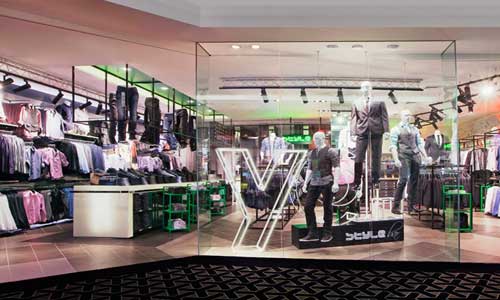
In markets with an abundance of brands and less and less differentiating products, product development and sourcing capabilities move back into the strategic focus of fashion retailers. It's the key enabler for differentiation in the competitive environment. Access to deep technical expertise and unique handwriting of product groups that are critical for brand building as well as curated supplier portfolios with the true ability to drive innovation, evolve to an indispensable asset to drive top line as well as markdown and margin performance.
Time to market
Speed of trends and innovation has tremendously increased over recent years and consumers are adopting market impulses from option leaders, celebrities, and bloggers at high pace. This requires being closer to consumer needs with critical seasonal milestones on concept, design, and development for adoption of trend impulses as well as buying decisions to ensure market right products and quantities. Sourcing plays a critical role in enabling differentiated seasonal calendars based on individual product needs and a balanced mix of near shore and Far East sourcing destinations.
Demand and supply responsiveness
A significant part of end-of-seasons stock and related markdowns stems from buying and production volumes being insufficiently aligned with actual consumer demand on the shop floor and online during full price selling period. Leading retailers and brands currently make significant investments to drive end-to-end planning integration along the value chain across retail, product merchandising, material management, and sourcing/production. Main objective is to act vertical while typically not owning the different stages of the value chain down to production.
Differentiated supplier capabilities must be leveraged and developed in close collaboration along the entire value chain, from planning, through design and development, material management, costing, down to logistics. Intensified collaboration will also mean more common standards, definitions and KPIs. An integrated cloud-based database provides end-to-end transparency and control, internally as well as with third party suppliers. Furthermore, it allows a dynamic access to big data across the entire value chain and enhances predictive analytics for an improved merchandise planning, production capacity planning. etc. In re-shaping the fashion value chain, technology will prove to be the key enabler to provide the tools for analytical optimisation. Data transparency and the smart application of Artificial Intelligence will give retailers and brands the power to drive true value.
Product quality and sustainability
Product quality compliance and unified standards, e.g., with regards to fit and construction, are gaining increasing significance with online growth being unbroken. Returns from mismatch of expectations with regard to quality, size, and fit are a significant cost position, which is difficult to effectively avoid without aiming for these root causes. While this usually means not choosing the short term minimal cost option, these levers have strong power to drive better sell-through rates, stock turns and a reduction of leftovers hence, positively impacting markdowns and ultimately improving gross margin. This certainly compensates for higher production cost, and this does not even account for the top line sales potential from brand uniqueness and better differentiation vs. competitive offerings.
Sourcing portfolio optimisation
The shift from one sourcing country to another won’t be a long-term answer, as almost all current sourcing countries are getting more and more expensive. Looking at current markdowns of often 15-25 per cent of net sales this is a very powerful source of gross margin improvement. Each percentage point of markdown reduction immediately translates into an equivalent in realised margin.