FW
Surat manmade fabric traders want GST exemption
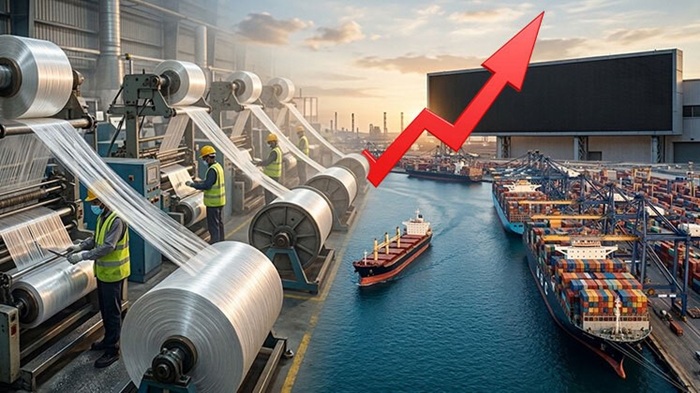
Manmade fabric hub of Surat wants traders and weavers to be removed from the purview of GST. The output of manmade fabric has come down from around four crore meters a day to less than two crore meters in the July-April 2017-18 period, ie post implementation of GST.
Sale of polyester fabric, including saris and dress material, has reduced by nearly 40 per cent, and the export of finished fabrics has decreased by around 28 per cent in the first ten months since GST was implemented on July 1, 2017. More than 90,000 power loom machines have been sold in scrap during the ten-month period, as import of fabric from China and other countries has become cheaper.
Since July 1 last year, over 60,000 embroidery machines have been shut rendering thousands of women jobless. First, the withdrawal of high-value currency notes paralysed Surat as its economy is largely cash-based involving small processors and migrant employees. Then GST rendered a big blow to textile processors, whose cost increased sharply along with compliance burden.
Since yarn is not woven, and fabric is not produced, job workers do not have much processing work. Following the rise in crude oil prices, prices of petrochemicals are also rising. These are raw materials for producing polyester yarn used by Surat-based power looms.
Pakistan’s textile export recovers in the 10M FY18 compared to last year
Compared to last year, Pakistan’s textile exports have managed to continue recovering in the 10MFY18 period with modest growth of 8 per cent. The segments that contributed the most to this growth in value terms were knitwear and readymade garments, registering an increase of almost 15 and 12 per cent respectively.
This year’s growth in textile exports has mostly been based on a boost in the value added segments. Readymade garments have also increased by 13.5 per cent. However, the state of overall sector remains mired with problems which continue to hamper growth. The outgoing government has left it in some cases to the last months of its tenure to address issues which have been red-flags for some time now.
The government has failed to address the issue as gas provision to majority of Punjab-based textile industry has been R-LNG. This costs almost Rs 1200/MMBTU and unless a weighted average formula is adopted by the next government, matters would become grimmer in the time to come.
Similarly, the government has realized in its final days high power tariffs for the textile sector are counter-productive and there are talks of bringing down the electricity tariff by Rs 3. Association (PTEA), not even a single processed sales tax refund claim has been paid for 8 months while huge amount of sales tax RPOs is also pending payment. The only thing that can be determined for a certainty is that the PML-N government did things too little and too late for recovery of the textile sector.
Latest edition of IIKF in Tirupur sees subdued mood
India International Knit Fair (IIKF) was held in Tirupur from May 16 to 18, 2018. The spotlight was on spring/summer 2018 with a complete display of latest fashion wear. This time, the fair was comparatively a dull show. The apparel sourcing fair witnessed only 30 companies displaying latest offerings. The event also witnessed a low footfall from the buying community.
In spite of the perfect venue, participation by top exporters displaying their diverse products’ range, tickets and the stay (hospitality) support given to visiting buyers, the visitation on all three days -- be it from overseas buyers or Indian buying houses – was limited.
Tirupur is the knitwear capital of India. Witnessing the worst decline in last three decades, Tirupur’s apparel export industry recorded business worth Rs 23,000 crores during the last financial year, significantly less when compared to Rs 26,000 crores the previous year.
IIKF has emerged as one among of the most reputed knitwear trade fairs in the world. It aims to showcase end-to-end products pertaining to the knitwear segment. India Knit Fair Association has been conducting the India International Knit Fair for 21 years with the objective of presenting the capabilities of knitwear items from India.
Starlinger Group takes over Barmag
Austria’s Starlinger Group will takeover the German business unit from Chemnitz also known under the brand name Barmag Spinnzwirn. The technologies for selected high speed winders and precision winders for special applications like aramid or carbon will be sold to Starlinger as well. The business unit has a very solid international customer base with long-standing successful relationships. In 2015, a new, innovative technology centre for R&D and the performance of customer experiments was put into operation. The Chemnitz site currently employs about 160 members of staff.
Another market success for the Chemnitz branch of the German parent company Oerlikon Textile is the recently launched automatic winders, WinTape and WinTape XXL as well as the EvoTape process for film extrusion lines.
Barmag Spinnzwirn has been successfully confirmed in the market as a technology trendsetter over the last decades. The Oerlikon manmade fibers segment unit provides its extrusion plants for the production of tape and monofilaments for polypropylene, polyethylene, polyamides and polyester as turnkey plant-design solutions.
The resulting synergies in technical as well as commercial terms will underpin Starlinger’s leading position in the world of textile packaging and its applications and lead to new, innovative and customer oriented solutions in the medium term.
Miami apparel sourcing show features leaders and experts
Apparel Textile Sourcing Show was held in Miami from May 21 to 23.This is an apparel and textile sourcing trade show. It welcomed top apparel and textile manufacturers from over 15 regions, top brands, retailers, designers and sourcing professionals from China, Bangladesh, India, Pakistan, Mexico,El Salvador, Honduras, Peru, the US. Over 3,500 visitors attended.
The product categories covered apparel and textiles from fashion to function, from leather to lace. Categories included finished apparel for men, women, and children that range from leisure, formal, denim, active, swim, intimates, and performance. Exhibitors also displayed home ware and linen, hardware, and textiles that included cotton, knits, yarns, leather, synthetics and blends.
Various seminars addressed a comprehensive range of topics including sustainability, global sourcing, supply chain, social compliance, influencer marketing, and branding strategies. Sessions were presented by industry experts, top educators, respected designers, influential bloggers and economists.
The show also saw inspirational leaders, and respected industry experts from the apparel, manufacturing, retail, and affiliated business industries to educate, network, share market intelligence, discuss pressing topics and engage in conversations that energize the flow of global commerce. Over 200 international and domestic manufacturing firms presented a range of products and process solutions in the field of manufacturing and sourcing services.
FM and textile minister suggest measures to enhance exports
To formulate the strategies for enhancing export in each sector and resolve the problems and challenges faced by the handicrafts sector, the Union finance minister Piyush Goyal and the textile ministry Smriti Irani have made certain suggestions.
These include: enhancing the list of essential embellishment, trimmings, tools and consumables to be imported duty free and exempting from payment of IGST on import of such items, inclusion of ‘merchant exporters’ in the list of exporters eligible for benefit of ‘interest equalisation scheme’, issuance of eBRC in case of exports of handicrafts to Iran, if issuance of eBRC is not done by the bank within stipulated time, banks to pay penalty to the exporters, scheme of ‘ Rebate of State Levies’ (ROSL) on exports of handicrafts, engagement of foreign designers in the handicrafts sector to be made easy, cap to be reduced, enhance allocation of funds under Market Access Initiative (MAI) and relaxation in operational guidelines for funding under the MAI Scheme to include markets of USA, Canada, EU, Japan, China and other developed markets for extending invitation to buyers to RBSM’s organised in India and blocking of working capital – Refund of ITC/ GST
Denim Premiere Vision explores denim applications
Denim Première Vision, which ended on May 24, demonstrated varied fashion applications of denim and the savoir-faire of the show’s exhibitors. An impressive installation welcomed visitors with meters of blue material unfurled and suspended as though in a factory. However, these fabrics were not mass runs, but special samples representing the latest denim trends for autumn/winter 2019-2020.
Visitors had the opportunity to discover a more fashion focused fair in this edition. For starters, this year, for the first time, the trade show’s five chosen themes were also interpreted by a renowned designer. Lutz Huelle had come up with a handful of silhouettes for each theme, using the products and innovations proposed by the various weavers, finishers and tailors at work in the world of denim.
This season's selection presented some interesting discoveries. In sportswear category, dubbed Active Denim, the concepts of elasticity and comfort are evidently still a priority. For example, through the application of a special technique, a fleece effect can now be achieved on the inside of denim products. But the sector is also exploring denim’s potential to capture market share from the ever present padded jacket, experimenting with elegant and intelligent padding techniques which could lead to some interesting developments in the future.
Russia to establish industrial zone in Egypt
Russia’s Minister of Trade and Industry Denis Manturov and his Egyptian counterpart Tarek Kabil signed an agreement to establish a Russian industrial zone in Egypt. The zone will boost cooperation between the two countries, especially in the industrial, agricultural and customs fields. It will also promote Russian high-tech products in the huge new markets in the Middle East, Africa, Europe and Latin America.
The Russian industrial zone, located within the economic zone of the Suez Canal, will cover 5.25 square kilometers with an investment of $6.9 billion, enough to provide an estimated 35,000 jobs. The zone project will cover several industrial fields, including construction equipment, glass and ceramics, wood and paper, autos and medicine.
KARL MAYER introduces HKS 3-M machine
KARL MAYER has introduced the HKS 3-M model having a width of 280 inches. Like all HKS three-bar machines, the new machine offers multiple features. The high-speed tricot machine operates with a 3 x 32" beam mounting arrangement as standard. It is available with a mounting configuration with a diameter of 40" for beam position GB 1, and 32" each for beam positions GB 2 and GB 3. Just like the machines having a smaller working width, the HKS 3-M, 280", is available in the gauges of E 28 and E 32.
The machine can be equipped with the new KAMCOS® 2 efficient computer platform, the LEO® Low Energy Option for energy-efficient running, and a camera monitoring system above or below the web. A face plate under the textile web for monitoring transparent fabrics is also available as an option. The knitting motions and elements are the same as on the existing machines. This machine delivers the dependable quality typical of all KARL MAYER’s machines. It can be supervised easily and operates steadily and reliably with low maintenance requirements. It is also extremely efficient. The HKS 3-M, 280", operates at a maximum speed of 2,200 min-1.
Karnataka garment workers seek revision of minimum wages
Garment workers in Karnataka have sought revision of minimum wages, withdrawn by the earlier government in March 2018. As per the draft notification, the minimum wage was to be revised to Rs 445 per day for an unskilled worker from Rs 220 a day. For a semi-skilled worker in Bengaluru, the wage was proposed to be revised from Rs 229 to Rs 490. For skilled and highly-skilled workers, the wages were proposed to be revised upwards from Rs 232 and Rs 240 to Rs 539 and Rs 593, respectively.
Implementation of this notification would have benefitted around 4.5 lakh people, mostly women, employed in the state’s garment industry. Bengaluru alone employs nearly 3.5 lakh people. The notification was withdrawn by the labour department stating that the industry management objected to the revision as minimum wages in the state were already higher compared to other states, and increasing the wages would have an adverse impact on the industry.