


FW
Garware net sales up 27 per cent
Garware Technical Fibers, founded in 1976, is a leading manufacturer of technical textiles. The company creates world class technical ropes that are used for fisheries, agriculture, shipping and industrial purposes, geosynthetics and sports. For the second quarter Garware Technical Fibers’ net sales grew 27.1 per cent. Profit before tax grew by 17.4 percent compared to the same quarter last year. Net profit grew 17 per cent. EPS for the period grew by 17 per cent.
For the first half of the fiscal year net sales grew by 12.7 per cent. Profit before tax grew by 18.7 per cent. Net profit has grown by 18.8 per cent. EPS for the period grew by 18.8 per cent.
Garware specializes in providing customized solutions worldwide. The company’s products are manufactured in state-of-art facilities at Wai and Pune and marketed in more than 75 countries. Over the past four decades, Garware has built a strong reputation for quality, value addition and application-focused innovation. Its solution segments are niche. These solutions are focused on progress and productivity for agriculture and fisheries, which typically constitutes almost 15 per cent of India’s GDP.
The company was earlier known as Garware Wall Ropes. Garware Technical Fibers aims at doubling its profit over the next five to seven years.
Working conditions for women in Asian countries demand attention
"A German court case, which implicated local discount clothing manufacturer KiK for a fire at its Ali Enterprises textile factory in Karachi in 2012, raised a pertinent question: whether corporations should be held accountable for the working conditions of their suppliers abroad. The global fast fashion industry, primarily staffed by impoverished women-especially in Asia, is often accused for the exploitative working conditions in its factories. Workers in these units are highly underpaid and have fewer rights. They are highly discriminated against by their male counterparts and often sexually harassed."
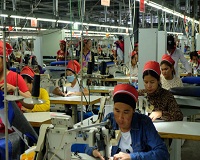 A German court case, which implicated local discount clothing manufacturer KiK for a fire at its Ali Enterprises textile factory in Karachi in 2012, raised a pertinent question: whether corporations should be held accountable for the working conditions of their suppliers abroad. The global fast fashion industry, primarily staffed by impoverished women-especially in Asia, is often accused for the exploitative working conditions in its factories. Workers in these units are highly underpaid and have fewer rights. They are highly discriminated against by their male counterparts and often sexually harassed.
Increasing minimum wages has little effect
The increase in minimum wages by Bangladeshi government from €60 to €85 (per month) in December, has had little effect as women still have to work overtime to survive. The factories are largely unorganised and if women workers try to organise themselves in trade unions, they are threatened by the management and asked to leave the factory. The industry hires women as they are docile and normally not a part of any trade unions. Their traditional upbringing also does not allow them to be treated as human beings. This makes them a soft target for factory owners who frequent mistreat them.
Not sufficient job opportunities available
Also, other industries do not offer many work opportunities for women. A textile job proves to be much better than stone cutting or working as a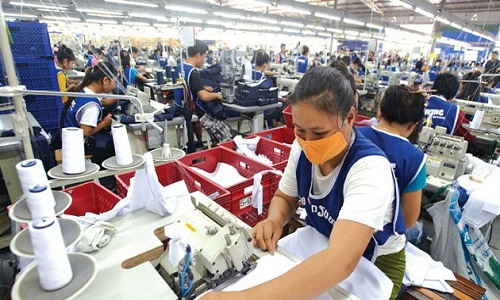 housemaid where the danger of being harassed by men is rampant. In China, many women have quit the textile industry and entered into the electronics industry which pays them better wages.
In the case of the KiK incident, the company should be held responsible as it was more or less the only buyer; having 80 per cent of the orders. Normally, in cases of human rights violations, the guilty is tried in the country where the incident happens. However, in this case, the German court has sought the Pakistani law to determine their responsibility in the incident. This indicates the lack of awareness in the industry regarding ensuring proper working conditions in factories.
Ushering in a change
FEMNET supports urgent appeals in cases where such accidents or human rights violations occur. The organisation’s partners in the countries of production makes a note of the German companies that place such orders which it addresses promptly. The organisation also involved raises awareness amongst students in 40 German universities.
The role of consumers is also important. They need to decide whether they require so many clothes. Already, there’s excess production happening with 60 per cent of these clothes not even being worn. Less consumption under better working conditions is always more preferable. This can be achieved by either buying second-hand clothes or those under certain labels like Fair Trade who assure of their clothes being produced in sustainable conditions.
Tackling deep-rooted concerns of Indian textile industry to boost growth
The government, in order to support the industry, has increased import duty on several textile items. However, to ensure long-term sustainable revival, it first needs to address certain deep-rooted problems. Currently, the industry is finding it extremely difficult to compete with even smaller players such as Bangladesh and Vietnam. Valued at around $127 billion, the textiles and apparels industry is a huge foreign exchange earner, and second-largest employer in India. However, the country’s share in global textiles exports is just 5 per cent, which is minuscule as compared to China’s share of 38 per cent. Much smaller players like Bangladesh and Vietnam, having a share of 3 per cent in global exports, are increasingly threatening India’s exports.
 The government, in order to support the industry, has increased import duty on several textile items. However, to ensure long-term sustainable revival, it first needs to address certain deep-rooted problems. Currently, the industry is finding it extremely difficult to compete with even smaller players such as Bangladesh and Vietnam.
Competition, domestic issues trample growth
Valued at around $127 billion, the textiles and apparels industry is a huge foreign exchange earner, and second-largest employer in India. However, the country’s share in global textiles exports is just 5 per cent, which is minuscule as compared to China’s share of 38 per cent. Much smaller players like Bangladesh and Vietnam, having a share of 3 per cent in global exports, are increasingly threatening India’s exports.
Other bug bears are domestic issues. Textile exports were expected to increase with the abolition of the Multi Fibre Arrangement (MFA) in 2005-06. However, this growth did not materialise, as the industry faced increased competition from low-cost producers like Vietnam and Bangladesh. The rise in Chinese labour cost could also have provided an opportunity to increase its share in the global textiles industry. But domestic issues including outdated technology, inflexible labour laws, infrastructure bottlenecks, and a fragmented nature of the industry trampled these hopes.
As per World Trade Organisation’s Agreement on Subsidies and Countervailing Measures, a country needs to phase out export subsidies for a product as it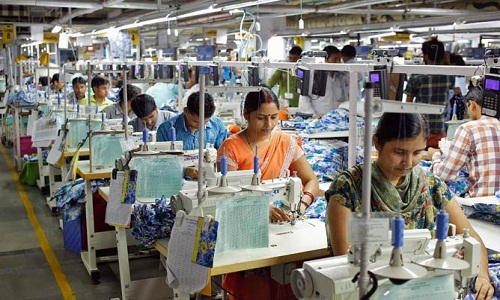 achieves export competitiveness, defined as 3.25 per cent share in world trade. As per this agreement, India needs to end export subsidy for the textiles sector by 2018. The industry needs to abolish some of the existing export subsidies such as Merchandise Export from India Scheme (MEIS) and the Export Promotion Capital Goods (EPCG) Scheme.
Need for skill development, technology upgradation subsidies
The government needs to focus on regional, cluster, technology upgradation and skill development subsidies, which benefit all producers. Globally, manmade textiles and garments are in high demand. However, India, despite being the second-largest textiles exporter, lags in this category due to the unavailability of manmade fibres at competitive prices. The total textiles and clothing exports from India, cotton accounts for around 75 per cent. We need to align our production with the global consumption patterns.
Flexibility in labor laws and adequate skilling is likely to boost the textiles sector in a big way. For instance, allowing women to work in all three shifts, after taking into account adequate safeguard measures, will enable the industry to employ more female workforce. Technology upgradation schemes will help Indian players increase both their productivity and competitiveness. In addition, the government needs to carefully evaluate various trade agreements—Bangladesh and Vietnam benefit from favorable access to some of the big apparel markets.
Although India has the required ingredients in the form of raw materials and abundant labor to make the industry a success, outdated technology, inflexible labor laws and infrastructure bottlenecks hamper its growth. The government needs to re-look at fibre neutrality and evaluate various trade agreement opportunities, while domestically focusing more on technology upgradation and skill development.
Vietnam garment, textiles exports up 16 per cent
Vietnam’s garment and textile exports have risen 16.01 per cent against last year. This is the highest rise over the last three years, compared with 12.1 per cent in 2015, 4.07 per cent in 2016, and 10.8 per cent in 2017. Export turnover of clothes was up 14.45 per cent; that of fabrics was up 25.5 per cent; and the export values of yarn was up 9.9 per cent. The sector’s trade surplus was up 14.39 per cent year on year.
The sector sees rosy signs for 2019, with many businesses already receiving orders for the first six months and some even the whole year, with better product competitiveness and supply chains forecast.
The new-generation free trade agreements Vietnam has joined will be put into place and are expected to exert positive impacts on the production and business activities of the sector. Businesses are joining hands in implementing solutions on investment, marketing, human resources development, and sci-tech applications. Other proposals are policies to support waste water treatment at garment-textile industrial parks, increase personnel training, and admit wholly foreign-invested enterprises to develop the supply chain and promote experience exchange. The target is to raise the export turnover by 10.8 per cent in 2019.
Trade war can benefit India
India can benefit from the trade war between the US and China because the US and China will explore options for suppliers from other countries to fulfill their demand. They will develop alternate markets for their products and seek new sources to meet their local demand.
India can focus on increasing exports from automotive, apparel and readymade sectors. India had come out with a policy of hardware manufacturing and a few large players, especially in mobile phones, had announced their plans for big investment in this sector. India has a very good eco system for hardware development and this could be a good opportunity for India to increase the growth of the hardware industry. Initiatives in India like Make in India, Industry 4.0 will make India attractive for foreign companies to make their investments here.
Auto components is another big opportunity. In the last few years, India has become very competitive in the auto sector and has emerged as the most preferred location for manufacturing small cars in the world. Further, the eco system for the auto sector in India is well developed. All players in the market invest on innovation, R&D and produce global quality vehicles. FDI regulations for this sector are very liberal. Indian auto and auto component manufacturers can capitalise on this emerging opportunity.
New regional UN report predicts export growth to slow in 2019
The Asia-Pacific Trade and Investment Report (APTIR) 2018 by the United Nations Economic and Social Commission for Asia and the Pacific (ESCAP) notes an accelerated imposition of restrictions on trade in goods and services, and more reservations on Foreign Direct Investment (FDI). The United States-China trade tensions have also begun to disrupt existing supply chains and dampen investor confidence, as evidenced by the deceleration in trade growth after the first half of 2018. If the trade tensions remain, export growth may slow to 2.3 per cent in 2019, compared to a nearly 4 per cent growth in export volume in 2018. FDI inflows to the region are also expected to continue in their downward trend next year, following a 4 per cent drop in 2018.
Tariff hikes are expected to cut global GDP by $150 billion, and regional GDP by a little over USD40 billion. Importantly, as many of the main export industries in the region are relatively labor-intensive, a contraction of export could spell at least temporary hardship for many workers. At a minimum, Asia and the Pacific will see a net loss of 2.7 million jobs due to the trade war, with unskilled workers -often women- shouldering more severe impact.
Uganda works on leather potential
The absence of a factory to process hides and skin into leather is hindering the growth of the leather industry in Uganda. The country has seven medium-sized leather tanneries and several small ones, with an installed capacity to process close to 10,000 hides and 47,000 skins per day, but no factory that processes hides and skins into final leather. As a result, many Ugandans prefer imported leather products since they feel domestic products are of poor quality.
The situation has robbed the local industry of a potential market and a productive ground to breed their businesses and brands to grow and be more competitive. Uganda’s small-scale entrepreneurs are encouraged to invest in the textile and leather industry in the country.
They are being urged to start tanning the tides from Uganda as opposed to buying expensive leather from other countries. Uganda has the potential to produce 1.4 million cattle hides, 3.1 million goatskins and 0.68 million sheepskins annually. Nonetheless, the collection rates currently average at 1.2 million hides, 2.4 million goat skins and 0.54 million sheepskins.
Entrepreneurs are urged to think beyond the business confinement of their national boundaries, casting their network of opportunities beyond the east African region and into the global market.
Pakistan emerges the largest importer of used clothing
Recent Statista figures reveal in 2017 Pakistan imported $240 million worth of used clothing making it the world’s largest importer in this category. The flea markets known as Landa Bazars specialise in selling used clothes in the country. These markets are found in all major cities and cater to middle-class and poor customers looking for moderately priced warm clothing for a couple of weeks of cold weather.
Pakistan has a huge domestic textile industry that meets the needs of the people with relatively cotton clothing for the rest of the year. Pakistan is also a big exporter of readymade garments. The top exporters of used clothing included the United States ($648 million), Germany ($371 million), the United Kingdom ($348 million), China ($219 million) and South Korea ($214 million). The top importers in 2016 were Pakistan ($206 million), Ukraine ($166million), Kenya ($131million), Malaysia ($129million) and Ghana ($126 million).
UK shoppers not in favor of online shopping
According to key findings from a new study of 2,000 shoppers, who were polled as part of tech company True Fit’s ‘Fashion Derailed’ report, 77 per cent women choose not to purchase clothing online as they are unsure of what size to buy. Meanwhile half of them purposely avoid certain retailers due to their unpredictable fits and sizing.
The research also estimated that Brits amass £32,951 worth of unworn clothing in their wardrobes over their lifetime, primarily due to difficulties in choosing the right size when shopping online. Mintel data estimates British women spend £29.4 billion on clothing this year, though 45 per cent of female shoppers in the UK admit to buying clothes online which they never wear and 44 per cent acknowledged that they wore an item they online only once in their lifetime.
As per a study, Britishers admit they only wear three-quarters of the clothing in their wardrobes while online jeans top the list for both men and women as the trickiest fashion item to buy online. Trousers, boots, dresses, and heels complete the top five lists of fashion items that prove most difficult to buy online.
Premiere Vision announces dates for upcoming editions
The next edition of Première Vision will be held in Milan’s Superstudio Più on May 28-29, 2019. The following 2019 edition happening in London will be held on December 4-5, 2019. The first London edition attracted 2,344 visitors, increased by 17 per cent against November 2017. Out of total visitors, 53 per cent were international. Out of these, 48 per cent were Turkish followed by Italian, Spanish, French and German.
Attendance by the US visitors, which numbered among the show’s top 10 visiting countries, declined by 25 per cent











