


FW
Tommy Hilfiger to focus on next gen retail experience
Tommy Hilfiger is now looking at next generation retail experiences and partnerships to stay ahead of today’s continuously changing shopping habits and preferences. The brand will reshape its retail landscape in North America by closing the New York City Fifth Avenue TH store and the TH store on Collins Avenue in Miami, Florida. Leveraging its store-of-the-future concepts rolled out in the global retail landscape, it will develop and test new modular, digitally infused retail concepts in the continue.
The brand also plans to expand once the agreement between PVH Corp and Dickson Concepts to reacquire the license for the TH brand in Central and South East Asia, closes. The transaction is aligned with PVH’s strategy of gaining more direct control over its brands, including the acquisition of licensed businesses.
Indonesia: Jiangsu Lianfa Textile to launch factory next year
Jiangsu Lianfa Textile, listed on the Shenzhen Stock Exchange, plans to launch its factory next year with an investment of between 5 and 6 trillion rupiah ($350 million and $422 million). The factory, in Indonesia’s Central Java province, will produce yarn for shirt-making, reducing the cost of yarn imports by $1 billion for Indonesian shirtmakers and helping them produce final goods such as fabrics and shirts more speedily for the US market.
Textile exports contributed $13.8 billion last year, or about 2 per cent of Indonesia’s GDP. It created around 3 million new jobs. The country aims to grow its textiles exports this year to $15 billion for the US, Japanese and European markets.Among other things, companies in Indonesia must pay a high minimum wage and commit to high severance payments.
Montex stenters makes a mark in technical textiles segment
Montex stenters have earned their leading position in the technical textiles market due to their overall robustness, reliability and economy. Technical textiles are a key pillar of Montex’s production program. Polyester warp knits, as well as woven materials, are also continuously pre-treated and finished on Montex stenters by leading Tier I suppliers of seating materials to the automotive industry.
Diverse end-products can be successfully finished on Montex stenters as well as with Montex coating units. Recent Monforts Montex stenter installations in Europe, for example, are dedicated to the production of wide-width digital printing substrates, to high volume automotive fabrics and to heavy duty filter media, to name just three advanced technical materials. Three Montex stenters have just been installed at the plant of a leading finisher of substrates for digital printing substrates in Germany – two of them in extra-wide widths of 5.4 meters – for drying after both washing and coating processes.
The ability to thermally-set PTFE fabrics without oil greasing in the stenter chain and in the width adjustment is meanwhile particularly appreciated by manufacturers of filter media using Montex stenters. This protects workers and the environment from harmful oil vapors and keeps the filter material clean. The emphasis for these manufacturers is not just on quality standards but also on precise control and guaranteed reproducibility.
Benninger to present latest developments at ITMA
At this year's ITMA in Barcelona, Benninger will present its latest developments including the Benninger-Küsters CPB dyeing centre for knitwear and woven fabrics - the only salt-free cold dyeing process; the Tempacta washing steamer for knitted fabrics with freshwater supply that is controlled by the degree of contamination; the Trikoflex drum washing machine that is available up to a working width of 5400 mm. In addition, a specially developed expander roller for sensitive fabrics will also be exhibited.
Benninger is celebrating its 160th anniversary IN 2019. The company, for the last 160, has continuously reiterated its commitment to textiles and responsibility towards sustainable textile production. Its consistent innovation and the continuous improvement and further development of our products, processes and services, has enabled it develop resource-efficient textile finishing plants.
Australia to host next edition of apparel sourcing expo in November
An apparel and textile sourcing expo will be held in Australia, November 12 to 14, 2019. This will attract some of the world’s leading apparel, accessories, textiles and footwear suppliers. More than 4,000 trade visitors are expected from Australia’s large fashion retailers, niche fashion brands, start-up labels, online outlets and independent fashion designers.
A runway program will showcase the collections of emerging and established fashion designers. Seminars will provide buyers valuable market insights and business tips. Seminars focused on the Australian market will also feature at the show and provide an opportunity for exhibitors to learn more about how to target the Australian market and understand more local trends and seasonality. In 2018, the expo attracted more than 720 manufacturers and agents from China, India, Pakistan, Bangladesh, Hong Kong, Indonesia, Vietnam etc. The 2019 edition is expected to attract an even wider participation.
India will be present for the seventh time. India is well-regarded in Australia as a quality and reliable supplier of textiles and apparel. In 2018, 130 companies from India participated, they included the Apparel Export Promotion Council, Wool and Woolen Export Promotion Council, and Handloom Export Promotion Council.
TEA requests banks to pass on repo rate reduction to exporting units
Tirupur Exporters' Association (TEA) has requested banks to pass on the reduction of repo rate by 25 paise to exporting units. The knitwears garment exporting units, particularly the MSMEs, would benefit by this as they have been suffering due to macro-economic changes.
Only few banks have passed on the benefit to the customers by which the real intention of the RBI for reduction of policy repo rate could not be achieved. The reduction of interest would pave way for the growth of investment and exports.
'Made in Rwanda' campaign boosts textile exports in the country
The “Made in Rwanda” campaign is helping to increase exports by small and medium businesses in different industries. Since 2017, Rwanda’s total exports have increased by 69 percent. Rwanda doesn’t have a market for their creations. The products are exported to the US, where they are sold in more than 100 boutiques for prices ranging from $28 to $225.
The textile industry in the country, like in most East Africa, had been dormant but then governments in the region decided to phase out and eventually ban the import of second-hand clothes. Handspun Hope is the only company in Rwanda engaged in processing wool for clothing. The company teaches women how to make hand-made knit apparel out of merino sheep and angora rabbit wool.
Handspun Hope imports merino sheep from Kenya and employs local farmers to look after them. After the farmers shear the sheep, the wool is collected and brought to Handspun Hope’s workshop, where it goes through many stages before products are made.
Labor shortage hits Surat units
The Surat textile cluster is facing a labor shortage. These units are heavily dependent on migrant labor, especially from Uttar Pradesh, Bihar, Orissa and Rajasthan. These workers haven’t returned after Holi and have taken a prolonged vacation especially in view of the elections. And this is happening at a time when textile units are flooded with orders for fabrics, dress materials, sarees and home furnishing due to the peak marriage season. Production has fallen by nearly 30 per cent. On an average, the daily minimum dispatch of textiles from Surat to other cities is around Rs 125 crores, but this has fallen to Rs 90 crores.
Surat’s textile cluster is one of the biggest textile clusters of India. Mandap cloth manufacturers in Surat and neighboring places are facing a similar issue. Surat is the biggest manufacturer of mandap cloth in the country with more than 250 units manufacturing only mandap cloth. There are nearly 1000 other units manufacturing mandap cloth as well as other fabrics. Surat’s textile cluster consists of more than 6.50 lakh power looms, nearly 4.50 lakh process houses and about 70,000 traders who add value in terms of making dress material, sarees and readymade garments. The industry is often plagued with labor absenteeism in case of natural calamities or disasters in the states from where migrant laborers hail.
Bangladesh tanneries need upgradation to increase global footprint
Bangladesh has the potential to expand its share of leather and leather products in the global market if it can make its tanneries fully compliant with international standards. This is possible since Bangladesh has the advantage of a secure domestic supply of raw hides and skins and can gain from a higher value addition by making products from processed leather. Since China is moving toward high-end markets of leather and related goods including footwear this has created opportunities for countries like Bangladesh. For Bangladesh, leather is the second largest earner of foreign currency after garments.
However, for now solid waste is not treated properly in the leather industry. Sludge is not properly managed, dumping yards are open and poorly managed and the drainage systems require more maintenance. Pipelines and motors used in central effluent treatment plants are not capable of taking the load of the peak season. Tanneries need incentives for better environmental management and ensuring occupational safety.
Bangladesh needs tanneries compliant with a Leather Working Group (LWG) standard. LWG is made up of member brands, retailers, leather manufacturers, chemical suppliers and technical experts that have worked together to develop an environmental stewardship protocol specifically for the leather manufacturing industry.
US suffers as trade deal with China hangs in a limbo
"The ongoing trade standoff between the US and China is likely to affect not only the Chinese but also the US apparel industry. The war is already taking a toll on supply chains, with apparel companies pulling their sourcing away from China and moving to other Asian countries. These issues were the highlight of discussion at this year’s American Apparel & Footwear Association’s (AAFA) Executive Summit."
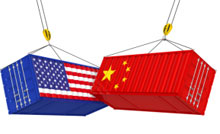 The ongoing trade standoff between the US and China is likely to affect not only the Chinese but also the US apparel industry. The war is already taking a toll on supply chains, with apparel companies pulling their sourcing away from China and moving to other Asian countries. These issues were the highlight of discussion at this year’s American Apparel & Footwear Association’s (AAFA) Executive Summit.
There is concern across the board about the ongoing crisis. President Trump has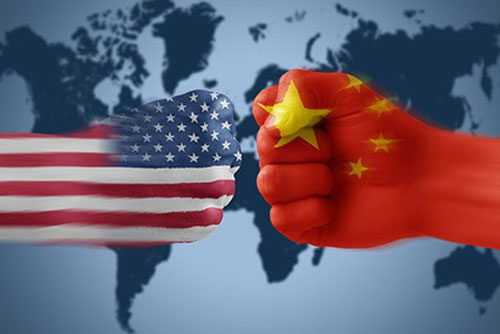 twice extended the deadline for a deal with China and the industry has been collectively holding its breath. In February, he delayed tariff and increase citing “substantial progress” on issues including IP and technology transfer. US Treasury Secretary Steven Mnuchin and US Trade Representative Robert Lighthizer will now work towards a final deal with a delegation of government officials from China scheduled to come to Washington for additional talks.
Deal needs upgradation
The trade deal between Washington and Beijing needs evaluation on several fronts. It requires a breakthrough including market access for the United States into China, as well as some structural reforms. The US has also demanded provisions for protecting IP and eliminating forced transfers of US technology. Negotiations will also determine whether these provisions are enforceable. Also, there’s a lot on the line from an image perspective, with the US administration setting high expectations for outcomes.
The negotiators will have to work on multiple fronts. One of the biggest hurdles in the enforcement of this deal is ensuring China actually follows through in areas such as opening its economy and respecting IP rights and technology ownership. Negotiators will also have to deal with issues such as the unpredictable behavior of President Trump and the uncertainty it throws into the process often compromising efforts by others.
Political crises hangs over the US
The next few weeks will be crucial for both the country as it will determine which country is more desperate for the deal. In the past five months, the economies of both the countries have suffered, although China’s slowing growth can be attributed to its deleveraging process, not the trade war. In 2007, China exports amounted to 37 per cent of its GDP, today this figure has declined to just 20 per cent, making the trade deal less important for China.
However, it doesn’t mean China doesn’t want the deal. But everything points toward the fact that US needing it more, especially given the political fallout that will result from continued tariffs going into the election season.”











