


FW
USFIA elects new chairperson
The United States Fashion Industry Association (USFIA) has elected Anna Walker, Vice President- Public Affairs, Levi Strauss & Co its new Chairperson. Walker has been a member of the USFIA Board of Directors since 2014 and served as Vice Chair of the Board of Directors since 2017.Since joining Levi Strauss & Co 2004, she has supported the company’s business strategy and strengthened its reputation by anticipating and shaping external public policy and stakeholder initiatives. Walkar also leads LS & Co’s community affairs program, developing strategy for community grants and employee giving and volunteerism programs globally.
A member of the Levi Strauss Foundation Board, Walkar has a masters’ degree from Johns Hopkins University School of Advanced International Studies and Bachelors of Arts degree from the University of California, Davis.
World footwear consumption declines by 22%: Survey
World footwear COVID-19 survey conducted by the Portuguese Footwear, Components, Leather Goods Manufacturers’ Association (APICCAPS) in April found that the virus had already sent global footwear consumption down more than 22 percent. In Europe, consumption tumbled 27 percent year over year by April. In North America, it’s down 21 percent, and in Asia, footwear consumption had fallen 20 percent.
The same survey also found 42 percent of footwear manufacturers ramping up supply-chain diversification efforts while 39 percent are trying to shorten their supply chains. Footwear production and consumption is picking up in China, where recovery started sooner than it did in the West. Total footwear production in the country has returned to about 70 percent of the normal level now, said Li Yuzhong, President, China Leather Industry Association (CLIA).
Though in India exporters are optimistic about recovery in demand, they are aware there’s still a long way to go. The Indian Council for Leather Exports saw 60 per cent production in May and July and expects this to improve to 85 per cent in August and September.
Brazil manufacturers are similarly optimistic as production is starting to pick up after a painful March that saw production plunge around 30 percent, according to Letícia Sperb Masselli, Manager, Abicalçados-a Brazilian footwear program.
Manufacturers in Brazil are banding together to capitalize on their opportunity. The supply chain there has started to work more as a union to collectively appeal to buyers keen on minimizing their risk and reliance on Asia for sourcing.
With shoppers at home instead of in stores during prime buying time for spring and summer shoes, many companies are in the same over-inventoried boat. Valleverde, an Italian shoe brand managed to deliver more than 80 percent of its shoes to the clients and has only 20 percent of the Spring/Summer 2020 shoes in its warehouse.
Make maximum use of technology, urges CITI conference
Organized by Confederation of Indian Textile Industry (CITI) and GartexTexprocess India, virtual conference on ‘Rebooting the Textile & Apparel Industry’ urged the textile and apparel industry to make maximum use of technology besides focusing on sustainability. The conference was inaugurated by Arvind Singhal, Chairman, Technopak Advisors, who presented a vision for the industry in next 10 years. K S Sundararaman, Chairman, Indian Technical Textile Association (ITTA), emphasized on the dominance of electronic clothing in the next 10 years and the growing demand for products made from biodegradable waste.
Ronak Rughani, Chairman, Synthetic & Rayon Textiles Export Promotion Council (SRTEPC), urged Indian brands to explore overseas markets while A Sakthivel, Chairman, Apparel Export Promotion Council (AEPC), hoped India will lead MMF exports in the next few years.
Technical experts at the conference highlighted the importance of digitization in the fashion industry. Ram Sareen, Chairman & Founder, Tukatech emphasized on shorter supply chains in order to adjust to the new normal. The session on ‘Brand and Retail – Emerging Scenario in Textiles & Apparel’ highlighted o the need for omni-channel retailing and the emergence of other channels apart from e-commerce.
AWI urges wool growers to complete online survey on industry growth
Australian Wool Innovation (AWI) is urging wool growers across the country to complete an online survey detailing their priorities for a prosperous industry in order to boost the organization’s Wool 2030 strategic plan. Closing on August 16, the survey explores opportunities and risks to garner a picture of the stakeholders’ future vision for the industry. The purpose of this survey is to maintain the profitability and sustainability of wool production, says, Stuart McCullough, Chief Executive Officer of the company.
Australian Wool Innovation is working to implement a Wool 2030 strategy that would serve to guide the country’s stakeholders in becoming ever stronger. The organization has urged wool growers to provide feedback on potential growth areas and biggest growth hurdles over the coming years.
AWI’s Wool Consultation Group (WCG) also conducted a series of five webinars exploring the areas to be addressed in the Wool 2030 strategy. These covered issues surrounding wool production as well as downstream activities in which wool growers have a strong stake, such as traceability systems.
LVMH quarterly sales plummet by 27 per cent
Analyst Sanford C Bernstein & Co pointed that like-for-like sales of LVMH Moët Hennessy Louis Vuitton fell by 38 per cent to $9.2 billion from April to June and by 27 per cent to $21.6 billion during the six month period of January-June 2020. The company’s net profit plummeted by 84 percent to $613 million due to the difficulties it faced in cutting costs, said Wall Street Journal. Hit by COVID-19-related store closures across the globe and by significantly decreased travel retail sales, LVMH reported lower revenues in United States and Europe during the quarter and first half.
LVMH’s Fashion & Leather Goods business recorded a 24 per cent decline in revenue in the first half of 2020, while Perfumes & Cosmetics and Watches & Jewelry saw respective drops of 29 and 39 per cent for the half year period. Despite the pandemic, Dior showed remarkable resilience, confirming its exceptional appeal and gaining market share in all regions. Louis Vuitton was also able to very quickly transform and boost its customer relationships with a unique, high-quality and highly effective digital clientele strategy.
LVMH plans to focus on its own e-commerce platform rather than on third party distribution channels.
Massive order cancellations in Nepal’s RMG sector due to COVID-19
Nepal’s RMG sector has faced major order cancellations of almost 28 per cent of the country’s total apparel export in the first 11 months of financial year 2019-20, which ended in middle of July due to COVID-19. Garment Association of Nepal disclosed orders worth Rs 1.25 billion have either been cancelled or put on hold by global buyers on account of the pandemic.
Further, the country had to face major obstacles both in importing raw materials and exporting the ready products to many countries, which halted its traffic movement, said Chandi Prasad Aryal, President of the association. In the first 11 months of financial year 2019-20, Nepal exported apparel products worth Rs 4.54 billion against exports worth Rs. 6.34 billion in the corresponding period of previous year.
Exporters focus on online research, trade bodies to boost orders
As Indian apparel exporters are likely to have at least 25 to 30 per cent fewer orders in the rest of the months of 2020, their marketing efforts need to be enhanced with more investments. Exploring the strategies of small and medium exporters, and other stakeholders, Apparel Resources noted, exporters are buying data, doing extensive online research and approaching various trade bodies in India as well as abroad.
Exporters are also exploring tools like Zoom meetings to connect with their buyers, and buying houses on a regular basis. Virtual fairs have proved to be one of the strongest pillars of support for many small exporters along with giving them hopes to add new buyers. Export Promotion Council for Handicrafts (EPCH) has conducted three virtual fairs in the last one and half month. Jaipur-based apparel exporter, Pradeep Nahata, Managing Director, Karni Exports, who participated in two of these fairs, is currently sampling for two new buyers he met during those virtual events. National Garment Fair by The Clothing Manufacturers Association of India (CMAI) will also go online and has been scheduled from 2 to 11 September this year.
Some exporters are even changing their strategies and personally approaching buying agents and buying houses. They are also ensuring that payment terms are clear in the beginning itself, for example, 30 per cent in advance and rest on completing the orders.
Exporters are also collaborating with agencies that have good reach in terms of wholesalers, importers and boutique buyers. However, issues like high charges of these agencies and less probability of order conversion with new buyers are making these collaborations difficult.
Italy revamps law introducing economic measures in response to COVID-19
Following its initial enactment in May, Italy revamped its Law Decree No 34, or the ‘Rilancio Decree’ – that introduced a number of economic measures in response to the COVID-19 crisis – this month. The law now includes amendments to provide corporate and tax measures to support Italian companies in light of the sweeping manufacturing disruptions and greater market volatility cased by the COVID pandemic. Among the new additions to the law is a specific provision that aims to provide tax credits for entities in the textile, fashion and accessories sectors in connection with their final stock inventories.”
According to Baker McKenzie’s Mariassunta Pica, Bianca Bagnoli, and Marzio Bucciol, the July 19, 2020 amendments include a new tax credit equal to 30 percent of the value of the unsold inventory at the year-end that exceeds the average of the inventories booked in the three previous fiscal years.
In order to be eligible for this tax credit, companies need to evaluate inventories by sing the same methodology and criteria both in the 2020 tax period and in the three previous tax periods.
A committed and responsible garment industry to drive Asian economies post COVID-19
 Recovery strategies planned by governments across the world would be of no value for Asian countries if they fail to address the issues of local garment sectors. As data from World Trade Organization indicates; a bulk of Bangladesh’s merchandize exports in 2018 comprised apparels. Similarly, the garment industry of Cambodia employs around 79 per cent of its female workforce.
The garment industry in most developing Asian countries relies on imported yarns and fabrics. Though COVID-19 has resulted in substantial order cancellations, factory closures and job losses, the outlook for the apparel industry remains positive. For most western brands and retailers, Asia still remains their largest sourcing base with no alternatives in sight. From January to May 2020, over 80 per cent of the apparels imported by the US were from Asia. Though retailers have diversified sourcing away from China, they are now targeting other Asian countries like Bangladesh, Vietnam and elsewhere in ASEAN.
Automation and innovation fuels popularity of Asian garments
Apparels made by Asian factories are gaining worldwide popularity due to their factories’ continuous investments in automation technologies, research and development,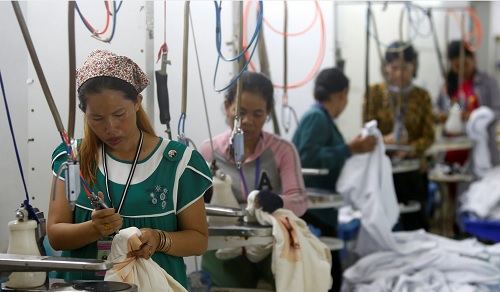 product innovation and infrastructure. Asian manufacturers offer competitive prices and other value-added benefits such as speed to market, reliability and flexibility. This gives them an edge over other suppliers across the world.
Rising purchasing power of consumers has turned Asia into one of the world's largest consumption markets with producers benefitting by making garments exclusively for Asian consumers.
Corporate social responsibility to ensure sustainability
However, to be a sustainable growth engine for Asian economies post-COVID-19, garment manufacturers and suppliers need to make a greater effort into corporate social responsibility. They will have to ensure better treatment of workers by reducing the pay parity between them and their global counterparts. Manufacturers will also have to assume the responsibility for safety of their workers and ensure that a tragedy like Rana Plaza fire outbreak does not occur again.
A step in the right direction, the recent suspension of the Everything But Arms trade preference to Cambodia by the European Union sheds light on issues like exploitative labor unions, lack of accountability for poor working conditions, gender discrimination, long working hours, underpayment and noncompliance with international labor standards in these factories.
More cooperation from Western brands
The onus of improving corporate social responsibility should not be placed on garment factories or apparel-producing countries alone. Western fashion brands and retailers that source from Asia should be made equally accountable for honoring their commitments and cooperating with their vendors during this difficult time.
Unfortunately, some fashion brands and retailers have not only canceled substantial orders but either delayed or rejected payment for orders already or nearly completed. This not only adds to the financial pressures of these garment factories in Asia but also makes their workers more vulnerable to future abuse. The garment sector can be a unique growth engine for Asian economies provided both manufacturers and retailers stick to commitments.
Behavioral changes, sustainable materials can help brands manage biodiversity
 The planet’s biodiversity is declining at a fast rate with the apparel industry being one of the most significant contributors to this loss. Indeed, global apparel companies have been launching myriad initiatives to become carbon neutral. However, measuring the impact of their operations on the environment requires multiple metrics and indicators. McKinsey & Company has made a deep study of the effect of each apparel value chain on Earth’s biodiversity and identified some of the largest contributors to its loss. These include:
High use of insecticides and pesticide in cotton farming: Although grown on only 2.4 per cent of global cropland, cotton accounts for 22.5 per cent of the world’s insecticide and pesticide use. It is also a water-intensive crop with around 713 gallons (2,700 liters) of water needed to produce one T-shirt.
Unethical sourcing of wood-based fibers: Around 30 per cent of man-made cellulose fibers (MMCFs) are obtained from endangered plantations. The water and soil pollution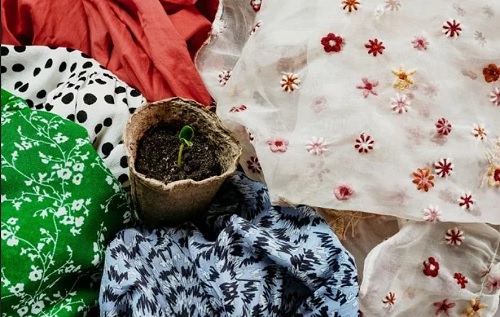 from chemicals used in the plantation of these forests results in habitat loss and endangering of species.
Exploiting fresh water resources: Textile dyeing and treatment, which overexploit freshwater resources and contaminate waterways, accounts for approximately 25 percent of industrial water pollution. The European Union classifies around 165 of the 1,900 chemicals used in clothing production as being hazardous to the health or the environment.
Contamination with microfibers: The report states on an average of 700,000 fibers are released in a standard laundry load, what’s more7 and half a million tons of microfibers (which are a type of microplastic) flow on the oceans every year. An estimated 35 percent of primary microplastics in the world’s oceans originate from the washing of synthetic textiles. Toxic chemicals in synthetic microfibers poison marine wildlife
Unmanaged waste: Around 12 per cent of textile waste is broken down into its component materials, and less than one per cent is closed loop recycled. Nearly three-fourths—73 per cent—of textile waste is incinerated or ends up in landfills, which release pollutants into their surroundings and contribute to habitat loss. Anywhere from 30 to 300 species per hectare may be lost during the development of just one landfill site
To mitigate these risks, apparel companies can adopt the following strategies:
Make materials more sustainable: Each of the materials used in the industry can be made more sustainable with new innovations and investments.
Support multiple production systems: The industry can optimize the environmental footprint of global cotton production by supporting multiple production systems. It can also develop low-impact alternatives to conventional fibers.
Tougher stance against waterway pollution: Waterway pollution from textile dyeing and processing requires a tougher stance from apparel brands. For this, brands can engage with suppliers to establish basic certification standards at scale. Suppliers should also comply with Zero Discharge of Hazardous Chemicals, Manufacturing Restricted Substances List (ZDHC MRSL), and Wastewater Guidelines, which regulate the use of hazardous chemicals and wastewater discharge.
Brands and suppliers can pursue high-tech options like moving from wet processing to waterless dyeing, which uses supercritical carbon dioxide, or to digital printing, which reduces water and chemical dependency. They can retrofit microfiber filters into their washing machines can help consumers prevent microfibers from entering waterways.
Make behavioral changes: Brands can minimize biodiversity loss by making simple behavioral adjustments and consumption choices like changing their washing-machine settings from delicate to cold express cycles.
They can also incentivize behavioral change by offering small vouchers in exchange for used clothing. The industry can provide viable business models for repair and reuse like Patagonia did in 2019, when its Worn Wear Program repaired more than 40,000 pieces of clothing.
Manage biodiversity like value creation. Brands can also manage biodiversity like financial performance by committing to new biodiversity science-based targets. They can team up with other apparel companies to invest in scaling and industrializing emerging, low-impact technologies and substitutes for nonsynthetic fibers.
Post COVID-19, biodiversity is likely to become an even greater concern for consumers and investors. Apparel industry should make bold moves to tackle it.











