


FW
Chimney Sheep to start wool project
Chimney Sheep will soon start its sourcing project ‘Operation Wool’ for the third year in a row. The Cumbrian firm will collect approximately 22 tonne of Herdwick wool throughout August directly from local farmers. This equates to the wool from just over 20,000 Herdwick sheep which is 20 per cent of the UK Herdwick population and will fill five lorries.
This wool will be used to create the company’s chimney draught excluder, the Chimney Sheep. The project will provide financial support to the farmers at time the wool industry is declining due to the pandemic.
The farmers will be paid a better rate compared to selling the wool to British Wool whilst making it more cost effective for Chimney Sheep d by cutting out several sourcing steps.
Egyptian researchers develop fibers and reinforcements from date palms
A consortium of five Egyptian researchers have developed the world’s first high-performance fibers and reinforcements extracted from the byproducts of pruning of date palms, such as fronds and fruit branches, also known as PalmFil. The fiber is not only sustainable but also economical in manufacturing, compatible with textile and composite processing and offers the properties needed for lightweight cars of the future. PalmFil consortium succeeded in extracting the first long textile fiber from date palm byproducts and converting them into fiber tow, chopped fiber, spun yarn/ roving, nonwoven mat, woven fabric, and unidirectional tape. The new fiber represents a sustainable material base for a wide spectrum of industries ranging from natural reinforcements for composites in automotive and sporting goods, plaster reinforcements in construction, burlap sacks for packaging, ropes, and twines, non-wood papers, and other consumer products.
The R&D conducted by PalmFil consortium demonstrates the potential of date palm fibre; its use in the modern context and in industrial settings, says Dilip Tambyrajah, Secretary-General, International Natural Fiber Organization. The use of most natural materials like the date palm fiber contributes towards maintaining biodiversity, provide employment and income and enable sustainable development in general. However, the key to its revival will be the national will and support to encourage the development of a reliable supply chain that can service the various production sectors that could use the fiber, he adds.
The self-supported research was conducted for five long years. It relied completely on the consortium funds and was driven by a strong belief on the impact of such innovation on the sustainable development of rural communities and their livelihoods, adds Dr Ahmed Hassanin, Partner, PalmFil Consortium.
Calik Denim postpones annual seminar due to COVID-19
Turkish denim mill Calik Denim has postponed its annual event ‘Ever Evolving Talks’ due to COVID-19. The seminar was scheduled for October 27, just a day before Kingpins trade show. The seminar was launched in October 2018 with an ambition to change the way the sector thinks about not only its material ‘denim’, but more widely the ‘Fashion Industry and business in general. The first edition of this seminar focused on concepts such as innovation, technology and sustainability. It also highlighted fashion and denim trends guiding the future of the sector hosted experts such as Ken Segall of Apple, Matthew Drinkwater of London College of Fashion's Innovation Agency, Adriana Galijasevic of G-Star Raw, Roian Atwood of Wrangler and Matthew Williams of Alyx.
Last year’s edition gave a stage to topics such as Blockchain system, consumption habits of generation Z and climate change discussed by speakers such as Gen Z expert Matt Britton, Jessi Baker, Provenance and Leland Devon Melvin, ENFL player and NASA astronaut. The next edition of Ever Evolving Talks is scheduled for April 2021 in Amsterdam.
BCI, IDH introduce insurance scheme for Indian farmers
The Better Cotton Initiative (BCI) and its strategic partner and funder, the Sustainable Trade Initiative (IDH) have introduced an insurance scheme that guarantees a one-time payout to those affected by COVID-19. The scheme alleviates concern that if a farmer were to fall ill, their families would not go without money, says farmer Vaghela Sureshbhai Jesabhai. It is paid off by the two organizations on behalf of 170,000 smallholder farmers in India, to enable them to continue to operate safely in the know that they will retain an income even if they were to be struck by the virus.
The insurance cover will provide a one-time lump sum pay-out to the insured in case s/he becomes infected with the novel coronavirus, explains Pramit Chanda, Global Director-Textiles and Manufacturing, IDH. It eases the financial burden of COVID-19 infections and offsets for the loss of income farmer families may experience.
Implementing partners that will work with BCI to afford insurance to these farmers include: AFPRO, Ambuja Cement Foundation, Arvind Limited, Cotton Connect India, Deshpande Foundation, Lupin Foundation, Spectrum International and STAC India.
Deep-pocketed investors to shape the future of fashion market
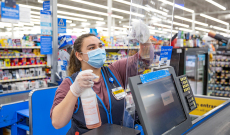 COVID-19 forced investors across the world to go into ‘life-raft’ mode and shore up their businesses. However now, investors are reconnecting with potential partners leading to some significant deals in the last few months. Some of the most significant deals that were cracked recently include KKR’s deal to buy 60 per cent stake of Wella from Coty Inc for $4.3 billion and L Catterton’s purchase of $400 million stake in Norwegian Cruise Line Holdings.
Deals across categories
In the fashion segment, prominent deals were signed by the Authentic Brands Group to buy bankrupt brands Brooks Brothers and Lucky Brand. Strategic players like PVH Corp and VF Corp also plan to consolidate their market positions by acquiring bankrupt retailers Neiman Marcus Group and J.C. Penney Co. Inc. Though some of these deals may eventually materialize, some could fall apart as the situation improves and companies start feeling confident to operate alone. Whatever the situation, buyers are looking for new acquisitions in skin-care, hair-care, food and beverage, health, wellness, and pet care categories.
Companies look to shore up balance sheets
While well-positioned companies are looking for partners to help them shore up their balance sheet, others are seeking an operating partner to help them through this crisis. Levi Strauss & Co is looking for partners to invest both in its store network and its burgeoning e-commerce business. The pandemic offers an opportunity to invest in companies that were profitable earlier but now lack liquidity, feels Rick Perkal, Managing Partner and CEO, Firelight Capital Partners, which an investor in Hobo Bags. Companies with e-commerce sites are doing quite well, wholesale brands are moving away from department stores.
Fresh perspectives on valuation
Deals are now being valued by reviewing the company’s past performance, brand heat, an evaluation of management and gut instinct. Market entrants are coming up with fresh perspectives to value deals. Brookfield Asset Management, which launched its $5 billion Retail Revitalization Program this May, is targeting retailers with normalized revenues of $250 million or more that have been operation for at least two years with “non-control” investments.
Advantage fresh starters
Investors making recent start are in advantage as access to talent is a lot more robust now, points out Jessie Cole, Founder, Seed Lab. According to her, as companies have laid-off employees, there’s abundant human resource available in the market and it’s the best time to staff up operations. The pandemic has made struggling companies weaker and strong firms stronger. Investors have moved away from mall-based retailers to focus on brands having direct relationships with consumers. This may shape the future of the fashion industry by highlighting companies backed by deep-pocketed investors.
Advance Denim collaborates with Paolo Gnutti
Global denim manufacturer Advance Denim and Italian denim specialist Paolo Gnutti have collaborated to create Advance Denim By Paolo Gnutti, a selection of special fabric capsule collections aimed at the US and Asian markets.
The first capsule will be launched starting from October 2020 and will include a total of about 40 fabrics of whose each part is catered upon the needs of each geographical area.
Gnutti, who has been dedicated to denim innovation and creativity for his whole career, is expert in reinventing indigo bases by completely transforming them thanks to the use of flocks, 3-D prints, colored foils and metallic effects while adding funky touches of fashion-driven ideas to denim.
For this collection Gnutti selected a series of specific cotton and yarn types with high quality characteristics to develop Made in China high-quality products at very profitable price-quality ratio, though meant to reach different customers, from premium to the mass market.
Benetton to launch sustainability platform for Sisley
Benetton Group released its 2019 Integrated Report, will soon launch a sustainability-focused platform for the Sisley brand.
In 2015 the Italian fashion group created a sustainability committee and in 2017, it became a member of the Better Cotton Initiative, a worldwide program that aims to make cotton production increasingly sustainable for the people involved in its production, as well as for the environment.
Benetton Group, which last year revealed its plan to convert all of its cotton production to be entirely sustainable by 2025, in 2019 succeeded in having 54 percent of the cotton used for the Sisley and United Colors of Benetton collections be certified by the BCI. In 2018, only 23 percent of the collections were crafted from certified cotton.
In addition, Benetton reduced by 90 percent the CO2 emissions of its logistic activities by implementing the use of rail and road transportation to import raw materials from China. Last year, the company also activated the recycling of 84 percent of the waste of its campuses in Ponzano and Castrette.
As part of its social responsibility strategy, in 2019 Benetton made an assessment of 300 suppliers to evaluate their social impact. Following that, 70 percent of them amended their noncompliant procedures, while the company ended the collaboration with 18 suppliers.
BSEC rejects two textile and apparel IPOs
Bangladesh Securities and Exchange Commission (BSEC) a statutory body attached to the Ministry of Finance and regulator of the capital market of Bangladesh, comprising Dhaka Stock Exchange (DSE) and Chittagong Stock Exchange (CSE) – rejected the IPOs of Beka Garments and Textile and SF Textile Industries for data manipulation, claimed media reports.
As per reports, BSEC rejected the IPOs as it found that the companies inflated revenues and profits and overstated inventories and assets in their financial statements.
According to the IPO prospectus, the principal activities of Beka Garments are to carry import, export, manufacturing, printing, dyeing, washing, embossing and trading of different types of readymade garments, knitwear, shirts, paints and other wearing apparels while as per the IPO prospectus of SF Textile, its main activities are to carry on the business of spinning mills to manufacture all types of cotton,viscose and CVC yarn for export to 100 per cent export-oriented dyeing or textiles industries and export thereof.
Japan’s MMF production falls by 18.80%: JCSA
According to a provisional data released by the Japan Chemical Fibers Association (JCSA), the Japanese production of MMF fiber in June ’20 has fallen by 18.80 per cent on Y-o-Y basis to hit 54,919 tonne.
The production output in the same month of 2019 was 67,900 tonne. Of total output, cellulosic fibers contributed 13,915 tonne, noting 18.20 per cent yearly increase over June ’19. On the other hand, synthetic fibers fell 26.60 per cent to give 41,004 tonne of output in June ’20.
The synthetic fiber production in Japan majorly saw decline because of low output of nylon filament, polyester filament, acrylic staple fibre and polyester staple fibers, while, at the same time, production output got increased for polypropylene filament and polypropylene staple fiber.
As far as half-year period (January to June ’20) is concerned, the total production of MMF fibers in Japan decreased 9 per cent to 378,751 tonne.
The production of cellulosic fibers noted 6.40 per cent growth in 6-month period of 2020 to 91,385 tonne, while synthetic fiber tumbled 13 per cent to 287,366 tonne.
Iran can export $150 million garments to Iraq: TPO
Farzad Piltan, Director-General,, Iran’s Trade Promotion Organization (TPO)’s Office of Arabian and African Countries said that Iran has the potential for exporting $150 million of garments to Iraq per year.
The official made the remarks on the sidelines of the third meeting of TPO’s Commodity-Country Desk on trade with Iraq, which was mainly focused on investigating the ways for increasing garments export to the Arab country.
Iraq imports $700 million of garments per year, while the share of Iran’s garment exports to its neighbor is just $35 million, which can be increased at least to $150 million, Piltan noted.
Despite the re-imposition of U.S. sanctions against the Islamic Republic, Iraq has been getting closer to Iran both politically and economically.
There is also the same approach adopted by Iran, as many Iranian companies are now eager to conduct trade with Iraq, especially with the Kurdistan region where there is a great demand for Iranian products.











