


FW
Bangladesh apparel exports jump 51% on order restoration BGMEA
As per Bangladesh Customs' data on daily exports compiled by BGMEA, the country recorded about 51 per cent growth in apparel exports during the first 19 days of the current month, compared to the same period last year. From August 1-19, Bangladesh exported apparels worth $2,048 million as against $1,359 million worth of apparels exported during the corresponding period in 2019.
Experts and apparel entrepreneurs linked the growth to restoration of a large part of cancelled orders and zero disruptions to shipments during the Eid holidays. Md Shahidullah Azim, Managing Director, Classic Group, says, about 75-80 per cent cancelled orders have returned to factories. During March-May period, export orders worth $3.18 billion were cancelled and withdrawn, according to the BGMEA. As a result, the RMG sector in April witnessed the lowest ever exports of $375 million. At the end of fiscal year 2019-20, apparel exports declined to $27.95 billion from $34.13 billion in the previous fiscal year.
At present, most apparel makers are focusing on clearing their backlogs besides honoring new orders. European Union markets are also coming back to life despite the threat of a second wave of COVID-19, adds Arshad Jamal Dipu, Chairman, Tusuka Group, adding that stores in Europe are reopening and online sales too are enjoying high growth.
Buying capacity in the US remains unchanged due to some stimulus packages undertaken by the country's government, he added. Western economies are gradually turning around with more new orders likely to be placed, says Ahsan H Mansur, Executive Director, Policy Research Institute. Buyers have already placed new orders and the result may be reflected in two months, he predicts.
On the other hand, a number of buyers are shifting from China to Vietnam and Bangladesh, due to the prevailing tension between Washington and Beijing, China is also moving to high value apparel due to a workers' wage hike. If Bangladesh can grasp one to two percent of the Chinese share by diverting those orders to the country, it will be a big jump for the apparel industry, adds Mansur.
Crushed by the pandemic, Tiruppur textile owners seek government intervention
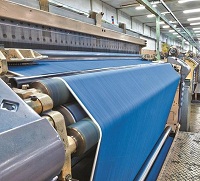 COVID-19 has been a death knell for 10,000 textile factory owners in Tirrupur as they have not been paid for goods worth Rs 10,000 crore ( US$1.35 bn) exported to different countries. This has drained Tiruppur of all its liquidity, says Raja M Shanmugham, President, Tiruppur Exporters Association. Besides domestic supply, the lockdown has also affected new and existing orders, he added. Factory owners are also been pressured to give discounts to clients in order to support businesses.
Many factory owners have been directed by the Centre and the state to take care of the basic needs of laborers besides paying them wages regularly. Though factory owners are trying to help these laborers as much as possible, expecting them to pay for their non-working days is unethical, opines Shanmugham. He urged the government to provide monetary assistance for workers.
Measures to curb the spread of coronavirus
Shanmugam urged the government to take a few steps to contain the virus spread. These include: providing monetary benefits to laborers; introducing special measures to prevent all industries – micro, macro, small-scale, large-scale – from being victimized in this process; instructing banks to forgo at least 1-2 per cent of interest rate and further reducing this by 2-3 per cent on all term and working capital loans; extending this scheme for one year and instructing the Employees’ State Insurance Corporation (ESI) to pay one month’s salary to all ESI card holders. The money for the non-card holders should be deposited in their Jan Dhan accounts.
Leveraging PPE demand
Realizing the business potential and growing demand for PPE production, over 100 factories in Tiruppur switched to producing masks and other personal protective equipment. These factories have received a number of orders from hospitals and civic bodies in Tamil Nadu and also from other states in the country. They are each producing at least 50,000 masks everyday by using about 200 tailors, adds Shangmugham.
Earlier the machines in these factories used to be placed close to each other. But factory owners are now placing them a few meters apart. Every time an employee enters a factory, owners ensure they sanitize their hands. Putting their concerted efforts to stop the spread of Coronavirus, owners have also disinfected the entire factory space. Leading industrialists say, the lockdown has broken the supply chain making raw material procurement a huge challenge for factory owners. They believe it will take more than a year for the industry to revive once the health crisis is controlled.
Apparel Textile Sourcing to launch new editions on a virtual platform
 Apparel Textile Sourcing (ATS) will launch their second and third editions on a digital platform. The two virtual events will take place online from October 26-30 and November 16-20. These state-of-the-artdigital events will connect more than 300 manufacturers and suppliers from over a dozen countries and regions online through voice, text and video chat with attendees and buyers from Canada, the US, Latin America, Europe, Australia, etc .
A key interactive feature at these events will be live complimentary matchmaking, made available to registered attendees and exhibiting manufacturers pre-show, post-show and during both virtual five-day events.
Focus on sourcing, design and sustainaibility
The ATS October event will focus on global and Canadian trade issues with special attention on the new USMCA trade agreement, pre-exisiting Foreign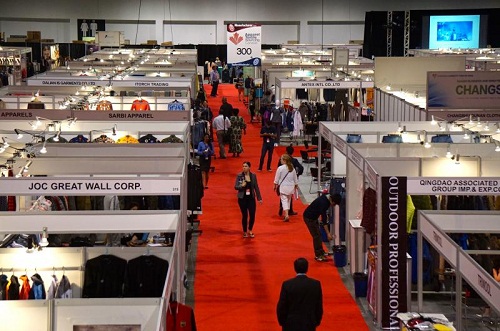 Trade Agreements, Least Developed Country trade benefits, sustainability and COVID-19. The ATS November event will feature panels and sessions focused on global suppliers and US buyers, with an emphasis on the US Presidential election results and the likely ripple effects on industries ATS serves. Analysts, economists, influencers and experts will recap 2020 and provide advantages to seek out in 2021.
Both event’s seminars will focus on sourcing, design and sustainability with an emphasis on marketing, logistics, fashion, design and trade. From near-sourcing in the Western hemisphere to continued sourcing from the far East; from the benefits of automation to the affects of COVID-19 on factories, from sustainable products to a sustainable workforce will be in focus.
“In a year when physical sourcing shows are not taking place, it’s important to take advantage of free opportunities like ATS Virtual to learn, network, and meet new global suppliers,” says Bob Kirke, Executive Director, Canadian Apparel Federation and Partner, ATS .
Major brand presence
More than 2,000 visitors attended the first ATS Virtual Trade Show in May – an event that was built in a month to serve as the first virtual trade show for the textile and apparel industry. As Jason Prescott, CEO, JP Communications, the Producer of ATS Trade Shows says, “Our team worked very hard to launch the industry’s first-ever fully digital virtual sourcing fair with numerous live components, like matchmaking, back in May. The entire supply chain has accepted virtual as the ‘Go To’ for trade facilitation and discoverability.
Major brands and retailers who previously attended ATS include: Kohl’s, Nordstrom, REI, Giant Tiger, Nike, Grafton Apparel, Bealls, Burton, Canada Sportswear, brrr!,GAP, Disney, Levis, TJ Maxx, American Eagle, Simons, Macy's,Li & Fung, etc.
AGI Denim welcomes new creative director
Pakistan-based denim manufacturer AGI Denim has welcomed Carl Chiara, global creative director, to its team.
Chiara brings with him two decades of global experience, previously working in similar roles at Levi Strauss & Co., consulting with companies such as Gap and co-founding boutique retail chain Unionmade. His extensive experience puts him in a unique position to further AGI’s mission of sustainability and circular design.
AGI is confident Chiara will bring a fresh perspective to the company as it formulates new ideas for creating during the pandemic.
AGI’s plans for the future include a heavy emphasis on responsible production, which it demonstrates with its water-saving technologies and incorporation of less-impactful fibers, including hemp and organic cotton.
Chiara started in his new role on Thursday, and noted that he is thrilled to “continue to create a truly meaningful impact globally.”
China to support rehabilitation of Pakistan’s textile sector
The Chinese market will absorb Pakistan’s textile yield significantly and support textile sector for its further rehabilitation in wake of COVID-19.
Gwadar Pro stated that the global economic recovery has been slow and gradual, while the Chinese economy has recovered steadily. The textile imports volume of China rose 6.5 per cent year-on-year in July, well ahead of market expectations.
Subsequently, China’s textile demand has continued to pick up significantly in August. as the orders of autumn and winter season fabric increasing, the related demands of textile have improved. In July, Pakistan exported 36,600 tonne of cotton yarn. Meanwhile, Pakistan exported $959 million of textile and clothing, only a year-on-year decrease of 5.44 per cent.
This followed a 36.72 per cent year-on-year fall in May and a 64.51% year-on-year fall in April.
According to a report released here this week, at present Pakistan’s domestic textile industry has fully recovered. Its cotton price has continued to rise in the latest week as demand from downstream businesses increased.
Textile and clothing factories have been resumed to full capacity production. Comparing with the same period in last year, the textile and garment exports have rose 14.4 per cent in July.
As a result, domestic and export prices of cotton have risen by more than 2 per cent in the past two weeks.
Japan’s cotton fabric imports surge 2.1 per cent
Data compiled by the Japan Spinners’ Association based on statistics released by Ministry of Finance, Japan reveals that the country recorded a 2.1 per cent Y-o-Y growth in its cotton fabric imports during January-June ’20 period against the same period of 2019. The country imported 117.08 million square meters of cotton fabric imports during the period. The country’s imports from China surged 29.40 per cent on Y-o-Y basis to 59 million sq. mt. This is over 50 per cent of share in total import of Japan.
Indonesia was the second largest cotton fabric exporter to Japan in H1 ’20 as the country imported 25.72 million sq. mt. of cotton fabric Indonesia marking 2.10 per cent yearly growth. Pakistan was the third largest exporter of cotton fabric to Japan. However its exports declined by 16.70 per cent to 21.61 million sq. mt. However, during this period, Japan’s import of cotton/polyester blended fabrics decreased by 29.20 per cent to 31.70 million sq. mt.
Target to feature back-to-school merchandize for extended duration
Target, which focuses on kids’ apparels and accessories, will feature back-to-school assortment for an extended duration this year so that parents can get good time to shop for school apparels. Going forward the retailer believes it has to be flexible and adaptable to combat the uncertainties and apprehensions that will accompany the retail sector in the new normal.
The retailer posted a whopping 80.3 per cent growth to $ 1.7 billion in profits in its second quarter. The company’s revenue shot up by 24 per cent to $23 billion during the three months ending 1 August, beating analysts’ prediction of $20.09 billion. Its same-store sales too rose by 10.9 per cent.
The retailer’s e-commerce sales too rose three times from what it was last year. Besides, it added 10 million new online customers in the first half of the year, with the numbers evenly divided across both quarters. The retailer posted double-digit growth in apparel sales during the second quarter, which is noteworthy considering the weak position the category has been in all through the year. It had posted a 20 per cent decline in the first quarter.
CITI to analyze impact of GST on domestic T&A production
Confederation of Indian Textiles Industries (CITI) is planning to conduct a study to analyze whether the Goods and Services Tax (GST) on textiles and apparels (T&A) was creating an inverted duty structure hurting domestic production
The study would be commissioned by the Ministry of Textiles. The consultants would be asked to map various GST rates on products covering entire value chain, understand existing incentives under GST and Customs and gather industry representations and demands made till date, as per the Request for Proposal (RFP) circulated by the Ministry of Textiles.
They would also have to study such taxes of other countries where in some cases some products are clubbed together while some others are exempted for making finished product competitive.
The consultants would also be required to make suggestions with respect to changes in existing rates, suggest new rates, find out if the taxes have affected the prices and thereby affected affordability for the buyer.
Recommendations regarding any change to the present tax and duty structure (including fiber neutrality), with proper justifications, that can be extended within the ambit of international norms and laws such as WTO have to be made.
Bangladesh to benefit from US’ shift of apparel sourcing from China: USFIA
The US buyers’ shifting of apparel sourcing base from China offers an opportunity for Bangladesh to further develop its apparel industry especially the manmade fibre (MMF) segment, says a recent US study titled '2020 Fashion Industry Benchmarking Study' by the US Fashion Industry Association and University of Delaware (USFIA). Citing US official trade statistics, the report says the value of Bangladesh's MMF apparel exports to the US enjoyed 5.5 per cent growth in the five months of 2020. In contrast, exports from China and Vietnam suffered a significant decline as value dropped 44.5 per cent and 8.8 per cent respectively over the same period.
Mahmud Hasan Khan, Managing Director, Rising Group, reiterated the bottlenecks hindering growth potential includes the absence of backward linkage industry and infrastructure. The production of MMF items requires huge investment in backward linkage and there are few who want to invest amid the absence of required infrastructure including sufficient gas supply. In 2019, Bangladesh shipped apparel items worth $5.93 billion to the US, of which cotton items were about 77 per cent.
According to Bangladesh Garment Manufacturers and Exporters Association (BGMEA), out of 430 spinning mills in Bangladesh, only 27 are based on synthetic and acrylic fiber, and rest are cotton spinning mills. Out of the country's 2.05 million tonne of fiber import in 2018, the share of cotton was 93.57 per cent, said BGMEA.
Cotton prices rise as buying by domestic and overseas firms picks up
During the past one week, domestic cotton prices increased about 5 per cent and may remain firm as buying by spinning mills and overseas firms has picked up, traders say. Most spinning mills in the country are running at 80 per cent capacity, said Mahesh Sarda President, Indian Cotton Association. The Association anticipates domestic yarn demand to improve with the festive season approaching.
Cotton Corporation of India (CCI), which started auctioning cotton about a month ago, has been able to sell almost 50 lakh bales of 170 kg each and prices have risen from Rs 36,500 to Rs 38,000 per candy of 356 kg. This has led to an increase in domestic prices by 5 per cent. Overseas firms such as Louis Dreyfus, Olam, Cargill and Glencore are bidding for the Cotton Corporation of India (CCI) stock in Rajkot mandi.
Firm global prices, lack of cotton in open market and weather risk were also attributing to the increase in prices in the domestic market, said Prerana Desai, Head-Research, Edelweiss Rural and Corporate Services. She expects prices to remain firm till the new crop arrives at the end of September.
Garment manufacturers Sanjay K Jain, Managing Director, TT Ltd, said this sudden spurt in cotton prices by 6 per cent in just a few days has taken the industry by surprise. He attributed this sudden jump in prices to cornering of cotton by selected few in the end season











