


FW
Polyprint presents latest DTG products at Innovate Textile & Apparel Trade Show
Polyprint SA, specialized Direct-to-Garment printer manufacturer, is showcasing its latest DTG products at Innovate Virtual Trade Show, being held virtually from October 15-30, 2020. Polyprint is exhibiting solutions including TexJet shortee2 and TexJet echo. The centre of attention will be PreTreater Pro: The NEW automatic pre-treatment machine.
Launched in July 2020, PreTreater Pro is the key to top-quality prints, consistency in repeated jobs and improved washability, while saving on liquids. Its 41x60cm true spray area, precision spraying capabilities with ‘Linear’ & ‘Grid’ edit modes, accurate liquid quantity selection per ml, 4 large diameter flat nozzles for uniform spraying and an auto re-circulation system for liquid homogeneity will seamlessly prepare garments for amazing prints.
The tradeshow will enable attendees to interact with industry professionals through live chat, witness its latest technological breakthroughs at our booth and schedule video meetings to address their every question.
World Textile Information Network (WTiN), the ITA Virtual Trade Show organizers, has planned a pioneering event that generates the unique ability for visitors and exhibitors to reconnect, without limitations.
Do not look at stimulus as a ‘one and done’ deal: Steve Lamar
Stephen Lamar, CEO, American Apparel and Footwear Association (AAFA) has advised lawmakers against looking at stimulus as as ‘one-and-done’ deal. The trade group CEO advocates lawmakers to seek additional rounds of stimulus in the coming months.
As per Lamar, tariffs on China’s apparel, footwear and travel goods could hurt US industries and consumers this holiday season. Tariffs are even being charged on crucial PPE equipment needed in the fight against the coronavirus. US is charging tariffs on many items of personal protective equipment. It still has tariffs on reusable isolation gowns.
This is the wrong time to have these tariffs, Lamar says. According to him, US can use those tariffs to pass along savings to consumers, to hire workers not to pay into these US coffers like this. Despite the political discord and jockeying going on in Washington, Lamar says that there are signs of encouragement that prove that lawmakers could come together on a stimulus.
MorganTecnica to showcase latest technology innovations at Denim Show
Fabric cutting room solutions provider MorganTecnica will showcase its technology innovations at the upcoming Denim Show – an online virtual event being held from October 21 to 23, 2020.
The show offers denim specific solutions through 11 events hosted in 8 different languages. The trade offers solutions for model creation, order management and optimal denim garment manufacturing and will also demonstrate denim fabric cutting real time along with optimal spreading and labeling to superfast and precise cutting with both its high and low ply solutions.
During the show, the company will cut around 3,000 meters of denim fabric. It will donate these fabrics to local Italian entities as per its agenda of ethical stance on the three pillars of people, planet and profit
The show will also display its software solution including the snapshots of its 3D virtual design and order planner. Besides, the additional range of equipment for all denim fabric cutting solutions will also be on display. MorganTecnica will launch Mastermind – order analysis management software during the show.
Dystar launches two new textile modules
DyStar, a leading specialty chemical company, has launched Cadira® Polyamide and Polyester / Cellulosic Exhaust. These two additions take the total number of Cadira modules by DyStar to 11. These modules support the supply chain with complete sustainable solutions from manufacturing to production and beyond. Cadira Polyamide is an environmentally friendly scour-dyeing process using DyStar’s Telon® and Isolan® dyes and selected Sera® products for Polyamide, Polyamide blends and recycled Polyamide.
Compared to the conventional process that requires three separate baths, Cadira Polymide completes pre-treatment, dyeing and a modified after treatment in the same bath, which help save water, process time and energy.
The Cadira Polyester/Cellulosic Exhaust module offers options for process optimization and exhaust processing of polyester/cellulosic blends to reduce consumption of water, energy and reduce the output of greenhouse gas emission, as well as wastewater quantities and effluent load.
Since its launch of the first Cadira module in 2016, DyStar has developed a total of 11 Cadira modules: Reactive, Reactive/Disperse Continuous, Polyester/Cellulosic Exhaust, VAT, Polyester, Recycled Polyester, Wool, Polyamide, Printing PX, Denim and Laundry, helping the entire textile value chain to achieve greener production.
Outerknown launches world’s first biodegradable stretch denim
California-based apparel label Outerknown has launched the world’s first biodegradable denim. The Iconoclast high rise skinny, women’s jeans is made with Candiani’s Coreva stretch technology constructed using renewable, plant-based rubber in place of the standard petrol-based elastane. The denim portrays a bend of 96 per cent organ cotton and 4 per cent natural rubber to achieve an eco-friendly stretch.
The jeans are officially available for pre-order on the outlooks’s website and retail for $248. The style is available in a light and medium wash denim in sizes varying from 24-32.
Outerknown is still considered a new entrant in the womenswear market. The brand launched its first women’s collection in 2019. The company has been responsible for manufacturers since 2015 and was founded by a 11-time champion surfer Kelly Slater and designer John Moor to create a positive change throughout the fashion industry. In the 2019 collection, the brand used 90 percent of the recycled fibers, It also invested in Econyl recycled nylon that converted ocean plastic into new material for fashion.
In 2019, Outerknown launched its denim made with cottonseed hemp through its collaboration with Levi’s.
Forever 21 signs licensing deal with AR Holdings
Authentic Brands Group owned fashion brand Forever 21 has signed a licensing deal with AR Holdings, a leading brand and retail operator, to expand operations into the Latin American market.
As per the deal, AR Holdings will distribute the brand across all channels in the region including e-commerce, wholesale and 26 retail stores in Chile, Colombia, Costa Rica, Dominican Republic, Ecuador, El Salvador, Guatemala, Panama and Peru. The company is an experienced player in the Latin American retail market with vast expertise in the fashion, home and restaurant industries. It plans is to launch an e-commerce site for Forever 21 in Latin America in 2021.
ABG purchased Forever 21 out of bankruptcy court in partnership with Simon Property Group and Brookfield Property Partners for $81.1 million in February. In June, it tapped IB Group to serve as licensee for the brand. In June, it licensed IB Group to expand the brand in Mexico.
Cotton production in Gujarat to dip this year: GCGA
As per the Gujarat Cotton Ginners’ Association (GCGA), a reduction in area under cotton cultivation is expected to bring down cotton production in Gujarat this year. Cotton output in the state is estimated to be around 85-90 lakh bales in 2020-21as compared to 95 lakh bales in 2019-20.
Cotton production in Gujarat also includes production of raw cotton. Gujarat ginners procure raw cotton from other states like Maharashtra and such raw cotton is then ginned and pressed within the state. According to a pan-India trade body member, the flow of cotton from other states may also be low this year due to cotton procurement by CCI at minimum support price (MSP).
However, few believe Gujarat’s production may reach 95 lakh bales given the improvement in yield this year when compared with last year. Meanwhile, the price of benchmark Shankar-6 cotton variety has increased to Rs 40,000 per candy mainly due to good demand from exporters and textile as well as spinning mills.
Prices had dropped to Rs 32,000 per candy in April-June following the lockdown. Currently, around 22,000 bales are arriving in the local markets of Gujarat.
IBA Craft selected as a finalist at National Startup Awards
Indian Beautiful Art, also known as IBA Craft was selected as a finalist in the National Startup Awards in the AR category. The company was awarded for the introduction of JIT – A new tool in textile technology.
The tool deals with the ‘demand-oriented production’ methodology with an objective to produce what is demanded by the market and control utilization of natural resources along with no dumping of waste fabric or garment. The problem is being solved in two parts, instead of getting prints of the photoshoot, images on the clothes are tested using technology. This effectively cuts the cost of photoshoot production and creates a single prototype for various patterns of the same garment. The colors and designs can be changed directly with sizes till 5 XL, saving time and resources. Secondly, it is assisting in compliance of energy, water, and environment conservation.
IBA has shipped over 1 million products worth $5 million to over 136 countries. The company boasts of a steady base of 500,000 customers around the world. It is known worldwide for its focus on redefining the process on which the garment industry runs.
Cotton cultivation area in Turkey to decrease in 2020/21: USDA
The USDA Foreign Agricultural Service forecasts cotton cultivation area in Turkey to decrease to 350,000 hectares (ha) for the season 2020/21. The association also projects production to decline to 615,000 tonne compared to 740,000 tonne in 2019/20.
A major reason for this is the mandatory rotation rule of the Turkish Ministry of Agriculture and Forestry (MinAF) which forced some farmers not to plant cotton this season or they would not have been entitled to subsidies. Another reason was that the Government of Turkey (GoT)’s 0.80 TL/kg subsidy established in 2018/19 was not increased for 2019/20, despite high inflation and the Turkish Lira (TL) losing value against major currencies. Low yields, unattractive cotton prices, inflated costs, uncertainty created by Covid-19, and better returns from alternative crops in addition to not enough subsidies from GoT and the fourth-year rotation rule are the major reasons for the expected decrease in planting areas.
Since the weather conditions have been better compared to the last season during both planting and growth stages, the production reduction compared to last season is lower than the cut in the planting area. Market sources indicate that there is no major pest problem seen in the Southeast Region (GAP Region), which seemed to be a problem last season.
Better Cotton Initiative (BCI) production is continuing to increase year by year and Turkey is expected to produce about 94 thousand tonnes of BCI cotton in 2020/21 according to the Better Cotton Practices Association of Turkey (IPUD). Although COVID-19 brought some European ready-to-wear/fast-fashion/textile orders from China to Turkey in January and February 2020, increasing the production of garments, utilization rates in the textile/ready-to-wear apparel industry dropped to less than 50 percent for three to four months. The USDA Foreign Agricultural Service now estimates the domestic consumption of cotton to be 1.4 million tonne in 2019/20.
Bangladesh: The primary textile sector comes out RMG’s shadow
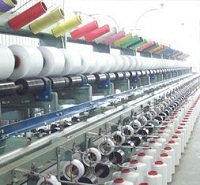 The primary textile sector is being hailed as the next big thing after readymade garments in Bangladesh. Though the sector had a dominating presence in the country’s manufacturing sector even earlier, its main role was relegated to meeting domestic demand under high protective tariffs and import quotas (pre-2000). As a result, products manufactured by this sector were not internationally competitive and exports were negligible or non-existent, reports Daily Star.
Entrepreneurial vision and new policies boost RMG
However, a confluence of entrepreneurial vision and evolution of contemporary policies changed all this in the 1990s. From a $624 million in FY 1990, RMG exports grew to $ 4.5 billion by FY 2000, registering a 600 percent rise in a decade. However, as RMG exports increased, intermediate inputs like yarn, fabrics and garment accessories had to be imported from countries like China, South Korea, India, and Pakistan. From $435 million in FY 1990 these imports grew to $3.2 billion in FY 2000. This stirred local textile industries to a massive business opportunity that was going waste.
Time benefits of local sourcing
To prevent this, the new generation of textile entrepreneurs started looking for new opportunities for domestic sourcing of raw materials and rising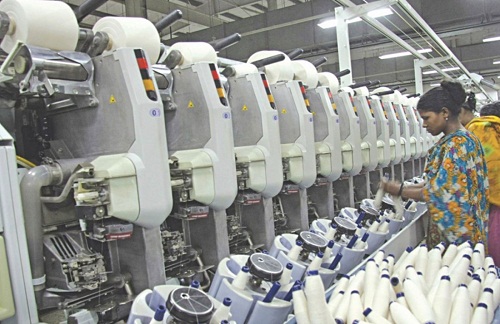 demand for textiles. The end of 1974 Multi-Fibre Arrangement (MFA) in 2005 created larger market opportunities. However, it also increased competition from well-heeled apparel producers. Bangladesh apparel factories began sourcing yarn from local suppliers. Local sourcing enabled them to avail intermediate inputs on time which drastically reduced their lead times.
Boost to backward industries spurs raw materials investments
In the mid-1990s a new generation of textile entrepreneurs emerged in Bangladesh which was ready to seize the opportunity created by the RMG industry. These entrepreneurs gave a boost to their investments in export-oriented textile projects aimed at producing yarn and fabrics. Easy availability of funds from banks, supportive taxes and government subsidies gave a boost to these backward linked industries including production of accessories like packaging, buttons, zippers, and labels.
Over the past three decades, the supply of intermediate inputs to RMG exporters has grown into a large industry in Bangladesh. The second major development after RMG, it is another popular way to describe the country’s industrial development.
As per BKMEA knitwear exporters source almost 80 per cent of their yarn requirement from local textile producers. Moreover the number of yarn manufacturing mills has doubled from 200 in 2000 to 433 in 2019 while spindle capacity has tripled to 13.5 billion kg of yarn. This growth is mainly attributed to the rapid expansion of knitwear exports from $1.5 billion in FY 2001 to $16.9 billion in FY 2019.
Production of denim fabrics in Bangladesh is an entirely export-oriented activity with 60 per cent of the annual denim requirement of 840 million yards supplied by 32 denim mills that have cropped up in the past 20 years. Other cotton-based fabrics and man-made fibre (MMF) production is also catching up to meet 40-45 per cent of demand coming from garment exporters, says BGMEA.
No longer a supporting industry
In the past 25 years, that Bangladesh textiles segment generated $21-plus billion industry that can no longer be relegated to just a sideshow to the $34 billion RMG. This is a result of introduction of new policies promoting backward linkage, says BTMA. This deemed export sector rolls everything including import substitution, export expansion, and export diversification into a single policy. These modern textiles are laser-focused on substituting massive amounts of imported yarn and fabrics. They are the embedded components of the final knit or woven garments that are deemed for exports
With the rise of RMG, embedment of principal inputs into non-RMG exports has also increased grown. The primary textile sector has become a predominant part of the textile industry. It can no longer be dismissed as non-competitive domestic industry











