


FW
H&M Home to launch new interiors collection
H&M Home plans to launch a new collection in collaboration with US fashion designer Diane von Fürstenberg, next year. The collection encourages consumers to express their personal styles in their homes. Diane von Fürstenberg has always been known for her strong use of print and color and the new collection brings together some of her vast archive of fashion prints and signature shades. While the wider H&M Home collection has a number of standalone stores, the offer also features in regular H&M stores and therefore helps drive visitor traffic to fashion departments at a time when fashion footfall is extremely challenged.
H&M Home is a design-driven interior brand, offering fashion-forward decor and accessories for every room and style. The assortment ranges from high-quality bed linen and timeless dinnerware to stylish textiles, furniture and lamps; with contemporary style and attention to detail at its core. H&M Home was launched online as a home textile concept in 2009. It enables interior lovers across the world to create their dream homes.
Van Heusen launches stain-resistant technology for dress shirts
Van Heusen has introduced a new technology when applied to fabrics repel both water- and oil-based stains, reports Women’s Wear Daily. Known as Stain Shield, the technology works on everything from coffee and wine to ketchup. If a stain hits the shirt, the wearer simply rinses it with water and the stain disappears. In its research, the company found that wrinkle-resistance is the number-one attribute sought by customers, with stain repellence coming in second. In fact, 70 percent of male consumers said they would buy apparel with stain-defense properties and 90 percent said they would pay more for it.
Stain Shield can also be applied to other woven products including sport shirts, pants, neckwear and other sportswear categories. In addition, the feel of the product is superior to other stain-resistant options. It is also breathable and answers consumer demand for sustainability since the brand’s manufacturing process is Bluesign-certified and the finish is certified to be free of harmful toxins. On a practical basis, because the shirts don’t stain, they won’t need to be replaced as often, Sirkin said.
Like other fashion brands, Van Heusen has been impacted by the pandemic. In the second quarter, its heritage division reported sales decline of 51 percent year-over-year due in large part to a drop in orders from department stores. Overall, the corporation lost $51.7 million in the period, compared with profits of $193 million last year.
Turkey’s textile exports reach $1bilion in October 2020
Turkey’s textile exports increased by 14.7 per cent in October 2020 compared to the same month of the previous year and by 9 per cent compared to September 2020, reaching a value of $1 billion. As per a Textile Intelligence report, from January-October 2020, Turkey’s textile exports decreased by 6.9 per cent to reached a value of $7.7 billion. Its overall exports increased by 5.6 per cent in October to $17.3 billion.
In October, the highest export market for Turkey’s textiles and raw materials was the group of 28 EU countries. Compared to October 2019, textile exports to these countries increased by 18.7 per cent to reach a value of $525 million. However, from January-October 2020, these exports declined by 5 per cent to $4 billion. Turkey’s exports to the Former Eastern Bloc Countries increased by 0.4 per cent in the first 10 months of the year to reach $863 million. Exports to these countries increased by 17.2 per cent on the basis of October alone and reached $860 million.
Exports to other European countries increased by 21.5 per cent to $74 million compared to last year, while exports to the Turkic Republics increase by 1.9 per cent to $257 million In January – October period, there were export losses in African countries, Middle East countries, Asian and Oceania countries, American countries and free zones. Germany continued to be the largest market with a share of 9.5 per cent. Exports to this country increased by 16.2 per cent in October and by 4.8 per cent in the January-October period. Germany was followed by Italy with 7.8 per cent, the US with 6.5 per cent, England with 5 per cent and Bulgaria with 3.8 per cent.
Uster Technologies launches standalone version of Uster Quality Expert
Uster Technologies has launched a new standalone version of Uster® Quality Expert which leverages the value of Uster® instruments to significant profitability gains. The new Uster® Quality Expert standalone version is targeted at textile mills that have invested in at least one modern Uster® instrument – such as the Uster® Quantum 3. The new machine helps users to benefit from automated quality management capabilities, powered by the brand’s well known application intelligence, with minimum investment. The value is then expanded in future with every additional product connected.
Uster® Quality Expert offers the same value-added reports, based on combined data from laboratory instruments and in-line monitoring systems. Remote access to production information, whenever and wherever needed, keeps users in the picture 24/7. Spinners can connect the Uster® mobile alerts app to Uster® Quality Expert and control mill operations from their mobile phones. It allows alarms to be managed ‘in the pocket’ – so users can stay safe and still control important production factors during the months under the ‘new normal’ conditions. The remote features will also be vital in driving a business upswing in future.
Second COVID-19 wave across Europe hits Bangladesh RMG sector
As second wave of coronavirus hits the US and Europe, Bangladesh's garment industry is again staring at loss. The country’s apparel sector, which had posted growth in exports in August and September, returned to the negative zone in October. The industry has also been hit by a drop in the product price against rising production costs. New work orders dropped in November and December in comparison with the same period last year, the entrepreneurs said.
As per BGMEA, Bangladesh exported garments worth $34 billion, or about 84 per cent of the total export earnings, in 2018-19. With help from the government’s stimulus package and the restart of the economies, the sector had begun to turn around its fortunes. However, export earnings began to dip in March 2020, with RMG export dropping to $2.25 billion that from $2.82 billion in the same month last year, after the pandemic began in China in late 2019. The factories were finally closed in late March with shipments halted. Garment exports plummeted by 85 per cent year on year to only $370 million in April.
Exports in the sector bounced back to growth in July and August bringing relief to the factory owners after a 6 per cent negative growth in June. Garment exporters, however, are losing hope again with the 7.78 negative growth in October.
Mango to reduce greenhouse gas emissions by 30 per cent
To reduce greenhouse gas emissions by 30 per cent in next 10 years, Spanish clothing retail giant Mango has joined the United Nations Fashion Industry Charter for Climate Actions. The charter lays down 16 principles for the fashion industry to come and work together to bring down its effect on the environment. These principles aim to minimize greenhouse gas emissions in factories, in the supply chains as well as in logistics. Mango too will analyze its carbon footprint so as to set science-based targets all through 2021.
Known for women’s wear, menswear and kid’s wear, Mango has been committed in its efforts to sustainability for several years now. Earlier this year, the retailer had launched its sustainable capsule collection ‘Second Chances’, which was a hit. It now plans to increase the use of recycled polyester to 50 per cent by 2025.
Gerber Technology unveils digital cutting solution
Gerber Technology has unveiled its latest digital cutting solution known as the Gerber Atria Digital Cutter. As per a Sourcing Journal report, the solution offers an in-depth look at the machine and its main value drivers. The cutter can produce 50 per cent more. Its accuracy allows manufacturers to nest products closer and cut with zero buffer, resulting in less material waste. Also, Atria cutter’s consumables—its knives, stones and bristles, for example—last longer, saving on both the cost of the replacements and downtime. Using an IoT-based intelligent sharpening system, the cutter can reduce the cost of consumables by up to $2,000 per single shift. It enhances the knife life three to four times and the stone life as much as three times.
The Gerber Connect IoT system monitors more than 160 data parameters, allowing Gerber to resolve nearly 85 percent of issues remotely, also saving on time.
Though presented as an end-to-end solution for mass production, the Atria cutter also can take a personalized e-commerce order and produce a finished product in less than an hour.
Mango to reduce greenhouse gas emissions by 30 %
To reduce greenhouse gas emissions by 30 per cent in next 10 years, Spanish clothing retail giant Mango has joined the United Nations Fashion Industry Charter for Climate Actions. The charter lays down 16 principles for the fashion industry to come and work together to bring down its effect on the environment.
These 16 principles aim to minimize greenhouse gas emissions in factories, in the supply chains as well as in logistics. Mango too will analyze its carbon footprint so as to set science-based targets all through 2021.
Known for its womenswear, menswear and kidswear, Mango has been committed in its efforts to sustainability for several years now. Earlier this year, the retailer had launched its sustainable capsule collection ‘Second Chances’, which was a hit. It now plans to increase the use of recycled polyester to 50 per cent by 2025.
Furla files for Chapter 11 bankruptcy proceedings
Furla USA has filed a voluntary petition for relief under Chapter 11 in New York. According to Women’s Wear Daily, the company made this decision in the wake of the pandemic and lockdown, which forced it to temporarily shut retail operations in March. It now plans to return to the American market with a leaner and improved organization.
In filings in New York bankruptcy court, Furla USA detailed the conditions that led to the filings, and outlined its plans in bankruptcy court. The brand held factors like declining foot-traffic, particularly in locations in Indianapolis and Boston responsible for its downfall. It plans to close four of those locations during the bankruptcy.
Besides closing 14 locations in March, the retailer also furloughed 90 employees during the time. It currently has about 34 full-time employees and 17 part-time employees. It plans to renovate its flagship store in Fifth Avenue besides collaborating with storied department stores such as Saks Fifth Avenue and Bloomingdale’s.
Ethical business practices, local craftsmanship boost Tunisian fashion trade
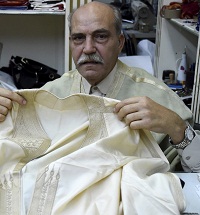 While the rest of the world is embracing fast fashion trends, Tunisian designers like Mechri are opting for environmentally conscious materials, reports Associated Press. They are ‘upcycling’ old or unwanted materials and incorporating high-quality fabrics into them. For instance, Mechri refurbishes old fabrics with local materials from Tataouine embroiderers. The designer says, fashion is an intelligent way to pay homage to local materials.
Hassen Ben Ayech, a 26-year-old former computer scientist, also values the importance of paying homage to one’s ancestry. Founder of the fledgling high-end brand Bardo, the designer aims to revive Tunisia’s heritage and traditional crafts to end the slow death of its culture in the face of globalization. The brand’s first collection is inspired by the famous Bardo palace and the rulers in the Tunisian monarchy that was abolished in 1957.
Weaving stories through organic materials
To expand the scale of sustainable fashion in Tunisia, Riad Trabelsi relaunched his French-Tunisian brand Basscoutur in 2018. The brand’s designs reflect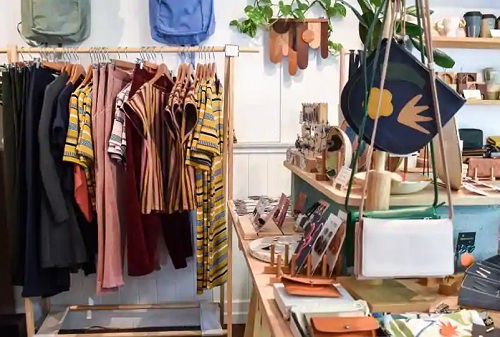 the complexity of modern Tunisian diaspora and see the sustainability concept become normative in the country. The brand has a growing client base in Japan and South Korea and plans to launch in Italy soon.
According to Sofia Guellaty, Founder, Mille World, an online platform spotlighting Arab youth culture, arts and fashion, Tunisian brands are using the concept of storytelling to make their garments stand out from the rest of the crowd. They are focusing on natural shapes and organic materials that are currently in demand in the international and local markets.
Flourishing textile trade to boost prospects
Though most Tunisian brands are not so eco-conscious, younger consumers are embracing sustainability to preserve their cultural identities. Tunisia has a flourishing textile industry which boosts businesses affected by the current pandemic. Balancing ethical industrial practices with community-driven craftmanship will reassure Tunisia of a better future.











