


FW
US Cotton Trust Protocol adds over 300 members
The US Cotton Trust Protocol has added over 300 brands, retailers, mills and manufacturers since it opened enrollment six months ago. These include Gap Inc and its lifestyle brands Old Navy, Gap, Banana Republic and Athleta as well as UK retailers Next and Byford. The Trust Protocol also added the first US mills, the first members in Latin America, and Advance Denim, as its members.
The Trust Protocol is a system for more responsibly grown cotton that has committed to six areas of sustainability in line with the U.N. Sustainability Development Goals. It underpins and verifies sustainability progress through sophisticated data collection and independent third-party verification, enabling members to better track the cotton entering their supply chain. Members also get an access aggregate year-over-year data on water use, greenhouse gas emissions, energy use, soil carbon and land use efficiency.
As per Dr Gary Adams, President, the Trust Protocol was designed to fit the unique growing environment in the United States. Members will avail of the critical assurances needed to verify that the cotton fiber element of their supply chain is more sustainably grown.
ORTA’s new collection focuses on climate change
ORTA Denim’s new Deeply Rooted collection focuses on issues of climate action and biodiversity stress, and antiviral protection. The collection includes the Gen H range that features 100 per cent plant based fibers and fabrics, from forest and field to jeans. The range includes a breakthrough denim fabric made with up to 30 per cent hemp, an important net-positive biodiversity crop, sustainably sourced from the leading hemp farm in France that certifies all the stages of production. With Gen H, ORTA perfects the authentic look and feel with the most resilient, soft and bio-positive ecofibers. The organic cotton used in the range are socially and environmentally certified by the Global Organic Textile Standard (GOTS), the world’s leading textile standard for organic fibers. With GEN H, you can wear your denim with an eco-conscience.
ORTA is continually innovating game-changing technologies that are antibacterial, anti-odor, moisture blocking, temperature-balancing, and UV protecting that are redefining denim performance, endurance and safety. Infused with sheltering technology, Denim Guard’s protective antibacterial and antiviral technology disrupts the contagious forces and inhibits its ability to adhere or inhabit your skin. While the Fresh Guard range offers triple benefits of balancing, UV protecting and 100 per cent odor managing, encapsulated with silver to eliminate bacteria.
NCTO’s 14TH AGM presents an overview of the textile industry
At its 17th Annual General Meeting, David Roberts, Chairman, National Council of Textile Organizations (NCTO), presented an overview of the US textile industry. Roberts outlined the industry’s efforts in producing PPE in the face of a once-in-a-life time pandemic. He also presented the US textile supply chain, economic, trade data, and NCTO’s 2020 policy priorities for domestic textile manufacturers. NCTO is Washington, DC-based trade association that represents domestic textile manufacturers
Roberts is CEO of Cap Yarns Inc, a South Carolina specialty yarn manufacturer and a leader in developing unique yarns for the knitting and weaving industry. NCTO’s annual meeting was held virtually on March 23-24.
The meeting also highlighted the US employs around 530,000 people in the textile industry in 2020. The country exported apparels and textiles worth $64.4 billion in 2020. Its exports of fiber, textiles and apparel were $25.4 billion in 2020. Capital expenditures for textiles and apparel production totaled $2.38 billion in 2019, the last year for which data is available.
International brands, retailers demand deferral in supplier payments
International retailers and brands are again demanding payments deferral of 120 to 150 days from Bangladesh suppliers on the pretext sales have dropped after Western nations reimposed lockdowns and tougher restrictions because of a surge in coronavirus infections. As per a Daily Star report, last year too, retailers and brands had sought a deferral in payments for 120 to 220 days, which resulted in severe financial crisis for suppliers, forcing many of them to close their factories and lay off workers.
AK Azad, Managing Director, Ha-Meem Group, is yet to receive its $1.4 million payment from JC Penney as the company was sold out. So far, Azad, Former President, Bangladesh Chamber of Commerce and Industry, has received only $0.7 million from JC Penney before ownership change.
Ahmed F Rahman, Managing Director, Kappa Fashions, said nine small and medium-sized garment exporters had together settled payments with their Hong Kong-based buyer at 43.5 per cent discount after nearly a year of negotiation. As per the final settlement, the Hong Kong-based company was supposed to pay the suppliers $1.5 million by February 19 this year. However, the buyer refused to pay saying was facing problems.
Rubana Huq, President, BGMEA confirms, regular demand for discounts and the deferment of payment are critical issues that the sector has to deal with.
Texprocil welcomes limited trade deal with the UK
Manoj Patodia, Chairman, Texprocil, has welcomed Ministry of Textiles’ initiative to sign a limited trade deal with the UK for textile and apparel products. Patodia said the UK is one of India’s largest trading partners amongst the European countries in textile & clothing (T&C) sector accounting for almost 24 per cent of the T&C products exported from India to the EU region. With UK signing trade agreements with 62 countries by January 1, 2021 including competing countries like Bangladesh, Pakistan, Vietnam, it becomes all the more imperative for India to conclude the limited trade deal without any delay as India stands to lose market share.
Patodia also mentioned that the proposed visit of Elizabeth Truss, UK Secretary of State for International Trade, provides an opportune moment for discussing the ‘limited trade deal’ which can get further cemented during the visit of Boris Johnson, UK Prime Minister in April.
BTPL expands workforce by over 50 per cent
Owner fo India’s largest state-of-the-art fabric processing facility, BRFL Textiles (BTPL), has expanded its workforce from 1,300 to over 2.000 employees within two months of raising private equity funding. The company has hired over 14 people in senior management roles across functions including a Chief Financial Officer, Processing In-Charge, Heads of various departments (HR, Designing & Product Development, Quality Assurance, IT, Compliance & Legal, Accounts & Finance and Taxation) and Senior Managers (in Sourcing, Sales, Marketing & Merchandizing), etc. The company has also introduced new employee focused initiatives including safety training, employee insurance assistance and an HR helpdesk to resolve employee queries.
Thorugh this expansion, BTPL aims to increase its annual processing capacity of 144 million meters (400,000 meters per day) over due course of time. Recently, the company completed an Rs 2.4 billion equity infusion from a consortium of marquee financial investors led by JM Financial India Fund II, Think Investments, etc.
BTPL was formed as a separate entity in August 2020 as part of a restructuring process undertaken by Bombay Rayon Fashions in which it hived-off its yarn dyeing & fabric processing units located in Tarapur. The company’s brands, including Bombay Rayon, BRFL, Linen Vogue, Giza Classe, Dickens & Browne and others, were also a part of the transaction.
AAFA welcomes new law to ensure transparency of online marketplaces
The American Apparel & Footwear Association (AAFA) has welcomed the introduction of the ‘Integrity, Notification, and Fairness in Online Retail Marketplaces for Consumers Act’. The bill aims to increase transparency and accountability in online marketplaces to combat the counterfeiting and stealing of goods sold through these channels. Introduced by Senator Dick Durbin (D-IL) and Senator Bill Cassidy (R-LA) — cosponsored by Senators Chuck Grassley (R-IA), Mazie K. Hirono (D-HI), Chris Coons (D-DE), and Thom Tillis (R-NC) — the INFORM Consumers Act urges online marketplaces to collect and verify basic business information from sellers before those entities can sell online.
In addition, the legislation also urges high-volume sellers to provide contact information to consumers. Removing seller anonymity on these platforms will create basic accountability measures that will help protect consumers from counterfeit goods and make it harder for criminals to profit from selling stolen or counterfeit merchandise.
AAFA is also a member of the Buy Safe America Coalition which represents a diverse group of responsible retailers, consumer groups, manufacturers, intellectual property advocates and law enforcement officials who support efforts at all levels of government to protect consumers and communities from the sale of counterfeit and stolen goods.
Textile Ministry supports free trade deal with UK
The Textile Ministry is supporting the Free Trade Deal between India and the UK which would include tariff reduction for textile and clothing items, resulting in possible gains for the sector.
As per the Hindu Business Line, Piyush Goyal, Commerce & Industry Minister, proposed to the UK . Secretary of State for International Trade Elizabeth Truss that the two countries could initially work on an interim pact on a preferential basis based on which both sides would reduce or eliminate tariffs on select items.
The Textile Ministry wants more market access for textiles and clothing under the proposed trade pact with the UK as the Indian industry has been complaining about not being able to perform to its full potential in the country because of tariff disadvantages.
As per figures collated by the Apparel Export Promotion Council (AEPC), total import of apparels in the UK in 2019 was $24.9 billion, of which India’s share was just $1.4 billion while Bangladesh’s share was at $3.6 billion.
SIMA urges for urgent removal of duties on VSF and Cotton
Ashwin Chandran, Chairman, The Southern Indian Mills’ Association (SIMA), urged Prime Minister Narender Modi to remove both the anti-dumping duty on VSF and also the 10 per cent import duty on cotton. He said that both the high value added market segments account around Rs.150,000 crore business size and employ over two million people, fetch GST revenue of Rs.5,000 crore and also forex earnings to the tune of Rs.75,000/- crore apart from catering to the value added segments.
Chandran said that VSF and superfine cotton value chain supplies to the international brands, and the price crisis is being utilized as an opportunity by the neighboring countries like Bangladesh, leading to an increase in imports. He stated that India has been mainly relying on the American PIMA and Egyptian GIZA and other ELS cotton for the domestic and international markets apart from the home grown DCH cotton. The industry has been mixing the imported cotton with the indigenous cotton, as the availability of Indian cotton is not even 20 per cent.
The industry has also been using Bunny cotton grown in Telangana and other regions for mixing with the imported cotton and produce fine count yarns and its products. The DCH cotton was costing around Rs.52,000/- per candy of 355 kgs during October 2020 and Rs.65,000/- in January 2021 and the same got increased to Rs.73,000/- after the levy of 10% duty. This has greatly impacted the entire value chain, added Chandran.
Higher quality, better prices boost Vietnam’s ranking in global apparel market
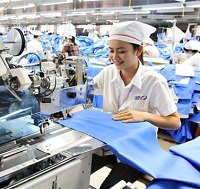 Superior quality fabrics and better experience in making high-end apparels are helping Vietnam outperform Bangladesh in apparel exports to the European Union and United States, says a Daily Star report. A 2020 research by the Centre for Policy Dialogue (CPD), notes, Vietnam fetched $2,157.90 for 100 kg of T-shirts in the EU market while Bangladesh fetched $ $1,091.50. In the US too, Vietnam’s apparel exports overtook Bangladesh’s shipments.
Higher compliance, human rights driving Vietnam export
Besides quality of fabrics, better prices are also driving up Vietnam’s exports to these two markets, says Khondaker Golam Moazzem, Research Director, CPD. The higher quality of fabrics used by manufacturers assures them of better prices while penchant for making upscale products enhances their ranking in World Bank’s ease of doing business index. Vietnamese manufacturers are also known for their higher compliance standards, protection of human rights and environmental protection practice. They mostly manufacture garments for upmarket consumers.
Another advantage is Vietnam’s apparel manufacturers offer lower lead times. They can ship garments to the EU in just 30 days, while Bangladesh takes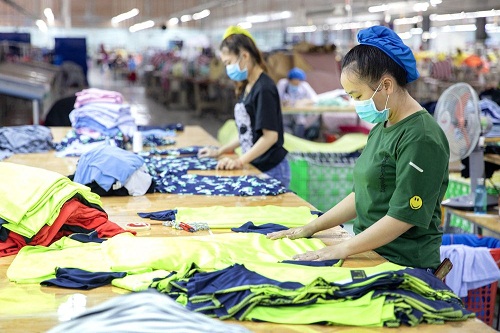 90 days. Vietnam is also closer to Europe than Bangladesh, which makes it the most preferred destination for international retailers and brands.
Low capacity, negative image impact Bangladesh exports
Comparatively, Bangladesh apparel manufacturers suffer from low scale and capacity. Also, a lack of a deep seaport increases their business operation costs and delivery times, says AK Azad, Managing Director, Ha-meem Group. He urged manufacturers to improve the quality of products as buyers do not want to change their sources frequently due to the pandemic.
K M Rezaul Hasanat, Chairman and Chief Executive Officer, Viyellatex Group, opines, a country’s image plays an important role while fixing prices. Vietnam is known for outwear garments made especially for people living in cold climates. The country also offers high-quality blazers and woven formal shirts and trousers to customers in the EU and US markets.
Bangladesh is known for basic garments like T-shirts and trousers. The country has just eight blazer making factories and very few factories for making hi-end apparels and their output volume is also low, says Kazi Iqbal, Senior Researcher, Bangladesh Institute of Development Studies.
Bangladesh’s image is of a supplier of lower priced products, adds Rubana Huq, President, BGMEA. The country still manufactures cotton garments while the rest of the world has moved to man-made fabrics. It also has to cope with various demands from government, she says. As a result, the country ranks 168th in the Ease of Doing Business index amongst 190 countries and Vietnam ranks 70th.











