


FW
Japan’s March apparel sales up
According to Japanese Chain Stores Association (JCSA), apparel sales in the country increased to 72,027.55 million yen ($665.10 million) in March ’21 as against 47,561.47 million yen ($432.51 million) in February ’21. Growth could be attributed to an increase in total number of shops associated with JCSA in March ’21. The number of shops that remained open increased from 11,014 shops of 56 companies in February to 11, 789 in March. Of total revenues, menswear category registered revenues of 11,519.80 million yen ($106.37 million) revenues during March ’21, noting 21.40 per cent surge on M-o-M basis. On a Y-o-Y basis, menswear sales grew by 6 per cent as compared to sales figures seen in March ’20. Women’s wear revenues increased 53.70 per cent to 18,350.70 million yen ($169.45 million) in March ’21 on M-o-M basis and 12.30 per cent growth on Y-o-Y basis.
All other type of clothing including kid’s wear and unisex products too grew significantly by 61.30 per cent on monthly note to 42,157.07 million yen ($389.27 million), while the growth on Y-o-Y note was 4.70 per cent.
New Age fit-tech tools assure customers of better shopping experience
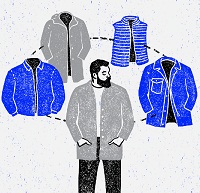 Fitting room closures due to the pandemic has left most shoppers guessing the size of their garments, spiking rate of garment returns. To help these shoppers find their right fit, a number of new fit-tech startups are emerging.
Artificial intelligence at stores
FitMatch one such startup, opened a first-of-its-kind fit studio in Chicago’s Oakbrook Center. As per Vogue Business, the studio scans people to make product recommendations. As per Jessica Murphy, Co-Founder, Fit Analytics, FitMatch applies artificial intelligence in physical stores of brands like Levi’s, Ralph Lauren and Kate Spade.
The startup’s pilot projects in Houston and Miami attracted millennials and Gen Z customers, with the average age being 27, says Haniff Brown, Founder and CEO. They collected more than 12,000 customer measurements and more than 1.8 million unique data points, while 80 per cent of shoppers who entered the studio were measured. Customers using this tool can buy items online or find them in-store. The startup also developed a concierge-style service where the store brings customer-selected items to the fit studio.
Four times increase in conversions
Online hi-tech tool, True Fit has over 180 million registered users, who provide information on height, weight and the size and information on their best-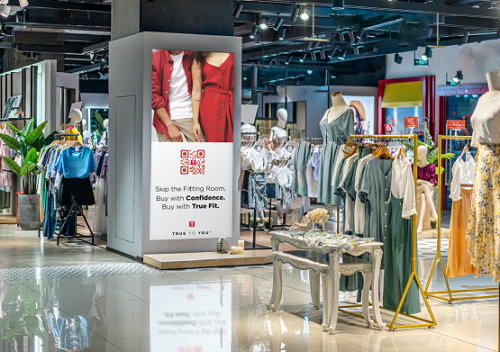 fitting pieces of clothing. Brands that adopt the True Fit tool have recorded a four times increase in conversions double-digit decrease in fit-related return rates, The platform adds about 2 million new users every week, informs.Jessica Murphy, Co-Founder Fit Analytics
True Fit is partnering retailers to install a new app in stores to help customers scan QR codes or bar codes to see personal recommendations, or access a personalized catalogue from within the store. Retailers who have adopted this tool include Macy’s, Ralph Lauren and Lane Bryant.
Fit Analytics, which makes size recommendations based on an online survey has adopted an online quiz for in-store associates. The startup has helped Brazilian women’s wear brand Amaro increase conversions by 2 per cent and decrease returns by 4 per cent.
Changing tastes make mainstream adoption challenging
Brands are also providing fitting technologies to in-store associates. The digital measurement tool launched by 3D Look has been adopted a lot of companies. Tailored Brands adopted 3D Look’s online consumer facing tool to help tailors measure customers with an iPad, says Whitney Chathcart, Co-Founder and Chief Strategy Officer
Even as adoption off these technologies is increasing, they are yet to become mainstream as fashion specifications keep constantly and syncing all together at one time is challenging, opines, Karen Katz, CEO, Neiman Marcus. According to Fokke de long, Founder and CEO, Suitsupply, a Dutch suiting brand, sometimes, even simple technology works. The company has launched ‘Safe Shopping Screens’ that tailors can reach through. These mirrors provide customers with a sense of familiarity as they gear up for a new shopping experience.
VF Corporation to sell the occupational portion of its Work segment
VF Corporation has entered into a definitive agreement to sell the occupational portion of its Work segment to a subsidiary of Redwood Capital Investments, LLC, a diversified holding company.
The occupational workwear portion of VF’s Work segment includes the following brands: Red Kap®, VF Solutions®, Bulwark®, Workrite®, Walls®, Terra®, Kodiak®, Work Authority® and Horace Small®.
The sale does not include the Dickies® and Timberland PRO® brands.
The transaction, which is expected to close in the first quarter of fiscal 2022, is subject to customary closing conditions and regulatory approvals for a closing to occur. Terms of the agreement were not disclosed.
Barclays is serving as exclusive financial advisor to VF on the transaction. Davis Polk & Wardwell LLP is acting as legal advisor. J.P. Morgan is serving as exclusive financial advisor to Redwood Capital Investments and Kirkland & Ellis, LLP is acting as legal advisor.
Walkaroo expects 25% growth despite COVID-19 disruptions
In the current financial year, footwear brand Walkaroo expects to grow by 25 percent despite the COVID-19 disruptions.
As per Fashion Network, Walkaroo clocked revenue of Rs 1,200 ($161 million) in the last financial year and expects to surpass that figure amid high demand for footwear coupled with the sharp decline in Chinese imports.
V Noushad, Managing Director, says, reduction of Chinese footwear in the domestic market offers an opportunity for Indian manufacturers to produce kids, sports and knitted shoes. He highlightsthat the use pattern of Indians is slowly shifting from slippers to closed sandals, shoes and knitted footwear. Walkaroo started offering knitted products very early and has increased its capacity because of the faster growth in this area.
Walkaroo is part of Kerala-based VKC Group, one of the largest footwear manufacturers in India. The brand has exclusive outlets and also sells through distributors and retailers across the country. Currently, 70 per cent of Walkaroo’s business comes from the South while East, West and North contribute 10 per cent each.
Browzzin plans $5million investment in India
Fashion-based social commerce platform Browzzin plans to invest $5 million in India to catalogue Indian and international labels and capitalize on the growing fashion influencer ecosystem.
Co-founded by Harry Markl, Former Managing Director, L Catterton, Browzzin,sets the stage for fashion influencers in the country who can use the app to curate fashion looks and drive traffic for brands and marketplaces by letting users discover similar or featured brands while getting paid for it. As per a Live Mint report, the Browzzin catalogue will offer 3 million products in India, including both Indian and international fashion labels and high street brands.
The catalogue is continuously updated for real-time availability. Apart from tie-ups with large marketplaces such as Amazon, Flipkart, and Myntra it is also eyeing tie-ups with independent Indian brand. Since its launch, the app has registered more than 250,000 downloads and is targeting to reach more than 5 million users this year in India.
The app essentially lets influencers upload their curated fashion looks from their phone or directly from Instagram. Browzzin's AI will scan partner brands and platforms for similar products. Browzzin will scrape through over 12 million products worldwide or 3 million products for India and show users similar products. Influencers in return get commissions from Browzzin on sale on of each product or even similar-looking products.
US’ PPE imports increase 380.20 per cent during Jan-Feb ’21: OTEXA
US’ imports of PPE increased 380.20 per cent on a Y-o-Y basis during the January-February 21 to $382 billion, reports OTEXA. Import of nonwoven disposable apparels grew 290 per cent during the period to 423.31 million under HS Code 6210105000/.The share of these apparels in total PPE import value of the US was 11 per cent.
During the period, US imported face masks, clubbing worth $ 860.44 million. They constituted 22.50 per cent of the total import value of PPE by the country. The import of plastic/rubber gloves valued $2.38 billion and constituted 62.40 per cent of overall PPE import value.
Demand for innerwear, kids 8wear growing says, TEA
S Sakthivel, Executive Secretary, Tiruppur Exporters Association (TEA) says, exporters in the city are seeing increased demand for innerwear, children wear, long garments from overseas markets while demand for fashion garments has declined. The opening of the US and European markets has not only smoothened operations and also improved domestic market, he adds. Demand for masks and personal protection equipment (PPE) has declined. Last year Tirupur hosiery units exported garments worth Rs 25,150 crore, a decline from Rs 27,250 crore exported during 2019-20,
Though yarn and export of other inputs have increased, the units have been unable to pass on the benefits to buyers as they are not allowed to operate due to the lockdown, Sakthivel adds. TEA set up in 1990 in Tirupur has always been quick in taking up the issues and stand in forefront to get them addressed. TEA is representing as on August 2020, TEA is consisting of 1119 knitwear exporters as members.
Second LCA rates CmiA cotton as being eco-friendly
The second Life Cycle Assessment (LCA) of the Cotton made in Africa (CmiA) initiative stated the environmental footprint of cotton produced by CmiA is excellent. As per this assessment, CmiA cotton contributes less to climate change than the global average, with only 1.24 tonne of CO2 equivalents being released per tonne of harvested CmiA cotton fibres versus the significantly higher global benchmark of 1.43 tonne. This is largely because CmiA farmers use relatively little fertilizer and cultivate their cotton under rain-fed conditions only. In addition to protecting surface and ground water, rain-fed agriculture saves energy, since there is no need to power the water pumps otherwise required for irrigation.
In the course of the assessment, CmiA-verified cotton companies from Côte d’Ivoire, Cameroon, and Zambia completed questionnaires on their practices, and data was collected on factors like average farm size, crop yields, and fertilizer application rates.
In this year’s LCA, the Cotton made in Africa (CmiA) initiative supplemented the usual criteria with a new key parameter: the impact of cotton farming on biodiversity. The results of this assessment are considered to be representative of CmiA cotton as a whole because more than half of all CmiA cotton is produced in the three countries under study.
Global online spending to increase 20 per cent in 2021
The online spending of global shoppers is expected to increase by 20 per cent in 2021 says a new Adobe report. This will further add pressure to supply chains as they struggle to keep up with a surge in demand. Adobe expects global e-commerce sales to reach $4.2 trillion this year driven by demand in the United States, China and Britain. Online sales of items from toys and video games to furniture totaled $876 billion in the first quarter of this year.
Shortage of vaccines and new COVID-19 waves have compelled retailers to keep their physical stores shut and invest more in online platforms. Around 65 per cent of Nike’s stores in Europe, the Middle East and Africa opened last month while its digital sales surged to 60 per cent in the most recent quarter. In America, online sales surged 39 per cent to about $200 billion in the first quarter, with growth spiking in the three weeks following President Joe Biden's $1.9 trillion COVID-19 relief bill. However, growth wasn't as impressive in other countries like Japan which saw only modest ecommerce sales.
Lululemon Athletica forays into clothing resale
Lululemon Athletica has forayed into the resale clothing market with the launch of a plot program in California and Texas stores. As per a Forbes report, the program aims to determine the viability of this new line of business. Dubbed ‘Like New,’ the test will give owners of Lululemon’s clothing an opportunity to trade in previously purchased merchandise. Lululemon plans to invest one hundred percent of all profits generated through this program into its other sustainability initiatives.
The trade-in phase of the program will kick off next month. Lululemon will begin selling traded-in items online in June. The retailer will only resell “like new” items. The chain will clean all merchandise it collects, offering for purchase only those items that meet its quality standards and recycling the rest. The chain will analyze customer response and feedback before it seeks to scale the pilot up or to incorporate it into its standard business model.
The Lululemon test program will put the retailer in the same space as a growing number of businesses that are taking similar approaches. Last week. Nike launched Nike Refurbished, a program that enables sneaker owners to return their shoes within 60 days of purchase for resale. The items selected are cleaned and sold to customers at a discount to buying the same shoes brand new. Nike is initially offering Refurbished shoes for sale in 15 stores before it further expands later this year and in the future.











