


FW
Over 50 per cent Canadians will shop for apparels post lockdown: NPD Group
Over 50 per cent of Canadian consumers plan to buy new clothes once lockdown restrictions are eased, says a report by the NPD Group. Two-thirds consumers aged 18 to 34 plan to go apparel shopping post lifting of the lockdown. The pandemic plunged apparel sales in Canada by 86.7 per cent in April 2020 with retailers including Le Chateau Inc, Reitmans (Canada) and Groupe Dynamite filing for bankruptcy. Sales picked up in March when lockdowns were eased briefly. Sales of women’s jeans increased by one per cent compared to March 2019.
The post-COVID clothing trend in Canada will be hybrid comfort and fashion, says Tamara Szames, Retail Industry Advisor, NPD Group. Denims will be softer and baggier with wide-cut legs, she adds. Post reopening, older shoppers will flock to stores while under 40s will continue to shop online, she adds.
Chinese immigrants flee Italy’s textile town Prato on COVID-19 fears
Worn down by COVID-induced recession and lured back to China by its greater success in combating the pandemic and brighter economic prospects, Chinese immigrants in Italian textile town Prato are returning back to their home country. As per a Business of Fashion report, many immigrants are leaving Italy due to economic hardships rather than fear of contagion, as Italy’s low budget textile industry has been hammered by repeated lockdowns.
The virus outbreak led to 8.9 per cent contraction in Italian economy last year and a loss of half a million jobs in the 12 months to March. While growing number of Chinese are leaving Prato, new arrivals have dried up, according to a town council manager, who cited school enrolment numbers.
Up to 2019, around 200 new Chinese pupils per year were enrolled in Prato’s schools while in 2020 and 2021 the figure was practically. Prato’s Chinese community has been hard hit by the recession as many worked in the shadow economy. This does not make eligible for government support based on businesses’ tax returns for the previous year.
BASF expands e3 Sustainable Cotton Program
BASF has expanded its e3 Sustainable Cotton Program to brands, retailers, mills and other value fiber value chain companies. As per Home Textiles Today, these parties can now contribute to the funds that will be distributed to e3 Sustainable Cotton farmers in addition to the $2.50 per bale premium provided by BASF.
The program, launched in February, was first joined by Vidalia Mills and General Standard. It currently uses most of its cotton for making apparels and denim. Currently, most of the cotton in the program is being used for apparel and denim brands like Rag & Bone which is designing an e3 denim line that will focus its marketing around the Louisiana farms that sell their e3 cotton to Vidalia Mills. Wrangler has already launched the Wrangler Rooted denim collection, made with 100 per cent sustainable cotton from Alabama and features the farmer’s signature on the inner pocket.
BASF expects more brands to join this program that has so far enrolled 660 cotton growers. The company commits to track eight sustainability measures on cotton farms, including their irrigation and water use, pesticide management and usage, soil conservation and fertility management, energy use and conservation, work health and safety, identity preservation and soil carbon.
India’s textile and apparel exports to reach $82 billion in 2021
India’s textiles and apparel exports are expected to grow 12.06 per cent CAGR to touch $82 billion in 2021. As per IBEF reports, India’s RMG exports reached $9.50 billion in January 2021 from April 2020. In January alone, India exported RMG worth $ 1.30 billion. Exports of apparel and clothing accessories knitted or crocheted reached $1.32 billion during April–July 2020 and $ 586.49 million in July.
Exports of non-knitted or crocheted apparels and accessories reached $1.27 billion during the April-July 2020 period and $504.98 million in July alone. The total value of cotton yarn, fabrics and made-ups exports from the country stood at $947.58 billion in February 2021. During April 2020-February 2021, these exports stood at $8.71 billion.
To promote export of readymade garments and made ups, the Indian government recently increased Merchandise Export from India Scheme (MEIS) rates from 4 per cent to 6 per cent under the mid-term review of Foreign Policy 2015-21.
Products rather than brands to drive future growth in luxury market
 The global online luxury market was the first to recover from the impact of COVID-19 pandemic. As per Bain & Luxury Study 2021 Spring Update report, driven by China’s growing appetite for luxury goods coupled with robust online business and recovery of the US market, the online luxury market returned to growth in the first quarter of 2021, reporting a flat to 1 per cent gain in revenues compared with 2019.
However, the market’s outlook for 2021 mainly depends on two possible scenarios. As a per a Women’s Wear Daily report, the market is either expected to grow by 5 per cent and record €280-€295 billion sales or is expected to fully recover in 2022 only. In 2021, the market is expected to record sales between €250 billion and €265 billion.
New trends shaping the market
The pandemic has forced luxury brands to innovate rapidly and switch to digital platforms, says Claudia D’Arpizio, Partner, Bain & Company. The analyst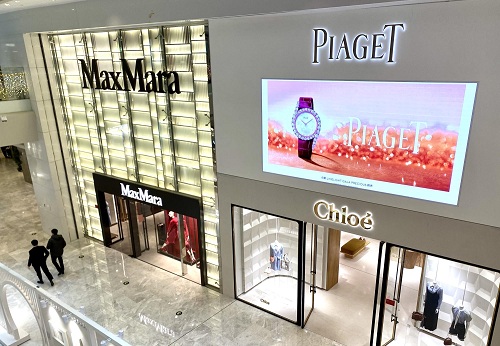 estimates 85 per cent luxury purchases in 2021 were digitally influenced. The rise in digital literacy of luxury customers is leading to a sales spike, explains Federica Levato, Partner, Bain & Company. The rise of new shopping hubs is impacting retail channel mix with most department stores reorganizing their operations. Levato advises brands to be aware of emerging trends and also stay connected to their roots.
Levato expects China to lead the growth in online luxury market. More activity in the apparel market is expected as people start dressing up for work again. However, future growth will be determined more by products than brands, Levato opines. A strong product can help attract consumers more than the brand itself. Consumers may have the best brands but they are missing out if they don’t have the bestselling product in the market, Levato adds.
Growing emphasis on brand ethics
To increase customer base, brands are also widening their price range. They are including entry-level products as well as high-end items and new categories in their portfolio, says Levato.
This has increased the importance of brand customer’s ethics. They are opting for brands upholding the values of sustainability, affiliation and belonging. They are evaluating brands for behavior towards workers and the environment. Consumers are also curbing waste by opting for secondhand goods. Bain & Company Report estimates, the online second-hand luxury market grew from €26 billion in 2019 to €28 billion in 2020. The growth was driven by both entry-level younger consumers and high-end shoppers, it adds.
TRIPS waiver ensures equal access to COVID vaccines, testing kits for workers
 Finalized in January 1995, the Agreement of Trade-Related Aspects of Intellectual Property Rights (TRIPS) establishes minimum standards for protecting and enforcing all forms of intellectual property rights (IPR), including those for patents. In October 2020, the Indian and South African government proposed a temporary waiver of this agreement to simplify laws related to manufacturing of medical products needed to control the spread of COVID-19.
Till date, the proposal has been supported by over 100 governments including the US and New Zealand. However, the EU, UK, Canada and Japan governments are opposing this proposal, delaying manufacturing of COVID-19 PPE, testing, kits and vaccines required to protect workers in global garment supply chains. In COVID-19 era, business recovery of global brands mostly depends on their workers who continue to work in factories that offer no protection from the infection. If workers are not protected against the virus, they may be infected with emerging new variants resulting in repeated lockdowns and factory closures.
Blocking workers’ rights to health
Garment manufacturing countries are currently facing an acute shortage of COVAX-used to treat COVID-19. Though many of countries have made huge donations to increase vaccine manufacturing, these cannot substitute for the TRIPS waiver. The Clean Clothes Campaign, a global network of labor rights groups spanning across 44 countries, warns, by blocking TRIPS waiver proposal these governments are blocking their workers’ rights to health. Sharing technologies to expand vaccine manufacturing
The TRIPS waiver helps protect the health and safety of garment workers engaged in global supply chains of international brands and retailers, including those headquartered in the US, UK, Europe, Japan, Canada, and Australia. Workers’ unions and labor and human rights group - People’s Vaccine Alliance has therefore urged governments to support the support the TRIPS waiver proposal.
The alliance has also urged governments to expand the production of COVID-19 vaccines, treatments, testing kits, and personal protective equipment by sharing technologies and participating in the COVID-19 Technology Access Pool. It also urges global brands having a reliant business model to ensure that all their garment workers have an equal access to COVID-19 vaccines. According to the Alliance, brands need to publicly support the TRIPS waiver proposal to ensure equal access to COVID-19 vaccines and testing and treatment kits. The Alliance has collaborated with the Clean Clothes Campaign Network for this initiative.
Texworld Evolution Paris to showcase 7,000 fabric samples
To be held from July 05-09, Texworld Evolution Paris will showcase almost 7,000 samples by more than 150 manufacturers. This event will adopt the format of professional meetings, imagined and successfully developed by Messe Frankfurt France.
A total of 7,000 samples from manufacturers in ten countries will be directly accessible to visitors. Chinese, Turkish and Indian textile products to discover Chinese, Turkish, Bangladeshi, Korean, Polish, Pakistani and Indian manufacturers have already registered for this session. Taiwan will participate for the first time.
The digital tablets made available to visitors will once again facilitate direct contact with manufacturers for expressions of interest, requests for samples or quotations. A winter 2022-2023 trendbook to build the collections As every year, and even more so with the specific format of the Showroom, the trendbook drawn up by Louis Gérin and GrégoryLamaud, the artistic directors of Texworld Evolution Paris, will serve as the architecture for the event.
Clean Clothes Campaign signatories urge companies to mitigate pandemic effect
Organizations of the Clean Clothes Campaign network have urged apparel companies to take action to mitigate the pandemic’s devastating effect on workers.
Thecampaign network urges apparel companies around the world to realize that their supply chain responsibility extends to the garment workers and they should honor their signed contracts and payment terms while allowing for extended production timelines
They should ensure that all workers in the supply chain are paid their legally mandated wages and benefits, including severance payments and arrears, sick pay and payment of full wages during any quarantine, isolation, or furlough
Ensure that factories adhere to ILO and WHO Occupational Safety and Health (OSH) protection standards and have access to adequate protective equipment (PPE), physical distancing, right of removal from danger, and worker participation mechanisms, adaptation of transport systems, the right to refuse unsafe work, and hazard pay.
Companies should also ensure workers’ right to organize is respected and that suppliers work with unions and worker organizations in addressing these issues
J Crew appoints Brendon Babenzien as creative director for menswear segment
New York-based fashion retailer JCrew Group has appointed former Supreme design director Brendon Babenzien as the new creative director of JCrew Men’s.
In his new role, Babenzien will lead menswear design at the JCrew brand to redefine the iconic American label’s aesthetic in collaboration with recently appointed JCrew Group CEO Libby Wadle. According to Fashion Network, he will bring his liberal points of view and visionary focus to the position.
Babenzein spent more than a decade as design director at Supreme, a period during which his creative vision helped turn a relatively niche skate brand into a global streetwear powerhouse. In 2002,he founded the menswear brand Noah, before leaving the streetwear label definitively in 2015. He then relaunched Noah in collaboration with his wife, Estelle Bailey-Babenzien. The brand, which adopted a greater focus on sustainability with its second launch, now boasts locations in New York, London, LA and Tokyo.
JCrew Group, which also owns the Madewell brand, filed for bankruptcy in May last year. It emerged from the process in September with Wadle taking over as the CEO in November.
AAFA publishes 22nd edition of RSL
American Apparel & Footwear Association (AAFA) has published the 22nd edition of the Restricted Substance List (RSL). As an open-industry resource available to both AAFA members and the broader community, the RSL supports the industry by providing a reference of all banned and restricted chemicals and substances for finished apparel, footwear, accessories, and home textile products, identifying the most restrictive regulations worldwide. The report also offers an Appendix on Reporting that covers the U.S. states whose laws require reporting of chemicals in children’s products as well as European reporting rules.
The 22nd edition of the RSL covers 12 categories with more than 250 chemicals and is updated to reflect additions or changes to regulations and laws that restrict or ban certain chemicals in finished apparel, footwear, and home textile products. First published in 2007, the RSL is produced by AAFA’s RSL Task Force, which reviews and updates the list regularly to reflect the latest global regulatory changes.











