


FW
BGMEA requests for extension of EBA scheme
Faruque Hassan, President, BGMEA has requested Switzerland to extend the EBA (Everything but Arms) scheme under its Generalized System of Preferences (GSP) program for 10 years for Bangladesh's smoother transition.
The request was made at the recent meeting held between Hassan and Nathalie Chuard, Ambassador of Switzerland to Bangladesh, Thomas Baumgartner, Head, Political, Economic and Cultural Affairs at BGMEA office in Dhaka.
Syed Nazrul Islam, First Vice President, BGMEA and Md Shahidullah Azam, Vice President also attended the meeting. The discussions covered issues pertinent to the readymade garment industry in Bangladesh, and its progress in the area of social and environmental sustainability.
It discussed progress of garment industry in the area of social and environmental sustainability, highlighted the future potential of the industry. Leaders also talked on the need for an industry upgrade particularly in the area of skills and efficiency enhancement, technological expertise, and diversification of products.
The BGMEA sought support from the embassy regarding the need for unified code of conduct for the social audits and collaboration to promote the untold stories of the industry's transformation.
Bangladeshs: Fall in volume compels manufacturers to accept all work orders
Decrease in work orders from the US is compelling Bangladesh RMG manufacturers to accept all types of work orders, says Fazlul Haque, Managing Director, Plummy Fashions. He expects the spike in coronavirus infections to delay business recovery by six-seven months. Haque also expects RMG exports to decline if the COVID-19 doesn’t rapidly improve. As per Textile Focus, US apparel imports declined 25 per cent in 2020. In the first two months of 2021, imports improved slightly as COVID cases fell. Imports from Bangladesh also increased during these two months.
However, due to a new spike in infections, imports again declined. OTEXA stats show, US imported $64.07 billion (6,407 crore) of clothing products in 2020. In the first two months of 2021, US’ clothing imports declined 13.85 per cent to $10,91 billion. In the first two months of 2021, imports from Bangladesh declined to $1 billion (Rs 8,500 crore). After China and Vietnam, Bangladesh has become the third biggest exporter of clothing to the US market.
In January-February 2021, US’ imports from Vietnam declined 12.9 per cent to $2.09 billion. Over the corresponding period of 2020, Vietnam exported clothing worth $2.34 billion to the US. Imports from India and Indonesia to the US also declined during these two months. India’s imports declined 21.89 per cent to $590 million.
Uplifting workers’ condition can help Bangladesh improve position in world RMG market
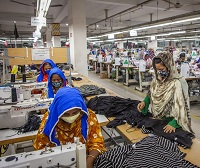 Bangladesh has come a long way since the Rana Plaza tragedy in 2013. The building collapse, which killed 1,134 people, majority of whom garment workers compelled Bangladesh to reflect on its safety measures for RMG workers safety. Bangladesh soon adopted the Accord on Fire and Building Safety agreement, paving the way for the creation of Alliance for Bangladesh Worker Safety. It also established the LEED Certified Green Factories program to acknowledge pioneers of energy and environmental design in the country.
Lack of contracts increases labor vulnerability
Yet, the RMG sector continues to face many health and safety challenges. An Asia Foundation report shows, workers in the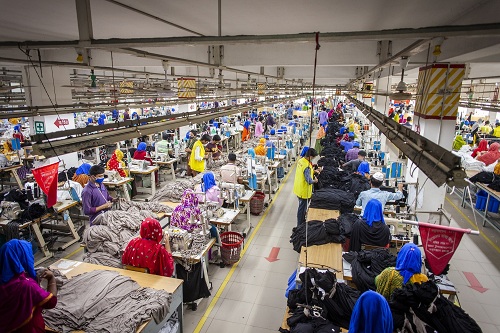 country are mostly ignorant of their legal rights. They are often hired without proper contracts or appointment letters by factories which makes vulnerable to easy layoffs during challenging times. Also, workers are often underpaid, especially for overtime. Around 30 per cent workers in a research by the Centre for Policy Dialogue highlighted increased workplace demands without growth in payments.
Violation of women laborers’ rights
Workers also often face discrimination on the grounds of religion, race, caste, sex, or place of birth. Most of these workers are women who are often paid lesser than their male counterparts. They are also often denied promotions, indicates a 2014 study by the International Growth Centre
Many employers in Bangladesh claim their factories are adequately equipped to ensure workplace safety. However, a new study points to the contrary. According to this study, only 68 per cent workers believe their workplace can handle emergencies.
The Labor Act introduced by Bangladesh in 2006 granted compulsory maternity leave for women factory workers. Yet, 66 per cent women laborers in the country are unaware of their rights and continue to work during the statutory leave period of their pregnancy. Around 24 per cent workers are also denied sick leave or permissions to take lunch or bathroom breaks.
A slow transition to better governance
A reason for this is lack of unified voice amongst Bangladesh workers to express their concerns to employers. The Bangladesh government is addressing this issue by collaborating with German development agency GIZ on projects such as PSES to promote social and environmental standards in the industry. Sustainable business organization BSR has also launched a project called HER to focus on women’s health, financial inclusion, and gender equality. International Labor Organization has launched two projects; the Better Work initiative to improve working conditions in the RMG sector and SDR project to improve social dialogue and industrial relations.
Bangladesh is slowly moving away from its overdependence on cheap labor which made it one of the least productive garment industries in Asia. Uplifting its workers’ conditions can help the country improve its rankings in the global RMG market
Uniqlo launches new LifeWear collection in India
Global apparel retailer Uniqlo launched its Uniqlo LifeWear collection in India. As per Indian Retailer report, the collection was launched under an ‘Everyday Performance’ concept. It has been created in joint venture with Sweden’s top athletes to support health and better living, maximizing comfort and performance in everything from working out to a life on the go.
The collection, Uniqlo+ was inspired by direct input and testing feedback from Uniqlo Team Sweden athletes, as well as other UNIQLO global brand ambassadors. Items in the new collection optimize comfort, even in sweltering summer conditions, so people everywhere can lead healthier, better lives.
Uniqlo+ reflects an enduring commitment to functionality and sustainability. Fabrics used incorporate recycled polyester made from collected PET plastic bottles and polyester fibers made from renewable biomass. Parkas in the collection employ fluorine-free water repellents. To create the knitwear, UNIQLO also used techniques that minimize material losses.
Q1 revenues of Ted Baker fall by 20%
The first quarter revenues of upmarket British retailer Ted Baker fell by 20 per cent due to coronavirus restrictions during the period.
The British company also reported an underlying pretax loss of €59.2 million ($83.53 million) for the year ended January 30, compared to a €4.8 million profit the previous year. Its average pretax loss amounted to €76 million, according to Eikon data from Refinitiv.
Ted Baker's annual sales also plummeted 44 per cent to €352 million partly due to its focus on formal and occasion wear. E-commerce sales rose by 22 per cent to €144.9 million pounds.
The London-listed company, under new boss Osborne, has been working on winning back customers and investor trust after a string of setbacks that followed the departure of previous chief executive and founder Ray Kelvin following misconduct allegations. He has denied the accusations.
Founder by Ray Kelvin, who named the company after a self-styled alter ego, Ted Baker established its first store in March 1988 in Glasgow, and opened further stores in Manchester, and Nottingham. In 1990 Ted Baker opened a store in Covent Gardenand Kelvin bought the company outright from part-owners Goldberg and Sons. A new range, Ted Baker Woman, was launched in 1995.
Billion Dollar Collection enables ten startups make positive climate impact
The Billion Dollar Collection, launched by non-profit H&M Foundation, presents ten sustainable start-ups with the potential to make a positive impact on the fashion industry.
Showcased as garments in a virtual fashion collection, each start-up features a price tag reflecting the estimated support each company believes they need to achieve scale for their disruptive innovations.
It has been estimated that billions of dollars are needed to change the fashion industry and the virtual Billion Dollar Collection highlights ten previous Global Change Award winners with potential to create multi-dimensional value with the industry’s support.
The ten innovations selected for the edgy collection of evolved casual classics come from across the globe and encompass elements from materials to traceability. The collection – characterized by asymmetrical details, trinket-like finishing, non-standard colours and bold volumes – has been exclusively created in computer-generated imagery by Mackevision, part of Accenture Interactive. Using the latest CGI character design technology, Mackevision created a unique digital avatar from scratch, which brings the textures and intricate details of the collection to life through movement. If the fashion industry and its communities, embrace these 10 disruptive innovations, this collection could become reality and be produced at scale.
Vietnam textile and garment firms launch new capacity enhancement plans
Textile and garment enterprises across Vietnam have launched new projects to enhance capacity, complete supply chains, and explore new FTAs. According to Vietnam Plus, one such company is Century Synthetic Fiber Corporation, which recently approved a $120 million investment plan for the Unitex synthetic fibre factory project in Tay Ninh province. Investment will increase the plant’s capacity to 120,000 ton per year making Century Fiber Corporation he second-largest fibre producer in the country.
The Viet Tien Garment Corporation also plans to invest 300 billion VND ($13 million) in several projects this year, including 100 billion VND ($4.3 million) in the establishment of the Viet Thai Tech Co. Ltd, with a view to securing raw material resources.
Similarly, the Thanh Cong Textile Garment Investment Trading Joint Stock Company (TCM) will start construction of its Vinh Long 2 factory this year. With an investment capital of $10 million the factory can manufacture 9 million items a year.
Vietnam has become the third-largest textile exporter in the world, after China and India. Its textile-garments industry enjoys advantages from a number of FTAs that are a driving force for them to continue investing in expanding production. These new investment projects, especially in the production of raw materials such as yarn and fabric, will resolve shortages of input materials in the industry.
RSA report accuses fast fashion retailers not meeting commitments on sustainable fashion
A report from the Royal Society of Arts (RSA) has accused fast fashion retailers of not meeting their commitments on sustainable fashion. The report analyzes more than 10,000 items from UK's leading fast fashion websites, including Asos, Boohoo, Misguided and PrettyLittleThing. As per Fashion Network, it reveals nearly half of the clothes listed in these e-stores are made entirely from new petrochemicals. The RSA report states, nearly 80 per cent of the items listed on the fashion websites surveyed contained new plastics. It cites the example of PrettyLittleThings with around 89 per cent of its clothing made from new plastics.
Around 49 per cent of clothes on these websites are made entirely from new petrochemicals, the report says further. This figure increases to 60 per cent in case of fast fashion brands.
Further, the RSA report reveals, though some fast fashion giants have focused their recent marketing on sustainability and circularity, with more recycled materials, in reality, these represent only a tiny fraction of the fibers used to manufacture clothes. On average, only 3 per cent of the clothes listed were made with recycled materials. And for some brands that falls as low as 1 per cent. Across all websites analyzed, certain garments containing both recycled and virgin plastics were still found to feature the term "recycled" in the product title, the report adds. It concludes by saying, only 49 per cent of fast fashion shoppers admit buying clothes made from synthetic materials.
SIMA urges for withdrawal of import duty on cotton
Ashwin Chandran, Chairman, The Southern India Mills’ Association (SIMA), has appealed to Union finance minister Nirmala Sitharaman to withdraw the 5 per cent BCD and 5 per cent AIDC with applicable cess on cotton imports to avoid severe detrimental impact on the high value-added segments, help garments and home textile exporters maintain competitiveness.
Chandran said, the cotton segment provides jobs to around 12 lakh people. It has taken over a decade for the Indian textile industry to build market share in this segment and the imposition of import duty will erode competitiveness of exporters in countries such as Bangladesh, Sri Lanka, Pakistan and Vietnam. Though the import duty might fetch the government an additional Rs 360 crores revenue per annum but the government will lose annual GST revenues of around Rs 1,800 crore. The import duty will also not benefit Indian cotton farmers owing to negligible volume of imports and the non-availability of speciality cottons in India at the moment, Chandran added.
John Lewis to expand online operations next year
UK-based department store chain John Lewis plans to expand its online fashion offerings over the next year. The company aims to add over 100 fashion brands on its website. It will add 40 new brands in the next six months including plus-size lingerie brand Oola and menswear labels Raging Bull and Spoke London. It will also offer other affordable brands, including Crew Clothing, Dorina Lingerie, Lands’ End, Knowledge Cotton Apparel, Dedicated and Lefrik.
The retailer has also strengthened its online offering under its digital-first transformation strategy. Last year, the retailer had announced plans to ‘transform’ 60 per cent to 70 per cent of its business online by 2025.
Last year, it announced plans to add 30 third party brands to its platform by the end of this year.The brands would include clothing brands FatFace and Calvin Klein, sportswear brand Fila and accessory brand Longchamp.











