


FW
RMGEC lowers prices to boost RMG exports
To maintain the country’s position in the global RMG market, the Readymade Garments Export Council of Egypt (RMGEC) has been striving to increase exports by lowering prices and bearing some of the losses. As per Textile Value Chain, this will help the nation demonstrate strength of its RMG sector besides maintaining sales volume. Last year, Magdy Tolba, Chairman said, international brands’ decision to halt production worldwide has impacted around 350-400 Egyptian garment factories.
To recover losses, the Egyptian Council for Industrialization and Entrepreneurship plans to promote exports by using cutting-edge marketing techniques. The council held several virtual meetings between RMG exporters and international customers from Jordan and Saudi Arabia to discuss Egypt’s export potential.
Post COVID trade shows to take-off with physical editions this year
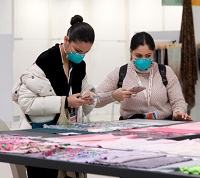 After a year of being confined to the digital platforms, trade shows are back in action with physical editions this year. Apparel and accessories show organizers have scheduled several in-person events during the second half of this year to attract international buyers. As per Women’s Wear Daily, organizers have also planned virtual meetings for customers who can’t attend these events in-person.
Paris shows with new formats and partners
The venues and modes of most of events in Paris have undergone a huge transformation since last year. Trade shows in Paris are being modernized with new partners, digital services and a renewed focus on sustainability. To be held at the Grand Palais near Eiffel Tower, the Premiere Vision will showcase Fall 2022 collections of fabrics, leather, accessories and designs. The other edition, the Made in France Première Vision will be held at the Carreau du Temple in Paris on September 8 and 9, 2021. It will focus on exclusively on French fashion while Premiere Vision Paris will focus on all sectors. The event will be held in a hybrid format at Paris Lord Villepinte from September 21-23, 2021. Organizers have expanded their digital systems to enable exhibitors connect with buyers even after the event completion. They have also regrouped the marketplace and the Première Vision Paris site under the premierevision.com banner.
To be organized by Messe Frankfurt from July 5 to 9, 2021 at Rue du Mail and Atelier Richelieu, Texworld Evolution Paris will focus on Fall/Winter 2022 trends, and feature around 7,000 fashion styles from manufacturers in 10 countries, including Taiwan. The event will focus on themes denoted by colors. It will also include individual sections focusing on earthy tones and brighter colors.
Tranoï will organize the Paris Fashion Week at Palais de Tokyo from June 25 to 27, 2021. The show will feature designers curated by the Fédération de la Haute Couture et de la Mode. Who’s Next, the ready-to-wear, accessories, lifestyle and beauty show, will be held from September 3 to 6 at Porte de Versailles.
UK trade shows with safety protocols
Physical fashion trade shows will make a comeback in the UK with Moda, to be held at the National Exhibition Centre near Birmingham. Organized by the Hyve Group alongwith the Association of Event Organizers, the event will follow strict government protocols and introduce sanitizer stations in busy areas. The event will follow a no handshake policy and make face masks compulsory within the exhibition and conference venues. Exhibitors will also have to follow a cleaning routine before, during and after the show opens each day.
The Hyve Group will also collaborate with Pure to present an edited lineup of emerging and established British and international fashion, home, and lifestyle collections at The Old Truman Brewery in East London from September 7 to 9, 2021. With wider aisles and more floor space, the exhibition will capture the true character of Scoop x Pure while maintaining social distancing, says Gloria Sandrucci, Event Director, Pure London.
Italy to focus on European, Korean, Japanese buyers
After over 16 months of hiatus, the, the Italian government has permitted event organizers to hold physical trade shows. The first show to resume its physical format will be Pitti Uomo will be held from June 30 to July 2 followed by the Pitti Bimbo and Pitti Filati shows. Each fair will implement strict safety protocols and launch new safety initiatives with Italy’s trade agency. For instance, Milano Unica plans to arrange COVID-19-free flights for European buyers, as well as Koreans and Japanese.
Milan’s leading show organizer, Fiera Milano will launch bridal fair Sì Sposaitalia from June 25 to 27 at Fieramilanocity. The physical show will be accompanied by a digital platform to broaden its global reach. This will help organizers guarantee continuity of the event, says Emanuele Guido, Director-Lifestyle, Fiera Milano. The event will feature physical bridal shows and a digital showcase to help the sector resume its activities.
Trade shows Micam, Mipel and Lineapelle will hold their physical events from September 18 to 24, 2021, under the Milano-Rho fairgrounds banner. Mipel also plans to team up with Lineapelle and Pitti Uomo to host the first Mipel Lab showcase at the Florentine fair on June 30. This event will help manufacturers connect with international brands, says Danny D’Alessandro, CEO, Mipel.
UK, US sign deal to suspend dispute hitting luxury sector
UK and US have signed an agreement to suspend a long-running trade dispute that hit export sales of luxury goods, until 2026. As per Fashion Network, the two countries have agreed to end a 17-year trade dispute that grew out of subsidies for plane-makers Boeing and Airbus and resulted in retaliatory tariffs of up to 25% on exports of key luxury goods.
The UK had made the first by suspending retaliatory tariffs on the US earlier this year. The US then agreed to a four-month tariff suspension while a more durable deal was negotiated.
Helen Brocklebank, CEO, Walpole said, luxury goods shouldn't become part of a trade war about plane parts. Liz Truss, International Trade Secretary, UK, added, the deal will support jobs across the country and is fantastic news for major employers.
The deal will help UK focus on taking its trading relationship with the US to the next level, including working more closely to challenge unfair practices and using the power of free trade to build back better from the pandemic, Truss added.
Rieter, Uster targeted for exports to China
Two Swiss textile machinery companies, Rieter and Uster have been singled out for exporting machines to China amid allegations of forced labor in the clothing supply chain including Uyghur and other minorities.
As per a report by the Textile Focus, Xinjiang purchased $6.4 million (CHF6 million) worth of machines from Switzerland in 2019. According to customs data from the Observatory of Economic Complexity (OEC), the region imports the majority of its machinery from three nations, Germany ($26.8 million), Japan ($23.4 million), and Italy ($7.4 million). Switzerland, on the other hand, is a major exporter of knitting machine accessories like spindles, dobbies, and automatic stop motions, which are used in large spinning, weaving, and knitting machines. Over the previous three years, Switzerland has shipped $2 million worth of knitting machine accessories to the autonomous area.
Indian companies bid to Kenyan manufacturers at RBSM Wool and Woolen show
To sell fabrics to Kenyan companies, Indian textile companies presented their bids to potential Kenyan apparel makers during the Reverse Buyer Seller Meet (RBSM) Wool and Woolen show in New Delhi.
As per Textile Focus, Kenyan fashion designers and sourcing agents interacted with India’s wool and woolen products manufacturers and exporters during the three-day exhibition, held from March 25 to 27. Rialto Enterprises, Occasions and Days, Sao Satorial, and Combiat Agencies were some of the Kenyan fashion companies and importers who attended the event. Of these, Occasions and Days plans to collaborate with the Indian textile and apparel industry to provide a continuous supply of high-quality materials to Kenya’s textile industry, says Monica Kanari, CEO.
Kenya has been encouraging people to buy locally made clothing in order to create jobs and reduce the amount of foreign currency spent on secondhand clothing each year. Jump-starting the leather, textiles, and agro-processing sub-sectors were considered critical in achieving early gains in the government’s “Big Four” agenda’s manufacturing pillar.
Dutch AGT shows increase in percentage of companies meeting sustainability requirements
As per the annual report of the Dutch Agreement on Sustainable Garments and Textile (AGT). the percentage of participating companies that meet the agreement’s requirements have increased from 63 to 80 percent. The production chains of participating companies are becoming increasingly transparent: the data of almost 6,000 unique production locations are now made public. The share of more sustainable raw materials increased from 28 to 38 percent. Several public calls for enhanced cooperation in the supply chain were made by the Agreement during the corona crisis.
The assessment of the AGT companies shows that 80 percent comply with the AGT-requirements regarding international Responsible Business Conduct (RBC), 7 percent almost comply and 13 percent does not comply. This is an improvement compared to 2019, in which 63 percent of companies met the obligations, 19 percent almost and 18 percent did not.
In 2020, the assessment interviews focused in particular on whether AGT companies complied with the principles drawn up regarding purchasing practices during the corona crisis. As time progressed, it turned out that a very large proportion of the companies acted in accordance with the principles. Companies have been repeatedly questioned and addressed by parties and the AGT secretariat about their actions during the corona pandemic. Companies that did not (fully) act in accordance with the corona guidelines received a lower score on the purchasing practice component and a negative remark in their annual assessment.
Trident bags gold trophy at Texprocil awards function
Trident was awarded with the Gold Trophy in Highest Global Exports category by The Cotton Textiles Export Promotion Council (Texprocil) at the virtual Export Awards function. Conducted in the presence of Smriti Irani, Minister of Textiles & Women and Child Development as Chief Guest, the awards were presented to outstanding export performers in the cotton textile industry.
Trident Group was set up by first generation entrepreneur and Padma Shri Rajinder Gupta during the early years of the great Indian economic liberalization. The group began with a solitary unit making high-quality yarn. However, in due course, it catapulted to become the largest manufacturer of terry towels and one of the largest integrated home textile manufacturers in the world. Today, it has diversified beyond home textiles into paper, chemicals, energy, etc. The company has millions of customers across 100 countries
Established in 1954, Texprocil is a Government of India sponsored export promotion council. The council has been the international face of cotton textiles from India, facilitating exports worldwide.
Pakistan textile and garment exports increase 19 per cent in 11 months of FY21
Pakistan’s textile and garment exports grew by 19 per cent in the 11 months of current fiscal year (11MFY21) compared to the same period a year ago, as per the data released by the Pakistan Bureau of Statistics. A report from Pakistan Today Profit says, total exports of textile and clothing increased 8.85 per cent to $13.748 billion between July and May this year against $11.567 billion over the corresponding period in FY20.
On a monthly basis, exports increased 41.14 per cent year-on-year to $1.06 billion in May 2021. Exports of ready-made garments increased 14.35 per cent to $2.706 billion in 11MFY21 against $2.367 billion over the corresponding months of last year. Knitwear exports increased by 32.70 per cent to $3.414 billion against $2.572 billion over the corresponding months of last year. Exports of bed wear increased by 24.60 per cent to $2.472 billion.
In the value-added sector, exports of leather garments increased by 9.92 per cent, while those of leather gloves increased by19.08per cent. In the non-value added sector, exports of cotton cloth grew by 0.97per cent in 11MFY21 from a year ago. However, exports of cotton yarn declined by 1.60 per cent and those of raw cotton declined by 96.51per cent.
Vietnam’s garment and textile export revenue increases by 21.2%
Vietnam’s revenue from garment and textile exports increased 21.2 per cent year on year to about $15.2 billion during the first five months of 2021, reveal from Vietnam Textile and Apparel Association (VITAS). During January-May 2021, Vietnam’s fiber and yarn exports soared 60.1 per cent year-on-year to $2.1 billion while fabric exports increased 26.4 per cent to $947 million As per Vietnam Plus, the country’s garment and textile imports increased by 33.4 per cent to $10.2 billion during the period.
The Ministry of Industry and Trade attributed growth to positive signals from the country’s major export markets as well as domestic businesses’ effective utilization of opportunities from free trade agreements (FTAs) which have been signed and put in place. The US remained the largest importer of Vietnam’s garments and textiles with imports increasing 24.4 per cent to $6.02 billion and accounting for 49.2 per cent of the sector’s total revenue.
Japan was the second largest importer with imports worth $1.31 billion followed by the European Union with $1.21 billion worth of imports and the Republic of Korea with $1.07 billion imports.
Zaber and Zubair Fabric take the sustainability route to boost profits
Supplier of home textiles to European retailers, Zaber and Zubair Fabric aims to improve its bottom lines by going greener. The company installed two plants in 2010 to recover 95 per cent caustic soda from water to rinse fabrics made into goods like sheets and pillow covers, saving 6.5 million litre of caustic soda annually as well as sulphuric acid.
The plants also generate hot water as a by-product, which is used in machines to process fabrics at high temperatures, economizing on water and electricity. The plants have helped the factory save $3.8 million a year through buying fewer chemicals, treating less waste water and lowering energy bills. Zaber and Zubair Fabrics has installed rooftop solar panels to generate about 400 kw power. It plans to add more solar capacity in the coming years.
According to a 2020 study by Global Fashion Agenda and McKinsey & Company, the apparel industry produces 4 per cent of the world’s planet-warming emissions, equal to the combined annual total of France, Germany and Britain. The UN Environment Program in 2019 also estimated fashion industry’s share of global carbon emissions at 10 per cent
Though Bangladesh’s overall emissions are tiny compared with industrialized countries, its garment sector is the world’s second-largest exporter of clothes and employs about 4 million people.
Last year, the Green Climate Fund, the main UN-backed climate finance channel for developing countries, approved a $250-million loan program for projects to make garment factories in Bangladesh more energy efficient.
The Partnership for Cleaner Textile (PaCT), a program led by the International Finance Corporation (IFC) practices, has also helped 338 Bangladeshi factories cut their greenhouse gas emissions by more than half a million tonne a year. The program recommendations have helped factories each save thousands of dollars annually, curb emissions and save water.











