FW
Karl Mayer launches HKS 3-M ON range of wrap knitting machines
Karl Mayer has launched the HKS 3-M ON range of warp knitting machines that are networked with KM.ON’s secure cloud via KM.ON’s key. The HKS 3-M ON machines combine the respective advantages of N and EL gears: simple, fast design changes with high working speeds. Their patterning is highly flexible since the information for the guide bar movement is loaded directly onto the machine from the KM.ON cloud. Their design options allow customers to quickly and easily adapt their current market requirements using a new multi-model concept.
The SwapKnit 36 and SwapKnit 36 Flat models enable patterns with repeats of up to 36 stitch courses per main shaft revolution. The required lapping information for new or tried-and-tested articles is obtained from Karl Mayer’s Spareparts Webshop in just a few clicks, and loaded onto the machine. The acquired lapping patterns remain available to customers in the cloud and can be used successively on several machines.
For designs with over 36 stitch courses per main shaft revolution, a model has been developed that uses KM.ON’s k.innovation – Core. The web-based software makes uncomplicated pattern creation possible. Simply log in to k.innovation – Core from any internet-ready device, select a machine, enter the lapping patterns for the individual ground guide bars and subsequently create the pattern file and send it to the KM.ON cloud in just a few clicks. All that remains before production can get underway is to select the lapping pattern file on the machine’s operator interface.
Increase sourcing from Bangladesh, urges BGMEA to Canadian buyers
Faruque Hassan, President, BGMEA has urged Canadian buyers to increase sourcing from Bangladesh as it is a safe, sustainable and ethical apparel-sourcing destination. As per a Textile Today, Hassan made this appeal during a recent meeting with Paul Draffin, Chief Supply Chain Officer, Canadian Tire Corporation in Toronto, Canada. The meeting was also attended by Abdullah Hit Rakib, Director, BGMEA and Kimi Walker, Associate Vice President, Product Stewardship, Eddy Kong, General Manager, Asia, Canadian Tire Corporation.
They discussed possible avenues of business opportunities for Bangladesh in Canadian market. Hassan also highlighted the tremendous progress of Bangladesh’s RMG industry in terms of workplace safety, sustainability and ethical manufacturing,
Hassan said, Bangladesh will continue to be the world’s preferred destination for apparel sourcing. He urged brands and retailers of Canada to strengthen partnership with their Bangladeshi suppliers to enhance capacities in apparel products that are in high demand in the Canadian market.
Innovation labs helping brands launch new, sustainable materials
 The activewear industry has received a huge push in the last three years with brands from Adidas to Pangaia to Allbirds launching collections made with sustainable materials. While some of these collections are made with materials sourced from other companies, however, much of the materials is now being developed in brands’ in-house laboratories. California-based activewear brand Rhone has set up a laboratory called Nanoprojects to develop new materials and manufacturing techniques. The brand recently launched a collection under a namesake higher-end label. The collection offers blazers, outerwear and chinos in the range of $160-$600.
Opportunity to explore maximum creativity
A report by Glossy says, Rhone’s collection gives the brand an opportunity to experiment with new categories and products. The collection is limited with less than 100 pieces being made for some products. Rhone’s co-Founder, Kyle McClure says, the brand’s in-house laboratory enabled it to explore creativity to maximum levels through this collection.
The innovation lab was set up with investments from the brand’s existing resources, notes McClure. Employees at the lab operate from Rhone’s existing office in Connecticut, The brand recently also hired freelance designer Rachel Rozz to lead the development of the brand Nanoprojects.
Nanoprojects works with textile companies and fabric mills to develop new materials and has recently launched a regenerated nylon that’s being used in a Rhone raincoat. The brand also uses a new indigo dyeing process developed by one of Rhone’s Italian manufacturing partners to make its debut denim range.
Brand support necessary for innovation lab’s success
In the last one year, many activewear brands have ventured into developing new materials. Allbirds’split its team into two: one for developing products and other for developing new materials for the launch of its debut activewear collection last month, informs Hana Kajimura, Head-Sustainability. Similarly, fitness and outdoor apparel company Pangaia launched a new range of sweaters in August made from a plant and fruit based fiber developed by the company internally. Underwear brand Knix has announced plans to set up a dedicated innovation lab in its new office in the US next year. The lab will introduce materials and production techniques.
Innovation lab needs to be supported continuously by the brand to be successfully operated, says Scott Emmons, Previous Owner, Neiman Marcus Innovation Lab. Nanoprojects’ laboratory has been operating for the last three years and McClure hopes to continue supporting the lab for many more years. From ready-to-wear, the brand also plans to expand into collections made from new and innovative materials.
Bangladesh: New Accord fails in brands’ legal accountability to suppliers
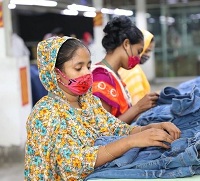 The recent renewal of the Bangladesh Accord has sparked a debate amongst industry leaders on the feasibility its renewal. While some believe, the agreement has led to substantial improvement in safety standards in Bangladesh factories, others are skeptical about the model’s ability to foster collaboration within the industry, writes Kim van der Weerd, Co-host of Manufactured Podcast, writer, consultant in a Textile Today write up.
Fails to shoulder supplier responsibility
The article quotes Elizabeth Cline, Author and Director- Policy and Advocacy, Remake who argues the new Accord encourages brands to enforce health and safety standards in garment factories. It makes brands legally responsible to adhere to worker safety rules in factories. However, it acquits them from their responsibility towards suppliers. The new Accord is an agreement between trade unions and brands, says Nurul Muktadir Bappy, who earlier worked with the Bangladeshi supplier Epcot. Though this compliance shake was needed, it would have been done in other ways.
Matthijs Crietee, Secretary-General, International Apparel Federation agrees, earlier, manufacturers were not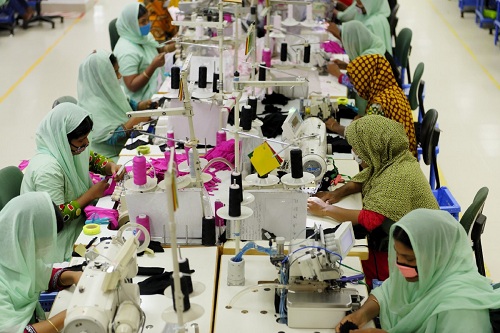 considered suitable to be the members of the International Apparel Federation. However now, perceptions are changing and suppliers are being treated on an equal level with brands, multistakeholder initiatives, unions, and employers,
Need to share financial risks and rewards
The author writes, to assert more control over safety standards in garment factories, brands need to share the financial risks and rewards involved in the production of their garments. However, the new Accord fails to make brands responsible to commit to making financial investments of at least 50 per cent of projected demand for a period equal to the supply chain’s total lead time. It also fails to compel brands to make prices compliant with demands.
If a brand is made to pay a deposit equal to the supply chain’s total lead time, it would compel them assume their fair share of the losses in lieu of changing consumer demands. Similarly, if a brand’s demand forecasts fail, they need to bear the losses equally with suppliers.
If suppliers are freed from shouldering the responsibility of changing consumer demands alone, they can concentrate on their workers’ conditions. Brands therefore, need to be made equally responsible for production of their garments. They also need to share financial risks equally. This alone would foster true collaboration between industry stakeholders.
The Lycra Company introduces new breakthrough technology
The Lycra Company has introduced a new breakthrough technology called Lycra Adaptiv fibre. The novel fibre allows garments to have a better fit for various lifestyles, movements and different body types. The accompanying new brand identity, Lycra Adaptiv, was created to communicate these new and beneficial motion attributes.
Made from a ‘revolutionary’ polymer, the patent-pending, adaptive fibre is said to have a unique chemistry that allows it to adjust to a wearer’s functional needs in a hybrid manner. When the wearer is at rest, the polymer adapts its compressive holding force to deliver the right fit, shape and control, and when the wearer is in motion, the polymer adapts its elasticity to deliver improved comfort in motion and a second-skin effect allowing the garment to stay in place better. Garments made with fabrics containing Lycra Adaptiv fibre are also said to be durable and easier to put on and take off.
The Lycra Company has conducted internal studies to assess wear performance by comparing fabrics and garments containing Lycra Adaptiv fibre versus the same fabrics and garments containing only generic spandex. The company says that results show several advantages in using Lycra Adaptiv fibre including comfort-in-motion and second skin performance accompanied by shape retention and greater freedom of movement
The Lycra Company worked with DIP agency to develop a new Lycra sub-brand identity that communicates the “adaptive” nature of this new fibre. The global agency FCB was selected to develop the campaign ‘Lycra Adaptiv fibre Adapts to your world’. The campaign leverages computer-generated graphics to promote the adaptive nature of the ground-breaking spandex (elastane) fibre innovation, Lycra says.
REACH4textiles project kicks off
The REACH4texiles project just kicked off. Funded by the European Commission, it aims at exploring solutions for fair and effective market surveillance on textile products.
The project pools together the key actors to address three objectives including Keeping non-compliant products away from the single market, increasing skills and knowledge and supporting a network addressing chemicals in textiles and applying the EU regulation 2019/1020
The 2 years project will share best practices, identify efficient approaches against non-compliant products, offer training and support for a more effective surveillance and for level playing field.
The first objective of the project will be pursued by increasing knowledge on market surveillance functioning by and working on a risk-based approach to identify products at higher risk.
The second objective supports a network to address the specificities of chemicals in textiles with market surveillance authorities and involving other relevant stakeholders. The third objective focuses on sharing knowledge with market surveillance actors on textile products and suitable test methodologies.
Supported by the European Commission DG Growth, the project team is coordinated by the Belgian test and research center Centexbel and include the European Textiles and Apparel industry confederation, EURATEX, the German national textile and fashion association Textile und Mode, T+m, the Italian association Tessile e Salute. Several other European industry associations and national authorities are welcomed to become involved through the project activities.
Inditex’s Q2 sales grow by 51%
Indiex’s second quarter sales rew by 51 percent compared with the corresponding period last year, and 7 percent versus 2019 on a constant currency basis.
With 99 percent of Inditex brand stores now open, sales have been gaining even more momentum. The retailer’s retail store and online sales increased by 9 percent between August 1 and September 9 compared with 2019. Compared with 2020, those sales rose 22 percent on a constant currency basis.
In the first six months to July 31, Inditex’s net sales reached €11.9 billion, 49 percent higher than in the same period last year. Sales in constant currencies grew by 53 percent.
The company’s t online sales in constant currency increased 36 percent compared with the corresponding period last year, and 137 percent versus 2019. The company said it expects online sales to account for more than 25 percent of overall store revenue in the full fiscal year.
In the first half, EBITDA increased 109 percent to €3.1 billion, while EBIT reached €1.7 billion. That compares with an EBIT loss of 198 million in the first half of 2020.
Net income in the first half was €1.3 billion, compared with a loss of €195 million in the first six months of last year.
Fourteen brands join CanopyStyle and Pack4Good initiatives
Led by fashion powerhouses Hugo Boss and Elam, 14 brands and innovators have joined the CanopyStyle and Pack4Good initiatives. They have committed to end sourcing paper, packaging, and viscose textiles from the world’s Ancient and Endangered Forests and to scale up the use of Next Generation alternatives.
A key priority of Canopy’s work with brands is the accelerated commercial-scale production of game-changing Next Generation Solutions. With intensifying market demand for these circular-economy alternatives, today’s new brand partners are joined by four additional Next Generation innovators. These technology ventures are developing breakthrough production innovations to alleviate today’s sourcing pressures on vital forests.
The companies signing on to CanopyStyle and Pack4Good are committed to ensuring their viscose and packaging supply chains will be:
● Free of Ancient and Endangered Forests including all recent deforestation.
● Maximizing recycled and alternative Next Generation fibres (such as regenerated cotton or agricultural residues).
● Preferencing FSC-certified wood if virgin wood fibre continues to be used.
Messe Frankfurt France launches first Texcare Forum France
Messe Frankfurt France has launched the first Texcare Forum France to dynamize the offer for textile care.
The first Texcare Forum France will be held onSeptember 27at the CCI of Nantes St-Nazaire. The event will kick-start the sector's recovery and the development of its economic activity. It will bring together a fully representative offer of the industry: equipment, products, services and insurances, for textile care specialists such as laundries, drycleaners and launderettes. Around 15 exhibitors and partners are scheduled to attend, including:
Alliance Laundry Systems (PRIMUS), Association Française des Laveries (AFL), CTTN-IREN, Electrolux Professional, Fédération Française des Pressings et Blanchisseries (FFPB), Gemsys, Generali Assurances, Gesticlean / Brooclean, Girbau, Immel / Lavandys,Kreussler Textile Care, LM Control, Miele Professional, Royant. Institutions and associations will complete this array of professionals.
Messe Frankfurt France will focus on the latest advancements in this constantly evolving industry by staging a series of conferences throughout the day around four themes.
Crocs launches new bio-based version of Croslite material
Broomfield, Colorado-based footwear company Crocs has launched a new bio-based version of its proprietary Croslite foam material, set to hit shelves around the world in early 2022.
Developed in collaboration with global materials science company Dow, the new bio-based Croslite is made from sustainably sourced waste and byproducts, transformed using Ecolibrium Technology. Crocs is the first footwear brand to go-to-market with this technology, which, it claims, offers “all the comfort you expect from Crocs, but with far less carbon.
The material will be incorporated into existing Crocs designs, including its now iconic classic clog, as part of efforts to reduce the carbon footprint of each pair of Crocs shoes by 50 per cent. According to the company, its decision to use the new material in its existing products, rather than create a separate sustainable line, will result in faster progress in its efforts to lower emissions.
In July, Crocs announced its intentions to become a net zero emissions brand by 2030 and the company also has plans to become 100 per cent vegan before the end of 2021. In addition, the company said that it is currently exploring sustainable alternatives for its packaging, as well as ways of extending the lifespan of its clogs through initiatives such as consumer-led donations, recycling and re-commerce programs. Crocs is also in the process of transitioning to renewably sourced energy in its offices and distribution centers.