FW
Global textile outlook improves: ITMF survey
The business situation along the global textile value chain is very good, says a survey by International Textile Manufacturers Federation. In the first half of November 2021, the ITMF conducted the 11th ITMF Corona-Survey among more than 330 companies around the world in all segments along the textile value chain.
On an average across all regions and all segments, the situation has improved significantly since the survey in September. The textile industry is also expecting a further improved business in future. The balance between companies with a good and a poor business situation jumped from +10 percentage points (pp) to +28 pp. When it comes to business expectations in six months’ time (May 2022), the balance is +33 pp. This means that significantly more companies are expecting business to be more favorable than less favorable by May 2022.
The business situation has improved on an average in most regions except for east Asia. Business expectations are optimistic in all regions. As for the different segments, the gap between the upstream segments – fiber producers, spinners, and textile machinery producers – on the one hand and the downstream segments – weavers/knitters, finishers/printers, and garment producers – on the other hand is narrowing. Order intake expectations have increased again from an already high level to +41 pp.
Egypt garment exports up 40 per cent
Egypt’s readymade garment exports increased 40 per cent from January 2021 to October 2021, says Ready-Made Garments Export Council (RMGEC). The country is working at upgrading the export system, increasing exports on a continuous basis, and informing exporting companies of all developments in international markets. All services needed by factories to assist them in the export process for all markets will be made available.
Egypt’s textile exports increased 28 per cent during the first nine months of 2021. Exports of fabrics were up 17 per cent. Higher exports were driven by the gradual easing of restrictions in markets and the high vaccination rates across the world. Egypt wants to have stronger trade relations with Africa. Steps include taking part in international exhibitions in the African continent and setting up an Egyptian-African free trade zone. The main countries Egypt is interested in are Kenya, Zambia and Ivory Coast.
Egypt plans to develop its textile industry with the objective of becoming the next textile factory of the planet. Machinery will be renovated and workers will be trained. The vision is to quadruple exports of textiles and garments by 2025. The aim is to support Egypt’s private sector upstream manufacturers’ competitiveness in the world markets.
Greece textile industry shows signs of recovery
The Greek clothing and textile industry is recovering after a difficult 2020, Greek Fashion. Accumulated net profits of the 100 largest enterprises in the sector fell by 70 per cent in 2020, with exporting companies recording the best results. Men’s clothing recorded the biggest decline in turnover last year, while underwear had the smallest decline and the sales of sports and casual clothing also declined. Turnover of 102 clothing companies fell by 20.8 per cent with gross earnings down 25.7 per cent compared with 2019 and profit margins at 36 per cent. Accumulated net profits were down 70 per cent from 2019.
Turnover of enterprises with activities in the domestic market fell 24.7 per cent, gross earnings fell 29 per cent. Exporting enterprises’ turnover fell 7.1 per cent in 2020, gross earnings fell 2.8 per cent and net profits soared 100 per cent.
From January 2021 to September 2021, retail sales in the domestic market grew 24.7 per cent and exports rose 19.2 per cent, evidence that the industry was staging a strong recovery. Greece is a renowned supplier of various types of textile products to international markets. The textile sector of Greece employs more than two million people in around one hundred thousand businesses. It is a significant part of the country’s economy.
Japanese retail giant Aeon launches recovery wear
Aeon is introducing a range of recovery wear called Topvalu Select Celliant. These are undershirts that use the first-ever Celliant fibers from Hologenix that are pure white in color. Many men prefer to wear white undershirts under their business shirts in Japan and in response Aeon planned and developed the pure white Celliant undershirt. Topvalu Select Celliant offers the benefits of Celliant, a responsive textile that captures and converts body heat into infrared, with the pure white color Aeon customers prefer. Topvalu Select Celliant is registered as a general medical device in Japan. Celliant mineral-infused fabrics have been shown to help regulate body temperature and improve local circulation in healthy individuals for faster recovery, better sleep and stronger performance during the day.
Aeon is a Japanese retail giant. Aeon Retail, incorporated in 1986, owns and operates general merchandise stores and supermarkets in Japan. Aeon is switching out existing acousto-magnetic electronic article surveillance systems for Checkpoint Systems’ radio frequency identification RF EAS systems to improve inventory management and the shopping experience. Aeon Retail will also pioneer Checkpoint’s RFID robot prototype to automate the in-store inventory cycle-counting process so it can improve inventory visibility and enhance the shopper experience. Shopping at Aeon means beautifully displayed products, immaculate shopping areas and reasonable prices.
Noida to host three-day Garment Show of India
Garment Show of India will be held in Noida from December 12 to 14, 2021. The apparel trade show will bring together garment manufacturers, wholesalers, traders, retailers, and distributors from across India. The trade show will feature product categories including men’s wear, women’s wear, children’s wear, active wear, accessories, ethnic wear, inner wear, and denim, among others. This is an exhibition for readymade garments, fabrics, accessories and fashion. The exhibition connects suppliers and buyers looking for quality and reasonably priced garments. The show is an important platform for the booming apparel retail industry of India.
GSI will also feature a fashion forum on December 13 for industry leaders to discuss upcoming trends. With an exhibition space measuring over 1,500 square feet and numerous experience zones, this is the biggest domestic exhibition for north India’s textile and apparel industry. The trade show expects around 8000 visitors and 200 exhibitors. Now in its fifth year, GSI is one of the prestigious and well-known B2B exhibitions connecting all apparel, fashion, textile and retail segments. Retailers, manufacturers and retail chains will be facilitated for their performance. Experts from fashion, retail and e-commerce will throw light on India’s domestic retail industry, its opportunities and threats.
US buyers shift preferences to basic denim apparels post COVID-19
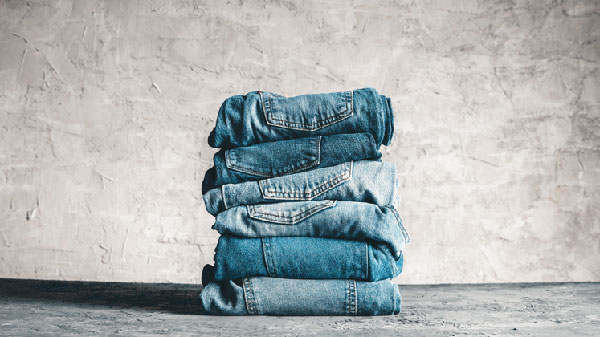
Having witnessed a tremendous uptick over the years, the US market for denim jeans is estimated to be around 25 per cent of the global denim apparel market. As per Global Industry Analysts Inc (GIA), the total value of the market is expected to reach $16.40 billion in 2021. The import data released by OTEXA also supports the market value estimated by GIA. As per an OTEXA report, US’ imports of denim apparels increased by 28.56 per cent Y-o-Y to $2.54 billion during January-September ’21 period. In terms of quantity, the imports grew by30 per cent to 27.07 million dozen annually.
However, compared to pre-COVID period, the sourcing of denim apparels by the US’ declined by 10 per cent in values and 5.74 per cent in quantities. Of the total denim apparels imported by US from January-September ’21, value of men and boys’ jeans surged 35.14 per cent Y-o-Y to $1.27 billion value, while the value of women and girls’ jeans surged by 23.70 per cent to $1.20 billion The remaining miniscule values were contributed by denim skirts and denim jackets.
Basic denim in demand
The data indicates, US denim buyers changed their preferences during COVID-19. The unit prices of denim apparels shrank hurting the exporting destinations. During the January-September ’19, unit prices per dozen of imported denim apparels shrunk 4.38 per cent to $ 95.10 in the same period of 2020 and further reduced to $93.95 in the 9-month period of 2021.This decline indicates the preference of US buyers to more basic jeans commodities and search for low cost destinations.
Bangladesh surpasses Mexico in US denim exports
The data also confirms, Bangladesh has now surpassed Mexico as the leading denim exporter to the US in 2021. Bangladesh’s exports increased by 23.74 per cent in 2021’s first 9-month period as compared to the corresponding period in 2019. The high UVR from Mexico is hurting its exports despite being in close proximity to the US and getting an advantage of ‘zero’ duty rates for jeans under USMCA.
China’s dominance has also come to an end as unit prices have massively contracted in the last two years’ time. China’s average UVR of the shipped denim clothing to the US, which earlier was $97.14 per dozen are now reduced to $75.24 per dozen while the country has further slipped to fifth position in the tally.
Pakistan gains advantage in denim exports surge
China’s decline is an advantage for Pakistan which has slowly increased its denim apparel exports to the US. In terms of export value of denim apparels Pakistan saw an increase from $194.94 million during January-September ’19 to $275.89 million in January-September ’21. This value surpasses China’s export to the US and comes close to Vietnam’s figure as both countries have been witnessing sluggish denim shipment over the months.
Sangam India invests in capacity expansion
Sangam India is expanding its manufacturing facility in Rajasthan. The Rs 137 crore expansion project is funded partly by term loans of Rs 102 crores and the balance Rs 35.25 crores by internal accruals. The move is aimed at increasing the capacity of Sangam’s cotton yarn business by 47 per cent and knitted fabric business by 28 per cent. The expansion is expected to increase the company's revenue by 15 per cent from 2022-23. The expansion program will result in the installation of 32,832 spindles and six knitting machines for the manufacturing of cotton yarn and knitted fabric. The plan is to achieve an increase of 15 per cent in the overall business.
The PV dyed yarn and seamless apparel producer is aiming at strategically leveraging the D2C (director) market and the digitised textile space to further elevate its reach and supply in India and overseas. Sangam India is the largest producer of PV dyed yarn in Asia at a single location. It is also a forerunner in manufacturing ready to stitch fabric with an annual capacity of 30 million meters of fabric and 40 million meters of denim. Sangam has more than 2,00,000 spindles and 3000 rotors. The group has diversified into infrastructure, power, steel and recently the seamless garment industry.
Delayed harvest in the US leads to global cotton shortage fears
A global shortage of cotton is worsening rapidly due to a delayed harvest in the US. Poor weather in the US this past spring forced farmers to plant later than usual, affecting the harvest. While new cotton has finally started to reach the market, the supply crunch has not been resolved partly due to a personnel shortage in the logistics sector. Cotton inventories have declined to the lowest level in 10 years for products that are certified by the US-based Intercontinental Exchange (ICE).
Cotton needs to meet certain standards such as fiber length to be included in ICE’s inventory, but the harvest delay has impacted the inspection process. Furthermore, strong demand means that a lot of cotton is being exported before being warehoused, another factor behind low inventories.
Stockpiles plunged by more than 90 per cent over a month through the end of November, at one point falling to 194 bales. While the figure has recovered to roughly 400 bales, it is still well short of the tens of thousands of bales usually stockpiled. Delays in container shipments between the US and China are also taking a toll, with deliveries said to be about two weeks slower than usual.
M&S wants to source high end apparels from Bangladesh
M&S plans to purchase more high end garments from Bangladesh. Currently the retailer buys garments worth over £1 billion from Bangladesh each year – making it the largest sourcing destination for apparel items for M&S. The company wants to buy more garment items from Bangladesh because of commitments of suppliers and diversification of products. M&S is no longer interested in basic garments.
M&S’ sourcing from Bangladesh has grown 30 per cent year-on-year in the past three years. It has started purchasing diversified garment products from Bangladesh. It helps the factories with technologies, expertise, modern design and banking products so that the factory owners can survive in the business. It also helps its model factories increase their productivity. M&S works with 12 green factories in Bangladesh. Today Bangladesh is no longer just a source of basic garment items. It is also a major source for value-added products like formal dresses, men’s suits, formal blazers.
There is a big change in the garment sector of Bangladesh. Now owners are more proactive about protecting the production environment, where previously they were not. Bangladeshi garment units are now exemplars of factory safety after owners began correcting structural flaws with the help of Accord, Alliance and the government.
Euratex develops strategy
The 9th edition of Euratex was held in Belgium, November 9 and 10, 2021. The event brought together over 250 apparel and textile industry professionals, from across Europe and beyond. The theme ‘A new paradigm for the European Textiles & Apparel Industry’, focused on the impact of Covid 19 and the role of the European Union in boosting the competitiveness of the industry. The plenary panel discussion, with representatives from fibers, apparel, luxury brands, and textile machines, confirmed the need to develop a common strategy across the supply chain.
Nine different workshops focused on specific aspects on that EU strategy: how to manage textile waste, the importance of traceability, the impact of the new chemical strategy, the need for new skills, relations with Turkey and the global trade dimension, EU support programs. Each workshop allowed participants to share their perspective and proposals. The convention was also an opportunity to get together again, after nearly two years of virtual dialogue. There was intense networking. With so many topics on the table, so many positive ideas circulating, the convention delivered on its purpose to bring the entire industry together and move forward with confidence. It also gave a boost to Euratex’s work in promoting the European textile and apparel industry. This was held back-to-back with the IAF World Fashion Convention.