FW
Better Cotton helping farmers in sustainable cultivation
Better Cotton is helping farmers in China, India, Pakistan, Tajikistan and Turkey perform better on environmental, social, and economic criteria. In Tajikistan, Better Cotton farmers use 16 per cent less water than farmers not on the program. In India they achieve nine per cent higher yields, and in Pakistan they use 12 per cent less synthetic pesticides.
Better Cotton focuses primarily on supporting farmers on the ground. Continuous improvement is a core principle for Better Cotton. Its focus is on helping cotton communities to survive and thrive, while protecting and restoring the environment. It collaborates with businesses and civil society organisations from across the cotton sector, to advance sustainability and encourage demand for Better Cotton among suppliers, manufacturers, retailers and brands. Working with close to 70 different field-level partners, Better Cotton continues to reach more and more of the world’s cotton-farming communities.
Nearly all of them – farmers and farm workers – work on smallholdings less than 20 hectares in size. The initiative helps them enjoy better yields, improved working conditions and greater financial security. Over 2.4 million farmers now have a license to sell their cotton as Better Cotton. In total, Better Cotton has reached almost four million people whose working lives are connected to cotton production.
Sri Lanka aims to be a global apparel hub by 2025
 Sri Lanka’s apparel industry forayed into exports in the late 70s. This ushered in forex and recognition to the industry. Facilitated by the 200 Garment Factories Program, Sri Lanka expanded manufacturing across the country during the 90’s. This helped the country uplift its rural economies. As per a Knitting Industry report, its manufacturing evolved further in the last decade as it focused on end-to-end partnerships and complete customer solutions. However, the industry’s full potential is yet to be realised.
Known as a trusted partner within global supply chain of leading brands and retailers, Sri Lanka has witnessed significant disruption in its economy due to the pandemic. This has made its vision of elevating the country to an $8 billion global apparel hub by 2025 more criticals.
Aligning to changing trade scenario
Global apparel exports reached $493 billion in 2019. However, Sri Lanka’s contribution was just 1 per cent of this at $5.3 billion. The country now aspires to grow its apparel exports to $8 billion. Despite high labor costs and less export market access, the Sri Lankan apparel sector progressed by leveraging other sources of competitive advantages. The country is known to be a reliable and high quality apparel supplier, which has elevated its reputation and overall positioning amongst reputed global brands including Victoria’s Secret, Marks & Spencer, Boss, NIKE, Calvin Klein, GAP, Levi’s, Ralph Lauren, Lululemon, Calzedonia, Intimissimi and Tommy Hilfiger.
Unlike other regional counterparts, Sri Lanka’s apparel sector also attracts better professional talent. Many fabric manufacturers have established their factories within the country’s Free Trade Zones while labor-intensive apparel manufacturers have relocated to rural areas.
While the Sri Lankan apparel sector is on its way to realize its true potential, it needs to leverage these strengths and align itself to changing trade shifts. With the political and economic tensions between the Far East and West increasing, a significant amount of trade is likely to shift away from China 2022 onwards. Sri Lanka’s policymakers including its industry umbrella organisation, the Joint Apparel Association Forum (JAAF), and its constituent associations, including the Sri Lanka Apparel Exporters Association (SLAEA), plan to facilitate this process of achieving the sector’s vision.
Conducive environment for innovation
To boost apparel exports, Sri Lanka needs to retain existing concessions under the EU and UK Generalized System of Preferences (GSP) Plus schemes while securing tariff reductions to other countries. The country’s needs to increase its export quota of eight million garment items per year to India, one of the fastest-growing regional economies.
Sri Lanka aims to evolve as an innovative apparel hub, it needs to create a safe and conducive environment for innovation by focusing on Intellectual Property and data protection laws. Similarly, it needs to reform its colonial-era labor laws and provide favorable policies and incentives for investments related to backward integration and automation.
PLI scheme made flexible for manmade fiber, technical textiles sector
Certain flexibilities may be provided to investors under the production linked incentive (PLI) scheme for the manmade fiber and technical textiles sectors to help them meet the strict timelines for achieving the mandatory prescribed minimum annual turnover. The idea is to ensure the industry does not miss incentives due to genuine problems they may encounter in their business activities.
Under the scheme, if participants fail to achieve the prescribed minimum net incremental turnover for any given year, they will not be eligible for claiming incentive for that particular year. They will only be eligible for benefits in the remaining years of the five-year block.
Benefits under the PLI scheme are to be provided for five years from 2025-26 to 2029-30 on incremental turnover achieved during 2024-25 to 2028-29. As per part one of the scheme, beneficiaries need to invest a minimum of Rs 300 crores in plant, machinery, equipment etc. They will earn an incentive of 15 per cent of turnover the first year and thereafter one per cent lower every year for the next four years. In the second part, the minimum investment limit is lower at Rs 100 crores, while incentives, too, are lower, starting at 11 per cent in the first year and getting reduced by one per cent each year in the four subsequent years.
Welspun Q2 topline up 26 per cent
For the second quarter Welspun’s topline grew 26 per cent. The company’s home textile business grew by 27 per cent and its flooring business grew by 96 per cent. Volumes of bath linen, bed linen, and rugs and carpets grew by 16 per cent, four per cent, and 29 per cent. Its US and European business witnessed strong double-digit growth during the quarter and order levels have surpassed pre-covid levels. Its growth story has led to Welspun becoming one of the most profitable stocks in the market.
On the operational front, the company was hit with supply side constraints and input cost inflation which brought down gross margins by 347 bps while the operating profit margins contracted by 307 bps. As a result, PBIDT (Excluding Other Income) was up just 6.25 per cent while the corresponding margin stood at 16.48 per cent. PAT was up by 7.29 per cent. The company is confident of passing on the rise in input cost to customers through price hikes that will be undertaken in the coming quarters, thus restoring the margins to 20 per cent by the fourth quarter.
Welspun India is engaged in the textile business and manufactures a range of home textile products ranging from towels, bathrobes, bath rugs and carpets, mats, area rugs, carpets, bedsheets, utility bedding and fashion bedding. The company is also engaged in the generation of power.
ITC, IAF tie up to support garment manufacturers
The International Trade Centre (ITC) will partner International Apparel Federation (IAF) to support associations of garment manufacturers in addressing emerging challenges related to competitiveness. IAF will advise garment manufacturers on rules of origin requirements, address new buyer requirements in markets, reduce the environmental footprint of garment manufacturing and empower women’s work along the supply chain. ITC and IAF will co-create trainings in this regard. ITC has plans to address digitalization and to engage in a more collaborative relationship with brands and retailers using digital technologies. ITC wants to ensure that its partners and beneficiary companies in developing countries have the best support to meet the environmental and human rights requirements of global buyers. The initiative is being done under the International Trade Centre's Global Textiles and Clothing Programme (GTEX) in North Africa, Middle East (MENATEX), Central Asia and Madagascar.
ITC shares with IAF a strong focus on apparel industry associations. IAF’s knowledge and network will join forces with ITC's knowledge and network to provide optimal support to the industry associations and their member companies involved.
The pandemic has drastically accelerated changes in the textile and clothing sector. More than ever, companies are expected to demonstrate a rigorous level of corporate responsibility and commitment. Due diligence regulations related to environmental, social, and human rights in the United States and the European Union, for example, urge companies to have a high degree of verification throughout the supply chain to be able to export to these markets.
Vietnam foresees 11 per cent growth in apparel sector this year
Vietnam Textile & Apparel Association (VITAS) expects the apparel sector to grow 11.2 per cent this year with export revenue touching $39 billion. The sector has seen positive signals with the reopening of major markets such as the US and the European Union. In particular, Vietnam has switched from a zero Covid approach to safe and flexible adaption to and effective control of the pandemic in combination with economic development.
Domestic and foreign enterprises will be connected to form a supply chain, export markets will be expanded. Firms will be connected with international apparel associations and organisations and training courses on design, sale and trademark building will be imparted.
Problems related to policies and mechanisms, administrative procedures, specialised inspection, taxation, customs, salary and insurance will be addressed. Free trade deals will be negotiated to create favorable conditions for the apparel business community.
VITAS foresees three scenarios to for growth based on the pandemic situation. In the first scenario, export earnings will hit $42.5 to $43.5 billion if the pandemic is under control in the first quarter next year. The second scenario sets a revenue of $40 billion if the pandemic is curbed in mid-2022 and $38 billion if the pandemic lasts till late 2022. Weak support industries and the heavy reliance on material imports are the biggest obstacles for Vietnam to develop the textile and garment industry.
ICAC holds virtual meeting
The ICAC’s plenary meeting is being held from December 6 to 8, 2021. The virtual and free for all to attend meeting has sessions on the cotton supply chain, T-shirt labeling, hybrid cotton technology and sustainability. An announcement will be sent in the coming weeks once all recorded presentations are uploaded and available on YouTube.
The International Cotton Advisory Committee (ICAC) formed in 1939 is an association of cotton producing, consuming and trading countries. It acts as a catalyst for change by helping member countries maintain a healthy world cotton economy, provides transparency to the world cotton market by serving as a clearinghouse for technical information on cotton production and serves as a forum for discussing cotton issues of international significance.
In addition, members can take advantage of the ICAC’s global network of cotton researchers, whose expertise covers the supply chain from farm to textile manufacturing, and have free access to its cutting-edge technologies like the voice-based app and virtual technology cotton training program. Committed to ensuring cotton’s continued sustainability, the ICAC is the only intergovernmental commodity body covering cotton that is recognised by the United Nations.
Chinese lyocell maker Sateri gets Oeko-Tex label
Sateri is China’s first lyocell producer to be Oeko-Tex STeP certified. Sateri has been awarded the Sustainable Textile Production (STeP) certification for responsible production. Sateri’s lyocell facility has also obtained the highest ranking of level three in the certification assessment scoring for exemplary implementation of best manufacturing practices.
Oeko-Tex is an independent Swiss-based certification organization. The STeP by Oeko-Tex certification comprises three levels describing the extent to which a company has achieved sustainable production and working conditions of factories in the textile industry. The areas of assessment include chemicals management, environmental performance, environmental management, social responsibility, quality management, as well as occupational health and safety.
The certification confirms Sateri’s lyocell fiber is free of any harmful substances and complies with European standards. This label not only attests to Sateri’s lyocell fiber as safe and manufactured in an environmentally-friendly, socially responsible and safe facility, but also the group’s commitment to higher levels of transparency and accountability through the product traceability feature of the label. This not only reflects Sateri’s relentless pursuit for responsible manufacturing excellence but marks an important step towards sustainable value chain management. Sateri will continue to work with upstream and downstream partners to realise the sustainable development of its entire industrial chain.
Green denim trends dominate with mills churning out innovative lines
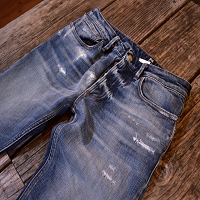 Focusing on sustainability, the recent spring-summer edition of Denim Premiere Vision highlighted the growing demand for green denim among consumers. The event offered a wide range of alternatives to raw cotton and chemicals for clothing and showcased vintage and workwear-inspired apparel styles.
Alternate denim making techniques in focus
Demand for denim has rebounded due to its ability to fit with the ‘Work from Home’ routine. Denim mills banked on their signature products and updated them with sustainability features. The denim fashion seminar highlighting spring-summer ’23 trends introduced cotton-alternatives like hemp, and new high-tech washing and finishing techniques. The sector spearheaded the sustainability wave in fashion.
An example was the introduction of the most sustainable iteration of the Green Replicants Collection by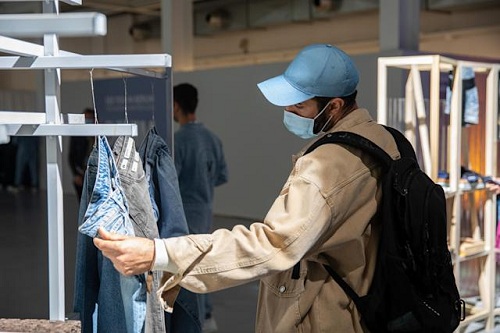 garment-maker and laundry company Elleti Group. The company believes, brands are not always ready to green solutions, especially those in the contemporary and advance contemporary segments. Hence, it develops denim by using the patented Wiser Wash technology. The technology replaces harmful chemicals and pumice stone with ozone treatments.
Denim pants developed by Elleti Group using the Wiser Wash technique were awarded the ‘green’ Environmental Impact Measuring score. These denims are cheaper than regular ones as they eliminate water and chemical costs. However, its consistency is yet to be assessed before rolling out broadly.
Exploring green blends and recycled fibers
Chinese-Vietnamese mill Prosperity Textile experimented with a wide variety of green blends. The Galactic Collection by the company focuses on the use of bio-based polyester. The material offers elasticity and recovery features while being compostable in specific environments. The mill has also teamed up with Swedish company Sodra to introduce rayon made of wood pulp and 20 per cent recycled textiles for its vintage-looking Once More Denim collection.
Turkish mill Calik’s new Re-J collection highlighted recycled fibers including pre- and post-consumer cotton. The company explored the market for hemp blends and fabrics containing up to 20 per cent of natural ingredients. PG Denim focused on saturated colors, flocking and 3D effects, as well as digital prints and metallic finishes. The brand has incorporated denim into sweaters and tops in addition to jeans. It has also developed eco-friendly dyeing technique to reduce chemical usage, notes Paolo Gnutti, Founder. The brand’s ‘Green Denim’ range uses GRS-certified textiles and aimed to tap high-end clients in France, Italy and the US.
Top synthetic spurn yarn maker RSWM forays into knitted fabrics
RSWM is foraying into knitted fabrics in line with demand trends. This decision is expected to contribute Rs 800 crores to its topline over the next two to three years. The Rs 3,000 crore company has earmarked Rs 200 crores for the foray and is currently investing Rs 80 crores in plant and machinery in its existing facility. Demand for woven fabrics has dwindled while there is a surge in demand for knitted fabrics from both domestic and international brands. The knitted fabric plant will become operational in April 2022 and will add to Rs 275 crores to the topline in a year with a 400 ton plant capacity but is expected to scale up to Rs 800 crores after the capacity gets augmented to 1000 tons. Over the next two or three years investments will be another Rs 500 crores in new, upgradation and debottlenecking projects spread over various plants.
RSWM, a group company of LNJ Bhilwara, is one of the largest makers and exporters of synthetic and blended spun yarns from India. RSWM is also exploring an opportunity into garmenting fabrication franchising as international brands are now keen on finished garments rather than buying yarns. The company will offer soft bridge loans to set up or expand with buyback arrangements.