FW
Nandan Terry’s revenue up 25 per cent, files for IPO
Nandan Terry’s revenues from operations for the fiscal year 2021 rose 25 per cent compared to fiscal 2020 primarily due to an increase in sales of cotton yarn, towel and toweling products. The company has filed preliminary documents with markets regulator Sebi to raise Rs 255 crores through an initial public offering (IPO).
The proceeds of the public issue will be used for payment of debt, for funding working capital requirements and general corporate proposes. The company may consider raising Rs 40 crores through a pre-IPO placement. If the pre-IPO round is undertaken, the issue size will be reduced.
Nandan Terry based in Ahmedabad and part of the Chiripal Group is a fully vertically integrated company engaged in manufacturing terry towels and toweling products and also sells the cotton yarn manufactured at its units to achieve better sales realisations. It has the latest technology machines right from spinning to processing and can produce 25 million towel pieces per annum. Chiripal is a professionally managed business entity. Starting with a few power looms, it has evolved into a multi-activity, multi-product textile house that produces fiber to apparel under one roof. It has business in the fields of petrochemicals, spinning, weaving, knitting, fabric processing and chemicals.
Parkdale Mills to set up yarn spinning unit in Honduras
US-based Parkdale Mills, one of the largest manufacturers of spun yarn and cotton consumer products in the world, will make a multimillion-dollar investment in a new yarn spinning facility in Honduras and make an additional substantial investment to support existing operations in Virginia. This investment will help customers shift a million pounds of yarn per week away from supply chains in Asia and China and enhance US and CAFTA-DR (Dominican Republic-Central America Free Trade Agreement) co-production resilience and increase regional product offerings. Parkdale will create hundreds of jobs in Honduras and further support hundreds of employees in Parkdale’s Virginia operations. Parkdale sees an enormous opportunity for brands and retailers to re-shore and nearshore production supply chains and double the size of US-CAFTA-DR trade.
The textile and apparel co-production chain is one of the most essential supply chains for employment and economic development in both the United States and the Northern Triangle region, currently supporting over a million jobs in the United States and the Central American region. The Dominican Republic-Central America Free Trade Agreement and its strong rules of origin are the primary reasons this co-production chain exists and is seeing significant growth this year. Rules of origin in nearshoring production chains help address labor and environmental challenges and mitigate supply chain risk.
Janus can keep one both warm and cool
Belgian researchers have revealed the concept for a fabric that can keep a person warm when worn one way and cool them down when worn the other way. Until now, most cooling fabrics have been made up of impermeable membranes that trap air and moisture against the skin, making them uncomfortable to wear. The team used the enhanced capabilities of photonic tailored textiles to solve this problem. They integrated infrared-emitting and absorbing components into mechanically flexible fabrics.
The Janus cloth with a thickness of 20 meters is named after the two-faced Roman god Janus. The material’s two interlaced sides are made up of two different types of fibers: dielectric and metallic, with highly differing infrared-emitting capabilities. On the one hand, dielectric fibers can release a considerable amount of radiation, but metallic fibers have a low emissivity. Janus textile is thin and flexible, in addition to its passive heating and cooling qualities. Moisture travels away from the body through gaps between the threads, assuring the wearer of comfort. For the time being, though, high manufacturing costs may prevent such reversible materials from appearing in clothing anytime soon. Large-scale production of the material is not currently practical but the findings can spur more study into comparable materials.
Guidelines sought for Dutch garment sector
Business, trade unions and NGOs have started negotiations on a new agreement to further human rights, international labor rights, the environment and animal welfare in the Dutch garment and textile sector. They are jointly seeking to drive leadership on responsible business conduct aligned with the OECD Guidelines and the UNGPs on business and human rights. The Social and Economic Council of the Netherlands (SER) facilitates the process. They want to help companies implement the due diligence guidelines and facilitate companies from a garment sector perspective based on upcoming legal requirements. The EU will come with a legislative proposal in 2022, and also the Dutch government has committed to drafting due diligence legislation.
The agreement is being designed by the parties to be impactful. The approach focuses on clear, individual and shared commitments to drive collective goals. This gives the sector a common point of reference on how impact can be achieved on known risks in the sector. The agreement aims to set the most impactful goals in the sector. The initial focus is on the national and international players active in the Dutch market, but the process is also open to organisations active in other European countries. It is expected that the new agreement will see the light in the course of early 2022, depending on the commitment of the Dutch government and the integration in the extended producer responsibility system of the sector, among others.
Ethiopian textile units exceed export target
The textile and apparel industry in Ethiopia has exceeded its target export earnings over the past five months. In particular the leather industry performed spectacularly and the plan is to earn $90 million from leather exports this year. The sector is seen having immense opportunity to support the overall economy of the country with an improved functioning.
Some 80 of the over 400 textile and apparel industries in the country export textile products. Work is now on to resolve the challenges being raised by the textile and leather industries, including the availability of foreign currency, input raw materials and spare parts. The textile and apparel sector is one of Ethiopia’s key industrial sectors.
Foreign currency earnings are given priority as a way of offsetting the current shortage in hard currency. To effect proper market linkages with reliable buyers, market opportunities are being explored to obtain potential buyers in the global market. A 15-year National Cotton Development Strategy has been prepared to tackle the cotton shortage. Ethiopia is going to harvest a huge amount of cotton for export and to satisfy the demands of the local textile industry. Several major foreign companies have invested in the textile and clothing industry in Ethiopia.
China’s garment exports up five per cent from Jan to Oct ’21
China’s garment and textile exports rose five per cent from January 2021 to October 2021 reveals Ministry of Industry and Information Technology (MIIT). In the same period, exports of clothing products surged 25 per cent. The combined operating revenue of major textile enterprises rose 14.2 per cent. Profits rose 29 per cent over one year earlier. China’s online retail sales of clothing products grew 14.1 per cent in the January to October period, hitting a three per cent average growth over the past two years.
Over two years China's technical textiles industry has grown by 12 per cent. From January to September 2021 production of nonwovens and cord fabric was down 1.01 per cent and up 29 per cent respectively. The operating income of enterprises in the technical textile industry decreased by 14.74 per cent with an average increase of 10.78 per cent in the past two years. Their total profit dropped by 63.78 per cent year on year, seeing an average increase of 14.12 per cent in the past two years. The operating profit margin reached 5.25 per cent, seeing a year-on-year decrease of 7.11 percentage points. The operating income of 31 listed companies in the third quarter fell by 1.15 per cent and their total profits declined by 33.59 per cent.
Fast Retailing to be carbon neutral by 2050
Fast Retailing aims at carbon neutrality by 2050. Efforts to do so include reducing its carbon emissions by 20 per cent in 2030. Since 2017, Fast Retailing has published a list of core sewing partner factories and since 2018 has expanded the list to include core fabric mills. By March 2022, the company plans to publish a list of all sewing partner factories it has ongoing dealings with. In addition to audits at garment factories and core fabric mills, the company aims to establish traceability across the whole supply chain, from upstream spinning mills to raw material level. The company will identify and correct any human rights or labor environment issues at an early stage. This also includes a gender equity-based policy, including an increase in the representation of female management in the company to 50 per cent by 2030, hiring people with disabilities, and enhancing LGBTQ friendliness of environments for both employees and customers.
Fast Retailing is the company behind the brand Uniqlo. All 64 Uniqlo stores from nine markets in Europe have switched over to renewable energy. By the end of 2021, all stores in North America and in some countries in southeast Asia will complete this switch.
Global brands sign for new safety platform Accord in Bangladesh
At least 147 global brands and retailers have so far joined the International Accord to ensure health and safety in the global garment and textile industry. The signatories include many of the 200 EU-based brands that previously joined Bangladesh’s garment industry’s Accord, a platform set up immediately after the Rana Plaza building collapse in 2013. After the expiry of Accord in Bangladesh, the Readymade garment Sustainability Council (RSC) was formed in June 2020 that took over the charge of Accord’s works in the country. In September 2021, the International Accord came into being, a 26-month-long legally-binding agreement to make garment factories safe. Most of the International Accord signatories were signatories of Accord.
According to the new agreement, the signatories will continue the health and safety program in Bangladesh through the RSC by recognising its independence. Almost 150 brands and retailers covering 1,300 factories have now signed the new International Accord. Among the brands that have joined are H&M, Benetton, Best Seller, C&A, Inditex, Marks & Spencer, Mango, Matalan, Next, Puma, PVH and Primark.
Bangladesh is now receiving more work orders, while more orders are expected in coming months due to various global factors, including issues in Myanmar. Exporters in Bangladesh have invested millions of dollars and made significant improvement in workplace safety in line with the recommendations of Accord and Alliance.
Bangladesh yarn exports up 15 per cent
Bangladesh’s exports of yarns and fabrics are up 15.52 per cent. Shipment of raw materials and intermediate goods is rising fast. Exports of yarn, fabrics and waste yarn were up 38 per cent from July 2021 to November 2021 Export Promotion Bureau. Spinners and weavers in Bangladesh are exporting yarns and fabrics after meeting the demands of domestic garment factories.
Vietnam recently agreed to buy yarn from Bangladesh. The garment producing country purchases one lakh tons of yarn from India every year. Similarly, textile millers and yarn and fabric users in Turkey, South Korea, Egypt and Taiwan are planning to buy more yarns and fabrics from Bangladesh. So spinners and weavers are expanding their capacity to produce manmade fibers because of the growing demand. In the next two years, Bangladesh's yarn production capacity will see an addition of 2.5 million spindles. Currently, 13.5 million spindles are used to manufacture textile raw materials.
Bangladesh has already conquered the international apparel market and is currently the second-largest exporter of garment items worldwide after China, with a six per cent global market share. Although Bangladesh depends on imports of cotton, a key raw material for textiles, the country is fast becoming a major source for yarn and fabrics for textile and garment producers.
India’s cotton production drops 1.37 per cent in 2020-21 as MSP is increased
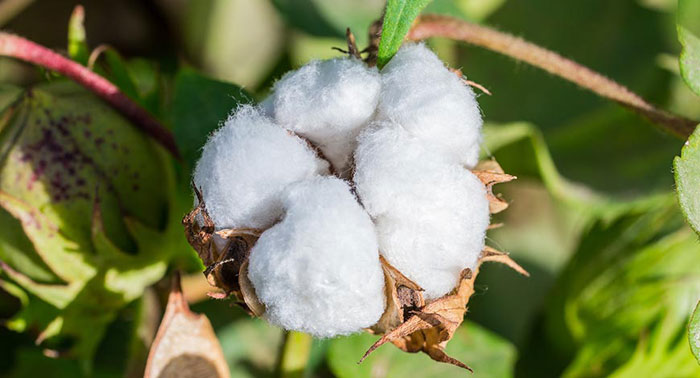
Spanning Gujarat, Madhya Pradesh and Maharashtra, the Central Zone emerged as the highest cotton producing zone as India’s cotton production dropped by 1.37 per cent to 360 lakh bales during the October-September 2020-21 seasons. State-wise, Gujarat emerged top cotton producer during the year with a production of 90 lakh bales; followed by Maharashtra with 84 lakh bales of cotton. Orissa was the lowest cotton producing state with just 4.5 lakh bales.
North Zone grows 0.7 per cent
Cotton production in the North zone grew 0.7 per cent to 65.50 lakh bales during 2020-21. Rajasthan emerged top producer of cotton during the year with a growth of 10.34 per cent. The state produced 32 lakh bales of cotton accounting for 9 per cent of the total cotton produced in India. The second largest cotton producer in the zone, Haryana‘s cotton production however, declined by 15.1 per cent to 22.50 lakh bales of cotton during the year.
Central Zone’s production drops
Central zone’s cotton production dropped 2 per cent during the year to 192 lakh bales. Gujarat emerged the highest cotton producing state in the zone with a growth of 1.1 per cent to 90 lakh of bales. The second largest producing state in the zone, Maharashtra witnessed a decline of 3.4 per cent in cotton production to 84 lakh bales in 2020-21.
Southern Zone produces 96 lakh bales
Cotton production in the Southern zone dropped 2 per cent to 96 lakh bales of cotton in 2020-21. Production in the zone was led by Telangana which produced 51 lakh bales in 2020-21 season, 5.5 per cent lower than the previous season; followed by Karnataka whose production grew 10 per cent to 22 lakh bales.
Exports surge
India’s cotton exports surged 105.7 per cent in the first nine months of 2021 totaling to $1,898.10 million. Bangladesh remained the top export market for India’s raw cotton. Cotton exports to the country grew by 37.19 per cent to $907.32 million in 2021 over CPLY.
India’s cotton exports to China grew 160.4 per cent to $630.86 million in January-September 2021. Around 336.29 million kg of cotton was exported to the country during the same period.
MSP for cotton increased
The Cabinet Committee on Economic Affairs increased the Minimum Support Prices (MSPs) for cotton fiber for the new cotton season 2021-22. Prices of medium staple cotton having a length of 24.5 to 25.5 mm have been increased to Rs 5,726 per quintal while the prices of long staple cotton having a length of 29.5 to 30.5 mm have been increased to Rs 6,025 per quintal.
In the last two cotton seasons, the Cotton Corporation of India procured around about 200 lakh bales and disbursed more than Rs 55,000 crore directly in the bank accounts of around 40 lakh farmers. In the current season, it has deployed manpower at over 450 procurement centers to meet all price requirements.