


FW
Sangam India to set up several units in Rajasthan
Sangam India will set up multiple manufacturing units focusing on spinning, weaving, garments, knitting and processing over 100 acres of land in Rajasthan. This would generate direct/indirect employment for over 10,000 people. This investment will be funded through a combination of internal accruals, raising fresh equity and debts via financial institutions.
The expansion is expected to increase the company's revenue by 15 per cent from 2022-23. The expansion program will result in the installation of 32,832 spindles and six knitting machines for the manufacturing of cotton yarn and knitted fabric. The plan is to achieve an increase of 15 per cent in the overall business. The textile sector of India needs a major impetus, especially after the turbulent times faced by the industry during the Covid pandemic.
Sangam India produces PV dyed yarn and seamless apparel and plans to increase the existing capacity of its cotton yarn business by 47 per cent and knitted fabric business by 28 per cent. Sangam India’s revenue has doubled in the second quarter of this fiscal year compared to the second quarter of the last fiscal. Sangam is aiming at strategically leveraging the D2C (director) market and the digitised textile space to further elevate its reach and supply in India and overseas.
Pakistan textile and apparel exports up 28 per cent
Pakistan’s textile and clothing exports grew 28 per cent from July 2021 to November 2021. This was mainly on the back of a massive depreciation in the currency’s value and a steady rise in global demand. The year-on-year growth in November 2021 was 35 per cent, reveals Pakistan Bureau of Statistics.
Readymade garment exports jumped 23.4 per cent in value and 23.6 per cent in quantity during July to November, while exports of knitwear edged up 36.6 per cent in value but dipped 14 per cent in quantity. Bedwear exports grew 23.6 per cent in value and 23.9 per cent in quantity. Towel exports were up by 18 per cent in value and 9.4 per cent in quantity, whereas those of cotton cloth rose by 22.3 per cent in value and 16.2 per cent in quantity.
Among primary commodities, cotton yarn exports surged 65.5 per cent and those of yarn made from material other than cotton by 118.8 per cent. Exports of made-up articles — excluding towels — rose by 15 per cent while those of tents, canvas and tarpaulin dipped by an equal percentage during the period. Imports of textile machinery jumped 97.9 per cent from July to November, reflecting expansion or modernisation in the textile industry.
Netherlands and ILO to guide Vietnam on skills needs
Netherlands and the International Labor Organization (ILO) will work on a project to address future skills needs in the garment sector of Vietnam. As a part of the two-year project, the ILO will support the government, employers’ and workers’ organizations in Vietnam to understand what skills the industry and its workers will need now and in future.
The project will focus on those at highest risk of losing their jobs as a result of the Covid crisis and increased automation and digitalization in industries. The project will apply lessons learn from similar ILO garment sector skills anticipation projects in the garment sector in Brazil, Ethiopia, Jordan and Peru and it will build on the achievements of past ILO skills development programs in Vietnam.
Vietnam’s textile and garment industry is key to the country’s growth and development. It employs about 2.7 million people, of which a vast majority, are women. However, the Covid crisis has hit the industry hard. In addition to factory closures and lost incomes, the pandemic has accelerated the drivers and megatrends that are changing textile and garment production. These include automation and digitalization as well as the introduction of greener and cleaner production to mitigate climate change.
Labor shortage plagues Delhi apparel exporters
Apparel exporters in Delhi-NCR are facing a labor shortage. There are hundreds of garment manufacturing units in the region. Owing to the scarcity of workers, factories are being forced to work overtime, and in night shifts, to complete orders on time. There are various factors responsible for the shortage of labor. A lot of workers have returned to their villages for marriages as well as for agriculture-related activities.
The shortage is despite a lot of effort to enhance skill development in the apparel manufacturing industry. Gurugram is facing a similar situation. Exporters have plenty of orders but the workers are mostly migrants. So many companies of Delhi-NCR have started their factories to states where labor availability is not an issue. So Matrix Clothing of Gurugram has an unit in Jharkhand.
Labor shortage has always been an annual concern for the industry during this season, but this time the struggle is a bit more ,as a chunk of workers, post-Covid, have not come back or have moved to other industries or businesses. However factories are not offering any lucrative wages to attract workers since the price pressure is already very high. Raw material costs have increased. Some apparel exporters of Noida work with prestigious retailers like Carrefour.
Global junior wear market grows at eight per cent
Asia-Pacific is likely to hold a significant market share from 2021 to 2026 owing to growth in the infant population especially in developing countries like India and China, reveals a research report by Research and Markets. Robust economic growth and rising household incomes are expected to increase consumer spending on children’s apparel and footwear products in the Asia-Pacific region. The growth in the number of high net worth individuals and urbanisation in Middle East countries, especially Saudi Arabia, Qatar and the UAE, is creating huge opportunities for luxury children’s apparel brands to enter the apparel market of these countries. The growing operational expansion of key players in Asian countries is likely to boost the market growth in African region.
New product developments, in compliance with consumer trends, are expected to help in better positioning of products. Therefore, brands and retailers are focusing on expanding their product offerings by launching new apparel designs, in order to cater to the demographic segment of consumers.
Brands such as Dolce & Gabbana, Stella McCartney and Gucci are offering luxury children’s apparel in the Middle East and North American region. Among the others are Carter’s, Adidas, Benetton, Gap, Nike, Disney, American Apparel and Dolce & Gabbana.
Ambattur Fashions invests in Orissa india, sets up garment manufacturing units
Orissa may get two new garment factories in coming months. Chennai-based Ambattur Fashions is all set to set up an apparel manufacturing unit with an investment of Rs 51 crores. The facility will produce men’s and women’s wear. Wild Lotus Fashions will also put up a factory with an investment of Rs 52 crores. This factory is expected to generate employment opportunities for over 560 persons.
The state’s primary focus has been on the employment-intensive sectors like apparel manufacturing which employs a large number of workers in a single unit. It will also help the state to arrange jobs for locals within the state. Currently, thousands of people from Orissa are working in the garment factories of other states. Orissa is offering a special incentive package for mega investments in textile and apparel including the technical textile sector. The aim is to make the state the textile hub of eastern India.
Mega-investments are being sought from major textile and apparel players. They have more than 1.5 lakh acres of land at their disposal. With multiple dedicated locations identified for setting up apparel parks, competitive land rates and ready to occupy industrial sheds, Orissa offers a compelling value proposition for units in the apparel sector.
SupplyCompass looks at setting up hub in India plans to link up supply chains
UK-based SupplyCompass will onboard 5,000 fashion brands and their supply chains in India to drive sustainable practices. The aim is to expand in South Asia with India as its strategic hub. Over the coming year, StyleCompass plans to link up with brands and their supply chains as part of its work to enable fashion brands to work with their manufacturers on making their practices more sustainable.
The business also plans to hire an additional 200 employees within the 18 months. For SupplyCompass India is of high strategic importance. Make in India and Atmanibhar Bharat are expected to give momentum to India’s fashion and textile landscape making India a very important market for SupplyCompass. The business launched its supply chain software in January 2020 and it is now in use by businesses in Europe, America, and Asia.
SupplyCompass is a sustainable product development and delivery software built for brands. SupplyCompass is backed by some of Europe’s leading venture capital firms and businesses and is on an ambitious growth path to set a new gold standard.
India is already emerging as one of the fastest-growing fashion markets in the world as more global brands gear up for India’s launch. This is likely to create a ripple effect on the manufacturing side of the business too.
Brands deny workers minimum wage
Factories are refusing to pay garment workers in Karnataka the legal minimum wage, says international labour rights organization The Workers Consortium. These garment workers make clothes for international brands. More than 4,00,000 garment workers in Karnataka have not been paid the state’s legal minimum wage since April 2020.
Karnataka is one of India’s garment-industry heartlands, with thousands of factories and hundreds of thousands of workers producing clothing for international brands including Puma, Nike, Zara, Tesco, C&A, Gap, Marks & Spencer and H&M. Western brands have either refused to intervene or have not acted to ensure that workers making their clothes are paid in line with Indian law. Obviously wages are not enough to meet at least the basic needs of workers and their families. Apparel suppliers make up the only industrial sector across Karnataka refusing to comply with a court order directing that minimum wages be paid. For workers in Karnataka, not receiving their pay rise, in the face of steeply rising living costs, has had a devastating effect on their lives and those of their families, especially children. One woman, who works at a factory making clothing for UK high street brands, was forced to leave her home and live with a relative because she could no longer pay the rent.
Bangladesh garment export to the US on the rise
In the first 10 months of 2021 Bangladesh’s earnings from garment exports to the US were up 27 per cent compared to the same period in 2020. In fact, Bangladesh surpassed Vietnam, China and Indonesia in terms of growth in apparel exports to the United States. Bangladesh’s apparel makers have been receiving an additional flow of work orders because of a drastic fall in China’s factory outputs fuelled by energy shortages and pandemic-led supply chain disruptions in Vietnam and Indonesia. Its apparel exports to the US market have kept growing and many US buyers are now shifting to Bangladesh. As per Mohammad Hatem, Executive President, Bangladesh Knitwear Manufacturers and Exporters Association (BKMEA), their apparel exports to the US market kept growing with many US buyers now shifting to Bangladesh.
With a reboot of economic activities in the US after the pandemic situation turned the corner, Americans have started releasing pent-up demand, especially for clothing and footwear. From January 2021 to October 2021, the US’ imports of clothing were 24 per cent more than in the same time a year ago. China’s apparel exports to the US might halve in the next five or 10 years, opening up an opportunity for Bangladesh to take a bigger stake in the largest market. If Bangladesh takes production costs under control by making business easier, it will take an edge over Vietnam. Bangladesh’s exports are hampered by the high costs of doing business. Many exporters do not take orders despite having the capacity as the prices they are getting are not in line with production costs.
Munich Fabric Start and Bluezone to highlight the changed future for industry
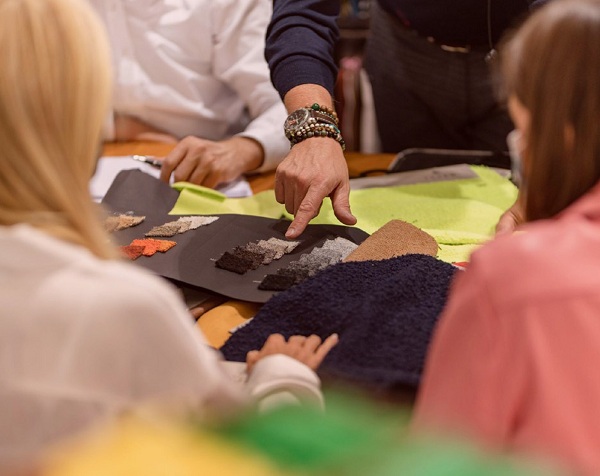
Scheduled from January 25, to 27, the Munich Fabric Start and Bluezone exhibitions by Munich Fabric Start Exhibitions will attract 600 suppliers from 33 countries including around 90 international suppliers of denim fabrics. The organizers are highly motivated to offer the industry a safe and inspiring trade show to build on their previous success, says Frank Junker, Creative Director, Munich Fabric Start.
2G+regulation to maintain safety standards
Aware of their great social responsibility, the organizers have planned to implement the 2G+ regulation at all upcoming events. As per this regulation, only vaccinated and recovered people with an additional valid COVID-19 test will be able to access the exhibition grounds. With its effectiveness proven at the last trade shows, this extensive hygiene concept is being regularly adapted at all upcoming trade shows.
Combining cosmopolitanism with tolerance
The theme of this year’s Spring/Summer edition is: ‘Every Body’ it denotes a new feeling, a new definition of individuality and community, a new balance and an individual self-image. It combines the newly learned cosmopolitanism of the industry with tolerance. Combining the needs for personal exchange and the tactile experience of textiles, the theme focuses on collecting new information and inspiration, without a screen or headphones. The event will attract many experts who will offer international visitors insights into latest trends and topics relating to digital solutions and future-oriented innovations. The program of the event will be published in early January.
Simplifying sourcing solutions
The recently relaunched Resource area and the Sustainable Innovations area, presented the latest sustainable alternatives in a modern surrounding to simply the latest sourcing solutions and help shape the sustainable development of the industry. “We managed to hold successful trade show even in these challenging times,” says Sebastian Klinder, Managing Director Munich Fabric Start, Bluezone shows.
The main theme of both events, the New Balance, highlights the brighter but changed future. The Bluezone event looks forward to bringing together all the leaders in technology, quality, product, saving resources, style etc, under one roof in Munich. With over 90 denim exhibitors, the event uses the coal bunker and the Zenith hall to showcase its products. Numerous premium mills, CMT solution and finishing providers as well as innovative start-ups have registered to present their novelties in the events.











