


FW
US to host Pheonix Fashion Week to host annual series from April 15-16
Phoenix Fashion Week will host its annual series of more than 20 runway shows from April 15-16 in North Phoenix. The two-day event will celebrate the successful organization of the rigorous emerging designer bootcamp, led by Brian Hill, Executive Director, Phoenix Fashion Week. The bootcamp featured four hand-selected designers from around the nation preparing to launch their collections.
The two-day event will include a variety of fashion and business focused seminars sponsored by the Arizona Department of Education and taught by industry experts, offering insight and real take-a-way tools on how to launch, market and successfully run a fashion business long-term. This year’s line-up of seminars will be led by Mike Spangenberg, Owner, State Forty Eight, and Director of Education, Alison Callaway.
On Saturday, April 16, Phoenix Fashion Week will award both ‘Designer of the Year’ and ‘Model of the Year’ Male and Female. The two winning models will each receive full modeling contracts from industry leader, Agency Arizona, successfully launching their careers. Phoenix Fashion Week team will also announce the ‘Designer of the Year’ and a $10,000 prize package comprised of goods and services to ensure long-term brand success for the winning designer.
In addition to designer runway shows, the event will include the new Chateau Luxe VIP champagne lounge, featuring gourmet hors d’oeuvres by two-time award-winning private chef, Will Turner. Visitors will also enjoy a VIP Front Row seat, coveted swag bag filled with fashionable goodies, red-carpet experience, exclusive access to designer pop-up shopping in the Style Villa Marketplace, designer meet and greets, live music, high energy performances, etc.
Kingpins Amsterdam plans physical show in April
Kingpins Amsterdam plans to organize a physical trade show from April 20-21, 2022 in Amsterdam. The US-based denim tradeshow will be held in a new venue, SugarCity, located in Halfweg near Amsterdam. The new venue is 40 per cent larger than Westergasfabriek and boasts of a whopping 100,000 sq. ft show space.
The building has three levels: ground floor holding the majority of exhibitor booths as well as Kingpins Trend and Most Sustainable Product installations; Level 1, which will host the Transformers and remaining exhibitor sections; and Level 2, which will house seminars, initiatives and serves as the main catering area for the tradeshow.
Kingpins Amsterdam will host its physical edition almost two years after the tradeshow transitioned to a virtual format, Kingpins24, following the outbreak of the pandemic which led to social restrictions.
Sri Lanka’s JAAF urges industry to work together to resolve power, fuel issues
Sri Lanka’s Joint Apparel Association Forum (JAAF) urged all stakeholders to work together to resolve the ongoing power and fuel issues that have caused many small apparel units to shutdown while escalating production cost for others. The immediate appointment of financial and legal advisors to commence discussions with Sri Lanka’s creditors will pause debt servicing obligations, relieving the pressure on the system, JAAF said.
It advised Sri Lanka to urgently engage with the International Monetary Fund (IMF) to bridge finances for essential imports, particularly for fuel, LPG and medicines. The government should also seek the assistance of the World Bank to reallocate unutilized funds from existing projects towards emergency relief programs, it added.
Extended power cuts have disrupted production activities of small and medium enterprises in Sri Lanka. The mandatory conversion of foreign exchange is complicating raw material imports, as banks are unable to meet their commitments to apparel exporters, JAAF added.
From Future expands with a new sustainable denim range
Launched in 2018 by Pauline and Thomas de Hesdin, apparel brand From Future continues to expand its clothing range.The brand has launched its first denim range made from recycled cotton. The range offers three different jean styles for women: straight, slim, bootcut, sold for €110. Three styles for men: straight, loose, slim, retailing at €120, and a pair of shorts for €69. The label has also launched jackets featuring embroidered patterns, colorful jeans and denim skirt in three different washes (€60).
The jeans are made from recycled cotton derived from fabric scraps, says Pauline, Creative Director. The dyes have been done using an eco-friendly washing process that drastically reduces consumption of water, energy and chemicals. The brand also plans to open two new stores in Paris next quarter and another three in n major French cities later this year.
Indian retailers plan to foray into Russia market
Even as global retail brands like Zara, H&M, Mango, Nike and IKEA exit from Russia, few Indian retailers plan to foray into this market with new shops there. Home furnishing retailer Maspar and fashion brand Killer Jeans are exploring franchise opportunities in Russia while four Indian brands have signed initial agreements with Russian firms. Another six are expected to join soon, says Susil Dungarwal, Founder, Beyond Squarefeet Advisory. Each of these brands will sign business deals of no less than $1 million with Russian firms.
Around 8-10 Russian franchisee operators plan to visit India in the first week of May to meet potential Indian partners and to check their factories, offices and stores, adds Dungarwal. Hundreds of franchisee stores lost business as international brands made a hasty exit amid US and western sanctions against Russia. The master franchisee of Calvin Klein lost business as the brand exited from eh country, he adds.
India’s specialized materials market to grow 15-20% over five years
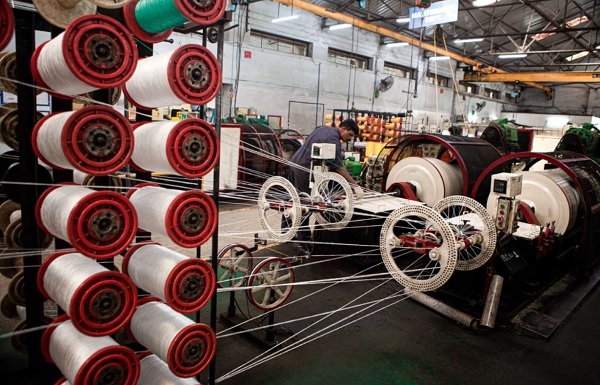
For long government has been focusing on the textile materials industry. Representing 4 per cent of India’s GDP, the industry opens up new business avenues for the country. To capitalize on these opportunities, the government has introduced measures to boost the development of specialized materials market in the country. Government focus on the materials industry had started even before the introduction of the National Technical Textiles Mission. As per a Textile Value Chain report, under its Foreign Trade Policy, it has marked 207 specialized material items from the Harmonized System of Nomenclature (HSN) code in 2019,
Moreover 92 regions under 10 focal services have been demarcated to promote the use of these specialized materials in different fields. On its part, the Bureau of Indian Standards has laid out certain rules for the use of 377 specialized material items. Meanwhile, the textile ministry has added six new courses to the Samarth conspire.
Government focus boost yearly growth to 9%
Currently, the specialized materials industry represents 13.5 per cent of India’s products, and is the second largest employer after agribusiness. Over the last 40 years, the industry has developed at an annual rate of 3 to 4 per cent. However, recent government focus has given a boost to its annual growth rate to around 8-9 per cent.
To present India as a global innovator in specialized materials within a time frame of four years from 2020-21 to 2023-24, the National Technical Textiles Mission was set up with an outlay of Rs 1,480 crore. Currently developing at an annual rate of 8 per cent, the specialized materials market in India is expected to grow 15-20 per cent over the next five years, says Piyush Goyal, Union Minister of Textiles.
Almost 20 projects were launched in the field of extraordinary strands and geotextiles in January 2022 under the National Technical Textiles Mission with an outlay of Rs 30 crore. Around 16 of these projects focus on fiber development; three on material waste reusing, and one on farming. Easy access to raw components
The Production Promotion Scheme has introduced new entry points into materials business through the Scheme for Integrated Textile Parks. India is the only country after China that manufactures all types of fibers. Access to raw components for specialized materials enables India to consolidate its position in the domestic and international materials business.
India provides basic facilities like land, water, labor supply and a good administrative structure to promote the development of the specialized materials industry. The materials can be assembled through an engaging and developing business sector to boost consumers’ interest in the field.
With sustained demand, consumers want more comfort, versatility in loungewear

Driven by changing consumer preferences during the pandemic, the loungewear trend is here to stay, reveals latest research by Naia from Eastman, a global specialty materials company. Interviewing over 2,000 women aged 18 to 60 in the US, Germany, Spain and the UK in December 2021 and January 2022, the survey concluded, 78 per cent women prefer loungewear due to its comfort. Around 74 per cent said they prefer to dress more casually at home while 66 per cent reported dressing casually outside homes too.
Loungewear trend to persist
As per a Spin Off report, consumers plan to continue buying loungewear in future too. However, they expect more comfortable fabrics and versatility in loungewear. Around 61 per cent women said, they are more buying casual clothes while 44 per cent have reduced the amount of formal clothing in their wardrobes. Consumers also prefer to buy loungewear made from more sustainable fabrics and expect brands to offer more such options.
The study also highlighted the dissatisfaction amongst consumers looking for better comfort, fit, quality, drape and durability in their loungewear. The survey revealed, consumers expect their items to keep looking new, are easy-care, breathable, bacteria- and odor-resistant and made with sustainable materials.
Focus on comfort and sustainability
To enhance customers’ experience of buying loungewear, Naia from Eastman aims to collaborate with new brands, says Ruth Farrell, Marketing Director-Textiles, Eastman. The firm aims to help brands understand consumers’ view of comfort and sustainability in loungewear. It also looks to help value-chain partners create comfortable, quality and sustainable loungewear for all its customers.
Inherently soft, the Naia Renew cellulosic fiber has quick drying and reduced pilling properties. It is available as both a filament yarn and a staple fiber and can be blended with other materials like modal and recycled polyesters. The fiber is a mix of 60 per cent sustainably sourced wood pulp and 40 per cent hard-to-recycle waste materials. It has a low carbon footprint and can be easily recycled.
Swiss Textile Machinery companies to highlight benefits of high-performance yarns
In the forthcoming Techtextil in Frankfurt from June 21-24 2022, Swiss Textile Machinery companies will highlight the benefits of using high-performance yarns in a wide range of technical applications.
Often tailor-made, these filament yarns go way beyond the conventional idea of ‘textiles’ to find new applications in sectors such as automotive, aviation, maritime, medical and construction, among many others. For example, Heberlein’s air splicers are used to splice aramid fibres of up to 16,100 dtex, carbon up to 30,000 dtex, Dyneema up to 5,500 dtex, and glass up to 4,800 dtex. Using compressed air, the splicers produce a tear-resistant, homogeneous splice of the material without knots.
Retech has the technology to achieve impressive specifications for filament yarns by drawing and stretching fibres. It develops top heated godet rolls for high-performance fibres and temperatures up to 400°C.
Many of the technical yarns hidden inside today’s cars have functions such as providing stability with hardly any weight, or absorbing tensile forces at defined elongation. This kind of controlled elongation behaviour arises from the choice of textile material and the special construction of the yarns used.
Such specifications make twisting and cabling machines essential for the automotive industry. Saurer offers ideal machines for the production of technical yarns made from a variety of feed materials in a very wide yarn count range. They are employed in vehicle products such as tyre carcasses, toothed engine belts, seat belts, airbags and lorry tarpaulins.
Technical yarns also play a surprising role in phones and other mobile devices. The touch-sensitivity taken for granted on their screens is largely made possible by twisted glass fibres. Bräcker, part of Rieter’s components business, offers a well-balanced selection of vertical sinter metal rings and nylon travellers for glass fibre twisting, so that mills can achieve the highest levels of productivity and quality.
Zhejiang Province to organize Virtual Expo for Bangladesh
The Department of Commerce of Zhejiang Province is organizing a virtual expo and business matchmaking platform alongwith Zhejiang International Trade & Exhibition Co
. The online fair on garment and textile equipment products will be held from April 11-15, 2022 and will target buyers of garment and textile equipment products in Bangladesh who are looking to source innovative products and accessories from key Chinese suppliers.
Supported by Creat, the expo will see more than 50 top manufacturers from Zhejiang. It will offer e innumerable options to choose from such as – Sewing Machine, Clothing Accessories, Ironing Machine, Gluing Machine, Overlock, Long Sewing Machine, Side Knife Sewing Machine, Interlock Sewing Machine, Long Sewing Machine, Button Machine, Electric Iron, Sewing Equipment, Household Sewing Machine, Multifunctional Embroidery Machine, Winder Twister, Sewing Thread, Embroidery Thread, Ribbon, Lace, Button, Zipper, Lining and other Clothing Accessories and Fabrics, Second Hand Spinning Machines, etc.
Bangladesh’s apparel exports to Russia sustain on alternate shipment and payment routes
Despite the Russia-Ukraine war and a ban on some banks on the use of global payments messaging network SWIFT, apparel shipment from Bangladesh to Russia has largely remained unscathed because of the use of alternative routes and payment channels, exporters say.
Garrment exports from Bangladesh has not faced any major disruption since shipments are being made via alternative routes such as China and Hong Kong and the suppliers are receiving payments from China in the renminbi, the Chinese currency.
Russian importers are also placing a higher number of orders with Bangladesh to fill up the vacuum created after some large American and European retailers and brands pulled out of the market.
Russian buyers are making advance payments to Bangladeshi garment exporters as well as the demand for apparel items has increased in the market.
Only seven Russian banks have been brought under the purview of the SWIFT ban and the country's buyers are making payments to Bangladeshi sellers through other lenders.
Besides, most of the liaison offices of major retailers and brands in Russia are making payments from their offices in Hong Kong, China, and Turkey.
Shahidul Islam, Managing Director, Rupa Group, has received a payment of $30,000 recently and is waiting to get another $1.5 lakh from a Russian buyer by April 15.
Nearly 150 suppliers export garment items to Russia. Apparel shipment fetched $600 million last fiscal year, up 36 per cent. The export value may go up to $1 billion in the current fiscal year ending in June.
Export receipts from garment shipments to the country registered 35.30 per cent year-on-year growth at $481.23 million during the July-February period, the latest for which data from the Export Promotion Bureau is available.











