FW
Diesel ropes in EraldoPoletto as new Global CEO
An OTB Group company, Diesel has roped in EraldoPoletto as its new global CEO.
As per a Spin Off report, Polette will succeed Massimo Piombini, who after completing the mission of defining Diesel's strategy and repositioning plan, assigned to him by founder and chairman Renzo Rosso and the group's board, will hand over the company’s leadership to Poletteefrom July 1, 2022.
Poletto, CEO, North America, has already contributed to the development in the market of the new strategic direction taken by Diesel. The manager has 30 years of experience in the luxury and retail sectors and has held important positions in his career as, among others, CEO and brand president of the footwear brand Stuart Weitzman (Tapestry Group) and CEO of Salvatore Ferragamo and Furla, leading the evolution of the brands globally.
Donald Kohler, a manager with significant international experience in the fashion industry, where he has held such important roles as President, Burberry Americas, CEO, Americas & Chief Retail Officer, Ferragamo, and President, Ann Taylor Group, has been named to head the North American market.
Nigeria’s textile industry may lose millions of jobs on further decline, warn experts
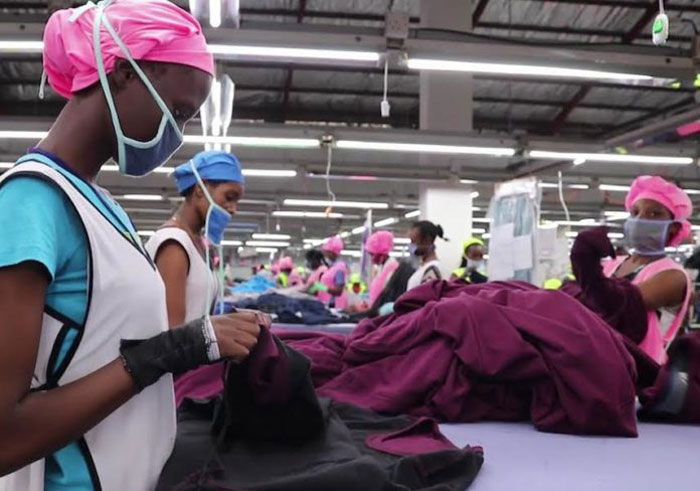
A strong pillar of its economy in the past, Nigeria’s textile industry is currently on the brink, having shrunk from 175 firms in 1985 to less than 20 in 2022. The sector’s employment has declined from 137,000 jobs in 1996 to less than 20,000 now. Nigeria’s textiles exports suffered a huge setback between 2003 and 2008. Sinking to its lowest level in 2006, textile exports has sunk almost zero today.
The Nigerian Textile Manufacturers Association (NTMA), held a press conference recently to address the state of poor competiveness. Led by Folorunsho Daniyan, President, NITMA the conference emphasized on the need for urgent government intervention to keep the industry alive.
Discouraging imports and boosting local consumption
Data released by the Nigerian Bureau of Statistics show, finished products dominated Nigeria’s textile imports in 2021. The all-commodity group import index of Nigeria’s textile products increased 0.47 per cent. Highest increase on the index was recorded by textile and textile articles followed by boilers, machinery and appliances, parts thereof and wood and articles of wood, wood charcoal and articles.
Disturbed by the report, Ali Baba, President, National Union of Textile Garment and Tailoring Workers of Nigeria (NUTGTWN) said, the latest report released by the NBS shows the surprise lead taken by the textile materials in the list of country’s imported commodities in 2021. NITMA estimates, over 95 per cent of Nigeria’s domestic textile market is dominated by imported fabrics and clothing materials.
Need for strict measures to boost exports
Daniyan says, the Nigerian textile industry suffers from high production costs that make products uncompetitive. Further, products are vulnerable to unrestrained smuggling and counterfeiting of Made in Nigeria textiles, poor patronage in spite of the Federal Government of Nigeria’s Executive Order of 2017. Daniyan urged the government to provide a conducive environment for the revival of textile industry and manufacturing activities in general. It also criticized the Nigeria Customs Service (NCS) for being ineffective in combating smuggling cheap textile products largely from China and other Asian countries.
The association urged NCS to adopt strict measures like conducting raids on smugglers’ warehouses in Kano, Lagos, Kaduna, Onitsha, and other cities. It also demanded the establishment of a Presidential Task Force of textile manufacturers and union to seize the goods smuggled into the country. Daniyan emphasized on the ability of African Continental Free Trade Agreement, (AFCFTA) to elude Nigeria of the illegal textile imports that can be produced locally.
Revive Kaduna complex and attract new investments
Peter Obi, Presidential Aspirant, Peoples’ Democratic Party (PDP) says, Nigeria can earn more foreign exchange by reviving the textile complex in Kaduna. Agreeing to this, Senator Shehu Sani also emphasizes on the need to boost employment in the industry.
One big challenge faced by sector is the huge shortage of raw materials like cotton, says Erneka Offor, CEO, Acting Executive Secretary, Nigerian Investment Promotion Commission (NIPC). Government’s slack in policies in cotton, textile and garment sectors is impacting growth . Nigeria also fails to attract new investments due to unproductive operating environment and infrastructural challenges like power cuts from public power sources and high diesel and oil costs. Marketing challenges like smuggling and dumping of textile products also make the industry uncompetitive, adds Offor. Any further decline may cause it to lose several direct and indirect jobs, he warns.
Decrease in crop size leads to cotton consumption outpace production in 2021-22: ICAC

This latest edition of Cotton This Month shows, a decrease in the size of cotton crop in top cotton producing countries like India, Argentina and South Africa that has resulted in consumption outpacing production in the 2021-22 season.
Consumption to exceed production by 265,000 tons
Yield of smaller-than-expected crops will lead to consumption exceeding production by about 265,000 tons. Production during the year is projected to reach 26.13 million tons while consumption is projected to reach 26.09 million tons. Total area under cotton cultivation will decrease 1 per cent during the year to 32.78 million hectare
To assess the impact of rising consumption, the secretariat uses stocks-to-use ratio that measures available cotton stocks as a share of cotton mill use to quantify the relationship between cotton supply and demand. Cotton price rise when the stock-to-use ratio declines due to tighter supply. In contrast, the ratio rises when supply exceeds demand, pulling cotton prices downwards. The total area under cotton cultivation also impacts prices.
Cotton forecasts to resume in August
The Secretariat plans to suspend publication of price projections and resume in August after re-evaluating the price situation. The current volatile market makes it difficult to predict accurate figures. Earlier too, it had suspended price forecasting in 2010-11 season of unprecedented high price and volatility.
Cotton This Month is published by the International Cotton Advisory Committee at the beginning of a month with Cotton Update published mid-month. The mid-month ‘Cotton Update’ contains updated information on supply/demand estimates and prices.
Transparent information on cotton production
An association of cotton producing, consuming and trading countries, the International Cotton Advisory Committee (ICAC) was formed in 1939. ICAC helps member strengthen global economy by providing transparent technical information on cotton production. The Association also acts as a forum for discussing issues covering the cotton supply chain from farm to textile manufacturing. It will provide a free access to its cutting-edge technologies like the voice-based app and virtual technology cotton training program. The intergovernmental commodity body covering cotton, ICAC is recognized by the United Nations.
Operating conditions of cellulose fiber enterprises in China improves in 2021
Compared to 2020, the operating conditions of most cellulose fiber enterprises in China improved significantly, according to the annual reports disclosed by Chinese listed companies.
Operating in the chemical fiber sector, FuningAoyang Technology Co registered a revenue of 1.048 billion yuan and a net profit of -1.068 billion yuan (-420 million in 2020). The huge losses are mainly caused by asset impairment losses, asset disposal losses and disposal costs of related employees. As per a CCF Group report, the company’s annual production declined by 36.26 per cent to 85,386 tons. The sales volume of the company declined by 36.84 per cent to 89,965 tons. The inventory declined by 90.67 per cent to 500 tons. On Apr 9, 2021, the company announced that it planned to sell viscose business, and the counterparty is Sateri China Investment Co., Ltd.
Jilin Chemical Fiber, a manufacturer of viscose filament yarn and viscose staple fiber reported a 29.7 per cent year-on-year increase in revenue of viscose filament yarn to 2.206 billion yuan, and the revenue of viscose staple fiber is 1.197 billion yuan, an increase of 72.52 per cent year-on-year. The production and sales of viscose filament yarn is 67,259 tons and 70,723 tons respectively, and the production and sales of viscose staple fiber is 106,052 tons and 103,797 tons respectively.
Nanjing Chemical Fiber improved its sales volume of viscose filament yarn to 897.37 tons during the eporting period. The inventory of viscose filament yarn has been sold, with revenues of 18.11 million yuan, a year-on-year increase of 92.84 per cent. The output and sales volume of viscose staple fiber is respectively 33.6kt and 30.8kt, with a revenue of 328 million yuan, a year-on-year increase of 24.56 per cent
Sanyou Chemical’s output and sales of viscose staple fiber declined to 681.7kt and 668.4kt respectively, compared with 749.6kt and 761kt in 2020. The revenue of viscose staple fiber increased by 21,03 per cent Y-o-Y to 8.284 billion yuanwhile the net profit declined by 124 million yuan to 270 million yuan
Xinxiang Chemical Fiber currently focuses on the production and sales of viscose filament yarn and spandex, and has suspended the production of viscose staple fiber. During the reporting period, the company produced 64,374 tons of viscose filament yarn, a year-on-year increase of 3,587 tons. The revenue totaled 2.045 billion yuan, a year-on-year decrease of 6.49 per cent. Zhongtai Chemical: the output and sales of viscose fiber is 569.9kt and 267.4kt respectively, and the output and sales of rayon yarn is 297.5kt and 300.3kt respectively. The revenue of the two is 2.881 billion yuan and 4.199 billion yuan respectively, a year-on-year increase of 80.7 per cent and 34.34 per cent respectively.
Fashion e-commerce contributes 37% to Nigeria’s economy: NEPC
The fashion e-commerce sector presently contributes to 37 per cent revenues to Nigeria’s economy, says DrEzaYakusak, CEO, Nigeria Export Promotion Council (NEPC),
Yakusakadds, fashion including textile and footwear sub-sector remains the second largest contributor to Nigeria’s Gross Domestic Products (GDP) after food, beverages and tobacco according to latest Statista 2020 figures.
Given the present circumstances, Nigeria has no option but to support the growth of its non-oil revenue sector for her economy to recover fast, Yakusak adds
There is no longer any doubt that sectors such as the apparel, garment, arts and craft, cosmetics and the beauty industry have continued to make tremendous contributions to the growth of the nation’s GDP.
’Available statistics from ecommercedb.com indicates that e-commerce transactions in 2020 was over $5 billion, presently, it is ranked 35th largest market for e-commerce globally with yearly record growth of 42 per cent.
Yakusak emphasized that NEPC is willing to render support to individuals and organizations that present viable and services of various sectors all of which forms the basis of its partnership with Agogo Africa to launch a credible platform to onboard fashion and related sectors for trading.
Digital Denim Week showcases Fall/Winter 23-24 collections of 83 brands
Around 83 exhibitors and more than 1,600 visitors, along with 1,800 professionals participated in the Digital Denim Week on May 17 and 18, 2022 at Berlin in Germany. These brands showcased Fall/Winter (F/W) 23-24 collections and their up-to-date sustainable R&D denim developments.
The elite show created an opportunity for denim manufacturers to meet with the creative minds behind brands.
Family-owned Italian laundry Blue Jeans Lavanderie showcased their chlorine- and potassium-free permanganate solution to attain the in-demand 3D effects seen on the Fall/Winter 22-23 catwalk.
Pacific Jeans proudly promoted ‘Made in Bangladesh’ at Denim PV in Berlin. The buyers visited Pacific Jeans stall at Denim PV and explored and experienced the premium jeans manufactured by Pacific Jeans. Bangladesh-based Square Denim presented its ‘ballerina’ impression with 85% stretch and no growth. Along with ballerina fabric – Square Denim also showcased vintage-inspired fabrics, ‘always raw’ finishes and ‘cactus’ denim manufactured with waterless dyeing in the F/W 23-24.
Turkey-based Isko presented its iconic fabric franchises like the Isko Reform, Isko Pop. Over 95% of Isko’s collection comprises a least 50 per cent recycled material – underlining the company’s emphasis on reducing virgin components.
Blue Jeans Lavanderie highlighted that the high-end denim market is beginning to transform from the worn-in vintage Levi’s look to bolder distinctions, needle piercing and color.
Pakistan-based Chottani presented a slow fashion notion that customs carved woodblock prints. Sustainability was the main attraction as recycled cotton and BCI cotton was the center stage of RealteksTekstil’s collection of tried-and-true indigo fabrics.Serbia-based Eurotay showcased A nostalgic collection that offers the 80s- and ’90s-inspired fabrics. A heritage range centers on selvedge denim with a worn look.
Another Pakistan-based denim manufacturer SM Denim’s booth attracted visitors with its eye-catching digital prints.Indigo Textile showed its zero-waste notion developed in collaboration with US designer Danielle Elsner.
Some of the other happenings at the Denim PV show included in-person and online fashion seminars, innovations at the show in the Trends Agora, Digital Denim Smart Talks to review the sector’s ecological progress and innovations in terms of sustainable materials, a Season Smart Talk donating new eco-friendly denim developments, and a Traceability Smart Talk to determine traceable-production solutions presented by the show’s exhibitors.
Copenhagen Fashion Week SS23 to focus on menswear
The SS23 edition of Copenhagen Fashion Week will focus on menswear and feature brands like Jade Cropper, (di)vision, The Garment and A Roege Hove, PLN, Latimmierand OperaSPORT.
New brands BernerKühl and Sunflower will participate alongside schedule stalwarts Soulland, Martin Asbjørn, Schnayderman's and Wood Wood, as well as last season's Zalando Sustainability Award winner, Iso.Poetism by Tobias Birk Nielsen. This is matched by Holzweiler, HenrikVibskov and Mark Kenly Domino Tan who shall be presenting menswear within their collections for the season ahead.
With an aim to present the best of the Nordics, Ganni will be back physically for August, alongside the highly anticipated continued presence of Saks Potts, Helmstedt, Rotate, Skall Studio, Stine Goya, Hope, Baum und Pferdgarten, Lovechild 1979, Gestuz, Munthe, RabensSaloner, SamsøeSamsøe, Remain and Rotate.The Royal Danish Academy will present the MA collections of their graduating class.
This season, CPHFW will also include Hungarian brand Aeron to the schedule, bringing their international perspective and Nordic synergies to SS23.
Welspun India receives Strong rating in CRISIL’s Sustainability Year book
Global leader in home textiles, Welspun India has received ‘Strong’ rating in the Sustainability Yearbook 2022, released by CRISIL, an S&P Global company and leading rating agency in India. As per a Business Wire India report, the ratings were based on analysis of ESG efforts of over 575 companies across 53 sectors by CRISIL Welspun India topped among the textile companies with the highest scores in all three dimensions of Environment, Social, and Governance.
Dipali Goenka, Joint Managing Director & CEO, Welspun India says, the company has always embedded ESG and circularity in every facet of its operations, setting benchmarks for the industry as a whole. Earlier this year, Welspun India was awarded with the 1st rank by the Union Ministry of Jal Shakti at the National Water Awards for its water stewardship and state-of-the-art 30 million litres per day sewage treatment plant at Anjar in Kutch. The company also baged the Jury Special Mention Award for its STP to recycle and reuse domestic sewage at the Frost & Sullivan and TERI’s Sustainability 4.0 Awards 2021, which honored companies embedding Sustainability with Economic Value Creation.
Trident’s Q4FY22 net profit jumps 137.1%
The consolidated net profit of textile brand Trident grew 137.1 per cent to Rs 181.25 crore in Q4 FY’22. Operations revenue from grew 39 per cent to Rs 1,869.85 crore during the quarter. Trident reported a 150.8 per cent Y-o-Y rise in consolidated profit before tax at Rs 244.26 crore in Q4 FY22. The company's operating margin grew to 21.67 per cent in quarter ended March 2022 as compared to 20.7 per cent as of March 2021.
On full year basis, the company’s consolidated net profit jumped 173.9 per cent to Rs 833.74 crore as net sales rose 54.5 per cent to Rs 6,997.66 crore durng the financial year ended March 31, 2022 over the financial year ended March 31, 2021.
The board of directors passed a resolution to raise funds and further recommended enabling resolution for approval of shareholders for an amount not exceeding Rs 500 crore by issue of non-convertible debentures (NCDs) by way of public or private offering, in one or more tranches. A vertically integrated textile (yarn, bath & bed linen) and paper (wheat straw-based) manufacturer, Trident is one of the largest players in home textile space in India.
Indonesia’s TPT industry grows 12.45% in Q1FY22
Contrary to the forecasts of Ministry of Industry of the 10.44 per cent growth of the apparel industry and 0.95 per cent of the textile industry, the Indonesian Filament Yarn and Fiber Producers Association (APSyFI) has predicted the textile and textile product (TPT) industry will grow 12.45 per cent on an annual basis in the first quarter of 2022. According to Redma Gita Wirawasta, Chairman, APSyFI, growth in the first quarter of 2022 was driven by domestic sales due to Ramadan 2022. However, Wirawasta believes growth will not continue in the second quarter of 2022.
Wirawasta attributes this to the opening of the textile import faucet for general importers or API-U.This step is strange because national textile manufacturers have proven they can supply the needs of the downstream textile industry since mid 2021. In addition, textile industry players have made investments to increase their production capacity. However, the restrictions on imports leads to lobbying by textile importers to the government to open the textile import faucet, he adds.