


FW
China to increase duty benefits to Bangladesh
China plans to increase duty benefits to Bangladesh, allowing free access to one percentage point more Bangladeshi products to its market in order to reduce the trade imbalance between the two countries.
As per a Daily Star report, around 97 per cent of goods produced in Bangladesh were granted duty-free access in July 2020. The package covers nearly 9,000 Bangladeshi goods.
The proposed 98 per cent will cover more than 9,000 locally produced goods. However, the duty benefit will cease to exist once Bangladesh makes the status graduation from a least developed country to a developing one in 2026. However, it could be retained through a trade deal.
The tariff free quota will be expanded by 1 percentage point as soon as possible, said Li Jiming, Chinese ambassador to Bangladesh.
Europe sportswear market to grow at 6% CAGR till 2025: GlobalData
Worth $115.9 billion in 2020, the sportswear market in Europe is expected to grow at a CAGR of over 6 per cent from 2020-25, as per a report by the Europe Sportswear Market Research Report offered by GlobalData Plc.
As per the report, the sportswear market in Europe was dominated by offline sales in 2020. Clothing, footwear and accessories specialists were the leading distribution channels in the market during the year, followed by online specialists and other online retailers. Nike, Adidas, and Decathlon were the top brands in Europe’s sportswear.
GlobalDatais involved in collecting and analyzing data to create comprehensive, authoritative, and granular intelligence on a global scale. The company leverages the collective expertise of its in-house research analysts, consultants, and data scientists, as well as thousands of external industry thought-leaders.
Copenhagen Fashion Summit convenes over 9,000 leaders
Hosted in the Royal Opera House, Copenhagen, on June 07-08, 2022 the Copenhagen Fashion Summit convened over 900 leaders from brands, retailers, NGOs, policy, manufacturers, and innovators to drive urgent action. The Summit was presented by Global Fashion Agenda (GFA), the non-profit organization that is accelerating the transition to a net positive fashion industry, under the patronage of HRH The Crown Princess of Denmark.
The Summit was centred around the theme ‘Alliances for a New Era’. Under the theme, the event brought together leaders to foster pre-competitive collaboration within the fashion industry and examined atypical cross-industry alliances, in a bid to accelerate the transition to a net positive industry.
The content was designed to be the boldest yet and focused on challenging topics and honest discussions with more diverse voices. The programme covered topics from ‘What even is a sustainable brand?’ to ‘subverting fashion’s historical exclusion’, to ‘supercharged storytelling’ to the ‘metaverse impact and decentralized futures’.
Rising cotton prices threaten garment makers in Asia
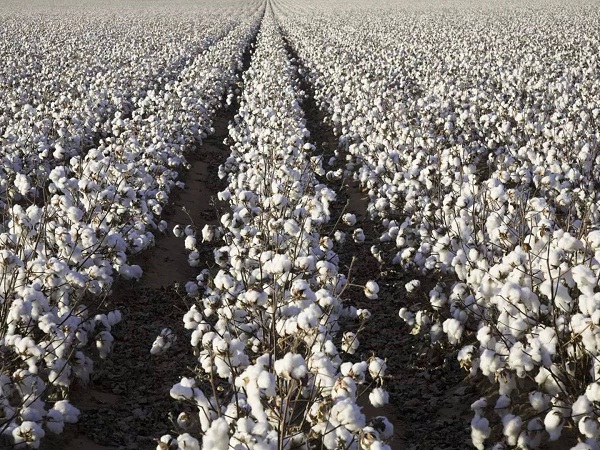
One of the region’s top employers, Asian garment makers are h facing mounting losses for some time with some small units even suspending operations, rendering thousands of workers jobless. Yet to recover from the sharp rise in freight and fuel prices, garment makers in Asia have been further hit by a spike in cotton prices with their global customers refusing to absorb the price rise.
A few garment manufacturers are replacing cotton with cheaper synthetic fabrics to sustain operations. They factories are running at full capacity but without profits, says Siddiqur Rahman, Managing Director, Sterling Group, a Dhaka-based supplier to H&M and Gap.
Global cotton prices surge
Garment makers woes have aggravated due to the uncertain demand outlook from Europe amid the Russia-Ukraine war, says a International Business Times report. Struggling to fulfill orders from the last three months, small apparel makers in India have stopped taking new orders, explains Ashok Juneja, President, Textile Association of India. They are struggling to fulfill orders from the last three months as cotton prices have more than doubled in a year after rains hit harvest.
Reaching their highest levels since 2011, global cotton prices rose 70 per cent in May with further increases predicted amid damaged crop due to a draught in the US, and higher demand from China with the easing of COVID curbs. With buyers refusing to raise prices, garment makers face uncertain summer demand, especially in Europe, adds Ravi Sam, Managing Director, Adwaith Textiles, an Indian exporter. Spinning mills in Southern India have stopped producing yarn and procuring raw cotton, says the South India Spinners Association.
Synthetic fibers over raw cotton
Asian garment makers are currently facing stifled demand amid China’s COVID-curbs and higher fuel prices. A four-fold increase in shipping costs from pre-pandemic levels and the refusal of global brands to absorb these costs is adding to their woes, notes Rahman.
To cut costs, a few mills are opting for synthetic fibres over raw cotton. They are increasing the ratio of polyester in their spinning mills, adds Rogers Varner, President, Varner Brokerage. However, manufacturers are bound by contractual commitments to use certain types of fabrics and cannot swap so easily, says Louis Barbera, Partner and Analyst, VLM Commodities.
Analysts predict, cotton cost may not ease soon as they continued to rise even amid strict lockdowns in China, and are expected to rise as the country resumes purchases. The industry uses about 400,000 tons of Xinjiang cotton every month, half of year-ago levels, the trader added. However, the lockdowns in China are triggering demand to spike. The hot weather in Texas is also helping cotton producers boost prices, adds Barbera. A time may come when people may stop buying cotton, warns Keith Brown, Principal, Keith Brown and Co.
Global baby apparel market to grow at 5.56% CAGR from 2022-2027
As per IMARC Group’s latest research report, titled “Baby Apparel Market:Global Industry Trends, Share, Size, Growth, Opportunity, and Forecast 2022-2027, the global baby apparel market is expected to grow t a CAGR of 5.56 per cent during 2022-2027.
The global market is majorly driven by increasing birth rates. In line with this, rising social media influence and changing fashion trends are significantly contributing to the market growth. Furthermore, bio-sensor-based baby apparel is gaining traction in the market, owing to its ability to quickly detect various activities of the infant, thus catalyzing the market growth. Apart from this, easy access to apparel and accessories, coupled with the infrastructural development of retail stores, is propelling the market growth. Moreover, the increasing number of working women has increased their purchasing power, which has resulted in greater demand for designer clothes for toddlers. Additionally, the rising trend of baby photoshoots is providing a boost to the market growth.
Business atmosphere in Bihar has improved in the last few years: NitishKumar, Chief Minister
The overall business atmosphere in Bihar has improved drastically in the last few years and the state is now getting many proposals from big investors and reputed companies, said Nitish Kumar, Chief Minister, addressing an investors’ meet after launching the Bihar Textile and Leather Policy for 2022. He also assured the investors all possible assistance from the administration and the state government.
The CM further said, his government would ensure that Bihar becomes the top destination for investors in different sectors in the coming years.
The government is currently working in various sectors, especially ethanol production, textile and leather, to attract investors in a big way, added Yadav while lauding state's industry minister Syed ShahnawazHussain for creating awareness among the investors about the facilities provided by the state government.
Investors are frequently arriving in the state with investment proposals. Such a turnaround happened mainly because of the consistent efforts of the industry minister, he added.
The textile and leather policy envisages capital investment subsidy up to Rs10 crore as well as freight subsidy up to Rs10 lakh per year.The power tariff for such units will be Rs2 per unit in order to provide competitive electricity rate to the industries to set up units in the state, he said
The new policy is aimed at opening doors for new textile and leather industries in Bihar. The state government has made several provisions for various types of incentives, including capital investment, employment generation, power tariff and skill development subsidies, Yadav said.
Announce ECLGS 5.0 for the garment sector, urges Finance Minister
Highlighting the crisis faced by the industry, Raja M Shanmugham, President, The Tiruppur Exporters’ Association (TEA) has urged NirmalaSitharaman, Union Minister of Finance to announce Emergency Credit Line Guarantee Scheme (ECLGS) 5.0 for garment sector.
Addressing the increase in policy repo rate by 50 bps to 4.90 per cent, Shanmugham said the central bank has taken the decision mainly to ensure the inflation remains within the target, while supporting growth.
However expressing apprehension he said that the increase of interest rates by banks will further impact the sustenance of MSMEs in Tiruppur Cluster.
He also emphasized on the protection of lakhs of jobs associated with MSMEs, out of which 65 per cent are women workers hailing from rural areas.
TEA has sought an immediate intervention to address the liquidity crisis issue and bring back the Value Added Tirupur Knitwear Garment Sector into a normal business mode, gain confidence and sustain in the business.
Garment retailers announce hike in prices of Fall/Winter garments
On June 7, Uniqlo owner Fast Retailing announced plans to raise prices of fleece and jacket in the Fall/Winter by as much as $7.54. As per a report by The Street, the company has been forced to raise priced due to increasing production costs. Currently, the hike is only effective in Uniqlo’s Japan stores. However, other brands across the globe are also raising prices. For instance, Ireland-based Primark, the retail subsidiary of Associated British Foods plans to raise prices of its Fall/Winter collection.
Similarly, British fast fashion brand Next increased prices by 8.5 per cent for fashion items while the prices for certain Zara items were raised by 10 per cent, as per a UBS Research report. The prices of H&M were also hiked by 10 per cent for certain items in March.
However, despite rise in prices, these chains continue to remain significantly more affordable than next rank in affordability. The prices of a Levi’s jeans have increased to $70 a pair without discounts while the prices of a Gap shirt start at $50. Currently apparel and footwear costs have increased 6.8 per cent from 2021, as per data from the Labor Department.
Sales at apparel stores rose by 11.2 per cent over the prior year, well above the prevailing rate of inflation for the category, says Neil Saunders, Managing Director, GlobalData. A lot of these sales were driven by consumers preparing their wardrobes for the spring and summer seasons.
Inditex Q1FY’22 profits soar by 80%
Despite a pause in business from Russia and Ukraine, net income of Inditex during the first fiscal quarter ended April 30, soared. The parent company of brands like Zara and Bershka recorded 80 per cent hike in Y-o-Y profit to €760 million with robust performance across all regions and in the US in particular. The company has incurred €216 million in costs to cover all extraordinary expenses resulting from temporary closure of business in Ukraine and Russia. It has closed all stores in the region since late February.
Revenues grew 36 per cent to €6.74 billion. China was the only market that underperformed with 67 stores being closed during the period due to COVID-related restrictions. Óscar García Maceiras, CEO, Inditex, attributed the strong results to a well-differentiated business model and the excellent performance of creative, sales and operating teams. The company’s sales increased 17 per cent in constant currency between May 1 and June 5. It has made constant progress on delivering its sustainability targets
The company has signed a three-year agreement worth over €100 million with Infinited Fiber Company to purchase 30 per cent of the fiber produced by Infinna, entirely from textile waste.
A part of Inditex’s Sustainability Hub, the project is an open innovation platform created to promote and to scale up innovation in materials, technologies, processes and sustainable solutions.
Shein applauded for $1.5 million donation to textile waste workers in Ghana
Chinese fashion behemoth Shein was applauded at the International Conference on Fashion Sustainability in Copenhagen for making a $15 million donation over three years to a charity working in the world’s largest secondhand clothing market at Kantamanto in Accra. The announcement was made by Liz Ricketts, Director, Or Foundation, a Ghana- and US-based not-for-profit working with Accra’s textile waste workers. Ghana gets 15 million secondhand garments every week, of which 40 per cent are thrown away that ultimately end up polluting the oceans.
The Or Foundation assesses the physical damages done by the accumulation of these heavy clothing bales through a weekly clinic for waste workers. According to Ricketts, the Shein fund does not substitute responsible behavior but forms a part of its extended producer responsibility. The money aims to address the ecological and social problems of the global clothing trade. It will help the foundation fund an apprenticeship program for Kantamanto women. It will also help textile business improve market conditions by recycling waste.
Ricketts urges other brands to be open about their sustainability initiatives and reward communities successfully managing their wastes. Adam Whinston, Head-ESG, Shein says, the brand looks forward to working with Or Foundation to address the problem of secondhand fashion.











