FW
Lululemon to launch the Hike Collection on July 5
Activewear brand Lululemon plans to launch its Hike Collection on July 5, 2022.
The 33-piece line has been designed to make hiking easier and more enjoyable.Its abrasion-resistant seams reduce friction for chafe-free climbs while lightweight fabrics make the items more breathable.
One such example is the ‘Grid Fleece Hiking Overshirt’ which is made of a grid-textured mesh fleece fabric that is also breathable. It’s also water-repellant and has pockets on the chest, arm sleeve and side of the stomach for carrying items.
The ‘Convertible Ripstop Hiking Jacket’ features zip-off sleeves to maximize comfort in shifting. Other pieces are highly adaptable to enable hikers to be comfortable in a variety of climates, like the water-resistant and windproof ‘Convertible Ripstop Hiking Jacket’ which features zip-off sleeves and a mesh opening in the back to maximize airflow. It even has a shoulder bag built into the side pocket that can be easily zipped off and used as a lightweight purse. The jacket can be rolled up into a small bundle for easy packing.
Convenience and comfort is equally as prioritized with the eight accessories included in the collection. The ‘LiftOS Hiking Backpack 25L’ is made with a water-repellent material and has been designed so that once it’s packed, it sits higher on the back, removing strain from the shoulders. The back panel is also curved for added lumbar support and to help transfer weight to the hip.
The entire collection is packable, stretchable and highly adjustable to maximize convenience and encourage hikers to get outdoors. The phrase “detours are welcome” is subtly sprinkled throughout the line—on the back of sports bras and above the hip pockets on leggings. “For us it’s about a sense of adventure,” says Stubbington. “We want to invite people to get out and enjoy nature.”
The ‘Hike to Swim Bra’ are designed to be functional both while hiking and swimming, to encourage hikers to not let their clothing prevent them from experiencing all that nature has to offer. The bra is made with Esca fabric and Xtra Life Lycra for stretch and shape retention, and improved chlorine and salt resistance.
The collection has been designed to take hikers from the trails to everyday activities, like socializing in the city.
Global zippers market to reach $22,280 million by 2028: Report
Due to the COVID-19 pandemic, the global zippers market, currently worth $16.760 million, is forecast to a readjusted size of $22.280 million by 2028 with a CAGR of 4.1 per cent during the forecast period 2022-2028.
As per a report by Market Research Guru, key players in the global zippers market include YKK, Coats Industrial, SBS, Weixing Group, YBS Zipper, etc. Global top five manufacturers hold a share about 20 per cent. Asia-Pacific is the largest market, with a share about 60% per cent followed by Europe and North America, both with a share about 15 percent. In terms of product, Nylon Zipper is the largest segment, with a share about 65 per centAnd in terms of application, the largest application is garment, followed by luggage and bags, sporting goods, camping gear, etc.
The research report incorporates the analysis of different factors that augment the market’s growth. It constitutes trends, restraints, and drivers that transform the market in either a positive or negative manner. This section also provides the scope of different segments and applications that can potentially influence the market in the future. The detailed information is based on current trends and historic milestones. This section also provides an analysis of the volume of production about the global market and about each type. This section mentions the volume of production by region. Pricing analysis is included in the report according to each type, manufacturer, region and global price from 2017 to 2028.
KraigBiocraft Labs selects manufacturer for first apparel line by SpydasilkTM brand
KraigBiocraft Laboratories, Inc, the biotechnology company focused on the development and commercialization of spider silk, in collaboration with its joint venture partner, Kings Group, has selected a high-quality garment manufacturer to produce first apparel line under its Spydasilk'sTMbrand.
The manufacturer selected has demonstrated its capacity and technical ability to deliver on Spydasilk's vision for apparel that blends performance and elegance with its exclusive spider silk materials. With more than 20 years in business and its strong ties to Vietnam's entire textile supply chain, this producer can leverage the capabilities of the best mills to bring the Spydasilk brand to life.
In partnership with Kings Group, the Company has already delivered its recombinant spider silk yarn and a non-spider silk fabric swatch for use in developing a brand new fabric built upon the performance and feel of the Company's spider silk.
Kraig Labs and Kings Group are simultaneously developing an accelerated product launch plan, including media, marketing, sales, and distribution systems for this first direct-to-consumer apparel launch.
Government to set up 75 textile hubs to support exports: Piyush Goyal
The Indian government plans to setup 75 textile hubs like Tiruppur to support textile exports, said Piyush Goyal, Union Minister of Textiles addressing a exporters’ meeting in Tiruppur. The meeting was organized by the Federation of Indian Export Organizations (FIEO) and Apparel Export Promotion Council.
The textile hubs will not just promote textile exports but also create huge employment opportunities, Goyal added. In 1985, Tiruppur exported garments worth Rs 15 crore annually. Growing at a CAGR of 23 per cent, exports have reached Rs 30,000 crore in 2021-22. Tiruppur’s garment industry employs four crore people across the textile value chain and its current size is Rs 10 lakh crore, Goyal stated.
Government to introduce PLI for apparel manufacturers: Piyush Goyal
The government plans to introduce a production linked incentive (PLI) scheme for apparel manufacturers, says Piyush Goyal, Minister of Textiles, Commerce and Industry. The PLI scheme with an outlay of nearly Rs 2 lakh crore has been announced for over a dozen sectors including man-made fibre, technical textiles, white goods, medical devices, and automobiles and auto components.
The scheme may help Indian garment manufacturers scale up operations at the time when the government is negotiating tariff concessions under FTAs with the UK and the European Union. India’s textile exports may reach $100 billion in the next five years from $44 billion currently, says Goyal. It plans to double these to Rs 20 lakh crore in the above period by creating new job opportunities, attracting investments and promoting startups and MSMEs, he says..
The government is accelerating free trade agreements with Canada, UK, European Union and Israel. It also plans to sign FTAs with the GCC (Gulf Cooperation Council) and Eurasian Economic Union These FTAs will help India boost exports, create new jobs and attracts investments worth thousands of crores, adds Goyal.
Garment manufacturers’ revenues to increase 9-11% this fiscal: CRISIL
Revenues of garment manufacturers could increase 9-11 per cent this fiscal to 1.25 times of the levels seen in 2020, says the SME Report 2022 by CRISIL. EBITDA margins of these manufacturers is likely to remain in the range 5 to 5.5 per cent. Over 25 per cent of micro, small and medium enterprises (MSMEs) operating in India lost 3 per cent market share due to the pandemic, while the earnings before interest, tax, depreciation and amortization (EBITDA) margins of over 50 per cent declined due to a sharp rise in commodity prices last fiscal compared to the pre-pandemic level.
The share of MSMEs in several sectors has erorded by 3 per cent while EBITDA margin erosion was equal to fiscal 2020. Despite a rise in freight rates, Ebitda margin of small fleet transport operators was impacted by 50 bps in fiscal 2022, over fiscal 2020, due to limited cost pass-through of rising fuel cost that forms about half of the total cost.
Sectors such as textiles offered a ray of hope for exports. Cotton yarn exports benefited from the US ban on Xinjiang, China-made items, besides the China+1 policy. Having 70 per cent share, the RMG industry gained from supply constraints in China, and from emerging global opportunities. Going forward, Tirupur-based garment manufacturers are likely to benefit from export orders diverted from an economically floundering Sri Lanka, says Elizabeth Master, Associate Director, CRISIL Research.
The CRISIL report covers 69 sectors and 147 clusters that achieved an aggregate revenue of Rs 47 lakh crore, representing 20-25 per cent of the GDP.
Brazil to boost Asian partnership with cotton supply to Bangladesh
Brazil is looking to enter strategic partnerships in Asia by increasing its cotton supply to Bangladesh, says Cotton Brazil at a sellers’ mission event in the country. Certified by the Brazilian Cotton Growers Association (ABRAPA), the international market development program for Brazilian cotton, Cotton Brazil, visited Bangladesh and met officials of BTMA, BGMEA, Ministry of Industries, Cotton Development Board, and some prominent textile millers including Noman Group, MAS Group, NRG Group, ISRAQ Group, Viyellatex Group, Syed Group and Salma Group in Dhaka
The delegates disclosed their aim to promote sustainability and demonstrate Brazil as a reliable partner of high-quality and traceable cotton. The event also focused on Cotton Brazil’s commitment to ensuring short-term, medium, and long-term business continuity through its promotion of Brazilian cotton export. They discussed the issue of rising cotton prices on Asian garment manufacturers and the lack of supply due to top producers’ diminishing yields of cotton last year.
To overcome cotton shortage, demand for Brazilian cotton is increasing making it the fourth largest cotton producer and second-largest exporter in global market. According to Cotton Brazil, they supplied 166,000 tons of cotton to Bangladesh as of April 2022.
ABRAPA estimates, Brazil’s area under cotton cultivation increased by 15 per cent to about 1.58 million hectare. It forecast, cotton production will increase 20 per cent to 2.82 million tons in 2022, marking it the second-best season for Brazilian cotton’s history. Moreover, Brazil projects, its total shipments will rise to 1.90 million tons for the next cycle.
Shein emerges the ‘most downloaded shopping app’: UBS survey
UBS Evidence Lab’s Global App Monitor has named Chinese fast fashion retailer Shein as ‘most downloaded’ shopping app as well as the ‘most searched-for apparel retailer in the US. The online-only retailer of inexpensive clothes, beauty, and lifestyle products grew from a $15 billion valuation in 2020 to 100 billion value in a recent funding round, as per a WSJ report.
Growth is attributed to its strong momentum with consumers, say UBS analysts. As per an AoI report, growth makes Shein an increasing threat to US specialty retailers such as American Eagle, Aberchrombie & Fitch, Urban Outfitters, Victoria’s Secret, The Gap, and department stores and off-price retailers. Despite having no network of physical stores, Shein has been ranked a top brand on TikTok and has been the second favorite website for shopping amongst teenagers for the last two years, according to Piper Sandler's semi-annual Gen Z Survey. The e-commerce company pursues an aggressive, data-driven fast-fashion business model that makes it a popular brand amongst price-sensitive consumers.
ASW 2022 to hold physical edition in Bengaluru on July 1 and 2, 2022
One of the leading events in apparel sourcing, The Apparel Sourcing Week (ASW) will organize its first physical edition after a two-years on July 1 and 2, 2022 at Sheraton Grand Hotel in Bengaluru. The two-day event will hold 10 seminars, 12 open house discussions, vendor sessions and workshops and accelerator program for start-ups, etc. It will include participants from 15 countries and over 10,000 brands, retailers, manufacturers, and analysts. Popular and established brands like the Shopper’s Stop, Being Human, Tata Cliq, Nykaa Beauty & Fashion, Adidas, Benetton, etc, will participate in the event.
Other key exhibitors such as Pacific Jeans, Giant Group, Laila Fashions, Liva, Vardhman, Reshamandi, Trace Network, Flix Stock etc, will also participate in this event. Mayank Mohindra, Director, Apparel Resources says, ASW 2022 has been curated for the industry and businesses to decode the post-pandemic business ecosystem and markets. It will also help generate productive and effective business opportunities, he adds.
The two-day will also host many thought-provoking sessions to discuss important topics such as ‘Reinventing physical retail’, ‘Fashion innovation using AI’, ‘Upcycling – the new frontier for sustainability, ‘Sourcing in times of Industry 4.0’, etc. The event also aims to encourate India-Bangladesh collaboration and promote South Asia as the global hub for apparel and textile innovations.
Euratex launches ReHubs initiative to recycle 2.5 million tons of textile waste by 2030-end.
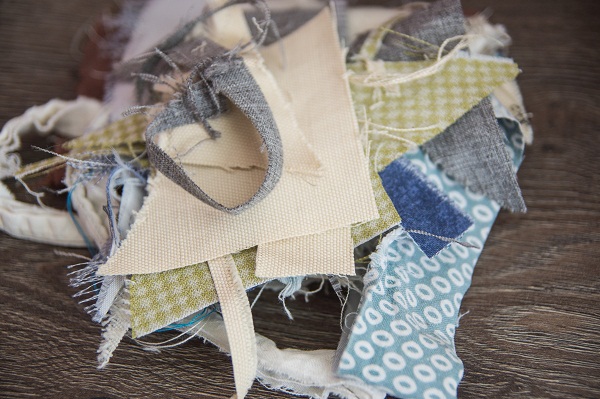
Textile recycling industry is expected to provide social, economic and environmental benefits to around €4.5 billion by 2030. It would also create 15,000 new jobs by the period besides increasing the need for nearshoring and reshoring of textile production, as per the Techno Eonomic Study by Euratex’s ReHubs Initiative.
No large-scale plan to tackle textile waste
Completed by ReHubs in June 2022, the ‘Techno Economic Master Study’ provides valuable information on the feedstock, new technologies, organizational and financial needs to recycle 2.5 million tons of textile waste by 2030, effective launching of the the ReHubs initiative. The study states, Europe generates around 7-7.5 million tons textile waste annually, of which only 30-35 per cent is recycled. Around 85 per cent of this textile waste comes from private households and approximately 99 per cent is virgin fibers.
The European Waste law mandates all member states to separately collect the textile waste in the next two and half years. While, few countries have already launched schemes for this purpose, a large scale plan to process this waste does not exist. To achieve a fiber-to-fiber recycling of around 18 to 26 per cent by 2030, investments worth $6 billion are needed. This would help the industry scale up fiber sorting and processing efficiently. It would also enable it to achieve economic, social, and environmental benefits worth €3.5-4.5 billion by 2030.
Expanding the industry size
Launched by Euratex in collaboration with members in 2020, the ReHubs initiative would help expand the size of textile recycling industry to 6-8 billion and, create around 15,000 direct new jobs by 2030. It aims to focus on recycling fiber-to-fiber 2.5 million of textile waste by 2030. For this, it will form a leading collaboration hub with large players and SMEs from across an extended textile recycling value chain. The project will be executed in four stages.
In the first stage, textile waste will be transformed into feedstock. It will address the limitations in current sorting technologies. The project will led by Texaid AG and build a 50,000 tons facility by the end 2024.
Second stage will focus on increasing adoption of mechanically recycled fibers in the value chain. The capacity of these fibers will be expanded in the third stage by addressing technical challenges in recycling thermo-mechanical textiles. The last stage will involve creating a capsule collection with post-consumer recycled project.
Achieving Green Deal goals
Bringing together key European and world players, the ReHubs initiative aims to transform textile waste into a resource. It also aims to boost the adoption of textile circular business model at large scale. The initiative will also focus on achieving EU ambitions of a Green Deal that mandates collection of entire textile waste by 2024.
The main focus of the collaboration will be on converting societal textile waste issue into a business opportunity. It will take into consideration all perspectives on chemicals, fibers making, textiles making, garments production, retail and distribution, textiles waste collection, sorting and recycling.
To mobilize resources for the initiative, Euratex has set three stakeholder groups. These include: a Business Council of pioneering companies that will conduct the TES study; Stakeholder Forum of business, research and academia players, who will share high-level information and support future collaboration; a Task Force comprising 14 national associations to review the progress of the ReHubs initiative and align this with policy and industry developments at the national level.