FW
Teejay Lanka records remarkable profit growth
Teejay Lanka PLC has increased with impressive financial performance in the third quarter of 2023-24, showcasing a robust turnaround from the previous year's losses. The multinational textile giant reported a notable pre- and post-tax profit growth for the quarter ending 31st December 2023.
With a remarkable 2870% growth, Teejay Lanka recorded a pre-tax profit of Rs 677.7 million compared to a loss of Rs 24.4 million in the same quarter of the previous fiscal year. Similarly, the company posted a net profit of Rs 477.4 million, marking a significant gain of 230% over the preceding year's net loss of Rs 366 million.
Despite a 12% dip in revenue compared to the corresponding quarter of the previous financial year, Teejay Lanka witnessed a 2.2% improvement in its top line compared to the second quarter of 2023-24.
Chairman Ajit Gunewardene attributed the company's resilience to proactive measures taken to navigate through industry uncertainties. These strategies include tapping into new customer segments, diversifying product offerings, upgrading infrastructure, and enhancing workforce skills to adapt to market dynamics effectively.
CEO Pubudu De Silva highlighted the success of strategic initiatives, such as inventory management and cost reduction measures, which contributed to the positive outcomes. Additionally, the stability in yarn prices bolstered the company's profitability.
Teejay Lanka's commitment to sustainability and transparency has earned it accolades, including being ranked as the top corporate entity for Transparency in Corporate Reporting by Transparency International Sri Lanka. With a strong ownership structure and strategic partnerships, Teejay Lanka is poised to sustain its growth trajectory amidst evolving market conditions.
Lenzing, Recyc Leather and GanniI unveil sustainable fashion innovation
Lenzing Group, in collaboration with leather alternative expert Recyc Leather, introduces Pélinova, a pioneering material blending Tencel Lyocell fibers and recycled leather for upscale fashion applications.
Teaming up with Danish contemporary brand Ganni, the trio aims to revolutionize the market with Pélinova as a sustainable alternative to genuine leather, debuting with Ganni’s Slouchy Boots.
Pélinova boasts a unique manufacturing process, combining pre-consumer recycled leather with Tencel Lyocell fibers, renowned for their eco-friendly production and odor resistance. The result is a supple, durable material, reducing water usage by 70% and CO2 emissions. Olivier Grammont, Co-founder of Recyc Leather, underscores Pélinova's environmental impact and potential to reshape the leather industry.
Florian Heubrandner, EVP Global Textiles Business at Lenzing AG, emphasizes the partnership's role in driving fabric innovation toward sustainability. Ganni, committed to reducing carbon emissions, lauds Pélinova as a key step in their journey towards responsible fashion.
Beyond footwear, Pélinova holds promise for home textiles, furniture, and luxury goods. Ganni aims to integrate Pélinova into accessories, with further collaborations and scaling efforts underway. The trio will discuss their collaboration at Première Vision Paris, highlighting the power of sustainable fashion through recycled materials.
Uniqlo unveils 2024 Spring collection for new women’s line
Uniqlo has unveiled the 2024 Spring collection for Uniqlo: C, a women's line designed by renowned British fashion creator Clare Waight Keller.
The latest line epitomises a light, comfortable aesthetic, pulsating with fresh energy to seamlessly integrate into everyday life. Adorned in lively hues of poppy red, blush pink, aqua blue, and army green, the functional and beautifully crafted pieces beckon a transition to the new season.
The collection features a pleated dress subtly emerging from behind a trench coat, voluminous wide pants, knitted vests, cropped T-shirts, poplin check baseball caps, and spacious faux leather bags.
Keller shares, this second collection for UNIQLO: C explores the concept of movement through lightness. Working with ultra-light fabrications, the designer offers a new perspective of proportions through this collection where longer volumes play against cropped silhouettes.
Anticipating the upcoming season, the second installment of the 2024 Summer collection is scheduled to be launched on April 5, 2024.
Recognised for her roles at the world’s top fashion houses and as the Creative Director of renowned luxury brands in London and Paris, British-born designer Clare Waight Keller has overseen ready-to-wear and couture collections. In 2018, she was awarded with title of ‘Womenswear Designer of the Year’ at the British Fashion Awards and was named one of the most influential people of 2019 in TIME magazine's TIME 100 Awards.
Diesel fights counterfeits with new technologies and partnerships
Iconic denim brand Diesel is winning the war on counterfeits by leveraging cutting-edge technology and strategic partnerships. The brand is achieving this success on the basis of five of its key strategies including a focus on the growing online shopping trend and its its counterfeit risks. Diesel is targeting online platforms hosting fake products, including resale websites.
The brand has appointed Glenn Martens as the new Creative Director to boost its appeal amongst customers, continue making genuine products and motivating anti-counterfeiting efforts.
Since 2023, the brand has seized 80,000 counterfeits of its goods. It has removed 27,000 online listings and shut down 500 imitation websites
Collaborating with Certilogo, Diesel uses unique QR codes and digital labels for product authentication, empowering customers to verify purchases.The brand has also joined the Aura Blockchain Consortium to leverage blockchain's robust security for traceability and anti-counterfeiting.
Despite Diesel's success, the fight against counterfeiting remains ongoing. The EUIPO estimates that counterfeiting costs the European clothing, cosmetics, and toy sectors a staggering €16 billion annually.
Bangladesh textile industry gets a boost with three mega exhibitions
The textile and garment industry in Bangladesh is set for a surge of innovation and collaboration with the commencement of three major exhibitions – DTG 2024, DitaTex, and Dyechem. These events, running concurrently from Feb 1-4, 2024 at the ICCB, will showcase the latest technology, cutting-edge solutions, and hottest trends in the sector.
Organised by the Bangladesh Textile Mills Association (BTMA) and Yorkers Trade and Marketing Service Co, these exhibitions offer a unique platform for global suppliers to connect with local customers and explore new business opportunities. From spinning and weaving to dyeing, printing, and garment manufacturing, every stage of the textile and garment supply chain will be covered.
Beyond showcasing equipment, materials, and accessories, these exhibitions aim to foster technological innovation throughout the industry. Attendees can expect to see cutting-edge techniques, groundbreaking solutions, and the latest trends driving
Bangladesh's textile and garment sector forward
Dedicated to textile and garment machinery, DTG 2024 will showcase advancements in all stages of production. Focusing on textile and apparel accessories, DitaTex will offer a glimpse into the latest trends and materials. The third exhibition, Dyechem explores the dyeing and chemical industry, highlighting sustainable and efficient practices.
These exhibitions play a crucial role in propelling Bangladesh's textile and garment industry to new heights. By fostering collaboration, innovation, and business opportunities, they contribute significantly to the country's economic growth and competitiveness in the global market.
APTMA proposes roadmap to achieve $50 billion in annual exports
To achieve its target of $50 billion in textile annual exports, the All Pakistan Textile Mills Association (APTMA) has presented a 41-point policy roadmap.
in collaboration with industry stakeholders.
While textiles have always been Pakistan's economic backbone, recent years exposed limitations. The industry relies heavily on cotton, limiting its global reach in an increasingly diversified market dominated by man-made fibers (MMF).
Recognising this, the roadmap emphasises product diversification, urging rationalisation of import duties on MMF inputs and incentives for MMF manufacturing and value-added production.
The plan also focuses on expanding manufacturing capacity. A key initiative is the establishment of 1,000 new garment plants, aiming to not just increase production but also shift towards higher-value products. This ambitious project, targeting an annual export capacity of over $50 billion, signifies a commitment to growth, innovation, and global competitiveness.
Specialised industrial and export processing zones with plug-and-play facilities are proposed to attract investment and create a growth-conducive ecosystem. Efficient logistics, advanced testing facilities and robust supply chain management are also highlighted as crucial factors in achieving international standards.
The roadmap demands regionally competitive energy tariffs (9 cents/kWh) and transition towards net-zero emissions to comply with upcoming regulations. It proposes allowing B2B power contracts and increasing solar net-metering cap as solutions. Additionally, it also emphasises on fixing the sales tax refund system and reducing inflation to single digits for tackling the industry's liquidity crisis.
Further, the roadmap outlines aggressive export marketing strategies including high-level delegations attending international conferences, networking events, and attracting international brands through incentive packages. It also emphasises on promoting Pakistan as a destination for buying houses and facilitating entry into non-traditional markets like e-commerce.
Government extends RoSCTL scheme for apparel exports until 2026
The Central Government has extended the Rebate of State and Central Taxes and Levies (RoSCTL) scheme, which provides financial support to make exports more competitive, until March 31, 2026.
Launched in 2020, RoSCTL compensates for state and central taxes not covered by the existing duty drawback scheme for apparel, garments, and made-ups. This helps make Indian exports more affordable in the international market.
Extension of this scheme ensures a stable policy environment that is crucial for long-term planning in the textile sector. Additionally, the scheme reduces the tax burden on exporters, making their products more competitive globally.
The scheme aligns with the principle of ‘zero-rated exports, where taxes are not exported, creating a fair playing field for Indian exporters.
The extension of the RoSCTL scheme also allows other textile products not covered by the scheme to benefit from the Remission of Duties and Taxes on Exported Products (RoDTEP) scheme.
The extension will boost competitiveness in India's apparel export competitiveness and create jobs in the textile sector.
Isko launches Casual Line-new fabric collection
Global denim giant Isko is branching out with the launch of Casual Line, a new fabric collection that ventures beyond its denim roots. This move aims to attract new customers and offer sustainable, casual-chic options.
The collection utilises a patented woven technology featuring recycled polyester and FSC viscose, making it entirely cotton-free and eco-friendly. It, adheres to the CTRL+Z initiative, using recycled and regenerated fibers.
Going beyond traditional denim weaves and constructions, the collection offers 45 different fabrics in various colors, rigid and stretch variants, for a total of 80 styles.
Offering comfortable alternatives to chinos and sweatshirt-like denim materials,
Casual Line aims to attract a different consumer segment. The new range will be officially unveiled at Premiere Vision in Paris from February 6-8, 2024.
This move signifies Isko's commitment to innovation and sustainability while expanding its reach beyond the denim market. With its focus on eco-friendly materials and diverse styles, Casual Line has the potential to appeal to a wider audience seeking comfortable and stylish casual wear.
TextileGenesis tackles footwear and leather traceability with new consortiums
A leader in textile traceability solutions, TextileGenesis is launching two new consortia dedicated to improving transparency in the footwear and leather industries.
Both these industries have complex and fragmented supply chains that are facing increasing growing pressure for ethical and sustainable practices, making robust traceability crucial, says Amit Gautam, Founder and CEO, TextileGenesis.
Having a proven track record in fashion, TextileGenesis offers manufacturers and brands a secure, digital platform for sustainable textile traceability. Their pioneering solution uses digital tokens and a network of partners to guarantee authenticity and provenance.
Building on this success, the new consortia aim to encourage information sharing by tracking all materials, footwear and leather companies, boost consumer confidence through transparency and drive positive change through collaboration to enable brands to deliver on sustainability commitments.
For these two consortia, TextileGenesis has assembled key players like Lenzing, Coats, and Fashion for Good, and is working closely with leading fashion brands.
Gartex Texprocess India 3rd Mumbai edition begins at JWCC
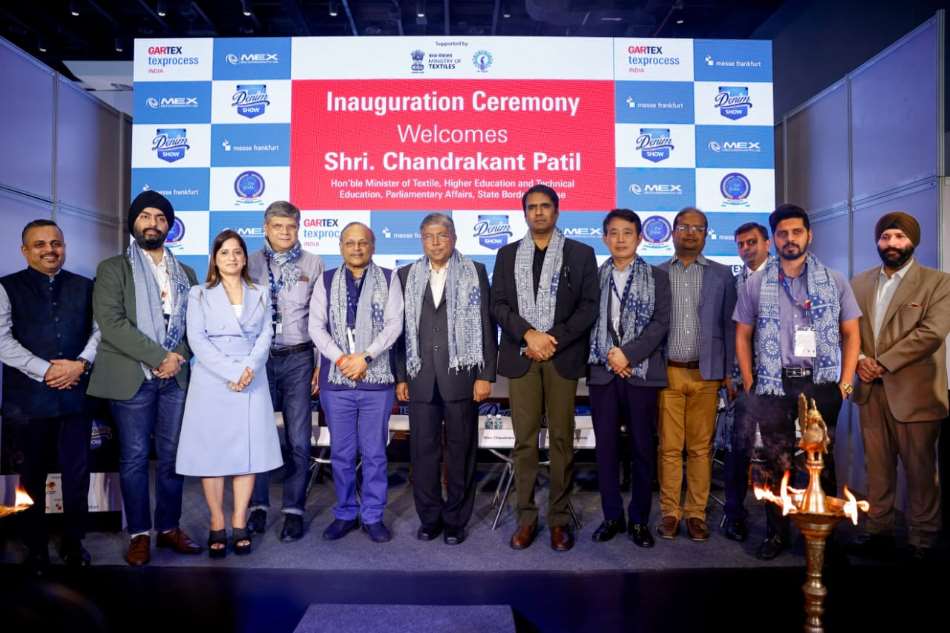
The 3rd Mumbai edition of ‘Gartex Texprocess India’ commenced today at the Jio World Convention Centre, Mumbai. The event, dedicated to garment and textile manufacturing, promises a platform for innovation and collaboration within the industry.
Government's support for indigenous manufacturing
Chandrakant Patil, Hon’ble Minister of Textile, Higher Education and Technical Education, Parliamentary Affairs, State Border Defense, lauded the organizers for consolidating 'Fabric to Finish solutions' in a single venue. He emphasized the exhibition's role in addressing the diverse needs of textile clusters across India, fostering growth in the domestic manufacturing sector.
Embracing the 'Vocal for Local' initiative
Encouraging attendees to endorse the Government's "Vocal for Local" campaign, Patil stressed its evolution towards a global outlook. He highlighted its significance in promoting local brands and bolstering the 'Make in India' initiative.
Innovations on display
With over 120 exhibitors showcasing innovations across 32 key product categories, including the Denim Show, Fabrics and Trims Show, and Screen Print India-Textile zone, the event provides a glimpse into the latest trends and technologies driving the industry forward.
Government initiatives and industry growth
The Ministry of Textiles' 2023 year-end review highlighted key initiatives such as PM Mitra Parks and investments under the PLI Scheme, indicating a concerted effort to boost the sector's growth. Sharad Jaipuria, President of the Denim Manufacturers Association, emphasized the industry's commitment to advancement and sustainability.
Transformative phase and global participation
Raj Manek, Executive Director of Messe Frankfurt Asia Holdings Ltd, underscored the industry's transformative phase, driven by government support, automation, and innovation. He emphasized the role of events like Gartex Texprocess India in facilitating global collaboration and understanding industry trends.
Exhibitor Diversity and International Presence
The event features a diverse range of exhibitors, both domestic and international, showcasing cutting-edge machinery, technologies, fabrics, and raw materials. Brands from India and abroad demonstrate the industry's global reach and potential.
Looking Ahead
Gaurav Juneja, Director of MEX Exhibitions Pvt Ltd, expressed optimism about the event's impact on the sector, citing supportive government schemes and technological advancements. The three-day event, supported by various stakeholders, aims to foster networking, knowledge exchange, and business expansion.
Conclusion
As the event unfolds over the next three days, it promises to be a crucial platform for stakeholders to explore opportunities, exchange ideas, and contribute to the growth of the textile industry. Supported by government initiatives and industry participation, Gartex Texprocess India reaffirms its position as a cornerstone event in the sector's calendar.