FW
Karl Mayer Turkey appoints Toros Greenhalgh as General Manager
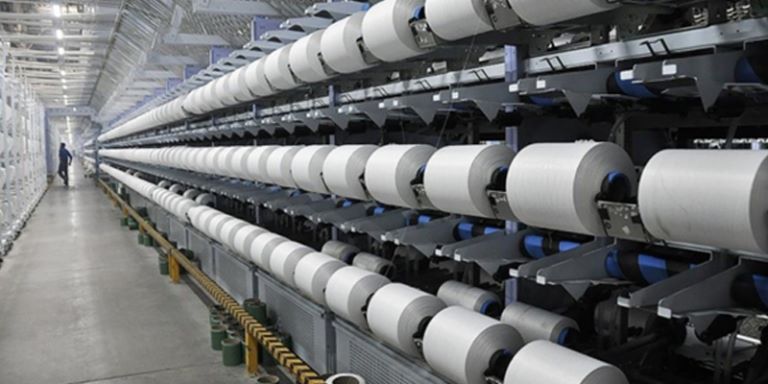
Karl Mayer Group expands its foothold in the Turkish market with the establishment of Karl Mayer Turkey in Bursa, Türkiye, signaling a strategic move to meet growing customer needs. Toros Greenhalgh, an industry veteran with a background in mechanical engineering and global experience spanning various sectors, takes the helm as General Manager.
With a focus on enhancing after-sales service, spare parts provisions, and educational offerings in warp knitting and warp preparation, Karl Mayer Turkey aims to elevate customer satisfaction.
Greenhalgh, leveraging his seven-year tenure in textile machinery with ERKO, Karl Mayer's regional representative, pledges to optimize service processes and cultivate a cohesive team dedicated to exceptional support.
Supported by Karl Mayer Group's resources and training initiatives, Greenhalgh is poised to strengthen customer relationships and drive operational efficiency. His appointment underscores Karl Mayer's commitment to delivering unparalleled service in one of its key markets.
Pure London x JATC brings menswear renaissance to Olympia London
The fashion landscape is set for a groundbreaking shift as the inaugural Pure London x JATC show prepares to grace Olympia London from February 11th to 13th, 2024. Breaking the mold and resurrecting menswear's presence at Olympia after a prolonged absence, this event promises an invigorating fusion of new and established menswear collections.
Juls Dawson, JATC Creative Director, heralds the return of menswear to Olympia with enthusiasm, citing the event as a platform to rejuvenate fashion retail with fresh prospects. The lineup boasts a diverse array of brands, each offering a unique take on contemporary menswear.
Among the highlights are The Wolf, seamlessly blending classic and modern aesthetics, and Remus Uomo, renowned for its sharp tailoring and understated elegance. Revolution Now injects a dash of innovation by reimagining the classic sweater, while Gianni Feraud showcases its expertise in suede and leather crafting.
Noteworthy additions include Outer known, championing environmental sustainability, and Harper & Lewis, whose unisex collection channels 90s subculture with a modern twist. VOID mode pushes the boundaries of fashion with avant-garde designs inspired by gothic and punk aesthetics.
In the accessories realm, Power play Brands offers a comprehensive selection, while Thomas Sabo dazzles with premium fashion jewelry. Ibex England presents meticulously crafted leather accessories, accompanied by Levi’S footwear and Merry People.
With over 300 curated brands, Pure London x JATC promises to be a definitive fashion extravaganza, coinciding with Scoop International at Olympia West. This convergence marks a pivotal moment in fashion history, heralding the resurgence of menswear at one of London's premier fashion destinations.
IFCO 2024: Istanbul prepares to host the epicenter of international fashion
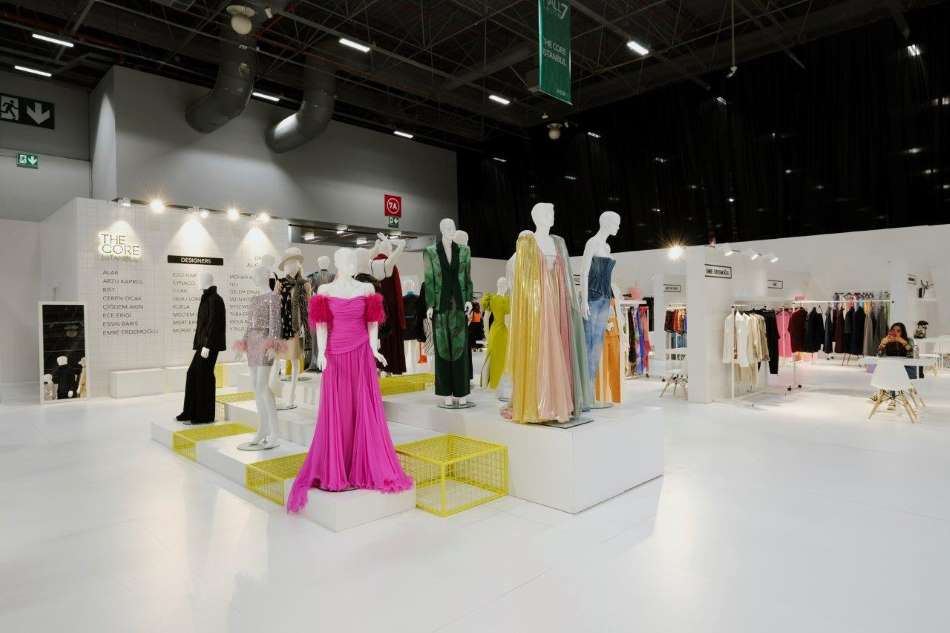
The Istanbul Expo Center gears up to welcome the fifth edition of IFCO, Istanbul Fashion Connection, from February 7 to 10, 2024. With over 600 exhibitors and brands showcasing their latest collections across 100,000 square meters, the event is poised to captivate the global fashion fraternity.
A convergence of fashion excellence
IFCO emerges as the focal point for fashion aficionados, boasting 8 meticulously arranged halls housing various product categories such as Womenswear, Menswear, Baby & Kidswear, Denim & Activewear, and more. This convergence of diversity underscores Turkey's pivotal role in the European fashion landscape, blending quality, tradition, and innovation seamlessly.
Anticipated attendance and industry significance
With more than 30,000 visitors expected, including buyers, experts, and enthusiasts eager to explore avant-garde designs and trends, the event underscores Turkey's status as an indispensable player in European fashion. As the EU's third-largest clothing and textile supplier, Turkey offers competitive advantages like short delivery times and high production quality.
Exhibitor showcase: Unveiling style and innovation
From established designers to emerging talents, the IFCO promises a showcase of creativity and innovation. Notable names like Arzu Kaprol and Tuba Ergin, alongside retail giants like Armine and Gizia, will unveil their latest collections, setting the stage for a fashion extravaganza.
A visitor's delight: Networking and international presence
IFCO's B2B Match Making facilitates efficient connections between exhibitors and buyers, with high-profile delegations from the USA and the UK adding to the international flair. With over 25,000 visitors from 125+ countries in the previous edition, the upcoming event anticipates an even larger turnout.
Empowering through knowledge: Seminars and workshops
The event's comprehensive seminar and workshop lineup, featuring contributions from industry stalwarts like WGSN and Academia della Moda, will delve into crucial topics such as consumer habits, ethical fashion, and digital transformation. Additionally, a collaboration with eight fine arts institutes promises to showcase the creative prowess of young talents.
Trendsetting initiatives: Reflecting the pulse of fashion
The Trend Area, curated by the renowned fashion academy IMA, promises to be a hub of innovation and inspiration. With a theme of Resilience AW 2024, it aims to encapsulate the psychology of design while staying abreast of the latest industry trends.
MTD: Nurturing emerging talent
The Fashion Designers' Association MTD emerges as a pivotal collaborator, spearheading innovative events and providing a platform for budding designers. Their involvement underscores the event's role as a catalyst for the Turkish fashion industry's evolution.
A nexus of creativity and inspiration
IFCO 2024 transcends being a mere fashion showcase; it serves as a nexus for exchange, inspiration, and forward-thinking ideas. As visitors traverse through its vibrant corridors, they embark on a journey through the dynamic world of fashion, encapsulating the essence of style, creativity, and innovation.
In essence, IFCO 2024 promises to redefine industry standards, offering an immersive platform that celebrates the ever-evolving realm of fashion.
Spring Fair 2024: Retail's global gathering
Spring Fair, the cornerstone of UK retail, returns for its 74th edition this Sunday, promising an electrifying showcase of the latest trends and innovations in Home, Gift, Fashion, and Everyday essentials. With a staggering attendance of over 35,000 buyers from around the world, this iconic event transforms Birmingham's NEC into a bustling hub of commerce and creativity.
Drawing in titans of retail like Marks & Spencer, Selfridges, and Harrods, alongside an impressive array of global retailers, Spring Fair stands as the ultimate marketplace for industry players to connect, discover, and procure. This year's lineup boasts a diverse roster of over 1,200 suppliers, with 200 exclusive to Spring Fair, ensuring a unique and unparalleled shopping experience.
At the heart of the event lies an expansive array of products spanning 13 distinct sectors, from Home and Fashion to Kids and Everyday essentials. With a keen eye on the pulse of consumer trends, Spring Fair serves as a launchpad for thousands of innovative brands vying to capture the imagination of buyers and consumers alike.
Soraya Gadelrab, Event Director of Spring Fair, emphasizes the event's role in championing retail innovation and fostering meaningful connections within the industry. "Spring Fair isn't just an event; it's a celebration of retail's resilience and dynamism," she remarks.
The Home sector, a treasure trove of chic furnishings and decorative accents, showcases offerings from esteemed brands like Trampoline and Ivyline, alongside exclusive launches such as Kleine Wolke's bathroom textiles collection.
Meanwhile, the Everyday sector presents a dizzying array of essentials, from household goods to vaping products, with newcomers like Keplin Group injecting fresh energy into the mix.
In the realm of Gifts, brands like Joe Davies and Sass & Belle showcase a cornucopia of contemporary designs and personalized treasures, while the Greeting Cards sector brims with creativity from industry stalwarts like Ohh Deer and The Art File.
Not to be outdone, the Fashion destination Moda unveils the latest trends across Clothing & Footwear, Fashion Accessories, and Jewellery & Watches, featuring an eclectic mix of established labels and emerging designers.
Beyond the bustling marketplace, Spring Fair 2024 offers a rich tapestry of educational opportunities and networking events, with industry luminaries sharing insights on everything from strategic buying to social media marketing.
As Gadelrab aptly puts it, "Spring Fair is where the retail world converges to shape the future of commerce." With its unwavering commitment to innovation and collaboration, this year's edition promises to be a beacon of inspiration for retailers worldwide.
Fulgar shines at Milano Unica with eco-sustainable yarn innovations
Italian leader in man-made fibers, Fulgar showcased its range of cutting-edge eco-friendly yarns at the recent Milano Unica trade fair. Aligned with the event's focus on promoting sustainability, Fulgar presented its impressive portfolio of green products, attracting significant interest from major fashion fabric manufacturers.
Fulgar's commitment to sustainability goes beyond a decade, with green programs focused on innovation and complete supply chain traceability. The extensive range of eco-sustainable yarns showcased by the brand includes Q-NOVA® regenerated yarn that is made from recycled nylon waste and offers high performance and sustainability; EVO® bio-based yarn derived from castor oil and offering a renewable and low-impact alternative; Amni Soul Eco, a bio-degradable nylon yarn that decomposes faster than traditional fibers, and Q-Cycle® yarn that is made from recycled pyrolysis oil from end-of-life tires, reducing reliance on fossil fuels.
These premium yarns cater to the high-quality standards of the fashion world without compromising on sustainability. Leading fashion fabric manufacturers are choosing Fulgar's solutions for their spring/summer 2025 collections, highlighting the demand for responsible and eco-friendly materials.
Daniela Antunes, Marketing Manager, Fulgar, says, the brand focuses on developing a responsible, traceable supply chain positions, and supports partner factories through its green products
The success of Fulgar's approach is evident in the collections presented by renowned players at Milano Unica. These include Alto Milanese, Borgini, Brugnoli, Iluna, Inwool, Lemar, Luxuy Jersey, Milior, Miti, Pontetorto, Sidonios, and Sitip.
Fashion 2.0: AI injects creativity and innovation into textile design
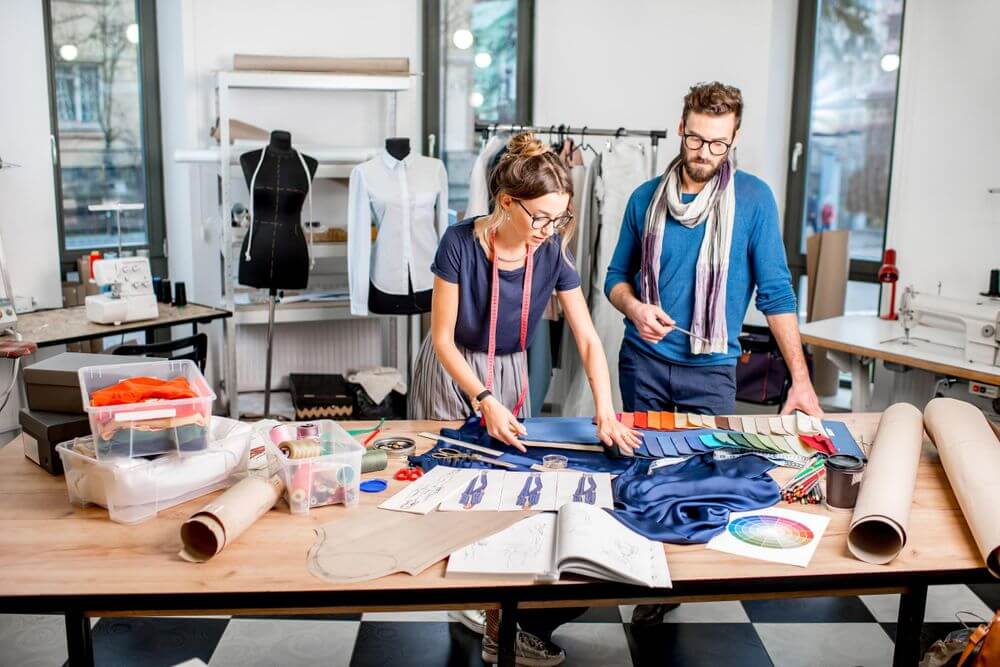
Fashion's ever-evolving landscape stuns constantly, from intricate silhouettes and opulent palettes to trend-setting colors. In 2024, fashionistas worldwide eagerly await the unveiling of this year's mood board. But in a revolutionary twist, 2024 promises to elevate the fashion ecosystem through the fusion of a disruptive force: Generative AI.
For decades, the textile industry, the very essence of fashion, has stagnated, leaving millions yearning for unique textile creations. With the tech revolution permeating various industries, the textile world is poised to embark on an AI-driven transformation in 2024, delivering fashion enthusiasts with "Textile Design 2.0," as Francesca Kerrey, CEO of AI Style, aptly puts it.
Game-changing design generation
Textile design, an intricate tapestry of art, requires years of practice to master. With AI integration, the fashion industry stands to create designs that explode with creativity, innovation, and distinctness. "AI is not here to replace designers; it's here to empower them," Kerrey emphasizes. By working with AI, designers can analyze customer preferences and trend data, crafting designs that not only stun but sell. Furthermore, Generative AI promises a rapid churn out of new designs at minimal cost, paving the way for brands to launch and gather customer feedback before physical production, as Minh Hua, Chief Technology Officer of the World Fashion Council, highlights.
Boosts retail sales
Generative AI isn't limited to design; it revolutionizes sales channels too. Brands can identify potential buyers through AI-powered sales tools and utilize this data to create designs that resonate with these customers' palettes. Automated marketing campaigns then promote these designs to both repeat and potential customers, creating a smooth sales funnel. With this feedback loop, brands can deliver exactly what fashion enthusiasts crave, as Carlota De La Vega, Founder of the Institute for Computational Fashion, emphasizes.
Fostering experimentation
Fashion thrives on experimentation, especially in an era where uniqueness reigns supreme. However, creative blocks plague everyone, from designers and artists to writers and dancers. By tapping into the creative prowess of Generative AI, designers can access innovative designs that often escape human sensibilities. This freedom to experiment pushes the boundaries of fashion, offering consumers an unprecedented array of choices, as De La Vega points out.
Quality control
Quality reigns supreme in all industries, but in fashion, it speaks volumes about a brand's identity and creative ethos. Traditionally, skilled workers physically inspect fabrics for quality control. With AI's entry, the textile design space will not only transform design and sales but also automate and expedite quality control. From ensuring uniform yarn manufacturing to testing raw cotton's color, strength, and length, Generative AI will redefine quality control.
Future-ready fashion space
While fashion has empowered us to embrace our identities and step into our own skin, it's time to elevate the industry to its true potential. In 2024, AI integration will propel the fashion world to its toes, creating trends that stay, delivering a breath of fresh air and innovation to fashion connoisseurs. As Hua aptly concludes, "AI is going to democratize fashion by making it more accessible and personalized for everyone." Indeed, the future of fashion is here.
SIMA optimistic: Interim budget maintains tax status
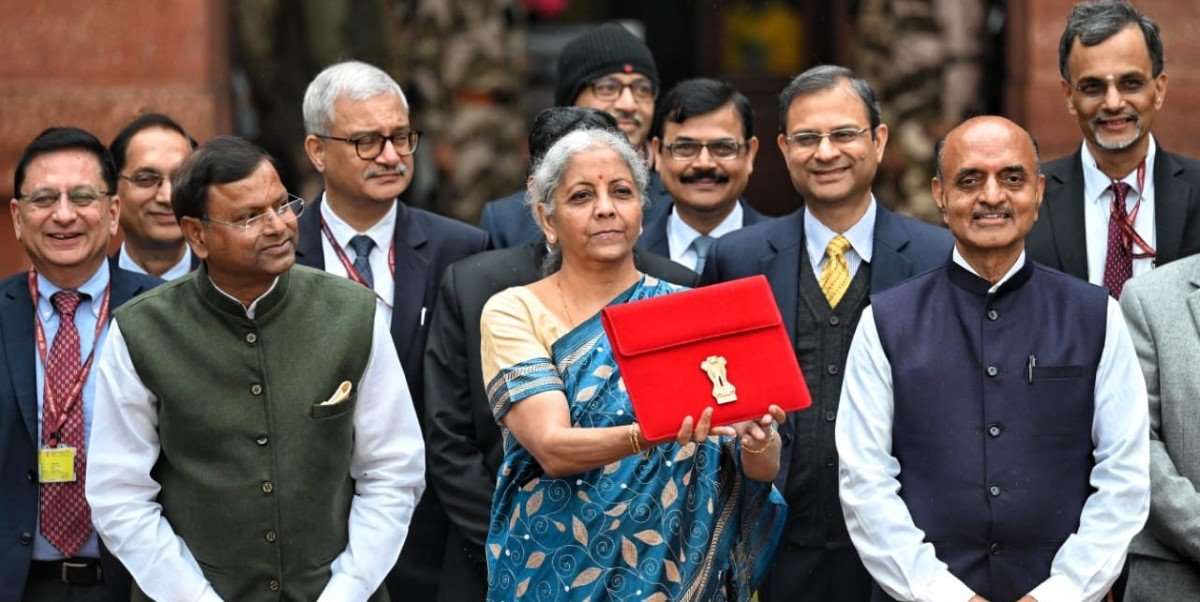
The interim Union Budget for 2024-25, unveiled today, retains existing tax rates while prioritizing ongoing projects and infrastructure development, aligning with the government's vision to achieve developed status by 2047. With a focus on inclusive growth and infrastructure, the budget sustains the momentum of previous years.
In response, S. K. Sundararaman, Chairman of The Southern India Mills’ Association (SIMA), voiced optimism, particularly with looming Lok Sabha elections. He expressed hope that the textile industry's demands regarding raw material issues and other concerns would find consideration in the forthcoming full-fledged budget.
Sundararaman welcomed the 27.60% increase in allocations for the Ministry of Textiles for 2024-25, compared to the previous year. Noteworthy allocations include funding for various schemes such as PM Mitra Park, NITTM, A-TUFS, ISDS, RoTDEP, and RoSCTL, along with provisions for the Cotton Corporation of India's MSP operations.
Moreover, he appreciated measures promoting green power, aiming to reduce carbon emissions, and applauded proactive initiatives towards sustainability goals. The budget's focus on strengthening logistics infrastructure to enhance manufacturing sector competitiveness was also commended.
However, Sundararaman highlighted unresolved industry concerns, including import duty on ELS cotton, technology missions for cotton production enhancement, and exemptions for imported man-made fibers. He expressed hope for their inclusion in the full-fledged budget, emphasizing their significance for farmers and industry growth.
As anticipation builds for the comprehensive budget, stakeholders await further clarity on policy directions and support measures for sectoral development.
By 2025, the Lycra Company to adopt bio-sourcing for 30% fibers
Under new leadership and ownership, The Lycra Company, is revamping its product range with a strong focus on sustainability.
By 2025, around 30 per cent of Lycra fibers will be bio-sourced, reducing CO2 emissions by half and aligning with clients' sustainability goals.
The company’s new fiber, Lycra Adaptiv offers better stretch and adaptability, potentially reducing the need for multiple sizes and minimizing waste. The fiber has already been adopted by Adidas for its All Me line.
Polyester Fiber, Lycra T400, enables recyclable stretch fabrics for jeans and sportswear while the new Fit400 fiber expands T400's use to recyclable sports apparel. These fibers will be rolled out gradually starting late 2024.
Last year, the company faced challenges due to inflation and pandemic disruptions, but expects a better outlook in 2024. It sees a growing interest in differentiation and sustainability narratives and aims to industrial-scale circularity.
Overall, The Lycra Company is making significant strides towards a more sustainable future by integrating eco-friendly innovations into its core product range. This strategic shift positions the company for growth while aligning with the evolving demands of the apparel industry and environmentally conscious consumers.
Indian government’s new MSME payment rule sparks outrage, stakeholders urge rethink
The South India Garment Association (SIGA) has raised alarm over the potential negative effect on the garment industry due to a new payment rule for Micro, Small, and Medium Enterprises (MSMEs). In a letter to Prime Minister Narendra Modi, SIGA urged for the repeal of Rule 43B(H) of Income Tax Act, claiming it poses an existential threat to countless garment units nationwide.
Introduced as part of the MSMEs Development Act, 2006, Rule 43B(H) mandates prompt payment to micro and small businesses by buyers. Payments exceeding specified timelines – 15 days for perishables, 30 days for goods, and 45 days for services – are now deemed income for the seller, attracting taxes on the buyer.
Affects on the industry
SIGA President Anurag Singhla expressed grave concerns, stating, "This will be a big blow to the garment industry, already struggling against corporate competition. Lakhs of jobs are at stake. We urge the Prime Minister to intervene and save the industry."
Industry experts too echoed their concerns. Naresh Lakhanpal, SIGA Vice President opines, "The garment industry faces its worst crisis in 50 years. Clients are cancelling orders due to the rule. It's unsustainable." While B C Shivakumar, Managing Director of BS Channabasappa & Sons, explained highlighted its impracticality in the garment industry's context. "The average payment cycle is 90 days. Enforcing a 45-day limit will cripple us. We request a phased implementation." Kundan Jain, former SIGA President, emphasized the ripple effect on suppliers facing order cancellations. "Making payments within 75-90 days is the norm. A 45-day limit is impossible," he asserted.
The garment industry is a significant contributor to the Indian economy, employing over 12 million people and accounting for 2 per cent of the GDP. Estimates suggest that over 50,000 garment units could be affected by the new rule, potentially jeopardizing millions of jobs across the value chain.
Meanwhile the government has acknowledged the SIGA’s and other industry bodies concerns. The Ministry of Micro, Small and Medium Enterprises (MSME) has stated it is reviewing the rule and considering possible modifications. However, no concrete action has been taken yet.
Potential consequences
Beyond job losses, the rule's implementation could have severe consequences on the garment industry:
• Lower production: As factories struggle to meet tight payment deadlines, production could slow down, impacting exports and domestic availability.
• Increased costs: Businesses may need to raise prices to compensate for the additional tax burden, potentially impacting consumer demand.
• Shifting orders: Garment manufacturers may be forced to move production to countries with more relaxed payment regulations, further impacting domestic jobs and exports.
Various stakeholders have proposed alternative solutions such as having industry-specific exemptions or exempting the garment industry from Rule 43B(H) or extending the payment timelines to align with industry norms. Financial support by way of providing working capital loan or other financial instruments to help businesses meet payment deadlines. Opting for phased implementation, which would mean implementing the rule gradually to allow businesses time to adjust their practices.
The future of the garment industry hangs in balance as it awaits the government's response. The potential consequences of the new payment rule are significant, and swift action is needed to protect jobs, ensure industry stability, and safeguard the sector's contribution to the Indian economy.
Bangladesh to double non-cotton garment exports by 2025
Bangladesh's exports of non-cotton garments, including man-made fibers, could double to $19 billion by 2025 from the current $8.5 billion, predicts a new study by the Economic Relations Division (ERD).
However, this potential hinges on overcoming several key challenges such as importing man-made fibers incurs duties of up to 59 per cent, compared to duty-free cotton. This discourages investment and increases costs.
Secondly, complex customs procedures and limited access to short-term financing hinder smooth operations and expansion. The industry also lacks skilled workers and modern technology, hindering efficiency and competitiveness. It even does a dedicated fiber security strategy and limited research and development activities further impede growth.
To unlock Bangladesh’s export potential, local entrepreneurs like Md Saleudh Zaman Khan Jitu have emphasised the need for duty-free imports of raw materials. Industry leaders like Mohammad Ali Khokon and Abdullahil Rakib have also called for policy support, including duty-free access and infrastructure development.
The recommendations of these leaders include implementing a fiber security strategy to ensure raw material availability, granting duty-free access to all man-made fiber raw materials, establishing a dedicated low-cost investment fund for the sector, investing in skill development and technology adoption initiatives, streamlining customs procedures and simplify duty drawback processes and increasing research and development activities to enhance competitiveness.