FW
India launches measures for small units
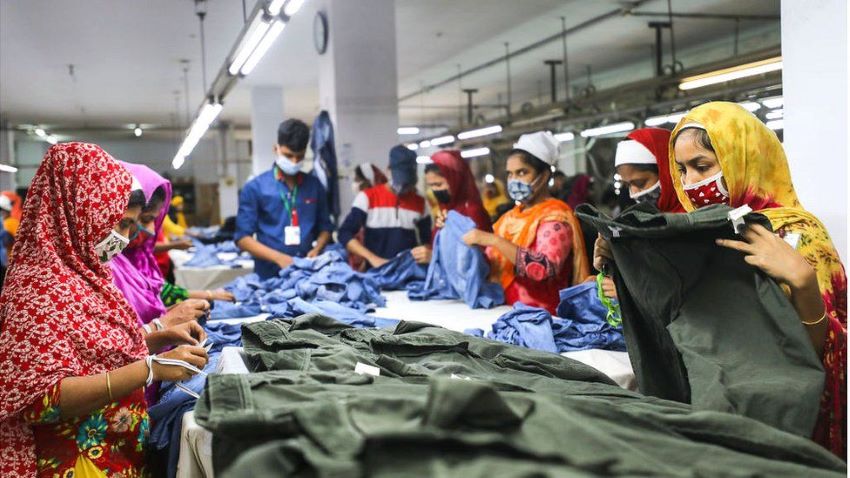
The government has announced measures to infuse confidence in small and medium units in the garment hub and for boosting industrial demand. Banks will come out with an improved and transparent OTS policy to benefit medium and small units and retail borrowers in settling their overdues and will pass on the rate cuts through MCLR reduction to benefit all borrowers. This will be a great relief to the financially stressed Tirupur knitwear garment exporting units in the small and medium sector.
As for NPA classification norms, the industry has appealed to a revert to the Two Quarter Past Due concept of 180 days instead of the 90 days prevailing now in the case of small and medium units as it will provide some breathing time for the units to recover and recoup. The opinion is that an enough and adequate monitoring mechanism may be implemented even if the overdue crosses 90 days to avoid any siphoning off such as happens in many big corporate cases. The industry requests for restructuring two times to have a leverage, after considering the seasonal nature of the business.
The rebate on state and central taxes and levies was announced on March 7, 2019, for the garment sector to reimburse the embedded taxes and levies not covered under GST.
India’s powerloom weavers want release of tax credit
The small and medium sector will receive GST refunds within 30 days. However, powerloom weavers are not satisfied and want revocation of the amended notification on GST refund lapse issued in 2017. They say their blocked accumulated input tax credit (ITC) should be released in full. A notification was on June 25, 2017, restricting refund of accumulated input tax credit in case of manufacturers of various qualities of grey fabrics, who otherwise were eligible for refund under GST. After representation by weavers, the notification was amended on June 28, 2017, allowing refund from August 1, 2018, but with condition that all the accumulated ITC up to July 31, 2018 will lapse. This was recently set aside by the high court.
The powerloom industry wants the earlier notification by which ITC refund lapses, to be revoked and feels this will help it get the full pending refund of Rs 1,400 crores to boost modernization in the industry. Medium and small units in the textile sector are the backbone of the textile industry. Release of ITC refunds within 30 days is a bold decision.
India has announced a slew of measures to boost the textile sector of the Indian economy.
Brands see Pakistan as a base
Pakistan’s cost-competitive garment makers are drawing attention from multinational brands, which are looking to expand their supplier base. Globally competitive Pakistani exporters remain few and far between. The economy still centers around production of cotton, a commodity, while manufacturers have been slow to embrace automation. But those that have gained a global foothold may benefit from the country's depreciating currency -- the rupee has lost a third of its value in the last two years, which makes Pakistan exports cheaper.
Chinese garment makers looking to export to the West are attracted to Pakistan, which has duty-free access to many western markets due to its status as a less developed economy. In addition to bringing in investment, China’s overtures have also led to an influx of Chinese business people and workers, particularly on construction projects. Whereas westerners doing business in Pakistan tend to stay only a few days at a time, the Chinese have more often settled in and become a part of local communities.
Pakistan garment companies are fighting hard to break into the supply chains of some of the world's biggest fashion brands as the country races to catch up with Bangladesh and other Asian apparel heavyweights. Terror continues to haunt the neighborhood.
UK-based garment maker Teemill shuns plastic
Teemill is a garment production company which uses certified organic cotton and plastic-free packaging. Teemill uses renewable energy throughout the supply chain and makes new T-shirts out of old ones. The cotton used is grown in northern India, where co-planting and insect-traps take the place of harmful fertilisers and pesticides. The water for the cotton comes from local reservoirs filled throughout the monsoon season, and the farmers are given a guaranteed price for their produce. In the renewable energy-run factory, water - usually a major effluent in the fashion business - is filtered and cleaned in order to be used again, while any excess cotton material is re-manufactured to be used for new products so nothing goes to waste. Even the packaging for the tee is 100 per cent biodegradable. from and lives in Garstang. A circular production model has been implemented in the latest collection.
From hummingbirds, deer, and polar bears to cassette tapes, Mt. Fuji, and dream-catchers, the designs are bold and intricate, often featuring motifs promoting veganism and environmentalism.
The fashion industry creates more CO2 than aviation and shipping combined. It's also directly responsible for 35 per cent of the microplastics found in the ocean, and is built on cheap labor and a deeply ugly throwaway culture.
Techtextil, Texprocess create a niche attracting top industry experts, exhibitors
Techtextil and Texprocess attract plenty of top decision makers, an international audience and have high levels of exhibitor satisfaction.
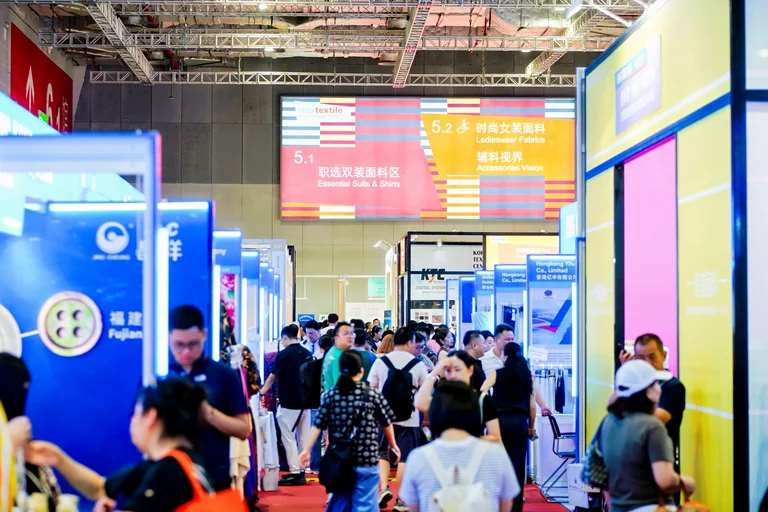
Last May’s edition with 1,818 exhibitors from 59 countries, and around 47,000 trade visitors from 116 countries, saw the biggest ever editions of Techtextil and Texprocess in Germany. The textile and apparel industry showed itself from its most progressive side, lifting the mood across the industry in what are proving to be challenging times. Both events are leading international platforms for users of technical textiles from a diversity of different industries and for manufacturers of apparel, fashion, upholstered furniture and leather products. Every two years, Techtextil mirrors the range of applications for textile materials. Leading international experts from the most diverse industries – be they from architecture, the automotive industry, medicine, the fashion industry or personal protection – come together at Techtextil in search of lightweight, durable and sustainable materials.
Featuring highly innovative exhibitors, Texprocess is synonymous with high-tech textile processing, presented in a concentration that can’t be found anywhere else. This overall package is what makes the twin fairs so unique.
For 2021 both trade fairs will respond to the exhibitors’ requests for larger stand areas. Product groups will be defined more clearly and visitors will be offered greater transparency.
Levi Strauss launches program for women
Denim giant Levi Strauss has launched an initiative focused on protecting women in supply chain. Women are frequently promised promotions or better contracts in exchange for sexual favors. The pilot program is aimed at protecting more than 10,000 women in garment making. Under the program, an independent watchdog with the power to investigate claims of sexual and power harassment will be created. This body will have the right to publicly expose abusive managers and compel factories to discipline or fire offenders. The program will run for two years and additionally involve an education campaign, to be delivered to staff of all seniority levels, as well as management training.
Levi’s has a longstanding commitment to creating safe, productive workplaces for workers across its supply chain. It is the first multinational apparel company to establish a comprehensive workplace code of conduct for its manufacturing suppliers. Reports of sexual harassment and coercion are more difficult to elicit from workers due to their fear of retaliation and other factors. The company is there for currently engaging with experts in order to identify best practices for identifying gender-based violence and harassment and improving its monitoring processes. Levi’s also plans to halve water use for manufacturing in water-stressed areas by 2025.
Khadi grows 28 per cent in India in past four years
The khadi industry in India has recorded an average growth of 28 per cent in the last four years compared to 6.18 per cent between 2004 and 2014. Also in four years, total production of khadi has jumped 70 per cent.
Khadi, a versatile fashion fabric, has become a stylish narrative that is now popularly embraced by designers. They have expanded the color palette, westernized the cuts, and created new trends. Khadi has transcended itself as a sustainable fabric of the future. At a time when the world is moving towards automation, khadi is one of the few handcrafted products. A symbol of Indian textile heritage, khadi has been brought to the centerstage over the years for its uniqueness of being hand spun, handwoven and a truly sustainable fabric. The khadi industry in India is expected to cross a Rs 10,000 crore turnover in the next five years. The target for this year is set at Rs 5000 crores.
The Lakme fashion week was dedicated to sustainable fashion where designers showcased their collection made out of sustainable fabrics. Three designers, Anuj Bhutani, Pallavi Dhyani and Gaurav Khanijo, collaborated with the Khadi Village and Industries Commission to create sustainable fashion wear that was showcased on the ramp.
Unlocking India’s cotton potential needs more focus on seeds, production
"In stark contrast to being crowned as the largest cotton producer in the world in the crop year (CY) 2015-16, India’s cotton production fared poorly in CY 2018-19 due to a 20 per cent rainfall deficit. The country’s production declined last year too by around 11 per cent over decadal average cotton production of 352 lakh bales."
 In stark contrast to being crowned as the largest cotton producer in the world in the crop year (CY) 2015-16, India’s cotton production fared poorly in CY 2018-19 due to a 20 per cent rainfall deficit. The country’s production declined last year too by around 11 per cent over decadal average cotton production of 352 lakh bales.
Increasing awareness about quality alongwith a widespread use of hybrid seeds, led to the growth of Indian cotton exports until CY 2017-18. However, lower crop estimates pushed Indian cotton millers to import raw materials in 2018-19, which were recorded to be highest in the last decade. Even stocks hit a new low at 13 lakh bales, which was a third of the decadal closing stock of 38 lakh bales.
Quality seeds, better agronomic practices to push yield
Cotton productivity in India has peaked and pulling the country out of this slump requires long-term efforts. For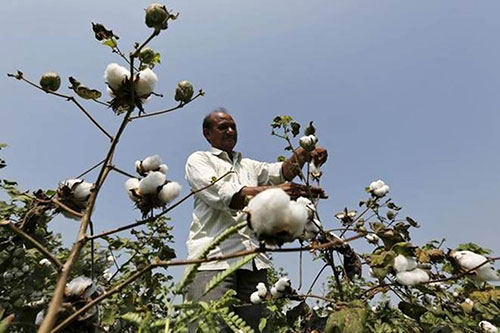 this, cotton cultivators need to first procure good quality cotton seeds with features like drought tolerance, pest resistance, etc. Secondly, they should adopt better agronomic practices such as high-quality planting of short duration varieties. This will increase their yields to about 29 per cent via lower exposure to pest attack, efficient use of water and other inputs while also suppressing weeds. They should also adopt sound management practices such as in-situ soil and water conservation with bunds, integrated pest management, soil fertility testing and management, drip irrigation, etc.
Focus on high staple length cotton
To augment cotton production and provide cotton fiber of desire length, farmers need to grow cotton varieties of high staple length. They should also adopt better harvesting and post-harvest management practices which will eliminate contamination, ensuring production and recovery of good quality of cotton that meets the requirements of domestic consumption as well as exports. Their use of commodity derivatives platforms either directly or through aggregators will help these farmers lock in their prices and create quality awareness.
Private and public sector agencies can also aid farmers by making available their desire quality of seeds at subsidised rates. As farmers get ready to sow their new crop in the next few years, they need to adopt several remedial measures to reclaim India’s position as the top cotton producer in the world.
Terry Towel Global Expo and Summit 2019, Solapur
Nike and Adidas have an ongoing battle for footwear supremacy. Nike is the larger business overall and the market leader in the global sports footwear industry with revenues from footwear of over $24.2 billion in 2018, compared to Adidas footwear revenue of $15 billion. These figures include not only Nike and Adidas branded footwear but also Converse (owned by Nike) and Reebok (owned by Adidas). Nike might be the bigger company but through sponsorship and an improving cool factor, Adidas is closing the gap. Since 2015 Adidas footwear has been growing at an average rate of 17.6 per cent whereas Nike footwear has been growing at an average rate of 6.8 per cent.
Nike’s market capitalization is more than double that of Adidas. Adidas has been demonstrating a stronger share price performance in 2019 whereas Nike has been growing in line with industry performance.
Adidas has adopted a marketing approach which focuses more on street wear sneakers through cooler collaborations with music and celebrity influencers as compared to Nike’s more sports-focused approach. Clearly with the athleisure trend moving sportswear from the gym to the office Adidas is betting that it can take even more of the market with this approach.
Solapur to host Terry Towel Global Expo and Summit 2019
The textile town of Solapur will host one of the world’s biggest exclusive expos for terry towels next month to woo international buyers who will be able directly source from local manufacturers. Organised by the Textile Development Foundation of Solapur in association with Global Network (International Trade Advisory) and supported by Ministry of Co-operative, Marketing and Textile, Maharashtra, the Terry Towel Global Expo and Summit 2019 from September 25 to 27. The expo will showcase a variety of towels along with unique jacquard woven terry towels and bath linen products.
The expo will showcase large varieties of high quality towels designed through deployment of latest technologies. Over 200 international buyers from 20 countries will attend this expo including department stores, wholesalers and retailers, corporate buyers, purchasing agents, merchants and exporters. Buyers from countries such as the US, UK, UAE, Canada, Poland, Germany, Australia, France, New Zealand, South Africa, Uganda, Kenya, Qatar and Saudi Arabia will be present.