FW
Brands up against overconsumption of fashion on Black Friday, Cyber Monday
"The United Nations recently declared an 11-year deadline to prevent irreversible damage from climate change. UK-based NGO Fashion Revolution has launched a Black Friday campaign that encouraged people to protest against mindless consumption and retailers to abstain from providing discounts. Similarly, Extinction Rebellion organized a series of peaceful protests across the world"
 Though the current climate and ecological crisis has made consumers aware of the perils of overproduction and overconsumption of apparels, their consumption habits have undergone some change. This can be noted from the fact that last year Americans spent 25 per cent more on online sales on Black Friday, while Cyber Monday became the largest online shopping event of all times reaching revenues of over $7.9 billion.
Protesting against mindless consumption
The United Nations recently declared an 11-year deadline to prevent irreversible damage from climate change. UK-based NGO Fashion Revolution has launched a Black Friday campaign that encouraged people to protest against mindless consumption and retailers to abstain from providing discounts. Similarly, Extinction Rebellion organized a series of peaceful protests across the world. They asked fellow activists in New York to join their ‘Buy Nothing Day Whirl’ movement where people push their empty shopping carts through a store in a lengthy chain of ‘nonshoppers’ followed by meditation outside the New York Public Library.
As a part of their ‘Take Back Black Friday Campaign’, Eco Age and Global Fashion Exchange provided their customers toolkits to share facts and encourage a digital protest. Though this movement started in the US, it has gathered momentum in UK too.
Brands too join the movement 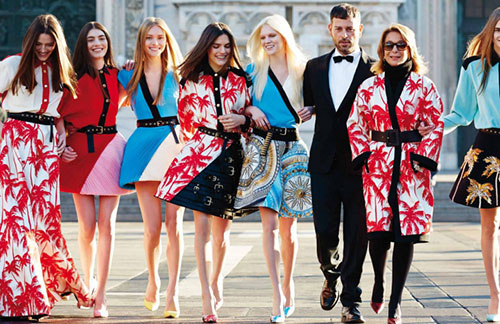
UK-based fashion brand Raeburn launched a new campaign titled ‘Buy Nothing, Repair Something’ while designer and founder Christopher Raeburn closed both his East London stores and e-commerce section of his website to protest against Black Friday. This boycott is spreading to local European brands as well with Ukrainian brand Ksenia Schnaider planting 10 trees, through Team Trees, for every order during Black Friday weekend.
Patagonia encouraged customers to donate some money to an environmental NGO while beauty company Deciem closed all stores on Friday, November 29 besides shutting down its website for the entire day. Everlane also relaunched its Black Friday Fund through which it donated $10 from every order (up to $300,000) to help put an end to single-use plastic.
Promoting circularity
With these organisations and brands boycotting Black Friday and Cyber Monday, there seems to be a growing awareness of how overconsumption contributes to the climate crisis. However, this awareness does not match last year’s increase in sales over the previous Black Friday weekend. A 2019 Pulse of the Fashion Industry report by Global Fashion Agency, fashion production is projected to rise 81 per cent by 2030. We therefore, need to rethink our relationship with our overall purchasing pattern and instead focus on a consumption model that promotes circularity of clothing and other products.
Brands need to take the end responsibility of the clothes they produce. Consumers also need to remember that their urge to buy something new comes at a heavy cost for the planet. To prevent this, they need to apply a brake on their consumption.
“Automation can improve a garment manufacturer’s efficiency by 50%”
BT Nagesh, Managing Director & India Subsidiary Head, Lectra Technologies
 Once upon a time there was a need for faster development, data reduction and material saving in the automotive sector. “Now, these requirements are more prominent in the apparel sector,” said BT Nagesh, Managing Director & India Subsidiary Head, Lectra Technologies during the inauguration of new Lectra Industry 4.0 Experience Center in association with AEPC.
“A garment manufacturer can improve his efficiency by 50 per cent through automation and reduction in raw material usage,” added Nagesh. “We have the required knowledge and technology to achieve this and we should use it. That’s how we can draw parallels between the automotive and apparel industries,” he stated further.
Automation to reduce manufacturing costs
China has grown leaps and bounds by developing its manufacturing facilities through innovation and technology. “Bangladesh and Vietnam too have adopted a similar strategy and raced ahead of us,” said Nagesh. To catch up with them, India needs to concentrate on technological developments in the industry. “We spend Rs 300 crore annually only on buying raw materials or fabrics. We can save half a percent of this through automation,” he added. However, he believes that it is up to business owners to explore this. “They need to take quick decisions based on value, price, productivity and efficiency. Even if 20 or 30 percent of the industry adopts something like this, it would be exponential.”
Accelerating technology adoption
Elaborating on the new experience center, Nagesh said, “We plan to set up more such centers in Tirupur or Ludhiana. However first, we need to get the nuances right. The current market slowdown offers apparel industries an opportunity to improve their processes, practices and technology. People are collaborating with their technology providers. There is a growing need to adopt new technologies in the business, and centers like this can improve the rate of this adoption.”
ITMACH to attract investors with latest textile technologies
The 3rd edition of International Textile Machinery & Accessories (ITMACH) India will showcase latest technologies to investors in the sector. The show will be held from December 5 to 8 in Gujarat. This edition is more significant as it will display the most modern technologies that were launched in the recently concluded ITMA in Barcelona. For example, world’s leading weaving machinery and technology supplier Picanol will be showcasing Airjet Omniplus- i loom with Smartshed which will be displayed working on denim fabric with warp beam from Arvind Mills and operate at production speed above 1000 rpm
From April-August 2019, about 90 companies have filed for Industrial Entrepreneurs' Memoranda (IEMs), related to investment in textile and clothing. Of these 90 proposals, 34 were related to yarn manufacturing (both cotton and MMF), weaving sector attracted 15 proposals, 14 proposals were related to the RMG sector, nine proposals were for textile processing, seven were for technical textiles, six for knitted fabrics, and four for home textiles.
EU-Textile2030, Tex4im sign cooperation agreement
EU-Textile2030, the European cluster of advanced textile materials, and Tex4im, the consortium that reviews the sector’s smart specialisation strategy in Europe, have signed an agreement that aims to strengthen cooperation between textile clusters in Europe.
This alliance aims to strengthen the capacity for innovation, business models, knowledge and the level of skills that will determine the future of the textile and clothing sector in Europe.
In addition, the association also aims to consolidate competencies and alliances in strategic areas, as well as to prioritize the innovation and research agenda carried out by the ETP, the European textile technology platform.
At the same time, the members of the EU-Textile2030 project have met in Lyon to present a new European organiSation of advanced textile materials. Ateval, CS-Pointex and Sachen! Textiles are members of the board of directors of the group.
The purpose of this program is to consolidate a European cluster specialized in technical textiles, define a joint internationalization strategy and strengthen the competitiveness of medium and small-sized companies.
Forever 21, the brand that rose high to lose its way on the way
Forever 21, founded in 1984, became a multibillion dollar operation in over 40 countries before it filed for bankruptcy in September 2019. The brand specialised in the fast fashion principle as it made outfits for young teenage girls, who wanted to dress like their favorite celebrities. Forever 21 helped them by providing these fast and at affordable rates. Customers would form huge lines for new store openings. The company also became an attractive tenant for most malls, usually becoming the anchor tenant with its huge sized stores, which drew huge footfalls. The company became a trendsetter, selling rapidly changing styles in young women’s dresses, tops, jeans, other apparel and accessories as part of its fast fashion strategy. The store catered to teenagers and young adults, along with some slightly older customers who refused to grow over 21.
The fashion chain had become successful due to its coolness factor and its ability to identify the needs of its customers. But these same customers started to move to online and other retailers. Falling sales forced the company to renegotiate shop rent leases and reduce the size of bigger stores. But this was not enough and cash crunch continued. The company was focussed on just growing stores and this diverted its attention, distracting it from producing the designs customers wanted. Forever 21 tried to respond by addressing a broader segment of shoppers, selling clothes and other merchandise towards a larger range of customers. The move to online retail was something that Forever 21 did not pay attention to.
Sri Lanka-based Hirdaramani prioritizes sustainability
The Hirdaramani Group, based in Sri Lanka, prioritizes sustainability in its business model. It encourages apparel manufacturers across Sri Lanka to invest in restorative and regenerative processes in creating sustainable products for the betterment of their own practices, the country, and the environment. Earlier this year the future-focused apparel conglomerate further cemented its long-standing commitment to the circular economy by becoming one of the few manufacturers globally to participate in the Ellen MacArthur Foundation’s Make Fashion Circular initiative, and pledging to incorporate innovative operational solutions that challenge the current take-make-waste industry model.
This company began with tailoring and soon branched into garments, textiles, carpets and jewelry. As globalisation of the fashion industry rapidly increased, Hirdaramani expanded with demand, building facilities throughout Sri Lanka and opening ventures in Bangladesh, Vietnam and in recent years Ethiopia. Already a pioneer in the industry, through its collaboration with the Ellen MacArthur Foundation, Hirdaramani joins an A-list of global industry stakeholders, corporations, NGOs and fashion houses who have pledged to incorporate circularity into the core of their business. The company has drastically reduced water use by employing low liquor ratio washing machines and waterless washing through ozone technology. Chemical use is optimized using state-of-the-art machinery.
Garment, footwear exports from Cambodia up 24 per cent
Last year, garments and footwear exports from Cambodia were up 24 per cent from 2017. The garment industry is Cambodia’s largest employer. The value of exports in the garment sector continued to grow at about 10 per cent for the past three years. Much credit goes to the growth in the travel goods sector, while the footwear industry is also a major contributor. Growth in garment exports has been relatively stable but it may decline this year. The main concerns are next year’s wage increase and the EBA issue.
Cambodia has benefited from its EBA status in the European Union since 2001. Under the EBA, all Cambodian goods, except arms, enter the bloc tariff and quota-free. However, the European Union is now reviewing the deal following concerns regarding democratic setbacks in Cambodia. Massive job losses are feared from the second quarter of 2020 should the trade preferences be revoked. The EU bloc is Cambodia’s largest trading partner, accounting for 45 per cent of its exports.
Around 17 garment factories have been established in Cambodia in the last two years, generating 11,502 jobs in the sector. The investors are from Hong Kong, Japan, Singapore, China, and Australia. The factories produce handbags, wallets, sportswear, T-shirts and jackets.
Europe cuts fashion emissions by 24 per cent
The fashion industry in Europe has cut its carbon dioxide emissions by 24 per cent between 2008 and 2017. Fashion in Europe is moving toward sustainability. In 2017, the European textile and leather industry emitted 8.7 billion tons of carbon dioxide into the atmosphere compared to 11.4 billion tons in 2008.
The Italian industry is the most polluting European fashion industry. The sector’s emission of carbon dioxide into the atmosphere is 30.2 per cent of the fashion industry’s emissions in the continent. The second most polluting market in the fashion industry in Europe is the British. However, the country has reduced its CO2 emissions over the years. France occupies the third position within the most polluting fashion industries in the region. Although French textile and leather increased their emissions by 1.9 per cent between 2016 and 2017, the sector has reduced its pollution, emitting 36 per cent less than in 2008. Spain and Portugal, meanwhile, are the other two most polluting fashion industries in Europe. However, the fashion industry in Spain and Portugal has reduced pollution by 20.7 per cent and 25.8 per cent between 2008 and 2017.
Fashion is one of the most polluting industries in the world but the sector has been taking more and more sustainable steps in the last ten years.
African fast fashion may swamp ethical fashion
Fast fashion brands are heading for Africa now. The effects will be catastrophic for the environment. The link between fashion, food security, and health care is barely noticed. And that link is climate change. The fashion industry contributes ten percent of all greenhouse gas emissions on earth. In effect, the industry’s use of water and energy has also highlighted it as one of the planet’s biggest polluters. Climate change is already having a negative impact on food security and consequently health.
As Africa’s population continues to rise, demand for clothing also increases. Even though sustainable fashion brands exist in Africa, there are few, highly-priced brands, and their market penetration is low. Africa is the continent with the highest growing population.
Despite Africa’s potential as a profitable market for ethical fashion, global ethical fashion giants lack a notable presence. Sustainable fashion is usually priced higher than ordinary fashion. There is very little knowledge of sustainable fashion in Africa. Africa’s contribution to sustainability in fashion has come through the consumption of imported secondhand clothes. At least 80 per cent of Africans wear secondhand clothes. The sooner the effect of fast fashion is realized and the importance of ethical clothing emphasized the better will it be for Africa.
Guess unveils five year strategy
Guess wants to boost brand relevancy and has chalked out a new strategy to take it forward. The American fashion retail company will set up celebrity and influencer collaborations to engage more effectively with a younger and broader audience made of millennial and Gen Z consumers. Customer centricity is another key area. The company will implement processes and platforms to offer customers a seamless omni-channel experience. Widening the global footprint is another priority. Guess will continue to expand the reach of its brands by optimizing the productivity and profitability of its current footprint and expanding its distribution channels. The strategy will be to increase profitability and sales while delivering global expansion.
Product excellence is also part of the group’s strategy. The company will extend its product offering to provide customers with a wider range of products for different occasions and lifestyles and will seek to better address local product needs. This consists in improving the areas of logistics, sourcing, product development and production, inventory management, and overall infrastructure.
By reaching all these objectives, the company expects to increase its turnover by 250 million dollars and boost its operating profits by 150 million dollars. On product side Guess made good progress with denim development and expanded presentations in stores and online.