FW
EU helps Myanmar garment industry upgrade
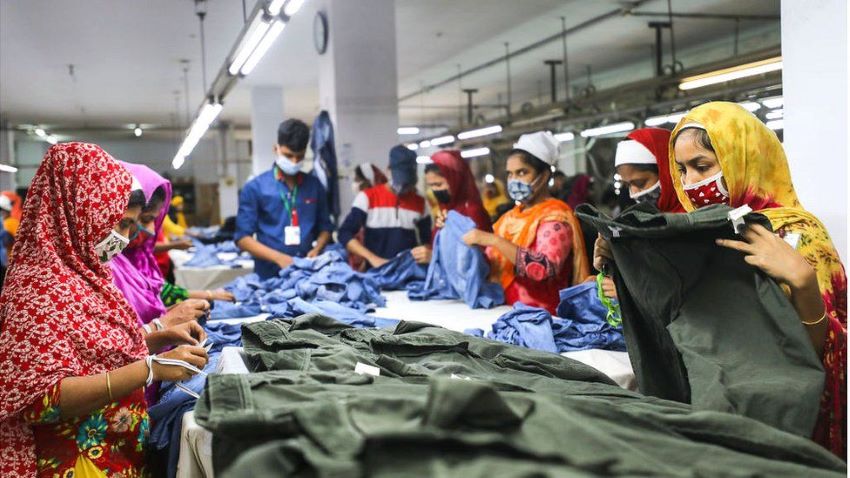
The European Union is working with more than a 100 garment and textile factories in Myanmar in expanding training and capacity building programs for social and environmental performance.
The Smart Myanmar project, which will feature the involvement of local and European experts, will deliver on-site assessment and training on topics such as human resource management systems and workplace communications, occupational safety and health, chemicals and waste management, and energy efficiency. The aim is to improve work conditions, strengthen sustainable production practices and responsible supply chains and foster responsible business practices in Myanmar.
Smart Myanmar has been working with garment factories since 2013 to promote sustainable consumption and production of garments – a concept with an emphasis on resource efficiency and social responsibility. In fiscal year 2018-19, Myanmar-made garments were among the largest export categories in the country. Since 2013, Myanmar’s garment sector has shown staggering export-oriented growth. The garment industry serves largely the European market and has created job opportunities for thousands, mostly women. Europe is one of the world’s largest consumer markets. European consumers pay a lot of attention to where the products they buy come from and how they are produced. Sustainable production and respect for international labor standards are therefore important topics in the EU’s trade relations with Myanmar.
Heimtextil to present New & Next winners
New & Next will again be a part of Heimtextil to be held during January 7 to 10, 2020. This competition, launched during the last Heimtextil, is aimed at promoting newcomers. The last event offered budding textile designers the chance to submit their work via their university and secure an exclusive presentation area at the fair. Out of a total of 18 submissions from around the globe, three universities - the University of Bolton from the UK, the Indus Valley School of Art and Architecture from Pakistan and the Lucerne School of Design & Art from Switzerland – won the competition. The three universities were selected by a five-member jury of experts. The works produced by the students from these universities impressed the jury with their creative approaches and reinterpretation of traditional craftsmanship. Their use of natural materials was found to be extremely innovative and in keeping with the zeitgeist. Representatives from the universities and their students will present the award-winning works at the New & Next area.
Over a dozen participants with fresh design ideas are expected to attend in January 2020. They will also be offering creative design products for furniture and decorative fabrics as well as bed and bath.
India to export 42-60 lakh bales of cotton in 2019
The Indian Cotton Association expects the country to export around 42-60 lakh bales of cotton this year. The annual exports of Indian producers and processors are likely to increase by 10-15 per cent to 60 lakh bales. Demand will largely come from Bangladesh, China and Vietnam. India will also have an opportunity to export cotton and cotton yarn to Pakistan.
Cheaper cotton prices compared to USA and Brazil, give India an edge in the global trade. With US and China indicating trade talks to resume and with possibility of even roll back in tariffs, Indian exporters and traders anticipate an increase in exports. The industry estimates the production of cotton bales to increase by 354.50 lakh which is higher by 42.50 lakh bales compared to the previous years. Rains in West India have damaged crop in Maharashtra, Gujarat, Telangana and parts of Rajasthan which was likely to ensure that good quality cotton get good price.
Apparel brands need to reassess sourcing
Fashion firms need to think about raw materials, their mill relationships and emerging sourcing destinations differently. Apparel companies can’t be in too much of a rush when it comes to diversification. Businesses sourcing in China are eager to get out, but they have to be careful about jumping out of one problem and into a host more if the new country can’t meet the productivity, quality, speed and sustainability they need. For instance, the items that cost the most may not be the first ones they should move. They may need to accelerate the low-cost items more. Even though the impact from the tariff on those is lower, those are the ones that don’t have a lot of margin and so the possibility to absorb any impact to speed to market is lower.
Beyond trade-related levers, there are several strategies for lowering fabric-related costs. The first is the cost engineering the automotive and electronics industries have developed to manage cost of goods. Essentially, they’ve figured out how to determine what the inputs they purchase should cost rather than relying on prices set by suppliers. It saves money and alleviates the need to negotiate. Further, it puts more power in the hands of the designers.
Global wool yarn market to grow at 4 per cent CAGR by 2029
As per Persistence Market Research, the global wool yarn market is anticipated to grow at a CAGR of 4 per cent from over $33,500 million in 2018 to nearly $50,500 million by the end of 2029.
Increasing disposable income and per capita consumer spending on clothing and other textiles, coupled with the growing youth inclination towards fashion trends, has escalated the consumption of wool yarn in end-use industries. The increasing preference for upholstery fabrics among consumers to enhance the appearance of their home interiors is also creating a lucrative impact on the wool yarn market, as wool yarn is used in the manufacturing of curtains, carpets, etc.
China is one of the leading producers of wool yarn in the world. A major part of the wool yarn produced in China is consumed in the country itself. Large population and changing lifestyles in China are attributed for its large share in the global wool yarn market. The world trade of fabric and finished products has expanded at a fast pace, as retailers buy goods from manufacturers, worldwide.
Even with the reduction in overall wool production, the trade of yarn, apparel, and textile items has grown. This is expected to drive the demand for wool yarn from clothing and textile industries.
2nd Cotton Trailblazer attracts 150 participants
Over 150 delegates from India and other parts of the world, representing government, the apparel industry, academia, research institutions, civil society and farmer groups participated in the 2nd edition of Cotton Trailblazers in Nagpur.
Their main goal is to build a roadmap for the organic cotton sector in India, establishing Maharashtra as a key hub for organic cotton. The convention, co-hosted by C&A Foundation in collaboration with Solidaridad Asia and Organic Cotton Accelerator (OCA), celebrated India’s leadership in global organic cotton production and turned the spotlight on organic cotton farmers.
Cotton Trailblazers brings together key players to deliberate on the challenges facing the organic cotton sector and to look for solutions through collaborative efforts that create value for all - from farmers to consumers.
The stakeholders unanimously agreed that organic cotton is positioned to ‘take off’ in Maharashtra. The state was a pioneer in the organic transformation; yet today, only 11 percent of India’s total organic cotton supply comes from Maharashtra. A revival in the state can benefit the farmers by reducing cultivation costs in the input phase and lead to a decrease the overall debt, as well as stimulate the soil’s natural balance.
C&A Foundation and Solidaridad Asia have already incubated various local solutions that have been catalyst for the adoption of organic practises in the state, with an aim to reach 15,000 farmers. The organic cotton programme was also complemented with additional efforts by Solidaridad Asia on addressing the water stress challenge in the region by promoting micro-irrigation and rainwater management solutions covering 30,000 farmers.
Sanctions revive Iran industry
The US sanctions have given Iran a rare opportunity to revive its textile and clothing industry. There is a big opportunity for existing textile and apparel plants to expand and for new entrants to set up shop. In addition the Iranian currency’s depreciation has provided an additional boon by cutting imports and smuggling, which are the nagging problem of the industry. Smuggled clothing costs Iran and its apparel producers heavily in lost revenues.
Textile and clothing accounted for 20 per cent of Iran’s economy in 1991. By 2009, this share dropped to three per cent. For more than 100 years until the early 1990s, the textile industry remained one of the largest sources of employment within Iran’s non-petroleum sector. The first industrialized textile factories were established in the 19th century during the Safavid dynasty. Despite remaining a cottage industry, textile production continued to play an important role in the economy. The industry consists of companies engaged in spinning, weaving, knitting, dyeing, and printing, and of finishing plants that process yarns from natural and synthetic fibers to produce a variety of woven and knitted fabrics. The major textile items are blankets, machine-made carpets, handmade carpets, serge, as well as fabrics and garments.
Denim project Jeans Redesign attracts brands and mills
Denim brands and fabric mills have joined Jeans Redesign. The project has been launched by ‘Make Fashion Circular’. Fabric mills who have signed up must implement the Zero Discharge Hazardous Chemicals wastewater guidelines, including testing and reporting, and produce no more than 0.025 cubic meters of wastewater per yard. The guidelines set out minimum requirements on garment durability, material health, recyclability and traceability, and are based on the principles of a circular economy. The jeans made in line with these guidelines will last longer, be easily recycled, and made in a way that is better for the environment and the health of the garment workers.
Denim brands that are a part of Jeans Redesign include: Ateliers & Repairs, Fairblue Jeans, Frank, Guess, Arvind, Bestseller, Boyish Jeans, C&A, Gap, Hirdaramani, H&M, Reformation, Saitex, Tommy Hilfiger. Fabric mills include Advance Denim Mill in China, Artistic Milliners in Pakistan and Cone Denim in the United States.
The Jeans Redesign project, launched in July 2019, aims at practical solutions that support the transition to a thriving fashion industry, where clothes are used for longer, are made from safe and renewable materials, and are made to be made again. The first pairs of the redesigned jeans will be on sale in autumn 2020.
Turkey’s footwear exports rise this year
Turkey sells footwear to 186 countries and other leather products to 202 destinations. There has been an increase in export figures compared to last year despite the protectionist measures in global trade and the shrinking trade volume. Exports of saddlery and footwear increased and exports of semi-finished products, leather and fur apparel fell. The decrease in leather apparel was due to the decline in sales to Russia.
There has been no decrease in exports to other countries but leather apparel sales to the European Union countries, the United States and the Far East increased. The major export destinations are Russia, Germany, Italy, Iraq, Spain and South Korea. China is the biggest market and is enabling Turkey to set historic records in footwear exports.
Now the aim is to triple exports of leather and leather products to South Korea and open a trade center in that country. Turkey is also exploring the possibility of selling shoes to South Africa and Chile. Turkish exporters are starting to sell more value-added products and raise the number of target countries. Australia has been identified as a focus region for export by footwear and apparel exporters in Turkey. The Australian market provides a huge potential for Turkey with its high purchasing power and living standards.
Ludhiana sewing machine makers in a fix
Sewing machine makers in Ludhiana are coping with falling demand. Instead garment manufacturers prefer to import high end advanced machines from South Korea, Taiwan and China since the sewing machine industry in Ludhiana doesn’t have the infrastructure and technology to manufacture these machines.
Ludhiana is the largest producer of sewing machines and spare parts in the country but the problem is, it does not have the required technology to manufacture even a single part of high-end sewing machines. And the cost of acquiring this technology is very high. So, the sewing industry wants help in setting up a research and development center to develop prototypes of high end machines, so that the new models of such sewing machines are made in India. There is a research and development institute for bicycles in Ludhiana but none for sewing machines.
Ludhiana’s sewing machine industry is losing several hundred crores worth of business every year. Domestic machines have gone out of trend, and industrial machines being manufactured in Ludhiana are of no use anywhere, because they cannot compete with the highly advanced industrial machines being imported. In the meantime businessmen associated with the sewing machine industry are setting up a cluster for sewing machines and parts manufacturers.