FW
Sartirana Textile Show postponed due to pandemic
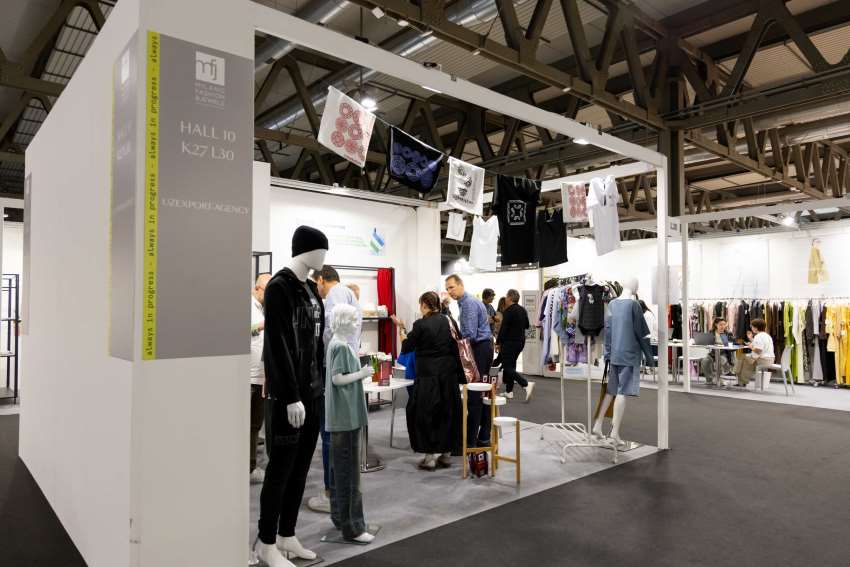
Due to worsening pandemic situation in Italy, the Sartirana Textile Show 2022 has been postponed. As per a Jozan report, the show was scheduled to take place from January 14 to 23, 2022 in Bergamo. It was to be a concurrent event with Italian Fine Art and Bergamo Arte Fiera.
Sartirana Textile Show is a renowned antique textile fair that takes place every year in Italy. Born in 2004 in Sartirana Lomellina, since 2019, the Sartirana Textile Show has been moved in Turin in the beautiful location of Società Promotrice delle Belle Arti. The show displays a fine selection of rugs and textile from all around the world since 2005. The exhibition is one of the most important trade fair of the antique textile sector. It attracts international dealers, collectors and enthusiasts in the beautiful setting of La Pila.
Every year, in addition to appreciating the Dealers Fair, visitors can enjoy a huge number events and side cultural exhibitions.
India Inc hails deferment of GST on textiles
India Inc has the hailed the GST Council’s decision to defer the proposed GST hike on textiles. The council has deferred the hike on the opposition from state governments and the industry. It had earlier proposed a GST hike on apparel from 5 to 12 per cent.
Bimal Jain, Chairman, IDT Committee, PHDCCI said, deferment will give a much needed impetus and support to the sector. The Confederation of All India Traders (CAIT) has also hailed the decision. It urged the council the decision to increase the GST rate on footwear also. CAIT also urged the FM to constitute a task force to consider the intricacies of the taxation system, simplification and rationalization, increase in tax base and revenue to the government.
The task force may be formed under the chairmanship of the Chairman of the Central Board of Indirect Taxes, which should include representatives of trade beside senior officials, added CAIT.
GST deferment on textiles, a welcome move, says India, Inc
India Inc has the hailed the GST Council’s decision to defer the proposed GST hike on textiles. The council has deferred the hike on the opposition from state governments and the industry. It had earlier proposed a GST hike on apparel from 5 to 12 per cent.
Bimal Jain, Chairman, IDT Committee, PHDCCI said, deferment will give a much needed impetus and support to the sector. The Confederation of All India Traders (CAIT) has also hailed the decision. It urged the council the decision to increase the GST rate on footwear also. CAIT also urged the FM to constitute a task force to consider the intricacies of the taxation system, simplification and rationalization, increase in tax base and revenue to the government.
The task force may be formed under the chairmanship of the Chairman of the Central Board of Indirect Taxes, which should include representatives of trade beside senior officials, added CAIT.
India partners with Nigeria
India will help Nigeria revive its textile and apparel sector.
India is working to boost its technical textile industry and is willing to partner with and support Nigeria in terms of provision of textile machinery, technology, capacity building and training in the entire textile value chain. The partnership, which is not just for Nigeria but for the entire West Africa, is very necessary, especially as the countries move into the implementation stage of the African Continental Free Trade Area Agreement (AfCFTA).India-West Africa trade offers an opportunity to rethink ways in which people do business, trade and investment across countries and continents. India recognises the immense potential of Africa as the home of the world’s largest free trade area by the number of participating countries and the fastest-growing economies in the world. The textile sector in Nigeria is one of the largest private employers, providing employment to over a million Nigerians, and has always been a major player in the manufacturing sector of the economy.
Leoht Africa has partnered with the Indian Chamber of Commerce to boost the retail sector of Nigeria’s textile industry and position it as a leading hub in the Central and West African market. The partnership aims to build a yearly and sustainable international sourcing platform for organisations to trade and secure orders from corporate buyers and resellers.
MIT converts plastic into textiles
Researchers at the Massachusetts Institute of Technology have developed an ingenious solution to turn plastic bags, wraps and other supermarket waste into textiles.
They have developed self-cooling fabrics from polyethylene, commonly used in plastic bags. They estimate that the new fabric may be more sustainable than cotton and other common textiles. The eco-friendly, recycling textile could revolutionize fashion as it resists dirt and can be washed on a cold cycle in just ten minutes. The hope is that sportswear, shoes, army uniforms and perhaps even spacesuits can be formed from fabric created out of plastic bags. The engineers found a way to spin polyethylene into fibers and yarn first made from spaghetti strings and weaved in a way that would allow it to absorb water and sweat. The researchers modeled the yarn by testing the wicking ability over cotton, nylon and polyester by dipping strips in water and measuring the time it took for the liquid to climb up each strip. The plastic yarn wicked away and evaporated the water faster than other common textiles.
Over 380 million tons of plastic are produced each year. Most of the plastic bags are used for approximately 12 minutes and it takes at least 500 years for one to degrade in a landfill.
Mey launches nightwear with viscose
German circular knitter, Mey has launched nightwear with Celliant viscose.
This converts body heat into energy.The collection consists of five designs in two colors, Natural and Deep Taupe. It is the world’s first nightwear that converts body heat to energy with Celliant viscose. Celliant converts the heat emitted by the body into full-spectrum infrared energy and reflects it back to the skin. This supports local circulation and helps improve cellular oxygenation.Celliant viscose features natural, ethically sourced minerals embedded into plant-based fibers and is biodegradable. Celliant viscose provides all the benefits of being a viscose fiber — lightweight, soft, highly breathable, excellent moisture management — as well as the fiber enhancements from Celliant infrared technology. In addition, Celliant is durable and will not wash out, lasting the useful life of the product it powers.
Mey is a global manufacturer of underwear, nightwear and lingerie. Sustainability isn't just a trend for Mey, it is part of its tradition. The added infrared properties of Celliant technology is combined with the soft, lightweight viscose fiber. The bridge between Celliant technology and Mey was formed by the Bavarian viscose specialty fiber manufacturer Kelheim Fibers. Kelheim Fibers’ flexible production technology allows targeted interventions in the viscose fiber process.
Chinese company uses Invista process
UK-basedInvista Textiles and China Resources Yantai Nylon have signed an agreement for the licensing of Invista’s nylon 6,6 polymerization technology.
With Invista’s leading expertise in nylon 6,6 production technology and process, this partnership continues to exemplify Invista’s commitment to promoting the development of the nylon 6,6 industry in China, meeting growing local demand with enhanced capacity and premium downstream applications.
Located in China, the new line is the first to be licensed with Invista’s nylon 6,6 polymerisation technology since 2015 and will use Invista’s patented nylon 6,6 salt process and advanced continuous polymerization technology, offering excellent safety and environmental performance, high reliability and run life, higher energy savings, lower operating costs, and excellent product quality for the nylon 6,6 industry.China is expected to be the world’s largest consumer of nylon 6.6 in the next few years. That means China Resources Yantai Nylon has chosen to adopt Invista’s nylon 6,6polymerisation technology. Invistalooks forward to working closely together for success on this new project and to identify additional opportunities for nylon 6,6 downstream applications, enabling strong growth as it contributes to the upgrading of the nylon 6,6 industry in China.
Invista, based in the United States, is one of the world’s largest integrated producers of polymers, fibers, fabrics, resins, chemical intermediates, and specialty chemicals for commercial, residential, automotive, and industrial customers.
The Children’s Place sales up 31 per cent

Sales of The Children’s Place grew 31 per cent in the third quarter. Growth was primarily driven by strong customer response to the company’s product assortment and the strategic reset of its pricing and promotions. Adjusted gross profits rose 868 basis points to 43 per cent of net sales compared to 35 per cent of net sales last year.
Growth is a result of significantly higher merchandise margins, resulting from double digit AUR increases, in both its digital and stores channels, due to the strategic reset of pricing and promotions, and lower occupancy expenses due to favorable lease negotiations and permanent store closures. The North American specialty retailer delivered another outstanding quarter with sales, gross margin, operating margin and EPS all at record levels.
To help put the magnitude of this turnaround into perspective, the third quarter adjusted operating income exceeded the brand’s full year 2019 adjusted operating income. The significant structural changes made to the business in 2020, combined with the accelerated digital investments made pre-pandemic, continue to propel The Children’s Place’s results. Meanwhile the fourth quarter is off to a very strong start for the brand, which continues to operate at a high level, while navigating the Covid landscape.
India: GI filed for Arunachal Pradesh’s Apatani products

The company Zeet Zeero has filed an application seeking Geographical Indication (GI) tag for Arunachal Pradesh’s textile product Apatani. The weave comes from the Apatani tribe of Arunachal Pradesh. This woven fabric is known for its geometric and zigzag patterns and also for its angular designs. The Apatani community weaves its own textiles for various occasions, including rituals and cultural festivals. The tribe predominantly weaves shawls known as jig-jiro and jilan and jackets called supuntarii. The people here use different leaves and plant resources for organically dyeing the cotton yarns in their traditional ways. And only women folk are engaged in weaving. The traditional handloom of this tribe is a type of loin loom, which is called Chichin, and is similar to the traditional handloom of the Nyishi tribe. It is portable, easy to install and operated by a single weaver, especially the female member of the community.
Getting a GI tag for a product indicates that it originates from a particular territory in India and has unique characteristics or quality. Having a GI tag for a product prevents unauthorised use of a registered Geographical Indication by others, boosts exports of Indian Geographical Indications by providing legal protection and also enables seeking legal protection in other WTO member countries.
US: Investments, production, communication to boost cotton sustainability
 Kater Hake, Vice President-Agricultural and Environmental Research Cotton Incorporated, defines a sustainable cotton as a type of cotton that meets the current needs of human being without compromising on the wants of the future generation. Speaking at the 78th International Cotton Advisory Committee meet, had said, cotton growers across West Texas and South Africa are adopting various sustainable practices such as no or reduced till, reduced fertilizer inputs while growing cotton.
A system with 3Es
According to Hake, sustainability is a system with 3Es: Environmental, Energy and Economical. Sustainable cotton gives opportunities to farmers in developing countries by providing jobs to those who own less than one hectare of land, he adds. Though the cost of sustainable cotton may be high compared to other types of cotton, overtime costs get absorbed into the lifecycle of products.
Increase production to curb price rise
Currently, cotton prices in the US are riding $1 per pound. In such a scenario, it would be advisable to increase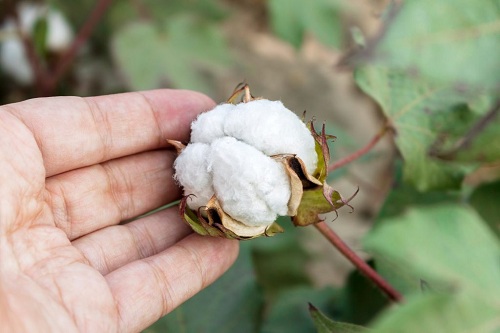 global production to curb this price rise, adds Professor Mohammad Negum, Chairman, International Cotton Advisory Committee. Global cotton production should be increased to 35 million metric ton per year from the current 25 million metric ton per year.
David Rousse, President, Association of Non-Woven Fabrics Industry (INDA), notes a greater push towards introducing plastic-free wipes substrate by 2025. He believes, climate change issue is compelling all sectors to incorporate sustainability in their operations. Hence, all sectors need to improve their communication strategies with stakeholders and consumers, he adds.
More investments from sectors
Sectors also need to attract more investments from both private and public entities, adds Hake. He opines, such investments would bring in great benefits for the cotton sector like increasing fiber strength, leading to a reduction in the weight of cotton garments and the amount of fiber needed to make durable products.
Plastic pollution in small water systems and large marine environments is already driving the sustainable development of biodegradable products, he adds.