FW
18th Maroc in Mode exhibition to focus on sustainability
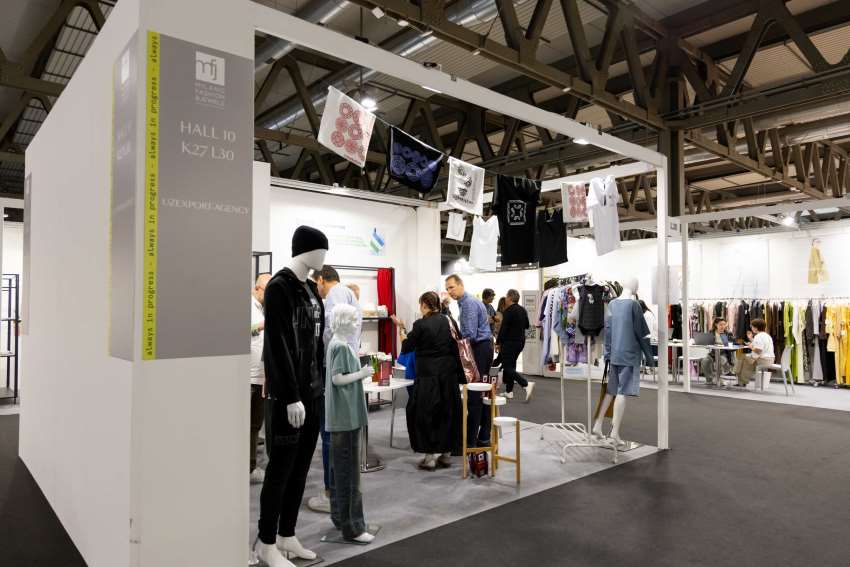
The 18th edition of the "Maroc in Mode" exhibition focuses on the need for sustainability in the Moroccan textile and fashion industry. The event hosted by the Moroccan Association of Textile and Clothing Industries (AMITH) is on from March 30 to 31 at the Mohammed VI Exhibition Center in El Jadida near Casablanca. It highlights the need to make the industry more socially, environmentally, and economically responsible.
All types of textile business are participating including fabric makers, home textile creators, and accessory makers. The exhibition centre has dedicated one third of space to display textiles from Morocco, Tunisia, Egypt, Turkey, France, Italy, Spain, and Uzbekistan. The event is part of the Association’s vision, ‘The Textile Sector 2035 - Vision and Convictions’, which aims to increase profits from Moroccan textile industry and its share in the global market.
The AMITH seeks to double the value of Moroccan textile exports to MAD 60 billion ($6.18 billion) by 2035. It also aims to increase Moroccan’s share of textiles in North American and Northern European markets by 20 per cent.
Vietnam’s apparel makers bypassing US sanctions on Xinjiang cotton, say organizations

In response to the legislation, the Uyghur Forced Labor Prevention Act, signed last December by President Joe Biden, the Alliance for Vietnam’s Democracy, has released a statement claiming Vietnam helps China bypass these sanctions by importing cotton from the Xinjiang region. World Bank stats show, China was the largest exporter of garments to the US between 2002 and 2020. However, the ban imposed by the Trump administrations on all cotton imports from Xinjiang in 2020 led to Vietnam usurping China’s position as the biggest exporter of garments to the US market.
Shipments from China diverted to Vietnam
As per 2019 data, China grows around 85 per cent of its cotton in the Xinjiang region. In the last few years, the country has witnessed a rapid growth in textile and apparel manufacturing in Uyghur. Yet, cotton shipments from the region have ceased in the last two years. Most of the cotton and cotton-based yarn, textiles and finished goods grown and manufactured in the Uyghur region are now transported first to Vietnam before being shipped internationally.
Vietnam has also emerged as one of the top two destinations, besides Bangladesh, for China’s export of raw cotton, yarn and fabric. Of the 53 international intermediary manufacturers that buy raw cotton goods from China, six are from Vietnam. These Vietnamese intermediaries supply their products to many well-known international brands and may have Xinjiang cotton in their supply chains, warns the Alliance for Vietnam's Democracy.
More than half of China’s cotton semi-finished products are shipped to countries within Asia, with Vietnam being the second largest importer, shows data from the UN Comtrade. These countries then produce finished garments from the semi-finished products to export around the world.
Growth in ‘cotton laundering’
This leads to ‘laundering’ of Xinjiang cotton, making it difficult to trace the origin of finished garments’ material. Laura Murphy, Helena Kennedy Centre for International Justice believes, such an export strategy prevents end buyers from being directly involved in buying cotton from the Xinjiang region. International brands and wholesalers can buy from factories in third countries that have few visible ties with Uyghur Region-based companies. This guarantees a stable supply of Xinjiang cotton to the international market even as brands, governments, and consumers continue to protest against Xinjiang forced-labor-made goods.
Vietnam tops cotton imports from China
Between 2016 and 2019, Vietnam emerged fourth largest importer of cotton or cotton-mixed products from China in terms of product value and weight. The country also emerged the second largest export destination for semi-finished cotton products from China in terms of value and weight.
All five suppliers of Uyghur cotton including Jiangsu Lianfa Group, Luthai Textile, Huafu Fashion, Texhong Textile Group, and Weiqiao Textile, export a significant number of cotton intermediaries to Vietnam. A reputed company, Huafu has established production facilities in both the Xinjiang Uyghur Autonomous Region and Vietnam.
Ban fabric imports from Xinjiang, urges industry
World’s largest apparel producer, China exports most of its textiles and apparels to the US, Japan, Vietnam, Hong Kong, Germany, South Korea, and the United Kingdom. Hence, the Alliance for Vietnam’s Democracy has urged, compliance with the new legislation, cotton fabrics imported from Vietnam should also be banned as the cotton and other intermediaries used in these fabrics are imported from Xinjiang.
Luxury fashion evolves with streetwear infusions and metaverse launch
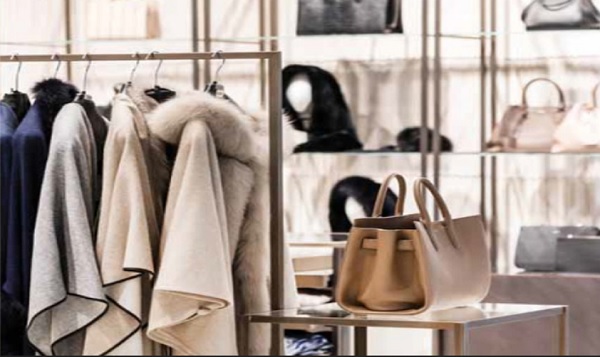
Forecasted to grow at 5.4 per cent CAGR till 2025, global luxury fashion industry is becoming increasingly multifaceted with its infusion of streetwear and growing investments in the metaverse. As per an Edited report, streetwear-inspired global luxury market is forecasted to grow to $382.6 billion in 2025. The sweatpants category will grow by 59 per cent, sweatshirts by 26 per cent and T-shirts by 14 per cent.
Investments in traditional workwear have been increasing since the onset of the pandemic. Luxury brands are also witnessing a 130 per cent Y-o-Y increase in demand for extended sizes. Currently, these sizes are available in only 7 per cent luxury apparel sold online. They need to be extended to offline retailers also. With animal hides no longer viewed as a status symbol, investments in animal furs have declined 27 per cent and exotic skins by 42 per cent Y-o-Y. The industry is increasingly opting for animal-free luxury alternatives like vegan leather whose demand has soared 20 per cent year-on-year
Quintessential streetwear items like hoodies, sweatpants, sneakers and T-shirts staples continue to form a part of luxury brands' collections. However, luxury brands have shifted away from bumbags to crossbody bags or duffels.
Demand for workwear grows
Streetwear brands like Fear of God and Stone Island continue to invest in third-party luxury sites. Both these brands have invested to acquire 680 per cent and 81 per cent stakes in these sites.
Reminiscent of pre-pandemic times, workwear essentials have grown on par with pre-pandemic levels in the luxury market. New shirt arrivals have increased 16 per cent and blazers 2 per cent Y-o-Y. However, demand for wide-leg pants has dropped by 31 per cent Y-o-Y.
Luxury collections to brighten up with new shades
Luxury assortments are expected to become brighter with the infusion of new shades. In 2021, the percentage of color pink in women’s wardrobes declined to 37 per cent from 43 per cent earlier. On the other hand, the percentage of color green surged from 6 per cent to 7 per cent, yellow from 3 per cent to 4 per cent and purple from 2 per cent to 4 per cent.
Demand for extended sizes grow
Luxury brands typically design garments ranging upto size XL for women and a 2XL for men. However, few retailers are extending their size offerings to serve growing demand from diverse body types. Sizes are on offer range from XL for women and 2XL for men.
Decline in fur demand
Investments in vegan leathers grew 20 per cent Y-o-Y. Demand for faux alternatives and teddy fixtures are also growing 78 per cent Y-o-Y while demand for conscious wool is rising 67 per cent. On the other hand, the value of fur and exotic skins has dropped though demand for wool continues to thrive despite 9 per cent Y-o-Y drop in value.
Pushing boundaries with metaverse
Metaverse is helping luxury brands push new boundaries to increase sales. Around 42 per cent of brands adopted metaverse and NFTs within the past year on their home pages. Designers are also coming on board with creation of new digital wearables and tokens. Gucci has emerged as a frontrunner by buying a plot of virtual land on The Sandbox and partnering 10KTF among its many metaverse projects. However, to increase their presence in metaverse retailers need to increase collaborations with experts.
Installation of short-staple spindle stabilizes in 2020, other machinery decline: ITMF

As per the International Textile Industry Statistics published by International Textile Manufacturers’ Federation (ITMF) on productive capacity and raw material consumption in the short-staple organized sector, the number of installed short-staple spindles globally remained stable in 2020 at 221 million units from 2018. However, the number of installed short-staple spindles declined to its lowest level of 150 million units in 2002 while it rose highest at 250 million units in 2012.
Open-end rotors witness slight decline
The number of installed open-end rotors decreased slightly from 7.4 million in 2019 to 7.2 million in 2020. Scrapping of outdated machinery in China seems to have stalled the decline in observed in both segments in previous years. The number of installed open-end rotors rose to its highest level of 8 million in 2018 while it dropeed to its lowest at 6 million in 1990. Installation of air-jet spindles increased in all regions except Europe, East and Europe, West in 2020.
Shuttleless looms shrink for first time
For the first time, the number of installed shuttleless looms fell from 1.68 million in 2019 to 1.64 in 2020. Number of installed shuttles looms rose to its highest in 2018 while they declined to their lowest in below 1.0 in 1990.
Raw material consumption sees negative growth
Total raw material consumption in the short-staple organized sector declined from 46 million tons in 2019 to 41 million tons in 2020. Consumption had peaked during 2019 while it sunk to its lowest level in 1990. Consumption of raw cotton, synthetic, and cellulosic short-staple fibers decreased -12 per cent, -14 per cent, and -9 per cent, respectively during the year. The decline in consumption in 2020 reflects a decline in production due to the pandemic.
The International Textile Machinery Forum (ITMF) is one of the oldest non-govern-mental organizations. It was founded in 1904 in Zurich and convened at the initiative of the British cotton spinning industry. The organization adopted the name ‘International Federation of Master Cotton Spinners' and Manufacturers' Association’. It was also referred to as the ‘International Cotton Federation’
India’s textile machinery sector to see phoenix-like growth as exports surge

Strict lockdowns and mass vaccination programs helped Indian textile engineering Industry (TEI) stage a quicker-than-expected recovery from the second COVID wave in Q3 and Q4 of 2021-22.
Production value to surge
Figures from Textile Machinery Manufacturers Association (TMMA) (I) show, Indian TEI managed to reduce its annual production losses in 2020-21 by -5 per cent to Rs. 5,093 crore from Rs 5,355 crore in 2019-20. Production of textile machinery is estimated to surge 52 per cent to Rs 8,056 crore during 2021-22 with the value of production including spare parts and accessories estimated to grow 58 per cent to Rs 1,229 crore from Rs 777 crore in 2020-21.
Rise in exports and import
In 2021-22, textile exports are estimated to surge 70 per cent to Rs 5,250 crore. Export of textile spare parts and accessories are also expected to grow 55 per cent to Rs 1,600 crore in 2021-22 from Rs 1,029 crore in 2020-21.
Imports on the other hand are estimated to rise 152 per cent to Rs 11,500 crore in the current fiscal as against Rs 10834 crore in 2018-19, says a Textile Value Chain report. Import of spare parts and accessories are estimated to rise 33 per cent to Rs 2,500 crore in 2021-22 as compared to Rs 1,881 crore in 2020-21.
Weaving and processing orders to rise
The rise in exports and decline in imports can be attributed to the pent-up demand created by the lockdowns of 2020-21 and 2021-22. Exporters rushed in to cash in on the business opportunities thrown in by the liquidity infusion by various governments in the market and revenue spending by consumers.
Industry leaders, especially those involved in the spinning sector, confirmed having enough orders to last till 2023-end. They denied accepting any new orders. Other segments such as weaving and processing have not picked up in proportion to the spinning segment. However, they are expected to log in new orders soon helping the Indian Textile Engineering Industry rise like the proverbial phoenix bird.
India’s T&C exports surpass grew 16.9% in 2021, cotton most exported commodity: Report
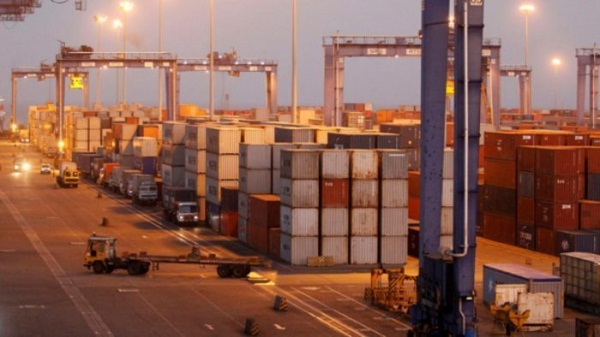
India’s textile and clothing (T&C) goods grew 39.6 per cent to $41,469.20 million in 2021 over previous year. Compared to 2019, India’s T&C exports grew 16.9 per cent, says a Textile Excellence report. Cotton was the most exported commodity during the year with exports growing 67.11 per cent to $10,026.99 million in 2021 compared to 2019. Most of India’s cotton exports were destined to the United States during the year.
US tops cotton textile exports
US emerged the top destination for India’s T&C exports. Most of India’s T&C exports to the US were dominated by cotton. India exported $3736.54 million worth of cotton textiles to the US during the year. The second largest export market for Indian cotton textiles was China, exports which grew 61.5 per cent to $1,686.83 million in 2021 over 2019 exports. Amongst other growing export destinations, Vietnam, Indonesia, Turkey, Guatemala and Nigeria witnessed 147.7 per cent, 178 per cent, 136.1 per cent, 179.8 and 198 per cent growth in exports respectively.
Yarn exports rise
The most exported commodity in cotton was cotton yarn which grew 68.8 per cent to $ 4,919.76 million. Exports of raw cotton also increased 150 per cent to $2854.41 million during the year while exports of woven cotton fabric grew 15.7 per cent to $2,251.52 million.
Apparel exports decline
India’s apparel exports declined 6.4 per cent to $15,205.91 million in 2021 over 2019 exports. The dip was mostly in knitted apparels whose exports declined 0.16 per cent to $7,869.08 million. The US emerged top market for India’s knitted apparels with exports growing 22.4 per cent to $2,504.67 million. Exports to other markets UAE, UK, Germany, France, Saudi Arabia and Spain dropped in 2021 compared to 2019 exports. Exports of knitted cotton T-shirts dropped 13.2 per cent to $1698.16 million in 2021. On the other hand, exports of cotton baby garments exports rose 11.5 per cent to $790.54 million. Exports of woven apparel dropped 12.33 per cent to $7,336.83 million during the year with the US emerging the largest destination. Woven apparel exports to the country dropped marginally by 0.9 per cent from 2019 to $2,277.02 million. On the other hand, exports UK, Germany, Spain, Saudi Arab, Japan and Italy registered a huge drop. In woven apparels category, exports of men’s and boy’s cotton shirts dropped 31.2 per cent to $570.78 million while exports of cotton dresses grew 8.26 per cent to $624.74 million.
Carpet exports grow
Indian’s carpet exports grew 32.09 per cent in 2021 to $2,263.99 million. Once again the US emerged as top destination with exports growing 33.34 per cent to $1, 287.11 million. India’s carpet exports to Germany, UK, Australia, Sweden and France are also growing at a steady rate.
Textile fabrics register maximum growth
Textile and knitted fabrics witnessed maximum growth of 172.4 per cent and 166.9 per cent respectively during the year. Export of made-ups textiles grew 39.7 per cent to $3,459.22 million while knitted apparels rose 22.41 per cent to $2,504.51 million. Woven apparel exports declined 0.9 per cent to $ 2,276.79 million while export of carpets increased to $1.286.98 million.
Bangladesh dominates T&C exports
Bangladesh remains the second largest export destination for India’s T&C goods. Exports to the country grew 107.2 per cent in 2021 to $4,259.53 million. Cotton exports to Bangladesh rose 141.7 per cent to $3,735.03 million in 2021 over the 2019 exports.
India’s T&C exports to China grew 46.5 per cent to $2055.03 million in 2021 over 2019. Cotton exports to China also rose 61.53 per cent to $1 686.83 million. On the other hand, exports to UK, Germany, France and Spain declined 19.1 per cent, 3.4 per cent, 2 per cent and 14.2 per cent respectively.
Tencel, RCGD Global collaborate for third year at 94th Awards
Lenzing’s flagship textile brand, Tencel™, and RCGD Global have collaborated for third year to spotlight eco-couture at the 94th Awards®. As part of the partnership, RCGD Global and Tencel™ also unveiled the winning designs of the 2020 and 2021 Global Design Contest for the first time at a Pre-Oscars celebratory event in Los Angeles on March 25th.
This year, three custom-made gowns, made of bespoke fabrics made from TencelLyocell fibers and Tencel™ Luxe filament yarn have been featured on the red carpet of the Oscars. More information about the fabrics used in the red carpet gowns can be found in the Appendix A. .
Derived from sustainably sourced natural raw material wood, Tencel™ branded lyocell fibers are produced in a closed loop process and are fully biodegradable and compostable. Known for its natural comfort, fabrics made of Tencel™ Lyocell fibers are also gentle on skin with high tenacity and efficient moisture management. .
As a vegan sustainable alternative to silk, TencelL™ Luxe filament yarn give fabrics an exquisite sensual appeal with silky smoothness, liquid-like drape and color vibrancy. Produced using eco-responsible production processes, TENCEL™ Luxe filament yarn is also certified as biodegradable and compostable, offering a circular solution to eco-couture and luxury fashion. .
The winning designs of the 2020 and 2021 Global Design Contest, organized in partnership with RCGD Global and CLO, were unveiled publicly for the first time at a Pre-Oscars celebratory event in Los Angeles on March 25th to leading sustainable advocates. Those in attendance included Zoe Saldana, Paloma Garcia Lee and Haley Strode.
WaveOn partners YKK to support Touchlink® Fastener Network
WaveOn is joining YKK’s network of software partners supporting itsTouchlink® fasteners enabled with Near Field Communication (NFC) technology. California based WaveOn is a software service provider that connects brands and consumers via products. Utilizing NFC technology, WaveOn helps brands turn physical products into rich interactive customer experiences.
By joining YKK’s software partner network for Touchlink fasteners, WaveOn looks to combine its award-winning software with the Touchlink fastener hardware to help brands create unique consumer engagements. Requiring no app or search engine, consumers can access customized experiences with a wave of their smartphone to the Touchlink zipper puller.
WaveOn plans to promote YKK’s Touchlink fastener hardware solution to brand customers as a digital access point that can be designed into their products. By using YKK® zippers with Touchlink zipper pullers, brands can easily add digital connectivity to their products without having to alter their designs.
YKK’s growing network of Touchlink fastener software partners is increasing the number of firms that brands can choose from to help them develop and deploy new consumer experiences and offerings. Specializing in digital consumer product interaction these software partners have developed a wide range of experiences and services ranging from providing product and warranty information to one-on-one consumer engagement to enabling product resale and rental programs.
Another advantage of YKK’s TouchLink fastener is its permanence and durability. The NFC chip is molded into the zipper puller, which completely encases it, making it highly resistant to moisture and breakage.
C&A launches new European sustainable denim collection
European fashion retailer C&A has launched its new European-made “Forever Denim” collection.
As per a Spin Off report, the new “Forever Denim” collection aims to offer a more sustainable denim collection that can appeal a variety of customers, and includes six different designs – three for men and three for women - available in various blue variants like, for instance, light, mid and dark tones.
The women’s selection is made up of two straight fits and a flared jeans shape, and the first release for men is characterized by straight and tapered versions.
The jeans in the collection are produced according to a carbon zero process using materials from across Europe, including GOTS or OCS certified bio cotton denim from Italian denim manufacturer Candiani Denim.
C&A FIT also aims to contribute to the creation of a more digital and sustainable textile production and supply chain, connecting elements of digitization and automation with more sustainable modes of production.
Scott Racing Team partners Rosti, Roica and Sitip for team uniform
For the year 2022 Scott Racing Team partnered with the knitwear factory Rosti, known for its technical excellence on product and image, the premium stretch fiber Roica™ by Asahi Kasei, internationally recognized for stretch innovation and responsibility, and Sitip, a company specializing in the production of stretch and circular fabrics that combines tradition and innovation with a choice of sustainable production. Together these companies created the team’s uniform offering the best solution in terms of style and ergonomics, high performance, easy maintenance, perfect fit and sustainability.
This year, the companies created responsible shorts, made with Native-Thunderbike Power fabric by Sitip in recycled polyamide and Roica™ EF yarn by Asahi Kasei.. Also the shirt has been produced with Sitip recycled fabrics - Native-Bicimania And Native-Pirata - made with Asahi Kasei's Roica™ EF* sustainable, stretch and certified recycled yarns. This composition, together with Sitip Microsense Soft Performance technology, made the shirt breathable, offering maximum comfort on the skin.