FW
Century net profit up 18 per cent
For the September quarter Century Textiles and Industries saw a 18.42 per cent rise in its net profit. It had posted a net profit of Rs 44.5 crores in the corresponding period of the previous fiscal. The company’s total income from operations, however, declined to Rs 1,844.57 crores from Rs 1,997.04 crores in the year ago period. During the quarter under review, its total expenses reduced to Rs 1,734.53 crores from Rs 1,952.13 crores in the corresponding period of the last fiscal.
Mumbai-based Century Textiles and Industries is active in textiles, viscose filament yarns, cement, and pulp and paper. In the textile business, Century has two revenue streams: cotton fabric and denim units. The company has a vertically integrated plant at Bharuch for manufacturing cotton fabrics.
Century Textiles and Industries is part of the BK Birla Group and was established in 1897. The cotton division of Century is one of the oldest in India and manufactures a wide range of premium textiles and supplies to many international players, including Royale Linen, Ralph Lauren, DKNY, Belk and US Polo.
Century Textiles’ financial metrics have declined, mainly due to its high debt. Interest costs have corroded its profit after tax.
Bangladesh lures Chinese investors
Bangladesh wants Chinese investment in infrastructure development, equipment manufacturing, light industry, electronics and textile sectors. Bangladesh is the gateway to Asean and South Asian countries and close to China.
Principal exports from Bangladesh to China are woven garments, leather goods, knitwear, jute and jute goods and leather and frozen foods. Imports from China include textiles and textile articles, machinery and mechanical appliance, electrical equipment and products of the chemical and allied industries.
Bangladesh’s readymade garment exports to China in the July-March period of FY17 grew by 27.11 per cent compared to the same period of FY16. The country is now focusing on exports to China especially since China is shifting from production of basic products to high-end and high-tech items and meeting domestic demand for basic products through imports.
Chinese investment in Bangladesh’s port and energy infrastructure, as well as extensive Chinese military assistance, has encouraged the country, part of India’s natural economic hinterland, to maintain a closed border with India.
By mid-1980s, China had become the staunchest international friend of Bangladesh, cementing the relationship with numerous trade and cultural agreements, construction projects, and military transfers. In recent years economic relations between China and Bangladesh have increased manifold. Bangladesh business community has been invited to invest in the Chinese agriculture, automobile and electronics sectors.
Zara name shamed in Turkey
Garments at the fashion retailer Zara in Turkey come with tags put on them by workers complaining they have not been paid for the merchandise in the store. The tags are a way of drawing shoppers’ attention. The tags are a way of putting pressure on Zara into making the payments.
The workers were employed by a manufacturer, which closed down overnight. The manufacturer owes them three months of pay and severance allowance. It can be difficult for brands to know exactly what their suppliers are doing. Factories may subcontract work without a brand’s knowledge to meet tight deadlines and Turkey’s proximity to Europe makes it convenient for fulfilling last-minute orders.
The fast-fashion formula of speed and low prices has created billionaires in the industry. Homegrown brand Zara leads the fashion industry in Spain. Zara is the flagship brand of the Inditex Group.
Inditex, which has a market capitalization of $113 billion, is one of the world's largest fashion retailers. It owns 7,405 stores and employs 1,62,450 people. The company has helped to reshape the fashion industry with its ability to quickly produce and turnaround cheaper fashion items.
Some of the world’s biggest brands source garments from Turkey. Among them are Primark, Inditex and H&M.
Texfusion sees fewer footfalls
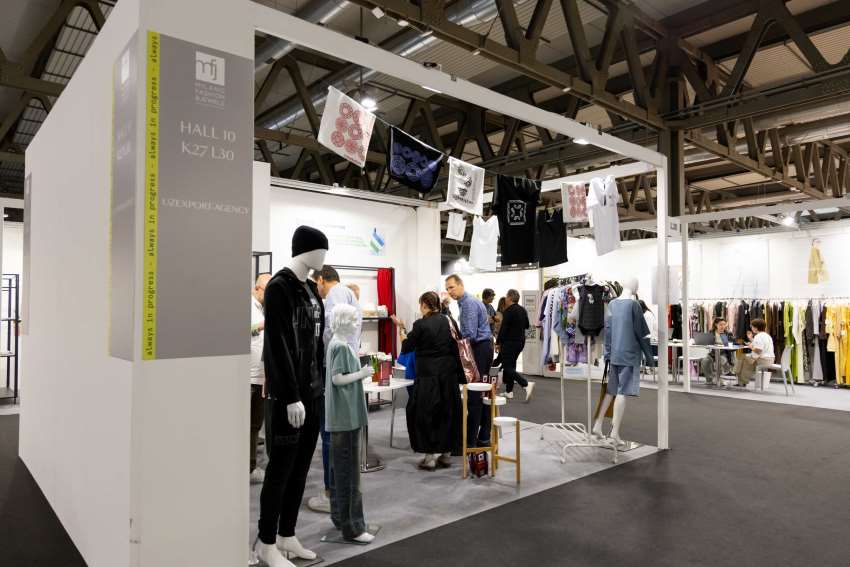
Texfusion held in London on October 31 to November 1 Nearly 165 exhibitors participated in the trade fair. Exhibitors reported fewer footfalls as market concerns continue to take their toll. The show’s modest footfall did not significantly affect all exhibitors, however, with both returning and new to the show manufacturers pleased with the turnout. There were new exhibitors from Brazil and more from Asia, particularly mainland China and Hong Kong.
The mood at the show was flatter than in previous editions. However, the exhibition’s international reach has helped boost its momentum. Future editions may have a dedicated space for Chinese exhibitors. For some buyers the show was a great source of inspiration. Indy Custom Apparel was looking for different ideas and materials to use for new products it’s trying to launch and saw a lot of interesting people. Indy Custom was particularly interested in sourcing from Pakistan and India, which this show caters to. Hong Kong-based manufacturer Novetex attended the show for the first time in a bid to break into the UK market and felt it was busier than other textile shows in Paris and Istanbul. The trade show’s visitors included Shop Direct, Topshop, Tesco, Next and Ted Baker.
Tamil Nadu plans setting up mini textile parks
Mini textile parks are being planned in Tamil Nadu. For each park, the state will provide 50 per cent of the cost to create roads, a sewage treatment plant and a captive power plant or Rs 2.5 crores as subsidy. Ten entrepreneurs could form a cluster and set up a mini-textile park on 10 acres after registering a special purpose vehicle. The entrepreneurs should buy the land on their own and establish a minimum of ten work sheds in the park to get the subsidy.
The total investment on buildings and machineries should be more than two times the amount spent for creating such facilities. The textile parks are expected to help improve the standards of living of handloom and power loom weavers in each district. Entrepreneurs should open a bank account in a nationalised bank in the name of the park. The subsidy will be released in three installments and the entrepreneurs should produce all necessary documents at the time of release of each installment.
The Director of Handloom and Textiles will monitor the progress of the work regularly. Discussions with entrepreneurs have already been initiated. Tamil Nadu accounts for nearly 30 per cent of the country’s handloom textiles production and 50 per cent of exports.
Pakistan’s Q1 garment exports up 15 per cent
Readymade garment exports from Pakistan in Q1 rose 15.97 per cent as compared to exports during the corresponding period last year. Exports of knitwear increased by 9.35 per cent; towels exports increased 0.9 per cent. Raw cotton exports from the country during the first quarter of the current financial year grew by 69.70 per cent.
Exports of cotton yarn were up 4.56 per cent. However, exports of cotton cloth decreased by 3.44 per cent. About 91,147 metric tons of bed wear were exported the in first quarter as compared to exports of 89,559 metric tons during the same period last year. In the first quarter of the current financial year, exports of yarn other then cotton yarn grew by 7.67 per cent.
Textile group exports from the country during the first quarter of current financial year witnessed a 7.91 per cent increase as compared to exports of the corresponding period last year.
The textile industry is the backbone of Pakistan's economy. It contributes more than 61 per cent share in the country's exports and is the largest foreign exchange earner and employment generator. The textile sector has been a major beneficiary of GSP Plus. Pakistan’s exports of textiles have increased by 55 per cent in value terms in 2016 over 2013.
Investors hesitant about Bangladesh
Europeans want to invest in Bangladesh as they perceive the country to be a good option for ready-to-work labor force and a fast growing economy. Moreover workplace safety has improved after inspections by Accord and Alliance. However, investors face a lot of hurdles.
A foreign investor has to collect nearly 25 permissions from different agencies and departments for starting a business. Bangladesh is still languishing in the lower rungs of the World Bank’s ease of doing business. It comes in at 177 in the latest edition — only higher than Afghanistan in South Asia.
While foreign investors want a liberalised trade policy, the country still follows protectionism. There is no clear and long-term plan on power and energy. This is very important to investors for making an investment plan. Although garment shipments from Bangladesh to the EU are growing, Myanmar and Ethiopia are looking to become strong contenders for the country’s throne as the world’s second largest apparel supplier. They can be good places for garment sourcing in future as both countries have been giving incentives to attract foreign investment. Potential European investors are look for a platform in Bangladesh where they can discuss the challenges they face and seek remedy from the government such that their investment plans can go through.
India develops textile standards
India is developing standards for the technical textile sector. The market for technical textiles is expanding rapidly with new products being added in various industries. Thus it is imperative to formulate standards to accelerate the growth of the sector.
India has the capability, resource and market in the area of technical textiles and the need is to capitalise on these strengths. The market is expanding rapidly with new products being added by users in various industries. However the share of technical textiles in the domestic textile sector is very low.
Despite achieving a high growth rate, the per capita consumption of technical textiles in India is 1.7 per kg vis-a-vis 10 to 12 kg in developed countries. Technical textiles have immense potential and are considered to be the sunrise industry in India. The industry could grow with sufficient investments in technology. Development and industrialisation are the main drivers for the demand for technical textile products in a country.
Technical textiles provide new opportunities to the Indian textile industry to have a long term sustainable future. India can be positioned as a manufacturing hub for technical textiles. Demand for technical textiles is expected to stay steady during the period 2015 to 2020.
Chris Noble to present at InPrint
Chris Noble, the pioneering giant from Xaar, will present blending of Inkjet and Xaar technologies in the realm of 3D printing at the InPrint exhibition, Germany, November 14 to 16, 2017. The endeavor is to transform 3D printing from a prototype industry to volume production. Inkjet technology is ideally placed to deliver 3D printing’s transformation to volume manufacturing.
Digital inkjet, and specifically Xaar’s TF Technology and High Laydown Technology, is at the heart of the solution, delivering both a fast and a scalable 3D manufacturing process which is robust as well as economical.
3D printing as a manufacturing methodology encompasses a range of processes and applications. It is a highly attractive methodology, not just because it eliminates the need for tooling, but also because it provides superior geometric freedom, giving product designers much more capability, while substantially reducing product design and production lead time.
In addition, 3D printing enables customisation of products to individual consumers, decentralisation of manufacturing and reduction of storage space required for spare parts – not to mention the time, environmental and cost benefits delivered with these.
To date, 3D printing technologies have often been used to produce prototypes and one-offs. While for many businesses there is a definite value to be had in this, the opportunities with inkjet technology are now creating even greater excitement and buzz around 3D printing and its potential to deliver reliable, repeatable systems for high volume manufacturing.
UP, Bihar check points demand e-way bill, hampers business
Crates of fabrics valued at several crores of rupees are being returned at the borders of Bihar and Uttar Pradesh as they do not have an e-way bill. The e-way bill was made compulsory for textile deliveries under the GST introduced in July. Approximately 30 per cent of saris and dress fabrics in India are supplied to Bihar and Uttar Pradesh from other states.
GST has cast a shadow on textile trade. Traders were hopeful that the marriage season would improve their fortunes. But states like Uttar Pradesh and Bihar do not allow goods without an e-way bill. Traders are losing business which is especially pressing during the wedding season when purchases of traditional wear are at their highest peak for the year. And there is confusion surrounding the matter. Though the rule was supposed to have been implemented only in 2018, local GST officials have been enforcing it strictly at the borders of Bihar and Uttar Pradesh.
Under GST, transporters will need to carry an electronic waybill or e-way bill when moving goods from one place to another. A movement of goods of more than Rs 50,000 in value cannot be made by a registered person without an e-way bill.