FW
Orissa frames guidelines for textile investors
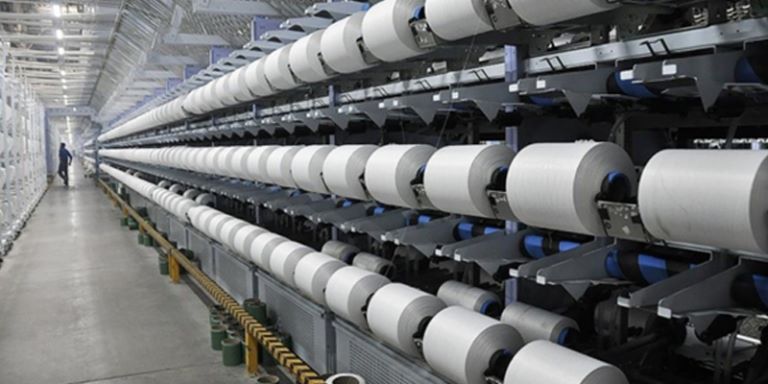
Orissa has framed guidelines for apparel parks. The guidelines will be applicable to industrial bodies as well as young entrepreneurs who want to start their business in the state. Entrepreneurs who want to set up textile units will have to obtain an identification number through the micro, small and medium enterprises department whereas bigger industrial bodies will have to do the same through the department of industrial policy and promotion.
To set up apparel parks, the promoters will have to obtain permission from the Odisha State Co-operative Spinning Mill Federation Limited (Spinfed), which monitors the physical and financial activities of member spinning mills and power loom industries in the state.
Spinfed will examine the preliminary report submitted by the promoter of the park and then accord approval. Land for the park has to be obtained by the promoter. But they will get assistance from the government for land acquisition mainly for private land.
Orissa aims to boost the textile sector through this policy by setting up apparel units, parks. The state has come up with six different policies under the ease of doing business based on the potential of the state and textile is a focus sector.
Michael Kors revenue up five per cent in Q2
Michael Kors total revenue rose 5.4 per cent in the second quarter. It faced a 1.8 per cent drop in same store sales in the second quarter. The company has forecast revenue of $4.59 billion for the year ending April 2018. The company expects Jimmy Choo to contribute up to $225 million to sales for the rest of the year.
Once a top name in affordable luxury, Kors is grappling falling same store sales, as people shop online. Over-distribution and a reliance on promotions to boost sales also eroded its brand value and appeal. To reverse a more-than two-year slump in same-store sales, Kors is pursuing a multi-brand strategy for growth. In July, the maker of the popular Mercer and Hamilton handbags announced a deal to buy Jimmy Choo. The company has also pulled back heavily-discounted inventory from department stores and off-price channels, refreshed its line of bags and shut underperforming stores.
Sales also got a fillip as the company boosted new products and high-end accessories by 40 per cent for the fall season and sold more bags at full-price, helping it overturn a one-year slide in total revenue for the first time.
Textile finishing company Imprima acquires Italy’s Set
Italy-based Imprima, dedicated to textile finishing has bought Set (Società Europa Tessile). Set, also in Italy, is a company specialized in textile printing. This will make Imprima one of the main textile printing and finishing industrial group in Europe.
At the base of the choice to let Set enter the group is Imprima's strong willingness to diversify its creative offer and costumer portfolio, increasing not only the figures of the fast fashion market but also those of the planned market at a geographical level.
Imprima aims at affirming itself as a partner of choice for fashion brands and retailers, offering digital printing and textile finishing services at an industrial level through the creative heritage of the acquired brands, clean and smart manufacturing, proximity to markets, qualitative excellence and sustainability. This business model evolution follows the concept of sustainability from a financial, industrial, social and environmental point of view.
In 2018, Imprima will launch a fully digital industrial platform in Como, Italy, which will be implemented in other areas as well. Societa' Europa Tessile manufactures textile products. The company offers textile goods including linen goods, felt goods, padding, and upholstery filling.
Bill Kingdon is the new managing director of ICA
Bill Kingdon is the new Managing Director of International Cotton Association (ICA). He has a masters in law and defense studies and has lived and worked overseas for much of his professional life as a soldier and senior leader. He has collaborated and partnered international teams all over the world, including Afghanistan, Iraq and Bosnia-Herzegovina.
As brigade commander he prepared large organisations for deployment to Iraq and Afghanistan as part of the British army in Germany. He has managed a varied and strategic portfolio as the chief operating officer for British forces in Cyprus and provided the focus for collaboration between international organisations, the Afghan government, diplomats and NATO in Kabul.
Established in 1841, ICA is the world’s leading international cotton trade association and arbitral body. The majority of the world’s raw cotton is traded internationally under ICA bylaws and rules. ICA has 550 members representing all sectors of the cotton industry, including the world’s major cotton companies. Its vision is to ensure contract sanctity in the global trade of cotton. Its mission is to protect the legitimate interests of all those involved in the cotton trade, whether buyer or seller. ICA operates on a not-for-profit basis.
Gerber upgrades software
Gerber Technology has made major advances in its software product lines AccuMark and YuniquePLM to make it easier for customers to adopt technology and achieve optimisation through improvements in their digital workflow. AccuMark Cloud offers all the features of AccuMark, the industry leading pattern design, grading, marker-making and production planning software, with the benefits of cloud computing.
AccuMark Creator leverages core functionality of the Yunique PLM product in the form of simple AccuMark add-on modules beginning with virtual sample management, allowing AccuMark users easier and more efficient collaboration with internal and external partners.
YuniquePLM 8.0 is the latest in easy-to-use, cloud-based PLM with a new modern look, more intuitive functionality and equipped with a self-guided tutorial for easier training and adoption.
Gerber is partnering with Avametric on an advanced 3D simulation engine that powers Gerber’s 3D product, integrates into AccuMark 2D and gives users the most realistic representation of fabric properties to create digital samples, saving companies up to 50 per cent of time and associated cost. The Avametric partnership also expands its 3D offer to cover the complete apparel value chain from retail/consumer all the way through design, development and production.
These innovations will enable customers’ digital transformation, so they can be agile and competitive in today’s e-commerce and internet driven markets.
Denim Premiere Vision in Paris lines up special shows, discussions
Denim Premiere Vision will be held in Paris from November 14 to 15, 2017. This is a specialized denim trade show. It will involve a wider group of insiders, including pure denim specialists, and also fashion-minded insiders, avant-garde fashion designers, and those interested in tailor-made and personalized products.
Denim PV has partnered eight young fashion brands designed by upcoming international talents who will show and sell their own collections at the off-show location. At the same time, in the main show venue, the same designers will unveil two look outfits they designed by employing fabrics and accessories from Denim PV exhibitors and interpreting spring/summer 2019 trends.
The Paris Event Centre will host many initiatives including eight workshops and conferences around key topics of the industry. Some will be moderated by Pascal Montfort, a fashion consultant specialized in sports and lifestyle who previously worked for Nike as consumer culture and innovation manager. Others will be moderated by Fabio Adami Dalla Val, an expert denim insider and business development manager at Premiere Vision.
The show will take place in two spots at the same time–in its usual location, at the Paris Event Center, and in the show’s first pop-up street venue in Le Marais. These two parallel events are aimed at serving the globally evolving denim market.
Make it British forum focuses on promoting local brands
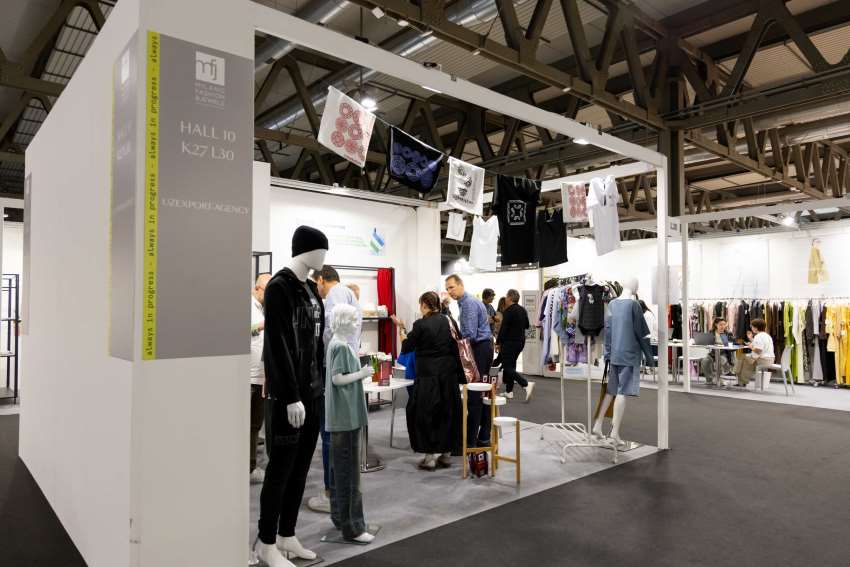
Make it British was held on November 2 where over 200 designers, manufacturers, retailers and academics gathered for a robust and thoughtful debate on how to build a made in Britain brand.
The conversation was positive with a collaborative can-do attitude. The sell-out event also attracted an online audience who could pose questions to the panel. The one-day forum provided knowledge and expertise to successfully manufacture, promote and sell a brand that is made in Britain. A host of experts, who understand what it takes to successfully negotiate the UK manufacturing supply chain, were on hand to offer advice along with an inspiring line up of brand owners and manufacturers to help provide solutions to some challenges and set delegates well on the way to developing a great Made in Britain business.
Developing a product that is made in the UK is not always easy, and this forum aimed at equipping visitors with the expertise required. Many new brands are opting to ensure the Made in Britain label is part of their DNA and there’s a trend for big brands to re-shore. Undoubtedly the key benefits of making in Britain are the convenience and speed of manufacturing in the UK.
Ghana’s Fad Apparel growing exponentially
Fad Apparel, based in Ghana, has a product line including T-shirts, hoodies, pants, sunglasses, baseball caps, and other street wear. The brand focuses its designs on having an international culture with designs and products that anyone will like no matter what their cultural background, religion or ethnicity is.
Since the opening of its international online store in October 2017, Fad Apparel has grown at an exponential rate. It has a growing international fan base through social media and word of mouth. Fad has unique clothing designs with a revolutionary patented product.
At Fad Apparel, the motive is to build a worldwide fashion brand and to represent Ghana in doing so. As such, it gives back to the community by doing donations, charitable events and local investments in Ghana. The hope is that more investors get attracted to the region and that this provides an opportunity for businesses to grow and supports entrepreneurship in the country.
Fad Apparel is part of the Fad Group, which has businesses in social media/affiliate marketing, entertainment, and app development. Fad Apparel was never intended to be a business or an international clothing brand but originally started as a fun activity. It began by selling custom-made T-shirts in the streets of Ghana, with unique designs but with no real branding.
Ban on coke may raise garment prices
Some 150 garment manufacturing plants in the Delhi-NCR have been hit by a Supreme Court order banning the use of petroleum coke and furnace oil. The ban on pet coke has come as a blow to the garment industry in the region at a time when it is already struggling with GST.
There are some 800 export hubs in Gurgaon and around 4,00,000 people are employed in these manufacturing units. Another 300 such units are there in Manesar. These units send fabrics and garments to mills that use pet coke. Even though the processing will restart with the help of alternative fuel, prices will increase significantly by Rs 5 per meter resulting in a hike in garment prices by Rs 30. With thin margins, this additional cost will come as a dampener for the industry as a whole.
This is the peak season for the industry which has big orders to deliver. Due to the pet coke ban, things have come to a temporary halt, which is bound to delay orders. The combined effect of GST, demonetisation and now the pet coke ban might make manufacturing business an unattractive. The Delhi-NCR belt is one of the country’s top textile manufacturing hubs.
Bangladesh: Non compliance to Accord, Alliance leads to dip in RMG orders
"The recent business accord has sent shivers among Bangladesh clothing manufacturers with most either getting termination order or registering a fall business. Global fashion brands and retailers detached business ties with them on their failure to comply and latest data reflects the total number of factories with which platforms — Accord on Fire and Building Safety and Alliance for Bangladesh Worker Safety — cut ties reached 238. Of them, the Alliance terminated ties with 162 RMG units, and the Accord with 76."
The recent business accord has sent shivers among Bangladesh clothing manufacturers with most either getting termination order or registering a fall business. Global fashion brands and retailers detached business ties with them on their failure to comply and latest data reflects the total number of factories with which platforms — Accord on Fire and Building Safety and Alliance for Bangladesh Worker Safety — cut ties reached 238. Of them, the Alliance terminated ties with 162 RMG units, and the Accord with 76.
Manufacturers in a fix
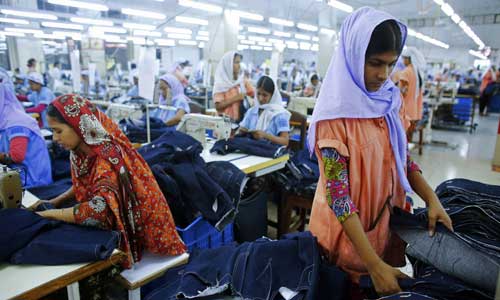
Retailers and signatory brands covered under the Accord and the Alliance sent a letter urging them not to continue business with such factories. As MG Fattah, MD, Sincere Knit Garments points out after termination of business by buyers’ platforms, it is difficult for them to establish contact with buyers and get work orders. With buyers backtracking on agreements signed with producers, it resulted in a downward spiral in overall production capacity of the country’s apparel industry.
Manufacturers need to work hard to find new buyers and to keep the wheels of the business moving after the stringent laws enforced on them. Another manufacturer cited insufficient number of orders after retailers under the Accord cut ties. Taking advantage of the termination, buyers who are not affiliated to the platform are offering lower prices. In such a situation, companies have to incur massive losses as orders declined substantially. It would have been better had the Accord allowed them to continue production in existing factory for a few more months and to give them leeway in adhering to compliance with all safety rules.
Mozammel Haque, MD, Deshone Apparels says he had an order from a Polish buyer that was supposed to be in effect until February 2018. But following the termination, the buyer wants the deal to be revoked by the end of this year. He has already withdrawn orders for products supposed to be produced between January and February. Even after asking for some more time, the buyer is in no mood to change his mind.
Should the government take onus
Industry feels the Bangladesh government and Bangladesh Garment Manufacturers and Exporters Association (BGMEA) should be blamed for the losses as they have been unable to negotiate terms with buyers and manufacturers have to borne the burden. They argue how did Bangladesh accept this despite being a sovereign country? Recent data on RMG sector reveals no recent record of accidents in factories. Nevertheless, these two platforms keep labeling factories dangerous. It is high time they informed foreign buyers their RMG factories have already become the safest in the world.
Latest data shows 81 per cent of safety concerns identified in 1,620 Accord-inspected factories were addressed, and 84 per cent of highest priority risks and non-compliance issues addressed in 655 Alliance-inspected factories. During the inspection, only 2 per cent of total garment factories were found to be risky, which have already been shut.
Presenting other side of the story, Faruq Hassan, Senior-VP, BGMEA, says though the business termination has caused a decline in the number of work orders, foreign buyers will ultimately depend on Bangladesh as they sell quality products at affordable prices. A large number of owners are relocating factories in a bid to ensure workers’ safety and meet international standards. He suggested factory owners meet minimum safety standards as any accidents may tarnish the image of the entire industry.