FW
Pakistan’s trade deficit widens to $2,597 billion in January
Pakistan’s trade deficit widened by 20.84 per cent to $2.597 billion in January from $2.149billion over the same month last year mainly on account of surging duty-free imports, reports Dawn.
The trade deficit swelled for the second consecutive month suggesting that consumption is reviving. An increase in export could mean recovering global economy and improvement in domestic production.
During the first seven months (July-January) of FY21 the trade deficit increased 8.24pc to $14.96bn from $13.82bn in the corresponding period last year.
Earlier, the country’s trade deficit during FY20 had narrowed to $23.099bn from $31.820bn.
Official data available with Dawn showed the country’s imports have been rising since September 2020. The duty-free import value recorded an unprecedented growth of 80pc in December while it grew by 30pc in January.
In the July-January period of 2020-21, the duty-free imports witnessed an increase of 27pc in terms of dollars over the last year. In overall imports, the share of duty-free import has surged 42pc in the seven months this year from 35pc over the same period last year.
As a result of the increase in duty-free imports, in January, the import bill rose by 14.68pc year-on-year to $4.725bn as against $4.120bn over the corresponding month last year. Meanwhile, on a month-on-month basis, imports in January dipped by 5.59pc compared to December.
Years to understand the full impact of COVID-19, say experts
Experts speaking on a podcast at the Leeds University said, it would take experts years to understand the full long-term impact of the coronavirus pandemic on the fashion and textiles industry.
Entitled 'How COVID-19 has increased the complexity of the fashion industry and its supply chains', the podcast was hosted by Dr Matthew Davis, an associate professor at the business school, with speakers Dr Mark Sumner, a lecturer in sustainability and fashion at the university's School of Design, and Fergus Dowling, a research assistant working on a project looking at the impact of COVID-19 on modern slavery.
Davis opened the discussion by asking about the impact of COVID-19 and the associated lockdowns on the global fashion industry and, in particular, the effect on how brands manage worker rights and relationships in their supply chains.
Describing the situation as "complex", Sumner said, there may be some major changes in the industry which he hoped would be positive like improving transparency and improving the relationship and the connection between brands and suppliers.
Dowling noted that some brands had cancelled orders without compensation but others had agreed to pay for all orders - leaving them with huge amounts of stock as lockdowns continue.
Freedom from synthetics can help fashion industry become more sustainable
 Found in more than half of all textiles, polyester production is likely to account for 85 per cent of total global fiber production by 2030, says a report titled ‘Fossil Fashion: The Hidden Reliance of Fashion on Fossil Fuels’, published by the Changing Markets Foundation, the report charts out growing polyester use in the last 20 years. The report also focuses on the growing carbon footprint of polyester production across the world. While this footprint was equivalent to 700 million tonne of CO2 in 2015, it is expected to nearly double by 2030.
One of the main reasons for the growing footprint is rise in production of plastics, from which polyester is made. Growing polyester production also results in an explosion of cheap and low-quality clothes causing a huge waste crisis, says the report. People today buy 60 per cent more clothes than they did 15 years ago, but do not wear them for half as long. This may result in ballooning of fashion production to 102 million tonne by 2030, it adds.
Fast fashion biggest generator of industry waste
Urska Trunk, Campaign Manager, Changing Markets Foundation, compares fast fashion to fossil fashion. According to her, brands’ addiction to cheap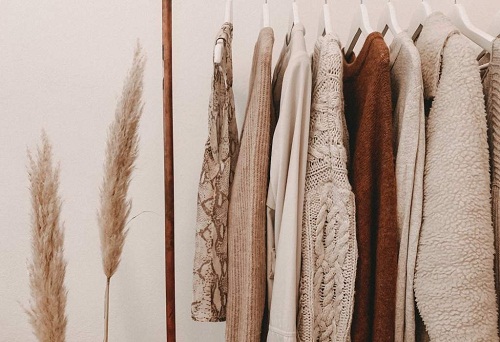 clothes made with synthetic fibers results in 87 per cent waste of clothing materials. Synthetic clothes also release tiny, non-biodegradable microfibers during washing and disposal.
Found everywhere from the Artic Ocean to food chains and even tap water, these microfibers are known to damage human lung development besides being harmful for sea creatures. Laura Díaz Sánchez, Campaigner at the Plastic Soup Foundation, also warns of the devastating effects of these microfibers on human health
An opportunity for European Commission
Time and again, the fashion industry has made several promises and launched many initiatives to control this microfiber pollution, but failed to reverse its impact on the environment. Now, the European Commission has the opportunity to lead this change. Besides slowing down the consumption rate of clothes across Europe, the commission can ensure that textile industry invests in fiber-to-fiber recycling technologies.
The Commission can also ensure that only those brands benefit from the COVID Recovery Package funds who adopt sustainability practices. Urska Trunk advises the commission to propose an all-encompassing textile strategy that makes fashion independent of synthetic fibers and takes it on a sustainable route. In this way, the commission can effectively address the issue that is threatening our lives.
Casualwear next growth driver for Arvind Fashions as it scales digital capabilities
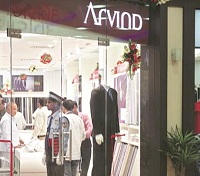 Expecting online sales to cross the Rs 10,000 crore mark soon, Arvind Fashions has made huge investments in various digital channels. Not only does the company sell on all third party portals, it has also scaled up its own website, said Kulin Lalbhai, Director to the Economic Times. Currently, the company is integrating stores with online channels ramp up sales.
Positive results from Flipkart partnership
Having seen incredible traction last quarter, Arvind Fashions has collaborated with Flipkart to build its brand Flying Machine. The partnership will help Arvind Fashions explore the best of both worlds, Lalbhai feels as it combines Flipkart’s reach and analytics with Arvind’s brand building capabilities and supply chain. The partnership is already yielding positive results with territory sales of Flying Machine growing almost 70 per cent during the festive season.
Sales recovery with efficient cost management
The company’s offline sales are also promising, says Lalbhai. It saw healthy recovery in January sales and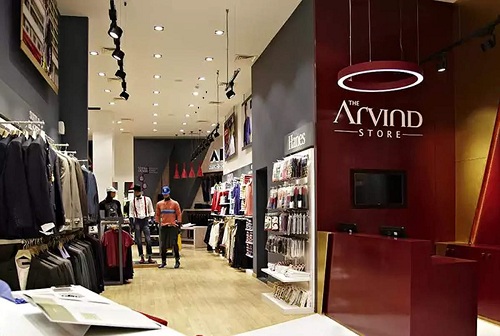 expects the trend to continue. It also plans to get a lot of fresh merchandise in stores from February onwards, he adds. Meanwhile Arvind Fashions managed to cut down a few of costs like temporary rental reductions and other costs during the pandemic. Though these costs are expected to rise again, the company has done a lot of structural cost savings, adds Lalbhai. It has not only reduced employee headcount but also cut supply chain costs. Arvind Fashions is also working on raw material costs and plans to introduce new strategies to prevent margin dilution and price corrections due to an increase in prices.
Robust revenues in Q2 & Q3
The company clocked in robust revenue growth in both second and third quarter of the current financial year and had a much better bottom line. Currently its offline sales have recovered to 70 per cent of pre-COVID levels while online sales are 230 per cent of last year. Adjusted for the Ind-As accounting, the company’s EBITDA is also much better last year’s third quarter. Most of its brands are gaining market share through sales on Flipkart and the company expects the trend to continue
Casual wear to drive future growth
Lalbhai believes, current casualization trend is not a response to COVID but existed even before that. The pandemic has only accelerated this trend with workwear transforming from formal to semi-formal. He expects casual wear brands like Tommy, Calvin Klein, US Polo to continue growing and emerge stronger from the pandemic. T-shirts and polos will lead casual wear growth post COVID, says Lalbhai. He also expects rapid growth for the footwear segment in times to come.
Textile Exchange adds new member
Industry organization Textile Exchange has named Bangladeshi certification services provider GSCS International as its latest member.
The companies are formalizing a licensing agreement that will entitle the Dhaka-based firm to accredit companies with the Global Recycled Standard (GRS), Recycled Claim Standard (RCS), Organic Content Standard (OCS), Responsible Down Standard (RDS) and Responsible Wool Standard (RWS).
GSCS International provides assessment, audit inspection, certification and training services worldwide, though its headquarters are in the key apparel manufacturing nation of Bangladesh – which is the second largest clothing exporter globally.
The company claims its offering “goes beyond simple compliance with regulations and standards”, as it encourages companies to promote and uphold sustainable best practices, which it says can improve performances and vindicate the preservation of natural resources.
As it secures a licensing agreement with Textile Exchange, GSCS will become a certified provider of the Vancouver organization’s portfolio of textile standards.
Visit to fashion websites leads to CO2 generation: Study
A new research from UK-based website SaveOnEnergy warns visits to popular fashion retailers’ websites could potentially contribute to CO2 generation. The research surveyed 20 most populated UK cities across the UK and at 25 retailers, including Next, Asos, Zara, and Shein. It names Next as the largest contributor to CO2, in the UK with 5,100,000 average monthly searches.
Online retailer Boohoo was the second-biggest producer, with potentially 10,815kg of CO2 emitted per month – equivalent to driving 26,836 miles. PrettyLittleThing was found to be the potentially lowest monthly contributor, producing only 142kg of CO2 per month. One visit to PrettyLittleThing’s website generates 2.34g of carbon dioxide.
The survey states, London generated the most CO2 from fast-fashion retailers with an average of 9,005kg of CO2 produced from website visits per month. For Asos alone, London had an average of 673,000 searches. Birmingham came second after London and Liverpool third. In ninth place was Edinburgh, potentially producing 601kg per month from searches, and tenth place was Belfast, producing around 597kg of carbon dioxide per month.
Uzbekistan to produce 3.1 million cotton bales in MY2020-21
Uzbekistan aims to produce approximately 3.1 million cotton bales in the marketing year (MY) 2020-21. Its cotton production area will be 980,000 hectares, says a report by international textile magazine, Textilegence. As a part of its new marketing strategy, Uzbekistan plans to sell cotton not as a raw material but as products to the global market. Its domestic consumption is estimated to be 2.75 million bales in 2020/21. On the other hand, raw cotton exports are expected to remain at 50 thousand tonne.
The Uzbekistan government is encouraging new partnerships to increase local cotton use. It has approved new textile investments and factories. Existing textile factories continue to increase their capacities. Government officials aim to use all local cotton production in the country’s own textile sector in the 2020-21 marketing year, due to the rapid increase in domestic consumption.
The government will also provide tax, customs and land benefits to foreign companies through clusters to encourage investment and promote vertical integration in the textile and clothing industry.
L Brands promotes Martin Waters as Victoria’s Secret’s New CEO
L Brands has promoted Martin Waters, the current CEO of Victoria’s Secret’s lingerie division as the new CEO of the entire business. Waters will report directly to Andrew Meslow, CEO of parent company L Brands. Amy Hauk, CEO, Victoria’s Secret Pink while Greg Unis, CEO of Victoria’s Secret Beauty, will report to Waters.
An experienced retail executive, Waters has led Victoria’s Secret’s international business for the past 13 years and had recently stepped into the role of CEO, Victoria’s Secret Lingerie. The company also revealed that Stuart Burgdoerfer will retire as chief financial officer of L Brands and interim chief executive officer of the Victoria’s Secret business. However, he will remain in the CFO role, however, until August, helping finalize the separation of the Victoria’s Secret’s business — which includes the lingerie, beauty and Pink divisions— and Bath & Body Works brand. The spin-off, which the company anticipates will be complete by August, will take Victoria’s Secret private, while Bath & Body Works remains on the public market as a stand-alone firm.
Luxury groups launch three sustainability projects
Top luxury groups Capri Holdings, Prada and Kering have launched three new projects on environmental protection and social responsibility. Capri Holdings has launched the Capri Holdings Foundation for the Advancement of Diversity in Fashion. The foundation aims to support diversity, inclusion and equality across the fashion industry and has pledged $20 million investment. It will develop on-campus recruitment, mentorship and scholarship programs to prepare students for successful careers in the fashion industry.
Prada aims to promote the inclusion and unlock the value of disabled people within multinational corporations. The brand is currently assessing various practical solutions to establish a long-term inclusivity action plan, starting with the hiring of people suffering from down's syndrome within its commercial organisation in Italy. French luxury group Kering has set up the Regenerative Fund for Nature together with Conservation International, a non-profit organization promoting biodiversity.
Over the next five years, the brand aims to convert to regenerative agriculture 1 million hectares of farmland and landscape where raw materials for the fashion supply chain are grown. The fund will provide direct support to farmers by financing projects in a number of countries. The first round of funding is open for applications until April 30 2021.
BCI benchmarks Greek AGRO-2 Integrated Management Standards as equivalent
The Better Cotton Initiative (BCI) has benchmarked the Greek AGRO-2 Integrated Management Standards as an equivalent to the Better Cotton Standard System. A Textilegence report says, this will promote sustainable cotton farming in Greece, Europe’s largest cotton producer. The development will enable AGRO-2 certified farmers participating in the BCI Program sell their cotton as Better Cotton from the 2020-21 cotton season. By the end of 2022, 5,000 farmers will grow AGRO-2 licensed cotton (equivalent to Better Cotton), on 40,000 hectare, producing around 185,000 bales.
The AGRO-2 Integrated Management Standards were developed by the national Hellenic Agricultural Organization, ELGO-DEMETER, a statutory body under the Ministry of Rural Development and Food. ELGO-DEMETER and the Inter-Branch Organization of Greek Cotton (DOV) – jointly ELGO-DOV – partnered to promote and implement the AGRO-2 standards for Greek cotton production.
The benchmarking of the AGRO-2 standards to the Better Cotton Standard System began in 2017 following interest expressed by Greek stakeholders. Upon completion, Greece began the official BCI country start-up process; culminating in the signing of a Strategic Partnership Agreement between BCI and ELGO-DOV; to recognize AGRO-2 certified cotton as equivalent to Better Cotton.