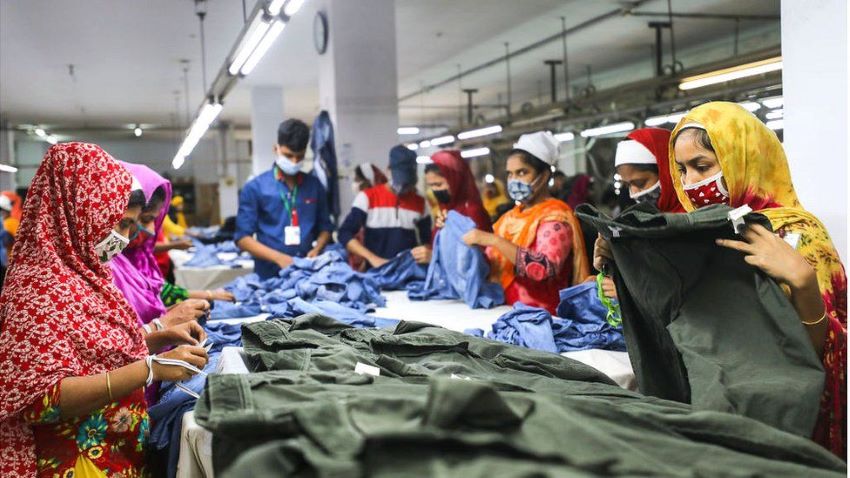
FW
Textile 2030 commits to reduce carbon footprint by 2030
Signatories of the 10 year voluntary agreement, Textiles 2030 launched by not-for-profit organization Wrap (Waste and Resources Action Program), have committed to reduce carbon footprint in the industry by 50 per cent, and reduce the aggregate water footprint of new products sold by 30 per cent by 2030.
As per Drapers Online, signatories also committed to make the industry more sustainable by focusing on three actions; agreeing good practice principles that focus on durability, recyclability, and minimizing waste; implementing circular business models and setting up partnerships to supply and use recycled fibres for new products.
Textiles 2030 builds on Wrap’s Sustainable Clothing Action Plan (SCAP), a voluntary commitment to reduce the industry’s environmental impact, which launched in 2012 and had been signed by more than 90 brands, retailers, trade bodies and other organisations.
Marcus Gover, CEO of Wrap, said: Textiles 2030 will create a fashion sector fit for the future and lower the environmental impacts of other household textiles. With clothing having the fourth largest impact on the environment after transport, housing and food we simply cannot afford for sustainability not to be the next big thing in fashion.”
Philippines garment industry may lose 30% revenues: FOBAP
Robert M Young, President, Foreign Buyers Association of the Philippines (FOBAP) said that the garment industry may lose 30 percent to 40 percent of $1.5 billion—which is the lower end of 2021 target industry revenues—if more shipment delays persist.
This translates to potential losses of $450 million to $600 million, or roughly P22 billion to P29 billion, this year.
This year, Fobap was targeting its yearend shipments to reach $1.5 billion to $2 billion, but the consequences arising from the lockdown protocols may block the industry’s goal.
Young explained that the garment manufacturers are experiencing delays of one month, even up to 45 days in some instances, in their shipments.
Adding fuel to the fire, he said, are the lack of factory workers and logistics amid the lockdown protocols.
Meanwhile, securing export permits and other necessary documentation is also a challenge given that the government agencies are operating with a skeletal workforce, he said, adding their systems are down in some events—all of which bring further delays to the process.
The Fobap official also expressed worries over the fulfillment of orders the country recently received from Myanmar as the latter struggles with a political turmoil.
Indonesian economist urges for a harmonized tariff structure for TPT industry
Enny Sri Hartati, The Economist Institute for Economic Financial Development has urged the Indonesian government to apply a harmonized tariff structure from upstream to downstream for the textile and textile products (TPT) industry.
As per Indo Textiles, this tariffs structure should include temporary trade security tariffs in the form of security or the imposition of Safeguard Measure Import Duty (BMTP). He Hartati believes, this will enable garment producers to absorb domestic raw materials more optimally while at the same time obtaining market certainty.
The implementation of this tariff structure will offer two benefits, adds Hartati.It would encourage creation of added value by boosting use of local raw materials, as well as import substitution.
Hartati says, the current import structure of the textile industry is reversed with the tariffs on the upstream and middle sides being higher from the downstream side. Such contradictory trade policies can have a huge impact on the absorption of national labor, he said Moreover, during the economic recovery, it requires a lot of jobs to fill the millions of workers who are victims of the pandemic.
Turkey to open foreign logistics centers
Turkey plans to open foreign logistics centers in its major export markets including the US. This would help local exporters' access these markets and stimulate the exports believes the Turkish Exporters Assembly, TIM. As per SRTEPC, these logistics centers will work as a regional base for exporters, reduce the costs of market access and accelerate access to new markets.
Turkey's apparel and home textiles exports are expected to keep growing like last year when exports to the US increased more than 20 per cent year-on-year to cross the $10 billion-mark. While sales of carpets increased by more than 30 per cent over the previous year, exports of ready-to-wear and apparels climbed by more than 20 per cent in 2020 over 2019.
This year too, Turkey's exports to the UK have grown during January-March 2021 period due to the finalization of the post-Brexit free trade agreement. They are expected to reach monthly average of $1.80 billion during January-August 2021, with a rise of 7.48 per cent compared to the monthly average exports of $1.68 billion in 2020.
India’s yarn exports expected to surge as fabric exports remain stable
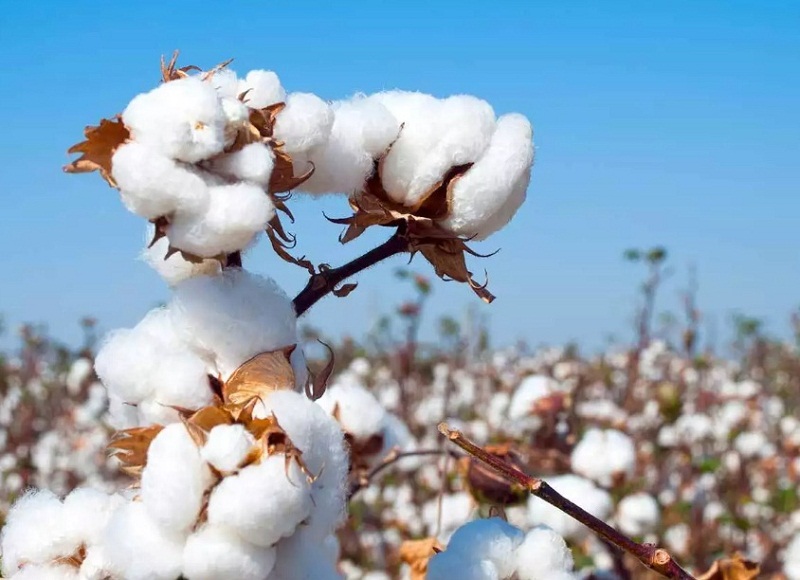
The boost provided by the US-China trade war to India’s cotton exports in marketing year (MY) 2019-20 was offset by the spread of pandemic. However, the country was able to control the pandemic’s impact through lockdowns and vaccination, reports SRTEPC. This also boosted area under cotton cultivation by 5.56 per cent to 13.30 hectare and production by 14.34 per cent to 29.50 million 480-lb bales in MY 2019-20.
Increase in cotton production to boost prices
India’s area under cotton cultivation is expected to reach 13.40 hectare while production is expected to increase to 29.50 million 480-lb bales in the year. Cotton exports are expected to increase 42.86 per cent in the MY 2020-21 to 500 million 480-lb bales while imports are expected to decline by 56.14 per cent to 1.00 million 480-lb bales.
Prices of Indian cotton fibers have been growing considerably since January 2021. For example, price of DCH-32 from Karnataka and V-797 from Gujarat increased 20.14 per cent and 22.87 per cent to Rs 71.23/candy and Rs 33.89 candy in March 2021 up from Rs 59.29/candy and Rs 27.58 /candy in January 2021, respectively. Price of other cotton varieties such as J-34-RG from Bhatinda, MCU-5 from Andhra Pradesh, MECH from Maharashtra, Mech-I/H-4 from Madhya Pradesh and Shankar-6 from Gujarat have also increased by 4to 7 per cent.
Growing demand for value added cotton textiles
There is increased demand for value added cotton textiles since the beginning of MY 2020-21. Most demand is being generated from countries like China, Bangladesh, and Vietnam. In the first half of MY2020-21 India’s monthly average yarn exports surged 15.67 per cent to 89.64 thousand metric ton and is further expected to increase 6.64 per cent from January to July 2021.
Meanwhile, fabric exports are expected to remain stable at a slightly lower value from January to July 2021. In the first half MY 2020-21, fabric exports surged 36.61 per cent to 169.52 thousand metric tonne from the monthly average exports of 124.10 thousand metric tonne in the MY 2019-20.
The boost provided by the US-China trade war to India’s cotton exports in marketing year (MY) 2019-20 was offset by the spread of pandemic. However, the country was able to control the pandemic’s impact through lockdowns and vaccination, reports SRTEPC. This also boosted area under cotton cultivation by 5.56 per cent to 13.30 hectare and production by 14.34 per cent to 29.50 million 480-lb bales in MY 2019-20.
New Textile Exchange standard ensures responsible wool sourcing
The new voluntary standard launched by global industry non-profit Textile Exchange (TE) ensures responsible sourcing of alpaca wool from farmers with high animal welfare standards. As per Eco Textile, known as the Responsible Aplaca Standard, it addresses farm-level animal welfare as well as land management and social welfare practices. It also ensures proper identification and tracking of the fiber from certified farms.
The standard provides the industry with a tool to recognize the best practices of farmers; ensuring that alpaca fiber comes from farms that have a progressive approach to managing their land, practice holistic respect for animal welfare, and respect the 'five freedoms' of animal welfare.
The RAS requires all sites to be certified, beginning with the alpaca farmers and through to the seller in the final business-to-business transaction. Individual sites are certified by independent third-party certification bodies while alpaca wool is tracked from farm to final product using transaction certificates. The new standard will also join the Responsible Animal Fiber (RAF) framework, along with the Responsible Wool and Mohair Standards.
Gujarat textile industry faces Rs 6,000 crore loss due to second COVID wave
The second COVID-19 wave has led to loss of Rs 6,000 crore for the Gujarat Textile Industry, says Manoj Agarwal, President, Federation of Surat Textile Traders Association (FOSTTA). He estimates production has declined 40 per cent in the state. Lockdowns in various states have led to a 20 per cent decline in business, he adds. Ashok Jirawala, President, Federation of Gujarat Weavers’ Welfare Association (FOGWA) puts the daily loss in the textile industry at Rs 37.5 crore. He says, daily production in the state has dropped to 2 crore meter. At Rs 15 per metre, this works out to a daily loss of Rs 37.5 crore. He expects another 20 per cent workers to return to their native land in the next one month.
Sanjay Desai, President, Surat Autoloom Weavers Association (SAWA), informs, 750 waterjet autolooms in Surat are currently working at 50 per cent capacity due to loss of workers. Dipak Sheth, President, Yarn Broker Association (YBA), also informed that over 50 per cent workers employed in the yarn manufacturing sector have not returned. The overall situation in the state is dismal, notes Jirawala, He urged the government to release the yet unpaid Rs 600 crore input credit worth to the textile units.
India’s polyester market under pressure for the next months
Polyester enterprises in India are likely to continue facing pressure in the next two months. As per CCF Group, downstream buyers are expected to purchase polyester at low prices and adopt a sidelined attitude when PFY price is high on the back of weaker demand. Polyester Filament Yarn (PFY) companies may cut price periodically to improve sales and gain profit. Their sales may improve periodically. Downstream fabric manufacturing and twisting market will expand capacity substantially in 2021.
As per some manufacturers, PFY exports have reduced since the beginning of 2021.One company received 5,000-6,000 ton of PFY orders to India in March but almost did not take orders in April. Falling PFY exports to India also indicated diminishing textiles orders in India indirectly. Whether this portion of orders were transferred to China or other Southeast Asian countries is hard to be verified.
Traditional peak season performed worse than anticipated in March-April. Orders in the first half of year have gradually come to an end.. Printing and dyeing market witnessed moderate performance but was still worse than the appearance in March-April in the past years. Dyeing plants were supposed to run at around 95 per cent of capacity during peak season in previous years. May-July are traditional off-season on textiles and apparels market. Overall market may be in dilemma: Orders taken before will gradually complete delivery while new orders are limited. Operating rate of downstream plants may continue declining amid meager profit. Players will not see improving demand before mid-Jul.
Overall market may not be optimistic. Orders change in late-May should be noted. Domestic sales will be thin in May by convention but summer orders may be stimulated by the online shopping spree on June 18. Therefore, some downstream buyers may replenish feedstock. In addition, some small-batched export orders may gradually emerge from late-May by convention.
Provide more funds for payment of salaries to workers, urges BGMEA
Faruque Hassan, President, Bangladesh Garment Manufacturers and Exporters Association (BGMEA) urged the government to provide more stimulus funds to enable factories to pay three months' salaries alongside festival allowances to workers. Hassan says, workers of export-oriented garment factories receive around Tk 3,000 crore every month as salary. The amount is already estimated and only the allowance money remains to be added, Daily Star reports.
According to him, many small and medium scale garment factories, are in trouble as they are struggling to survive with lower quantity of work orders from international retailers and brands during the time of COVID-19. He urged banks to support these suppliers. Last year, the government provided Tk 10,500 crore in stimulus funds to the export-oriented garment, leather and footwear sectors for the payment of salaries and allowances at only 2 per cent service charge.
However, factory owners have been lobbying with the government for a moratorium and deferral of repayment as most of the apparel exporters could not make a comeback to normal business practices because of the second wave of COVID-19. Local apparel suppliers have been running their factories amidst challenges since March last year for a dearth of work orders from the international retailers and brands.
India ITME virtual expo helps India, E Africa textile businesses collaborate
The two-day virtual expo organized by India ITME Society in association with Supporting Indian Trade and Investment for Africa (SITA) initiative of the International Trade Centre (ITC), aimed to help Indian and East African textile businesses network and capitalize on marketing opportunities. As per S Hari Shankar, Chairman, India ITME Society, the platform enabled buyers and sellers to interact, showcase products, connect and network with relevant partners. Focusing on machinery, fibre, yarn, fabric, trimmings and accessories, the platform extends opportunities to both, buyers and sellers, says a report by the Hindu.
The expo held over 700 business to business (B2B) meeting that were attended by around 250 businesses from Ethiopia, India, Kenya, Rwanda, Tanzania and Uganda. Govind Venuprasad, Co-Ordinator, SITA, said, through this expo, the online expo aimed to fulfill the gap created by lack of physical shows. Sheena Frida, Kenyan Fashion Council emphasized that the event has been accurately timed as the sector has been particularly badly hit by the COVID-19 pandemic.