FW
Pandemic leads to 25% decline in global fur trade value
As per a new study by the University of Copenhagen, the pandemic led to 25 per cent decline in the value of global fur trade to $20.1 billion in 2020. According to Business of Fashion, lockdowns and travel bans disrupted supply chains and retail sales of fur clothing and accessories last year, while a COVID-19 outbreak on mink farms in Denmark led to a mass cull, effectively ending the mink-fur farming industry for the world’s largest producer of the material.
While the pandemic eradicated 25 percent of global production and 30 to 35 percent of the global trade of raw mink skins, the Danish mink cull did not have any significant impact on retail sales last year, according to the study.
However, despite the ‘significant’ negative impact of the pandemic, the report predicted disruptions caused by COVID-19 will likely prove temporary and have little impact on longer-term industry trends.
Swiss Textile Machinery group marks presence with 13 exhibitors at ITMA Asia+CITME.
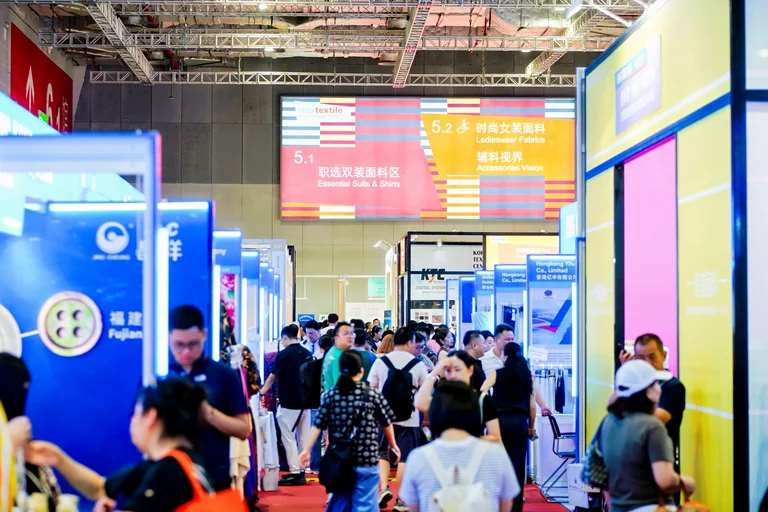
The members of the Swiss Textile Machinery Group marked their presence at the recent ITMA Asia + CITME exhibition. As per Textile Today, held from June 12-16 in Shanghai, the event had 18 Swiss exhibitors, of whom 13 were Swiss Textile Machinery member companies. Around 99 per cent of the show’s visitors were from China.
The feedback from the event was extremely positive regarding the post-pandemic future market situation, said Cornelia Buchwalder, Secretary-General, Swiss Textile Machinery. Norbert Klapper, CEO, Rieter Group, added, the textile machinery market is booming due to a catch-up effect. Orders for the first half of this year are already expected to be more than triple the level in the corresponding period of 2020, and customer feedback at the event was also positive.
The importance of the China market was also emphasized by Loepfe Brothers with its new products. Dr Ralph Menmicke, CEO, said, his company has seen a great pick-up of investments into spinning mills in 2021. Uster Technologies showcased three significant innovations that attracted interest from commercial and technical visitors.
EEB coalition demands end to fast fashion in new textile legislation
As a part of the upcoming EU textile legislation, European Environmental Bureau (EEB) led coalition is demanding an end to ‘fast fashion’ in the textile industry, which it claims is one of the world’s largest polluters.
EEB’s proposed measures include minimum standards for how long clothes should last, a ban on the destruction of unsold and returned goods, rules to verify and substantiate green claims, and ambitious targets for an absolute reduction in the amount of natural resources used across the supply chain.
The group is also calling for urgent rules on hazardous chemicals in fashion, and for moves to combat environmental harm and end labour rights’ violations in supply chains.
The group cited European Environmental Agency figures estimating that 675 million tonne of raw materials are being used annually to fuel EU consumption of clothing, footwear, and household textiles. The global fast fashion market is expected to grow from $25 billion in 2020 to $40 billion in 2025, according to the group.
The EU consultation runs until 4 August and a legislative proposal for the strategy is expected by the end of the year.
An analysis by the Royal Society for Arts (RSA) of 10,000 fashion items sold online found the vast majority contained new plastics, with half made entirely from petrochemically-derived polymers such as polyester, acrylic, elastane and nylon.
In a report, Fashion’s Plastic Problem, the RSA said plastics required large amounts of energy, damaged the environment, and could take thousands of years to break down. It said this, combined with a ‘throwaway culture’, meant most items would end up in landfill.
The study, involving clothing from Asos, Boohoo, Missguided and PrettyLittleThing, estimated the average item was 61 per cent plastic and an average of just 3 per cent of clothes containing plastics used recycled polymers.
A&E collaborates with APDN to launch new thread technology
World’s foremost thread manufacturer A&E has collaborated with Applied DNA Sciences, Inc. (APDN) to launch A&E’s IntegrityTM advanced identification thread technology that is available for its Eco100 recycled thread line.
As per Apparel Resources, the IntegrityTM ECO100 provides innovative and chemical solution for brands to authenticate and validate their products in supply chain by sewing thread. Made of 100 per cent recycled fibre, it is a perfect blend of APDN’s proprietary CertainTR and BeaconR platform.
The innovation helps authenticate a brand’s products and components by using the Beacon technology for a quick, in-the-field optical verification and, when needed, by using a portable qPCR test for a forensic analysis of the molecular tag.
It protects the brand as well as supply chains at a time when both security and sustainability are equally important.
A portfolio company of Elevate Textiles, A&E is the foremost manufacturer and distributor of high-quality industrial and consumer quality thread, embroidery thread and technical textiles, which are used globally by makers of apparels, footwear and home furnishing, amongst many others. A&E products are made in 22 countries, distributed in 50 countries and sold in over 100 countries.
Stoking patriotic fervor, global boycott boosts domestic sales of Xinjiang cotton
 With jump in sale of some Xinjiang manufacturers, foreign brands’ boycott of Xinjiang cotton has stoked patriotic fervor among Chinese consumers. A report by the Global Times says, the boycott has led to local Xinjiang companies stepping up efforts to introduce new techniques to improve the quality of Xinjiang cotton, and developing it into a global brand.
Replacing American cotton with local produce
The industry’s vision to develop Xinjiang cotton into a global brand was also supported by industry players attending the 2021 China International Cotton Conference in Suzhou. A sales representative from Shenzhen-based brand Purcotton said, since last year his firm has been replacing American imports with Xinjiang cotton.
Other domestic brands such as Lining, Anta and Helian Homes too have followed suit, leading to huge gains in their sales figures. At the shopping festival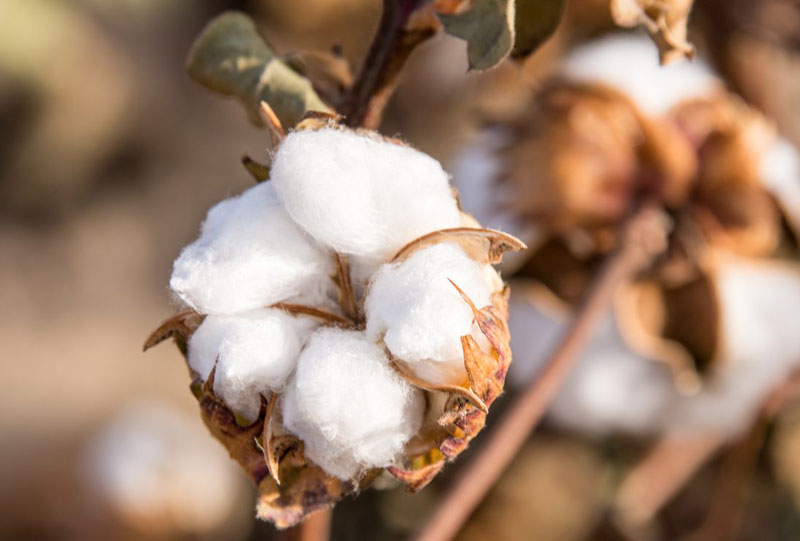 held on June 18, sales of Lining and Anta on e-commerce platform Suning jumped 29 and 25 per cent respectively.
Towards mechanized production
Besides local governments, textile companies are also preparing to defend themselves against the US crackdown and boost domestic sales. Operator of 3,000,000 mu of cotton farms in the region, Xinjiang Shuifa Agriculture Co has announced plans to take its entire cotton farming, purchase, processing and sales process to a big data platform which would allow it to control the quality of its cotton produced.
Industry experts also recommend technological up gradation of cotton fields to improve the quality of cotton seeds and make Xinjiang cotton suitable for a more high-end market. Currently, around 95 per cent of cotton production in northern Xinjiang is mechanized while 85 per cent of cotton production in Southern Xinjiang is mechanized.
With 1.6 million listings, Nike emerges a favorite on global resale platforms
 Nike is one of the most popular sportswear brands in the world. The brand’s popularity can be gauged from the fact that it is a favorite not just amongst buyers of new products but also shoppers seeking second-hand apparels and accessories. A recent survey by SaveOnEnergy of resale sites such as Depop, eBay, ASOS, Marketplace with 1.6 million listings reveals, Nike is by far the most resold brand in the world
Titled ‘Most Resold Fashion Brands,’ the SaveOnEnergy report examines the resale status of 60 of the world's most popular resale brands. This report, with 502,510 listings says, UK-based ‘PrettyLittleThing’ is one of the most resold brands in the world alongwith Boohoo and Misguided.
Gucci emerges the most resold brand overall
As per a reports by New Fashion Law, with 3,45,109 total listings across different platforms, the SaveOnEnergy report ranks Gucci as the most resold brand overall. Gucci is also one of the most listed brands on the luxury resale platform Vestiaire Collective. It has 1,63,810 listings on the platform. Louis Vuitton with 125,361 listings stands second, followed by Prada (112,471 items listed), Chanel (100,084), Burberry (73,786), Dolce & Gabbana (69,716), Dior (64,626), Hermès (62,159), Zara (54,219), and Valentino (51,562).
The SaveOnEnergy report considers the number of listings each brand has on the Etsy platform. The list on this platform is topped by Nike followed by Virgil Abloh’s brand Off-White, Champion, Jordan, adidas, Gucci, Supreme, Dior, Chanel, and Ralph Lauren, which respectively make up the top ten.
Chanel refuses to join Etsy’s counterfeit bandwagon
Though Etsy rankings highlight brands having the most number of listings, most of the products on this platform are infringed and target counterfeit sellers. A recent search of Off-White products by TFL revealed unauthorized use of the Off-White trademark on various products ranging from $30 T-shirts to duplicate and cheaper versions of Jitney bags and key chains. The Etsy rankings also include other counterfeit and/or trademark infringing products such as fake Gucci bags and Supreme T-shirts and duplicate bra tops and short sets from Dior.
However, a brand that does not sell counterfeits on Etsy is Chanel. It had recently filed a trademark infringement and dilution, and unfair competition lawsuit against jewelry maker Shiver + Duke for selling costume jewelry made from upcyled ‘Chanel’ buttons. The suit is currently underway in a New York federal court. Edith Anne Hunt, Founder, Shiver + Duke claim, through this suit, Chanel aims to negate the First Sale Doctrine by involving a small company into expensive litigation in a foreign state despite its efforts to differentiate the counterfeit Chanel buttons in its jewelry range.
VDMA orders increase 69 per cent in April
In April 2021, the number of orders received by VDMA Textile Care, Fabric and Leather Technologies division increased 69 per cent in real terms compared to previous year. Orders from Germany increased 55 per cent and from abroad by as much as 80 per cent. In April, 158 per cent more orders came from the Euro countries, while non-Euro countries increased their orders by 22 per cent. Turnover also increased by 9.5 per cent compared to the previous year
In 2019, the Textile Care, Fabric and Leather Technologies division exported machines worth €788 million, which was 9.5 per cent less than in 2019. Most of these machines were exported to Poland, followed by the US and France. Exports to Poland increased 69 per cent to €89 million in 2020, whereas exports to the United States decreased by 12 per cent to €77 million. Likewise, exports to France fell by 8 per cent to €68 million. Poland remained the most important export market in the first quarter of 2021, followed by France and the US. In particular, exports within the EU developed positively in the first quarter of 2021, increasing by 3 per cent to €90 million.
The VDMA has around 3,300 German and European mechanical engineering companies as its members. The association represents innovation, export orientation, medium-sized companies and employs around four million people in Europe, more than one million of them in Germany.
Punjab government announces new initiative to clean Sutlej river
The Punjab government and stakeholders have announced an initiative to clean the Sutlej river. Launched by the Centre for Responsible Business (CRB) and The ReFashion Hub, the initiative involves promotion of wastewater reuse to address water contamination issue in the state.
This initiative is part of a nation-wide campaign launched along with the Alliance for Water Stewardship & YWater to raise awareness on wastewater reuse in the textile industry. CRB along with stakeholders and The Refashion Hub organized several consultations and meetings to gauge awareness on water reuse and wastewater treatment.
They found Ludhiana's textile industry consists of roughly 300 processing and dyeing units, which are in proximity to rivers and groundwater sources. The pollution of Sutlej river, especially from industrial and domestic sewage, has drawn much attention. Ludhiana is one of the key locations identified as the source of pollution. Of the 2,400 plus industrial units identified in Ludhiana, nearly 10 per cent belong to the dyeing units.
Orta launches the Scenic Route Collection
Denim brand Orta has launched a new collection that promotes bio-based modernity to close the loop in textile manufacturing. Known as the Scenic Route, the collection crafts each of its fabric with eco-consciousness. As per Sourcing Journal, the brand shares its handprint and traces the fibers journey from help farms to local waste cotton recycling partners, to promote transparency.
The Blu Narratives range in the collection is designed to evoke nostalgia with a modern-vintage character and ultimate eco-engineering. The fabrics and their names are inspired by cult classic cinema directors and their films that influenced the denim-clad subcultures and contemporary fashion of the time.
The Newtopia range explores the relationship between humans and nature, and embraces a new future with fabric names that echo the ‘Star Wars’ philosophy of ‘peace, wisdom and coming together for the greater good.’
Constructed with a new balance of indoor and outdoor worlds, Newtopia is a contrast of tough, durable fabrics that are still super-soft to touch. The “Rey” family of Zero-Max®, zero virgin cotton includes maximum shape retention capabilities designed to reinvent denim origins with a mix of Tencel™, Tencel Modal, pre-consumer recycled cotton and post-consumer recycled polyester.
Orta’s “Stay Colors” range is intense yet kind to the environment, with no color fading, less washing required and dynamic color depth retention. The ‘Obi Wan,’ ‘Padme,’ ‘Anakin’ and “Han” cashmere fabrics used in this collection offer eco-friendly mixed weaves aimed at amplifying everyday comfort and functionality with superlative retro-cool styles.
Pakistan’s textile group exports decline by 20.45% in May 2021
As per Pakistan Bureau of Statistics, Pakistan’s textile group exports declined 20.45 per cent to $1.060 billion in May 2021compared to $1.332 billion during April 2021. On a yearly basis, Pakistan’s textile group exports increased by 41.14 percent on year-on-year basis to reach $1.060 billion in May 2021 compared to $751.124 million in May 2020.
The country’s textile group exports increased by 18.85 percent during the first 11 months (July-May) 2020-21 to reach $13.748 billion compared to $11.567 billion during the same period of last year. As per a Business Recorder reports, its raw cotton exports declined by 96.51 percent during the July-May 2020-21 period to $0.593 million compared to $17.002 million during the same period of last year.
Export of cotton yarn declined by.60 percent during July-May 2020-21to $896.034 million compared to $910.577 million during the same period of last year. During May 2021, cotton yarn exports declined by 29.84 percent to $72.084 million compared to $102.736 million during April 2021 and increased by 38.63 percent when compared to $51.997 million during the same month of last year.
Pakistan’s import of petroleum group products declined by 0.76 percent to reach $9.882 billion during July-May 2020-21 compared to $9.807 billion during the same period of last year. Its imports of petroleum group products increased by 262.46 percent to reach $1.184 billion in May 2021 compared to $326.75 million during May 2020.