FW
Welspun posts Rs 40.72 crore profit in Q4
In Q4 FY2020-21 ended March 31,2020, Welspun Enterprises posted a net profit of Rs 40.72 crore as against Rs 38.13 crore loss in the third quarter ended December 31, 2020.
The company reported total income of Rs.600.97 crores during the period ended March 31, 2021 as compared to Rs.465.09 crores during the period ended December 31, 2020. Its EPS grew to Rs.2.71 for the period ended March 31, 2021 as compared to Rs.2.54 for the period ended December 31, 2020.
On a year-on-year basis, Welspun posted a net profit of Rs 40.72 crore for the period ended March 31, 2021 as against a loss of Rs 88.59 during the period ended March 31, 2020. The company reported total income of Rs.600.97 crores during the period ended March 31, 2021 as compared to Rs.501.57 crores during the period ended March 31, 2020. Its EPS declined to Rs 2.71 for the period ended March 31, 2021 as compared to Rs.5.89 for the period ended March 31, 2020.
USTR ends dispute over aircraft subsdies
US Trade Representative’s (USTR) has ended a dispute over aircraft subsidies, suspending the five years retaliatory tariffs on clothes, shoes and fashion accessories imposed by the United States and the European Union (EU) as a result of that dispute.
This decision has been welcomed by the American Apparel & Footwear Association (AAFA) who has long argued that tariffs, especially those connected to unrelated disputes such as aircraft subsidies and digital services, are an ineffective tool in fostering resolution of trade frictions.
Apparel, footwear and travel goods, which are already some of the most heavily traded goods on the planet, have little ability to absorb additional tariff costs, especially in the face of skyrocketing logistics costs as we attempt to sustain a post-COVID recovery, AAFA said in a press release.
The United States and the EU on June 15 announced a cooperative framework to address the large civil aircraft disputes. The agreement moves away from past confrontation in pursuit of a cooperative future by suspending the tariffs related to this dispute for five years.
Both sides also agreed to clear principles, including their shared intent that any financing for the production or development of large civil aircraft on market terms.
Myanmar’s garment exports decline by 20%
The garment export value of Myanmar declined by 20 per cent from October 1, 2020 to May 28, 2021 to reach $2.193 billion, according to Ministry of Commerce.
As per CCF Group report, Myanmar mainly exports CMP garments to the European markets along with Japan, the Republic of Korea, and the US. Its garment industry has been facing challenges such as cancellation of orders amid the pandemic.
In 2010, Myanmar exported garments worth $337 million. Since 2014, its exports have been supported by the EU GSP duty-free system and investments in the sector have increased. However, the current political conditions have dragged down the sector with Myanmar's PMI production index hitting a new low in March. New orders in the production industry have also fallen dramatically due to the pandemic and political unrest.
Kingpins launches program schedule of Kingpins24 Flash Australia
Denim trade show Kingpins has launched the program schedule of its upcoming digital event, Kingpins24 Flash Australia.
To be held from June 23 to 24, each day of the event will feature livestreamed seminars, conversations and stories about the Australian denim sector, with a particular emphasis on digitalization and responsible practices.
A sustainability-focused presentation by the show’s lead sponsor, Tencel will be held on the first day followed by a panel discussion on ‘Digitalizing Denim.’ The discussion will feature Jorgen Sevild of Inqova, Richard Atkins of Global Management Services and Jeanologia’s Jordi Juani. It will be moderated by Henry Chow.
Other panel discussions will focus on topics such as ‘Australia and Fashion Sustainability’ and ‘Zero Chemicals Wash,’ which is moderated by ZDHC’s Prasad Pant and will feature Denim Clothing Company’s Diogo Aguiar, Andrea Venier from Officina+39, and Mansoor Bilal from Pakistan-based Soorty.
Major sponsor Naveena Denim will open the second day with a ‘Fashion meets Function” segment, followed by a presentation by Calik Denim about water-free dyeing technology Dyepro.
Other highlights include a talk from Kontoor Brands’ David Tring on ‘Lessons I learnt on a skateboard and the future archive’ and a ‘Trend Talk’ interview with Amy Leverton of Denim Dudes, conducted by Vivan Wang.
IVXP launches new PNDA production unit
Indorama Ventures Xylenes & PTA, LLC (IVXP), a subsidiary of global chemical producer Indorama Ventures Public Company, has launched a new PNDA (Purified 2,6-Naphthalene Dicarboxylic Acid) production unit, making IVXP the world’s largest PNDA producer. As per Textile World, the unit is located at IVXP’s integrated manufacturing site in Decatur, Alabama, U.S.
The company used in-house technology to design and develop the new unit, which was built with equipment mostly made in the U.S. IVXP’s PNDA maintains the highest 99.8% purity level, with extremely low levels of metals and other organics. The unit can produce enough PNDA to fulfil current and forecast global demand for the next 10 years.
IVL is the only large-scale commercial producer of NDC (Dimethyl 2,6-Naphthalene Dicarboxylate) monomers. In addition to PNDA and NDC production, it offers a wide range of naphthalate polymers such as PEN (Polyethylene Naphthalate), PEN-Copolymers, PBN (Polybutylene Naphthalate), and other specialty naphthalates.
Brandix launches new initiatives to ensure worker safety
Brandix, an apparel group employing over 70,000 staff worldwide, is launching new initiatives to keep workers safe besides earning export revenues vital to keep the pandemic hit Sri Lanka stable.
In 2020 Brandix shifted to personal protective equipment as demand fell away for regular clothes. The PPE work kept workers in jobs though health regulations and placed constraints on output.
In September one factory near the airport got infected, after a variant of Coronavirus. The so-called Nordic variant was suspected have leaked from a hotel where transiting air crews were housed, officials have said.
In the last week of May 2021 Sri Lanka went into a nation-wide lockdown as surgical isolation of small areas failed to contain the pandemic after the April New Year. Export factories were allowed to operate during the lockdown with workers provided company transport.
Workers in areas under strict isolation stay at home, increasing absenteeism. Brandix has been operating a health protocol in its network involving pre-screening and temperature checks. Based on red flags worker are asked to stay home with pay.
During the first Coronavirus wave April 2020, Brandix gave a factory in Punani to the government to be used as a quarantine centre.
In October, a Brandix factory in Pinnawala was given to be used a quarantine centre. In the latest wave, a factory in Seeduwa was given to the government be used an intermediate care centre. The Army converted it to a hospital and it is run by the Health Ministry.
Brandix continues to provide power and other utilities to keep the hospital centre running. The firm had also appointed counselors to the factories to help workers cope with psychological stresses of coping with COVID lockdowns. In the second wave some workers faced pressure from the community requiring support.
100th edition of Pitti Uomo planned from June 30
The 100th edition of Pitti Uomo will be held from June 30-July02, 2021, at the Fortezza da Basso. This reference fair of men's fashion will feature brands from all over the world that will showcase their vision of future fashion.
The fair will have three zones including the Fantastic Classic zone that will bring together the most innovative and contemporary evolution of classic style; the Dynamic Attitude zone that will combine streetwear with sportswear, and Super Styling zone featuring new stylistic codes to anticipate future trends
This year Pitti Uomo will present the third edition of "Sustainable Style". This project aims to inspire a change towards sustainability in the fashion world. Giorgia Cantarini, fashion journalist and project manager, will present a new selection of innovative brands thanks to their respect for eco-responsible criteria. This project is one of those supported by the Pitti Imagine/Uni Credit collaboration focused on innovation and sustainability.
For this 100th edition, Pitti Imagine will launch a new project "Pitti Studios". This project aims to highlight the distinctive features of the brands in the best and most global way, through the creation of content. Pitti Studios will allow the brands' offers to be enhanced in a digital perspective (social media) on Pitti Connect and on the various exhibitors' websites.
Asia Pacific personal luxury market to continue growing post pandemic
 The global luxury market has been severely affected by the ongoing pandemic. As per Euromonitor International’s Luxury Goods 2021 study, in 20202, global luxe market reduced 15 per cent in value terms. In the Asia Pacific sales of personal luxury items that include designer clothes, footwear, eyewear, jewellery, leather goods, among other things dropped 7 per cent. However, the region’s share of global personal luxury goods increased from 32 per cent in 2019 to 37 per cent during this time, demonstrating the region’s growing importance in global luxe market.
Asia Pacific a growing luxury market
Going forward the outlook for personal luxury in this region is positive despite the pandemic. Sales are predicted to grow at a CAGR of 10 per cent in US dollar terms at 2020 prices from 2020-25, and the region will account for 40 per cent of the global personal luxury market by 2025.
Moreover, China has emerged one of the biggest market. The country is now ahead of Japan in the personal luxury space, and Taiwan has surpassed Hong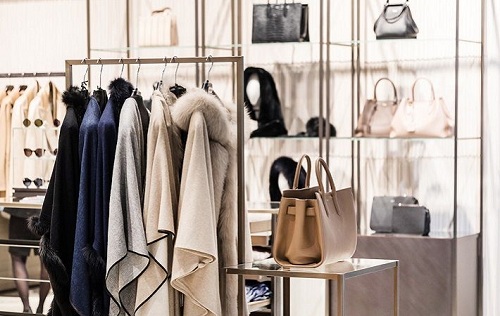 Kong for the first time. The study indicates a drop in tourism and tourist related spending, coupled with weakened demand from local consumers in 2020, led low sales in several major shopping destinations including Japan, Hong Kong and Singapore. At the same time, spending by unaffected affluent and middle-class consumers in Mainland China and Taiwan underpinned resilient growth in these two markets.
Going forward, sales growth will increase to pre-pandemic levels by the end of 2021 in China and South Korea. In fact, China will have 41 per cent share of all personal luxury sales in the Asia Pacific region by 2025, up from 36 per cent in 2020.
Sales driven by sustainability, affordability
Interestingly, the pre-loved luxury goods market has gained traction in the Asia Pacific region. And the trend has gained ground during the pandemic. Sustainability, affordability and collectability are the three key drivers pushing circular luxury since the pandemic.
Consumers in this region have indicated greater affinity towards sustainability and are considering the wider impact of purchase. Vintage stores are becoming hot destinations for key opinion leaders (KOLs) and key opinion consumers (KOCs) in Asia Pacific, driving the fashion value of vintage luxury goods.
For example, Vestiaire Collective, the online vintage luxury site with a strong base in Asia, has increased collaboration with luxury groups since 2020. In March 2021, Kering acquired a 5 per cent stake in the company, indicating the focus of circular luxury to its business blueprint.
Going forward, to tap this every growing personal luxe market in the region, brands need to look at all emerging trends to remain competitive. This involves offering premium exclusivity to new luxury customers, staying in touch with local consumer values, being sustainability-driven, and ensuring high-level personalisation aided by digital technologies.
Rise in raw material prices increases production costs, allege Tirupur garment exporters
Tirupur garment exporters have alleged that the rise in raw material prices has raised their production costs by 30 per cent since December 2019.
Raja M Shanmugam, president, Tirupur Exporters’ Association said, the increase in yarn prices by more than 40 per cent in the past six months is forcing exporters to send the goods through air cargo rather than shipping them, as they were in a hurry to deliver the products to the buyers in scheduled time
Exporter Kumar Duraisamy, said, exporters are working with just 25 per cent of the workforce and are producing lesser percentage of goods. But the basic expenses like the building rent and electricity charges have remained the same.
He said the lockdown was very different this time. Exporters are in the middle of a season and orders are pending. GR Senthilvel, Secretary, Tirupur Exporters and Manufacturers’ Association, added the impact of the lockdown would be felt only after the industries start to function in a full-fledged manner.
Inexmoda to jointly host Columbiamoda and Columbiatex
From July 27-29, Inexmoda will jointly host its annual Colombiamoda and Columbiatex events at Medellín, Columbia.
By joining forces, Colombiamoda and Colombiatex will contribute to the economic reactivation of the textile and fashion industry in a comprehensive manner. Colombiamoda is Colombia’s fashion week, while the Colombiatex textile show features upstream suppliers and solutions. Together, the two shows provide visitors a rounded view of the fashion supply chain. About 500 international and national exhibitors will meet both face-to-face and virtually with specialized buyers to carry out wholesale and export deals in categories such as textiles, supplies, machinery, full package, denim, children’s wear, formal wear, casual wear, intimates, shapewear, sleepwear, sportswear, footwear, leather goods and jewelry.
This collaborative event will integrate the entire value chain of the fashion industry, featuring sustainability as one of the main pillars of conversation.
Inexmoda has always offered different knowledge areas in its events and projects, as it recognizes the value they have for the key actors in fashion. Maintaining this tradition, Colombiatex and Colombiamoda will have two spaces dedicated to keeping industry players updated on the business’ current challenges. One of them will be the Knowledge Pavilion®, which will feature around 15 seminars and free access discussions that can be enjoyed both at the venue and on the official event websites.
The second space, Masterclasses, Workshops and Consultancies, will be exclusively accessible in a digital format. These spaces will feature experts from the fashion industry, who will share their knowledge about the future of the fashion business and innovation with 12 training sessions.