FW
Denim Darzi launches upcycled collection
Denim Darzi has launched a new upcycled, sustainable and fashionable range of collection. As per a Fashion Network report, the range includes outfits for men, women and kids. Started around the pandemic in 2020 by entrepreneur Rupali Mukherjee, the brand was born out of sheer love for denims and with an aim to repurpose old denim wear and industry-waste denim meaningfully.
Denim Darzi’s wide collection includes Indian, western and Indo-western styles in various silhouettes from a sari to a dhoti. The brand upcycles post-consumer discarded denims and textile industry-waste denim. It infuses the collected denim with fabric waste from shops and the textile industry to design our collections. Its outfits are a concoction of waste denim and other fabrics like satin, cotton, linen, jamdani, adds Mukherjee.
The brand has tied up with a tailoring unit. It does hand sketches and sends them. The idea was to work sustainably and not have a big production unit. The brand operates only through online platforms.
Walmart to invite Indian sellers to join marketplace community
American retail giant Walmart plans to invite select Indian sellers to join its Walmart Marketplace community that serves over 120 million shoppers a month. As per a Fashion Network report, this will give Indian exporters a platform in the US market.
Indian businesses retailing on the Walmart Marketplace can access WalmartFulfilment Services This enables them to use the business’ warehousing and delivery infrastructure in the US. Indian exporters will be able to leverage Walmart’s global supply chain infrastructure and receive support to help them reach mills of customers in the us, says Michelle Mi, Vice Presidet-Emerging Markets and Business Development, Walmart.
Walmart Marketplace already features a number of Indian businesses including jewellery business Touchstone Gems & Jewelry, textiles business Welspun, and leather goods business Delphi Leather India, among others.
The initiative will help ‘Make in India’ brands expand their global networks, learn export best practices and diversify their product categories in concert with Walmart as they take on the world,” adds Rajneesh Kumar, Chief Corporate Officer, Flipkart.
Cambodia’s garment and footwear exports surge in 2021: GMAC
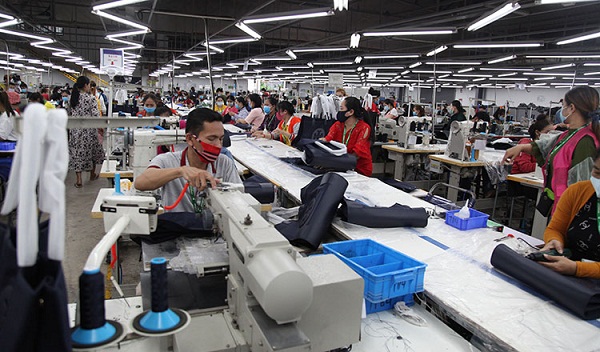
Cambodia’s garments, textiles and footwear exports have surged by 10 per cent annually over the last decade. Garments industry bounced back last year after a year of decline in 2020 due to the COVID-19. Members of Garment Manufacturers Association Cambodia (GMAC) hope to mark 2021 as a year of strong growth for the sector.
At the 15th Annual General Meeting of the association held recently, GMAC members reflected on the industry’s prospects in 2022. As per Khmer Times, the meeting was chaired by Oknha Van Sou Leng, Outgoing President of the association. Okhha Kong Song, Former Deputy Chairman, was elected new President.
Garments exports reach $10 billion in 2021
Cambodia’s garment exports formed 63 per cent of its total export value in 2021. In all, Cambodia exported garments worth $10 billion in 2021. It also provided employment to around one million people during the year.
Cambodia mainly exported knitted and non-knitted clothes. This was followed by footwear and travel products such as suitcases. Garment exports increased 6 per cent in the first 10 months of last year to $6.538 billion. Footwear exports increased 20 per cent to $1.113 billion while exports of travel products surged 40 per cent to $1.179 billion.
Trade recovery drives export growth in 2021
Several factors drove Cambodia’s garment sector performance in 2021 including a recovery in world trade and surge in COVID-19 cases in Bangladesh and Myanmar, which drove customers to Cambodia, says Ken Loo, Secretary-General, GMAC. Loo believes, Cambodia can continue its strong performance by exploring the new Law on Investment and shifting to higher quality products. The new law will help it attract more investors to the industry.
After 1999, Cambodia and the US signed a trade agreement to seal trade with international labor standards. This led to an increase in the number of officially registered factories to over 1,200 by the end of 2021. It also provided systematic employment to over one million and indirectly benefitting two million people.
Unified voice of investors
Formed 25 years ago GMAC acts as a unified voice of investors in Cambodia. It protects and promotes the legitimate rights and interests of all industry investors and provides them with a forum to discuss issues impacting potential investments in the sector. Along with the Ministry of Labor and Vocational Training, GMAC has been instrumental in successfully implementing strategic rectangular policies such as the National Employment Policy, national policy on technical and vocational education, national policy on industrial development and national social protection policy framework.
The association has also successfully implemented all the obligations laid out in the Labor Law, the Law on Trade Unions and the Law on Social Security for those who fall under the provisions of the Labor Law, the Minimum Wage Law, and other legal standards related to the field of employment.
Women’s footwear grows at steady pace as brands launch innovative ranges

Concerned about their physical appearance, women often engage in a variety of activities like trekking, training, yoga, etc. Regular exercising has become an essential part of their daily lives. However, this is also creating demand for exercise-appropriate outfits and footwear.
As per recent Future Market Insights Report, demand for women's footwear is growing at a rapid rate. Another industry report pegs demand growth at 4.7 per cent CAGR from 2022-27. Footwear manufacturers across the world are doing their best to tap this demand. They are opting for sporty, comfortable and casual footwear, encouraging brands to launch new ranges of smart shoes.
Nike launches LED-operated sneakers range
Nike has launched self-lacing HyperAdapt 1.0 sneakers with in-built LEDs that alert the wearer on the depreciation in battery power or tight fit. These shoes do not require daily charging and have pressure sensors in their soles that detect when the foot should be inserted and trigger an algorithm that allows for automatic lacing
Popularity of 3D-printed shoes surges
Many footwear brands are launching shoes manufactured using 3D printing techniques. For instance, US-based custom shoe company Feetz has built its own 3D printer utilizing a fused filament creation technology. This technology is gaining popularity amongst women due to its low-environmental impact. Brands tap e-commerce for growth
Footwear manufacturers are increasingly relying on online sales boost sales besides exploring various e-commerce channels for further growth, says a Senior Research Analyst. They are launching promotional strategies and advertisements to drive up sales. Major players present in the women’s footwear market are: Nike, Adidas, Puma, Skechers, Under Armor, Wolverine World Wide, Crocs, ASICS Corporation, Deichmann SE, The ALDO Group, among others.
Steady growth despite the pandemic
COVID-19 seems to have stalled footwear business to certain extent. The combined effect of store closures and declining demand due to consumers’ economic constrains has made a deep impact on the market. Though in mid-2020, business resurged due to the availability of online shopping and doorstep delivery options, and continues to grow at a steady rate.
Textile mills in Tamil Nadu unable to manage rising raw material costs
Since the last 15 months, weavers, garment manufacturers, and textile mills in Tamil Nadu are finding it difficult to manage rising raw material costs.
The weavers and garment manufacturers are hit by high yarn prices and the textile mills. Garment units in Tiruppur downed shutters for two days – January 17 and 18 – demanding measures to control cotton and yarn prices. The Chief Minister also wrote to the Union government asking for the removal of the 10 per cent import duty on cotton, ban on cotton exports, and calibration of cotton yarn exports.
Raja M Shanmugham, President, Tiruppur Exporters’ Association, of the 2,000 exporters in the Tiruppur cluster, less than 10 per cent have textile mills. Shanmugham urged the government to reconsider the permission given for the export of cotton and said only excess yarn and fabric should be exported. Further, trading of cotton on commodity exchanges should be monitored, he said.
Ravi Sam, Chairman, Southern India Mills’ Association, the problem of price increase starts with the basic raw material – cotton. The association just wants the government to monitor cotton trading on the commodity exchanges and measures to ensure that prices are under control. Right now, large-scale traders, who are handling relatively less quantity of cotton, are increasing the prices.
There is an acute shortage of quality cotton and its prices are higher, too. With cotton production during the current season (October 2021 to September 2022) expected to be just about 350 lakh bales, and the domestic industry requirement estimated to be 340 lakh bales, there may be a crisis between July and October as the quality of cotton available now is poor.
The association reiterated its demand for immediate withdrawal of the import duty on cotton.
CinteTechtextil China 2030 to have a package booth
To be held from September 06-08, 2022 at the Shanghai New International Expo Centre, CinteTechtextil China 2030 will have a package booth with complete construction and equipment or raw space booth with visitors’ own branding and design, complimentary online listings, marketing support from the show’s PR professionals, optimal reach to potential clients from the fair’s database.
Following the switch to being held annually, in 2021, CinteTechtextil China hosted 366 exhibitors across two exhibition halls and attracting over 14,868 visits. The fair offered the perfect platform for in-person infor
CinteTechtextil China’s product categories cover 12 application areas, which comprehensively span the full range of potential uses of modern textile technologies. These categories also span the entire industry, from upstream equipment and raw materials providers to finished fabrics, chemicals and other solutions.
Government begins work on new Textile Technology Development Scheme
The government has begun work on the new Textile Technology Development Scheme, launched with an outlay of about Rs 16,600 crore. To be implemented for the next five years, the scheme will boost textile machinery manufacturing, support to technology upgradation in existing clusters and micro, small and medium enterprises (MSMEs), and support for new integrated manufacturing facilities in various segments including spinning, weaving and knitting.
The new scheme, will replace the Amended Technology Upgradation Fund Scheme (ATUFS), which ends on March 31, 2022.
The Technology Upgradation Fund Scheme was launched in 1999 and has been modified many times since then.The thrust on manufacturing textile machinery is crucial as India imported shuttle-less looms, sewing machines and knitting machines, among others, and accessories such as spindles and needles worth almost Rs 72,000 crore in the past five years, mostly from China.
The textile ministry has proposed investment and value-addition linked incentives under the scheme. Incentives for technology transfer in case of joint ventures by foreign manufacturers, and support for research and development and commercialisation, are also likely to figure in the planned scheme as it seeks to encourage indigenous manufacturing of machinery with a focus on the garmenting sector.
Indonesia to impose anti-dumping import duty for PSY products
Indonesian products continue to face obstacles from authorities of other countries including India. Led by Prime Minister NarendraModi, the country plans to impose an anti-dumping import duty (BMAD) for polyester spun yarn (PSY) products
The cancellation of PSY product BMAD is based on the decision of the Indian Ministry of Finance through the Tax Revenue Unit (TRU). The decision is contained in Office Memorandum No. 190354/182/2021 - TRU issued by Government of India on 8 January 2022.
With this decision, the final recommendation from India's Directorate General Trade Remedies (DGTR) published on August 19, 2021, is declared null and void and Indonesian exporters are not subject to BMAD of US$61 per metric ton to US$191 per metric ton.
This is the third time since 2021 the Indian government has canceled implementing the BMAD. The success momentum is certainly expected to continue for other cases, says IndrasariWisnuWardhana, Director General, Foreign Trade.
Previously, flat rolled products of stainless steel (FRPSS) and plain medium density fiberboard (MDF Board) products were also almost hit by the BMAD, but the Indian government was unable to prove the alleged violation of the Indonesian products, including PSY.
This case began on May 21, 2020 when the Indian DGTR authority initiated an anti-dumping investigation for PSY with the HS code 5509.21.00 originating from China, Indonesia, Nepal and Vietnam. PSY is a raw material for making cloth which is used for clothing, curtains, car seats, and other products.
PSY products already have a sizable market in India. Based on data from the Central Statistics Agency (BPS), Indonesia's PSY export performance to India reached the highest value in 2019 at $51 million. Although it had dropped to US $ 23 million the following year. Meanwhile, in the January-June 2021 period, the export value was recorded at $26.1 million, or an increase of 321.23% from the same period in the previous year, which was $6.19 million.
Hohenstein joins hands with Presize
Hohenstein, a leading specialist in fit and pattern engineering, has joined forces with digital size pioneer, Presize. The partnership now offers a variety of business services, including reliable size tables and digital scaling, that empower online retailers to automatically recommend appropriate garment sizes.
Merging traditional size tables, reliable garment fits and digital body measurements with smartphone technology reduces the number of returned online purchases. Proper fit also reduces waste, lowers footprint and bolsters customer loyalty.
This size and grading advice is now underpinned by digital measurement services and technology based on artificial intelligence. “All it takes to work out the right size, based on a user’s individual body measurements, are some quick questions regarding their age, height and weight, plus an optional video to take measurements. We use an algorithm that learns as it goes along, and this improves the advice given on sizes with each order or return,” states Leon Szeli, Co Founder, Presize.
Italian trade shows Micam, Mipel and Milan Design Week postponed
Italian trade shows Micam, Mipel and Milan Design Week have been postponed to March to enable them to better meet operators form across the world and offer more buyers an opportunity to participate. As per a Spin Off report, International Footwear Exhibition Micam Milano, International Leather Goods and Fashion Accessories Exhibition Mipel,and Haute-à-Porter Exhibition The One Milano have all been postponed to March 13-15, 2022. They were initially scheduled for February. An event dedicated to fashion jewelry and accessories, Homi Fashion&Jewels Exhibition, will partially overlap these events from March 11 to 14, inside the Fiera Milano Rho exhibition center.
Milan Design Week/The Salone del Mobile of Milano has been rescheduled for June 7-12 in Milan. However, not all fashion events have been postponed international exhibition of leather, accessories, components, fabrics, synthetics and models will be held as per scheduled as will Mipel Lab
Milanese fashion salon White will also be held as per scheduled from February 24-27, 2022 during the Milan Fashion Week