


FW
Increasing costs and competitors may hamper Vietnam’s textile growth in 2022
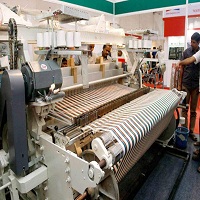 With thousands of employees quitting their jobs, 2021 proved to be an ‘unprecedented’ year for the textile and garment industry in Vietnam, says Cao Huu Hieu, General Director, Vietnam National Textile and Garment Group. Around 94 per cent of the Viet Tein Garment Corporation’s employees quit their jobs during the year. Many other firms had to stop production due worsening COVID-19 situation in the South.
The industry was particularly hit hard during the third quarter, says a VN Express International report. During the quarter, Ho Chi Minh City and Southern provinces witnessed massive disruption due to COVID-19. This compelled businesses to adopt ‘stay at work’ model for employees. The garment and textile industry faced enormous pressures in Q2 and Q3, 2021 as logistics and other costs increased, there were raw material shortages.
The pandemic forced many businesses in the Southern region to either close temporarily or operate at half capacity. This led to a fall in textile exports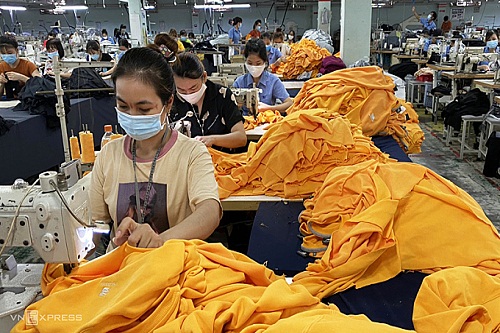 turnover by nearly 16 per cent in September compared to July, and the downward trend continued till the end of year.
Market reopening helps achieve targets
Relaxation of prevention and control measures in October provided some relief as the US, the European Union and Japan markets reopened, allowing Vietnam’s industry an opportunity to grow once more. Around 90 per cent employees returned to work after reopening, says Hieu. Production in the country returned to normal in Q4. This helped the industry meet its target of $39 billion exports during the year.
The US continued to be the largest market for Vietnam’s textile and garment sector with exports worth $16 billion in 2021. Other markets included, the EU with $3.7 billion, up 14 per cent; South Korea $3.6 billion, and China $4.4 billion in exports.
Growth in the midst of pandemic
Despite pressures, few companies in Vietnam experienced impressive growth amidst the pandemic. For example, Vietnam National Textile and Garment Group’s consolidated profits more than doubled in 202. The company succeeded on account of its business restructuring which boosted revenues and profit growth to 50-55 per cent.
Another company that experienced growth during the period was the TNG Investment and Trading Joint Stock Company (Thai Nguyen) Nguyen Van Thoi, Chairman, TNG Joint Stock Company (Thai Nguyen) points out the company remained operational during the pandemic as all factories are concentrated in Thai Nguyen Province. The company also benefited from shifting textile and garment orders to Northern plants.
Experts advise caution
Despite these successes, industry leaders have advised caution as a spike in Omicron cases may again affect business goals. The industry also needs to reduce logistic costs, make empty containers available, resolve congestion issues in sea transportation and other shipping difficulties, changes in major markets. The pandemic is expected to remain complicated and unpredictable in 2022. However, the industry may also experience few growth opportunities, says La Tien Troung, Chairman, Vinatex. In 2022, Vietnam’s garment and textile exports may rise to 43.5 billion, adds VITAS. However, new COVID cases, increased logistic costs and increasing competition from India, China and Bangladesh, could dampen growth.
Rebound in woven garments raises merchandize exports from Bangladesh
Merchandize exports from Bangladesh have surged in the last one and half years due to a stunning rebound in the export of woven garments, driven by rising demand and inflow of increased orders. As per a Daily Star report, export of woven garments started recovering from August after going through more than 10 per cent negative growth for 18 months. In August, woven exporters fetched $1.15 billion, registering 4.48 per cent year-on-year growth.
In December, Bangladesh exported woven garments worth $1.86 billion, the highest in a single month and up 48.17 per cent year-on-year, according to data from the Export Promotion Bureau. In the second half of 2921, the shipments of woven garments grew by 24.30 per cent to $8.74 billion compared to the same period a year ago.
Desh Garments, the country's oldest garment factory’s 75 per cent business was non-existent up to June 2021 as international retailers and brands were not placing adequate orders. Shipment started picking up gradually from June with the reopening of economies worldwide. And at the end of 2021, export receipts from shipment of woven shirts witnessed 60 per cent growth.
Shahidullah Azim, Managing Director, Classic Fashion says, international retailers and brands are placing a lot of work orders for woven items. However, manufacturers may have to rely on Chinese suppliers for the rest of the fabrics. Faruque Hassan, President, BGMEA is hopeful about the continuation of the current pace of exports as work orders have not been cancelled or suspended because of Omicron. However, European and American buyers, retailers and brands are likely to shut their outlets if the situation worsens.
Another challenge is abnormal hike of freight charge, which increased as high as 500 per cent. The price of raw materials such as yarn surged in 2021, affecting the garment shipment. Knitwear exports maintained more than 15 per cent growth during the peak of COVID-19 as people were confined to homes in many countries because of stay-at-home orders.
Pakistan’s commerce ministry withdraws Textile and Apparel Policy 2020-25
The Commerce Ministry of Pakistan has been compelled to withdraw its Textile and Apparel Policy 2020-25 due to the finance ministry’s harsh conditions on new fiscal incentives. The policy has already been approved by the ECC and ratified by the Cabinet, according to the Business Recorder.
The Finance Ministry had said, the government is consistently supporting the export sector. During last three years, an estimated Rs 115.5 billion were disbursed to zero-rated sectors under DLTL schemes to textile exporters and over Rs 100 billion were given as power and gas subsidy. Further concessions included taxes and duty-free import of raw material and machinery, and market determined exchange rate and subsidized financing by the State Bank of Pakistan (SBP) were provided.
However, exports of five zero-rated sectors registered negative growth in 2019-20 vis-à-vis 2018-19 and annual cumulative growth rate remained 6 per cent in the last three years. Finance Division argues it is imperative for the Commerce Ministry to take a holistic picture of the unprecedented support and outcome thereof for informed decision making by the ECC/Cabinet.
Egypt’s RMG exports increase 38 per cent from Jan to Nov
From January to November end 2021, Egypt’s readymade garment and apparel exports increased by 38 per cent, according to the Marie Louise, Head, Readymade Garments Export Council of Egypt (RMGEC). Exports amounted to $1.7 billion, compared to $1.3 billion in the same period of 2020. Exports to the US were highest during the first 11 months valued at $1.04 billion compared to $726 million in the same period in 2020, an increase of 44 per cent. Additionally, exports to Europe increased 3 per cent to record $320 million in 11 months of 2021, compared to $310 million in the same period last year. Exports to Arab countries increased 128 per cent to $235 million, compared to $83 million in 2020.
Louise explained T-shirt and polo shirt exports jumped 34 per cent during, to record $455 million, compared to $339 million, followed by sportswear, which increased by 102 per cent to $24 million, compared to $12 million. Trousers exports also increased 179 per cent to $49million, compared to $18 million. She noted exports hike came with the Council’s continued efforts in various events, as well as direct communication with the state agencies concerned with the export file to overcome all obstacles facing readymade garment exports.
India: Industry associations want GST hike to be scrapped totally
Praising the Goods and Services Tax Council’s decision to poste GST hike on textiles, clothing and hosiery trade bodies have urged the government to scrap the proposal altogether. Devendra Kumar Baid, Secretary, West Bengal Garments Manufacturer’s & Dealers Association says, it plans to maintain pressure to abolish the proposal altogether to avert huge job losses.
The GST Council had planned to raise GST rates on numerous categories of clothing and textiles from 5 per cent to 12 per cent from January 1, 2022. However, following pleas from state governments and trade bodies, the Council deferred the ruling to avoid lakhs of job losses numerous organizations and politicians said it would lead to.
K B Agarwala, President, Federation of Hosiery Manufacturers Association of India, says, the tax hike would have caused a huge impact on the sector as it could not have absorbed the hike. The organized sector would have collapsed ad the government would have lost revenue with the strong emergence of a parallel economy to bypass the tax.
Fashion rental booms in India as consumers become more brand conscious and internet savvy
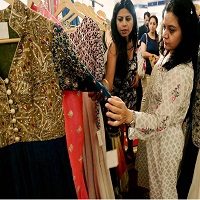 Still a niche segment globally, fashion rental has great potential for expansion in India with growing awareness on sustainability and rising internet usage. An increasing appetite for branded clothes is also driving the growth of this market in India.
‘Hygiene’-an important factor in clothing rental
As per Market Data Forecast, the global online fashion rental market is set to almost double to more than $2 billion by 2026. However, analysts believe, India’s online fashion rental market will grow faster than the average global market over the next years. Companies like Flyrobe, The Stylease and The Clothing Rental will make their mark in the country in the next few years.
As Kuntal Malia, Co-Founder, StyleNook says, renting clothes appeals more to the younger generation of shoppers. They either rent an outfit for a special occasion like attending a wedding, or to wear the brand’s latest collection. Rented garments are professionally cleaned by fashion companies between uses and delivered to customers in ‘as-new’ condition. Yet, many customers are skeptical to rent due to hygiene factors especially amid the pandemic.
Weddings postponement impacts business
Fashion rental companies in India including Flyrobe also faced other major challenges during the pandemic. The company’s business was mainly affected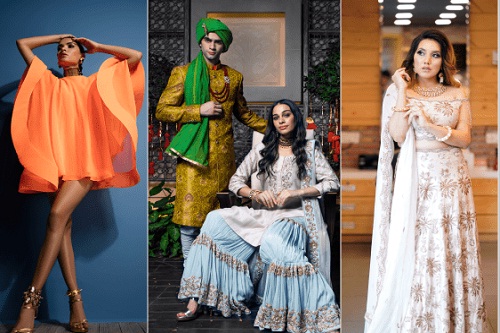 by the deferring of many weddings in 2020 and the first half of 2021. Flyrobe lost around 200 orders on cancellation on each wedding, hitting the company’s revenues. It had to shut stores and lay off people, adds Aanchal Saini, CEO.
However, easing of restrictions and recovering economy, the company’s business is back on track. It aims to open more stores across the country and is looking for funding its expansion. It has however, deferred plans to launch a subscription program to generate more revenues from western wear, since it would largely be aimed at office workers.
Catering to both men and women, Flyrobe generates around 55 per cent revenue from men’s collection. The company holds its own inventory of clothes besides allowing other designer to rent their garments on its platform. It also allows customers to lease their garments.
Pandemic open doors for fashion rentals
The pandemic seems to have increased consumers' environmental concerns. They are now worried about the impact of fast fashion on the environment. They are spending lesser amount on buying new clothes, says Rohan Gupta, Managing Director, Gargee Designer’s, a luxury menswear brand, which offers the option to hire its outfits.
Consumers are more open to access high-quality clothes on rent, explains Japnah Gambhir, Founder and Designer, Majestic. This is also driving the growth of e-commerce in the country. Fashion rental platforms are also taking an ethical approach to fashion and launching clothes that are environment-friendly yet fashionable. However, it might take a few years for the industry to boom.
Rising internet usage is also fuelling demand for clothes that everyone may not be able to buy. One can, access these items through online fashion rental platforms. This is increasing brand and quality consciousness. It will help the market surge with people eventually shifting to renting clothes instead of buying them.
Military seizure compel Chinese investors to rethink their Myanmar policy
 Chinese investors, involved in funding the garment sector in Myanmar, are planning to relocate to other countries after the military seized the nation 10 months ago. In March, at least 40 Chinese-funded garment factories in Yangon were destroyed on rumors of Beijing supported the military junta. Equipment was smashed and warehouses were set alight, causing millions of dollars in losses. Though the factory owners have demanded compensation several times from local authorities, no progress has made on this move, says San Khun, Chairman, Chinese Textile and Garment Association in Myanmar.
EU, US impose sanctions against junta-related companies
In a write up in the South China Morning post, Loura Zhou writes, many Chinese investors have opened garment factories in Myanmar and most of their products are exported to Europe. However, since the coup, the European Union and the United States have imposed sanctions against senior military leaders and junta-related companies. This is compelling Beijing to rethink its policy on Myanmar.
Since the coup, China has avoided publicly condemning the military takeover but in September it invited the NLD as well as three other of Myanmar’s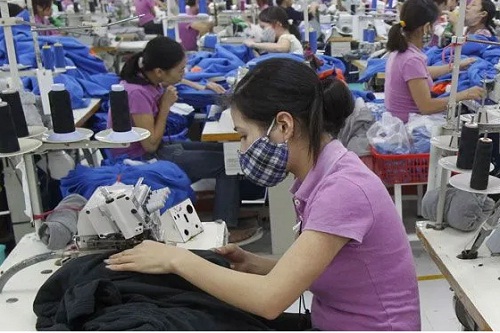 political parties to the Asian Political Party Summit, hosted by a department of the Chinese Communist Party. Both China and the US – who are locked in a bitter geopolitical rivalry in Southeast Asia – have expressed willingness to work closely with the Association of Southeast Asian Nations (ASEAN) to address the Myanmar crisis. The US may also tighten its sanctions on the Myanmar military as part of efforts to win over some ASEAN member states.
Chinese scholars urge for government intervention
Since the coup, Chinese scholars have been urging the Beijing government to intervene in the matter, says Wang Zichang, Professor, Jinan University. However, a fruitless trip to Myanmar in August by China’s special envoy Sun Guoxiang had reignited the debate among scholars as to whether China should now interfere in the situation in Myanmar in some way, in accordance with China’s national interests.
China has long adhered to the principle of non-interference in each other’s internal affairs, adds Wang. However, Myanmar’s stability is directly related to China’s diplomacy efforts with its neighbors and the external environment for China’s peaceful development. Hence, Myanmar leaving ASEAN after being pushed too would pose a greater dilemma for China, he adds.
After leaving ASEAN, Myanmar can only depend on China, politically and szeconomically. However, supporting Myanmar may threaten China’s long-standing support to ASEAN, causing resentment among other ASEAN member states and even drawing intervention from extra-regional powers.
But isolating Myanmar could also undermine its relations with the country and further damage its foreign strategy with its neighbors. A strange predicament to be in indeed for China, sums up Zhou.
US apparel imports up 25 per cent in the last 10 years of 2021
Imports of textiles and apparel by the US increased 25 per cent in the first 10 months of 2021 compared to the first 10 months of 2020 reveal OTEXA data. With a 27 per cent share, China continues to be the largest supplier of textiles and clothing to the US, followed by Vietnam with a 13 per cent share. Apparel constituted the bulk of textile and garment imports made by the US during the 19 months while non-apparel imports accounted for the remainder.
Segment-wise, among the top 10 apparel suppliers to the US, imports from Pakistan, Honduras and Nicaragua shot up by 56 per cent, 46 per cent and 42 per cent year-on-year respectively. But imports from Indonesia registered a growth of only ten per cent compared to the same period of the previous year. In the non-apparel category, among the top ten suppliers, imports from Italy, India, and Turkey soared by 56 per cent, 55 per cent and 44 per cent respectively. The sharp rise in numbers is due to the base effect, as imports were disrupted last year due to the pandemic.
Of the total US textile and apparel imports of $93.51 billion during the period under review, cotton products were worth $40 billion, while manmade fiber products accounted for $48 billion followed by $2 billion of wool products and $1 billion of products from silk and vegetable fibers. In 2020, US textile and apparel imports had decreased sharply, mainly due to pandemic-induced disruption.
Simplify RMG export procedure, urges BGMEA
Faruque Hassan, President, BGMEA, has urged the Commerce Minister Tipu Munshi to address current challenges by simplifying export procedures for the RMG sector. Hassan said, OMICRON variant is creating new challenges for the RMG sector which is slowing recovering from the massive impacts of the COVID-19 pandemic. The government needs to safeguard the industry in these difficult times as it is the mainstay of Bangladesh’s economy, he adds, The government’s support helped the apparel sector survive the first wave of the COVID-19 pandemic and turn around, he adds. Sector leaders demanded supports from the government to address the possible challenges due to the spread of Omicron in major western markets. They also sought commerce minister's intervention saying they are being harassed by NBR.
BSL to augment cotton spinning capacity in Rajasthan
Formerly known as Bhilwara Synthetics, fabric manufacturer BSL plans to augment cotton spinning capacity at its Rajasthan facility with a capital expenditure of Rs 150 crore. The capital expenditure (Capex) will also help boost sales and profitability, says Nivedan Churiwal, Managing Director. The company also aims to generate revenues worth Rs 700 crore in the 2023-24 fiscal. It had posted over Rs 321-crore revenue from operations in 2020-21 fiscal.
BSL has signed an MoU with the Rajasthan government tor fiscal incentives, in the form of interest subsidies, adds Churiwal. The company has suiting, furnishings and yarn spinning verticals. Suiting contributes around 60 per cent of the annual revenue, while furnishing is the most profitable line of business, adds Churiwal. Exports account for around two-thirds of the turnover, and domestic sales contribute the rest. In the first quarter of last financial year, the company rationalized its costs by reducing manpower, adds Churiwal.











