FW
Indonesia aims at being Muslim fashion hub
Indonesia aims at being the center of Muslim fashion.
Indonesia’s main strength is the wealth of handmade fabrics and products. Unfortunately, that strength is also a weakness. Local artisans usually take quite a long time to create a piece of batik and tenun (handwoven fabrics), which will also affect the fashion designers’ timetable. And the country will be facing fierce competition mainly from Turkey, which is both a producer and a large consumer of Muslim fashion.China, backed by its strong garment and textile sector, is also a tough competitor to Indonesia’s Muslim fashion industry. Indonesian brands have to import quality silks from China and getting customs clearance takes time, which hampers production. So the industry has to improve internally.
Indonesia has the largest Muslim population in the world and highly creative fashion designers as well.Indonesia’s exports of Muslim fashion in the first half of 2022 were a 39 percent increase from the same period last year and Indonesia is currently the biggest consumer of Muslim fashion in Southeast Asia. However the country is still number 13 on the list of the biggest Muslim fashion exporters, with a market share of only one percent and is way behind Dubai, Vietnam and Bangladesh.
Italian brand Cifra adopts best practices
Cifra is accelerating on environmental best practices for advanced and sustainable sportswear.
Every single process is certified in the entire value chain as well as the yarns used. In July 2022 Cifra started an innovative 124-kWp photovoltaic system that will avoid further CO2 emissions into the atmosphere and is going to be further implemented over the next three years. This has been made possible by structural interventions and planned investments towards greater efficiency such as full electricity supply from renewable sources.
All items made from recycled, raw and dyed yarns are GRS (Global Recycled Standard) certified, the most important international standard for the sustainable production of garments and textile products made from recycled materials.
Cifra, based in Italy, produces tailored knitwear based on the patented warp-knit-seamless technique. These are unique garments capable of shaping the body and are also designed for either the most extreme sports or as more contemporary upper casuals.
Redesigning the future of the textile industry is an ambitious yet attainable vision. Many companies already, especially in the sportswear and outdoor sector, the most sustainability-oriented ones, have accepted the challenge of a new industrial model capable of producing sustainable garments without having to give up on technical performance.
Cambodia raises minimum wage
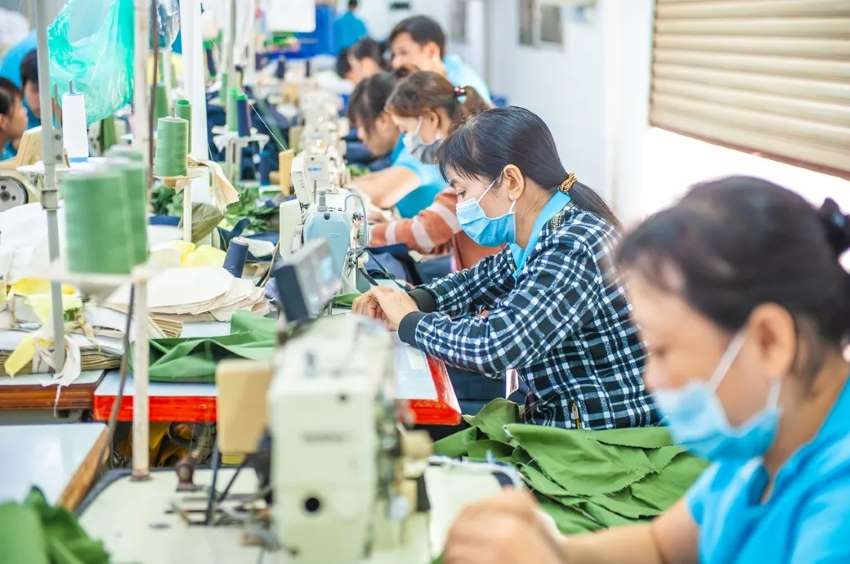
Cambodia has raised the minimum wage for textile, garment, and footwear workers.
In addition to the minimum wage, workers will also receive attendance bonus, travel and accommodation expenses, meal allowances and overtime and seniority bonus. Workers who are paid based on productivity can earn more than the minimum wage; however, if the amount they produce earns them less than the minimum wage, then the employer has to add the remainder.
The textile, garment, and footwear industries are the lifeline of Cambodia’s economy. These industries are the country’s largest employers with over 7,00,000 workers and represent 80 per cent of total export earnings. Cambodia’s exports of textile-related products increased 15 per cent in 2021 from 2020. The industries suffered at the height of the pandemic. Nearly half of all factories in the first half of 2020 had to halt production, either temporarily or permanently.
Cambodia wants to develop textile, garment, and footwear manufacturing into sustainable, high-value-added industries, capable of supporting economic diversification. The strategy focuses on strengthening human resource capabilities and productivity and creating better career paths for workers, improving worker welfare and working conditions, increasing foreign and domestic investment with a focus on producing high-end products and developing new export markets.
Bangladesh exports to Canada face duty
Once Bangladesh graduates from the least developed country (LDC) status, its readymade garment exports to Canada are likely to face duty. The duty may be 17 per cent to 19 per cent. As of now Bangladesh’s exports are duty-free.
Bangladesh’s apparel exports to Canada witnessed a robust 33 per cent growth in fiscal 2022 after a 13 per cent growth in fiscal 2021.
Japan, Australia and Canada are three potential markets for Bangladesh beyond the traditional US, EU and UK markets.
Bangladesh’s imports from Canada are less compared to exports.Bangladesh and Canada may form a blue ribbon panel to explore possibilities of expanding trade and investment. The signing of a bilateral investment treaty between the two countries would go a long way toward increasing foreign direct investment from Canada to Bangladesh.
Sustainable economic growth, health, and education are the three areas Canada wants to work on in Bangladesh. The country is also working to strengthen garment worker safety in Bangladesh. Canada wants to expand in the services sector in Bangladesh, such as aircraft safety.
Canada is a country of some 37 million people, with French and English as official languages. It is a leading as well as growing trading partner of Bangladesh, providing export opportunities.
US to host luxury summit
Luxury Law Summit Americas will be held in the US, November 2, 2022. Senior executives and lawyers from global fashion brands including Burberry, Louis Vuitton America, David Yurman and Diane von Furstenberg are among the headline speakers.
The one-day conference will explore how the US luxury goods industry is adjusting to the post-pandemic environment and amid a backdrop of increased economic uncertainty.Participants will hear about the luxury outlook for fashion, trade and economics as well as the challenges around luxury, politics and sustainability. There will also be discussions about current trends in luxury travel, the world of luxury jewelry and the secondary art market.
A number of workshops will also be available throughout the day. K&L Gates is hosting a session on fashion’s role in politics, diplomacy and social change. Epstein Drangel is hosting a session on copyright issues in the fashion industry. Steptoe is hosting a session on how to navigate California’s strict consumer protection laws and Greenberg Traurig is hosting a session on brand protection and partnerships. Speakers include Beth Hughes, vice president of the American Apparel and Footwear Association and Gabby Hirata, CEO of Belgian fashion label Diane von Furstenberg.
Malaysia hosts textile event
The Asean Traditional Textile Symposium was held in Malaysia, September 25 to 30, 2022. Participants gained many experiences through the symposium and learnt a lot about traditional textiles in Malaysia.
The aim of the biennial event was to modernise the traditional costume to attract the younger generation to wear it and continuously preserve it for years to come. The event saw over 300 participants from 13 countries and brought together textile artists, artisans and weavers not only from across the country but also from Asean and other regions.
A total of 19 working papers were presented in the symposium. Experts discussed and shared information about the preservation and sustainability of original textile weaving in the Asean and surrounding regions so traditional arts and crafts do not become relics of the past or mere footnotes in history books.
The Asean Traditional Textile Symposium started in 2005 where Indonesia was the first organiser and continued again in the Philippines in 2009, Malaysia (2011), Vietnam (2013), Thailand (2015), Brunei (2017) and the last time in Indonesia (2019). The symposium also featured a textile exhibition as well as demonstrations of craft making such as Tenun Diraja Pahang, songket, Sabah siambitan, Sarawak puakumbu, mengkuang weaving, wood carvings as well as the sale of various crafts.
Wazir partners with German consultant
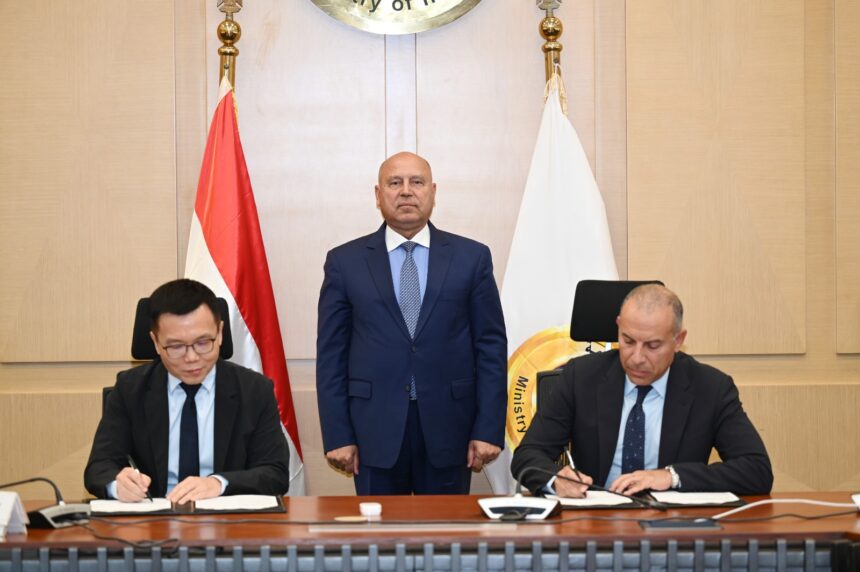
Wazir Advisorshas partnered with ITA to offer sustainability, digitalization, and contract research services. ITA is based in Germany and is a part of RWTH Aachen University. Wazir Advisors is a global consulting firm based out of India offering services in sectors of textile and apparel, consumer products and retail, and food, agri and dairy. Its scope of services covers strategy, implementation, alliances and skill development. With this partnership, Wazir aims to provide new-age services to textile, apparel, and technical textile stakeholders in the Indian subcontinent who are looking to align with changing times and adopt best global practices.
Sustainability and digitalization have moved from just being buzzwords to being immediate action for the textile industry. Push from global buyers as well as anticipated legislation in developed countries will cause the industry to embrace sustainable manufacturing processes sooner than later. Similarly, with the increasing cost of manufacturing, manpower shortage and need for faster decision-making digitalization is taking a centre seat in the industry. The entire industry is at the cusp of a major transformation. New products and processes that are compliant with ESG norms will be the only way to success for the industry in the near future. Asian countries have so far leveraged the cost aspect. Now is the time for them to think about completely different parameters to evolve further.
Diesel, OTB brands aims at carbon neutrality
OTB has set to achieve carbon neutrality of internal operations by 2030 and of the entire value chain by 2050. Another target is to go public between the end of 2024 and 2025.
This is an international fashion and luxury group whose brands include Diesel, Jil Sander, Maison Margiela, Marni, Viktor & Rolf. OTB has joined the Roadmap to Zero Program of the Zero Discharge of Hazardous Chemicals (ZDHC) Foundation, committing to the development of a responsible water and chemical management strategy and to the elimination of the use of hazardous chemicals from production processes by 2030. About 40 per cent of the electricity used for OTB's internal operations comes from renewable sources.
In addition, since 2020, Diesel has joined The Fashion Pact, the global coalition of fashion and textile companies acting in three main areas: mitigating global warming, restoring biodiversity, and protecting the oceans. Used Diesel-branded denim garments are meticulously repaired, refurbished and sold in selected Italian stores and online throughout Europe. Maison Margiela has a line of restored and repurposed limited-edition garments or accessories. Jil Sander has a collection made of organic, high-performance and environmentally sustainable fibers that combine aesthetics and comfort, sophistication and high resistance to the elements.
Seoul Fashion Week next week
Seoul Fashion Week will be held October 11 to 15, 2022.
South Korea’s largest fashion event will present spring-summer 2023 collections by 30 designers. Four to eight brands will present runway shows on each day of the five-day Seoul Fashion Week. Some 200 buyers from 23 countries will visit the event.
A trade show will be held in a hybrid format, combining online and in-person formats. A total of 86 Korean designer brands will show their collections at 67 separate booths and four joint booths set up in a 2,992-square-meter hall. Brands will set up stores where people can make purchases at discounted prices using QR codes. Actor Lee Jung-jae was the global ambassador of the previous fashion week, featuring fall-winter 2022 collections. The event was held in an online-offline hybrid format.
Bangladesh is aiming at hiking apparel exports to South Korea. A big push will be taken this year to capture a bigger share of the South Korean marketwith diversified items such as underwear, denims, shirts, jackets and pullovers as South Korea has a great demand for high-value winter clothing and denim. Other potential products that have good demand in the country include non-leather footwear, home textiles, jute and jute products etc.
Onshoring picks up in the US
Fashion and textile production is returning to the US.
What once appeared to be a trend of bringing major manufacturing operations back to the United States, as a stopgap measure to mitigate complications arising from the pandemic economy, is now seen as a wise long term strategy guaranteeing operational viability, resiliency and value.
While high labor costs have long been used to justify offshore production, volatile supply chains, shipping complications and costs, tariffs, perceived sociopolitical instability, and other factors — including the proliferation of automation technologies that necessitate fewer laborers to operate in general — have made reshoring to North America a practical, profitable, and safer proposition.
The economics of bringing production closer to the end consumer — immediately delivery that negates the need for vast and vulnerable supply chains, the ability to react to demand in real time, the eco-friendly aspect of a streamlined process, and the mitigation of troublesome external factors in general — has become attractive.
Manufacturers prefer to base their businesses in the US, even in highly regulated and high-cost regions that would not appear to be logical production sites.One of the greatest attributes of localized, on-demand fashion and textile production models is that the strategy is entirely modular. It can be replicated to mitigate risk, foster operational agility and versatility, and deliver profitability anywhere.