FW
Eastman unveils Naia On The Move at Functional Fabric Fair in USA
Eastman is showcasing its latest sustainable innovation, Naia On The Move, at this spring’s Functional Fabric Fair in Portland, USA an industry-leading expo focused on high-performance and eco-friendly textiles for outdoor, lifestyle, and activewear segments.
Naia On The Move marks a new phase in Eastman’s cellulosic fiber development, building on the success of Naia Renew staple fiber. Designed for light sports and dynamic urban lifestyles, this new blending solution offers exceptional comfort, breathability, and quick-dry performance. The fiber is manufactured using Eastman’s advanced molecular recycling process, incorporating 60 per cent sustainably sourced wood pulp and 40 per cent recycled materials, verified by Global Recycled Standard (GRS) mass balance certification.
Targeted at the needs of modern, active consumers, Naia On The Move delivers next-to-skin softness, reliable shape retention, and resistance to pilling even after multiple washes. It performs well in variable urban conditions like shifting temperatures and high humidity, making it ideal for everyday wear. Independent testing reveals it surpasses polyester in moisture management and odor control, even at lower blend ratios. Its compatibility with wool and polyester further enhances design flexibility and wearer experience.
Following its premiere in Shanghai, Naia On The Move makes its North American debut in Portland. “This innovation was created to match the pace of modern life, blending comfort and technical performance,” said Chad Doub, Eastman’s global segment leader for staple fibers.
Attendees can explore the full Naia range and experience Naia On The Move in action at Booth 920, where Eastman invites visitors to discover sustainable solutions that blend function, fashion, and environmental responsibility.
Best of Bangladesh in Europe debuts in Amsterdam, draws major global attention
The opening day of the two-day “Best of Bangladesh in Europe” event in Amsterdam concluded with strong international engagement, spotlighting Bangladesh’s growing economic potential. Held on April 17-18, 2025, at Beurs van Berlage, the nation branding event is being organized by Bangladesh Apparel Exchange (BAE) and powered by PDS Limited. It is supported by the Ministry of Foreign Affairs and Bangladesh Investment Development Authority (BIDA), in association with City Bank Plc and KDS Group.
The event is expected to host over 1,500 visitors, including buyers, investors, and stakeholders from across Europe. A total of 32 Bangladeshi companies from eight key sectors apparel, leather, jute and handicrafts, IT, agro-food, poultry, and seed are showcasing their products and innovations. Notable participants include Aus Bangla Jutex Ltd, Brain Station 23, Countree Agro, KDS Group, Leatherina, PRAN Foods, Simco Spinning, and Zhejiang Weixing Industrial Development Co Ltd.
The inauguration ceremony featured Chowdhury Ashik Mahmud Bin Harun, Executive Chairman of BIDA and BEZA, as Chief Guest. Other prominent guests included Charles Whiteley from the European External Action Service, Pascalle Grotenhuis from the Netherlands Ministry of Foreign Affairs, Bangladesh Ambassador to the Netherlands H E Tareque Muhammad, and Pallak Seth, Executive Vice Chairman of PDS Limited.
Chowdhury Ashik Mahmud highlighted Bangladesh’s ambition to become a global manufacturing hub, citing reforms like the ‘Green Channel’ and ‘One-stop Service’ to ease trade and investment. Charles Whiteley praised Bangladesh’s economic growth and export diversification potential, affirming continued EU support. Pascalle Grotenhuis emphasized Dutch interest in long-term collaboration, especially in the RMG sector. Ambassador Tareque Muhammad urged investors to explore Bangladesh’s dynamic business environment and skilled workforce. Pallak Seth lauded Bangladesh’s business transparency and forward-looking mindset.
Day one featured several panel discussions and breakout sessions, including topics like Bangladesh’s economic growth, global sourcing opportunities, decarbonization of supply chains, innovation in fashion, and textile recycling. Contributors to the event include Fashion for Good, Fair Wear Foundation, Apparel Impact Institute, Netherlands Food Partnership, and others.
Mostafiz Uddin, Founder & CEO of BAE, called the event a milestone in branding Bangladesh globally, fostering meaningful partnerships and business expansion.
AAFA warns of economic fallout from steep US port fees, tariffs on Chinese shipping
The American Apparel & Footwear Association (AAFA) has strongly opposed the US Trade Representative’s (USTR) decision to impose new fees and tariffs on Chinese shipping and maritime equipment. The move follows a Section 301 investigation into China’s shipbuilding and logistics practices, and includes a phased fee structure targeting Chinese vessels, their owners, and operators.
In addition, USTR proposed new tariffs of 20 to 100 per cent on critical shipping infrastructure, such as containers, chassis, and ship-to-shore cranes. AAFA argues these measures will disrupt trade, hurt US exporters, and raise costs for American consumers and businesses.
AAFA previously submitted written comments and testified before the USTR opposing the plan. The association also commissioned a study warning of the economic damage these actions would cause across multiple sectors, including agriculture, retail, and manufacturing.
“With port fees reaching $1.5 million per call, these measures will raise shipping costs, reduce GDP, and cut US exports,” said Nate Herman, AAFA’s Senior Vice President of Policy. “Penalizing shippers for not using American-built vessels when they are scarce and five times more expensive is counterproductive. This decision will harm American farmers, manufacturers, small ports, and families alike.”
Herman further noted the announcement was strategically timed after markets closed, underscoring its potential to rattle economic confidence.
EU's T-shirt market: Steady consumption, rising imports shows changing dynamics
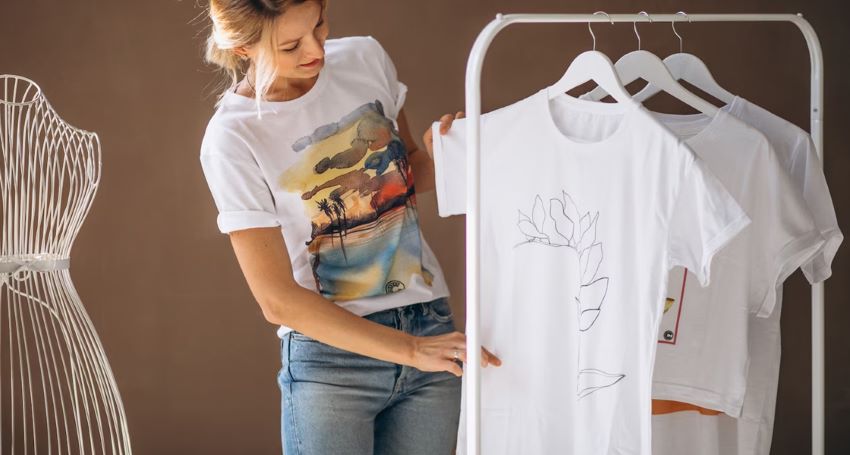
The European Union's appetite for T-shirts remains robust, with consumption expected to grow steadily over the next decade, albeit at a moderate pace. However, the market is witnessing a significant shift, with imports playing an increasingly dominant role as domestic production falters. A recent market analysis reveals, the EU's T-shirt consumption is projected to reach 3 billion units by 2035, growing at a CAGR of over 0.6 per cent from 2024. While this signals continued demand, the growth rate indicates a deceleration compared to the past.
T-shirt consumption trends
In 2024, the EU consumed approximately 2.8 billion tees, much like the previous year. From 2013 to 2024, consumption volume increased at an average annual rate of over 2.1 per cent, demonstrating a relatively stable trend with some fluctuations. The market peaked at 3.2 billion units in 2022, before experiencing a slight dip in the following years.
Table: T-shirt consumption
|
Year |
Consumption volume (bn units) |
|
2013 |
2.2 |
|
2014 |
2.3 |
|
2015 |
2.4 |
|
2016 |
2.5 |
|
2017 |
2.6 |
|
2018 |
2.7 |
|
2019 |
2.8 |
|
2020 |
2.9 |
|
2021 |
3.1 |
|
2022 |
3.2 |
|
2023 |
2.8 |
|
2024 |
2.8 |
In value terms, the EU's T-shirt market reached $9.3 billion in 2024, a slight decrease from the previous year. Despite this, the overall consumption trend has remained relatively flat, with a peak of $11.3 billion reached in previous years. Germany, France, and Spain remain the largest consumers, accounting for 46 per cent of total EU consumption in 2024. Germany alone consumed 609 million units, followed by France (361 million) and Spain (335 million). Notably, Poland has seen the most significant growth in consumption, with a CAGR of +9.0 per cent from 2013 to 2024.
Imports grow as domestic production dips
While consumption remains steady, the EU's domestic T-shirt production has witnessed a sharp decline. In 2024, production fell to 281 million units, a 19.7 per cent drop from the previous year. This downward trend has been consistent since 2014, when production peaked at 594 million units.
To meet demand, the EU relies heavily on imports. In 2024, T-shirt imports reached 4.3 billion units, despite a -9.9 per cent decrease from the previous year. Over the period from 2013 to 2024, imports increased at an average annual rate of over 2.2 per cent, highlighting the growing dependence on foreign suppliers.
Table: T-shirt imports
|
Year |
Import volume (bn units) |
|
2013 |
3.4 |
|
2014 |
3.5 |
|
2015 |
3.6 |
|
2016 |
3.7 |
|
2017 |
3.8 |
|
2018 |
4 |
|
2019 |
4.2 |
|
2020 |
4.4 |
|
2021 |
4.9 |
|
2022 |
5.3 |
|
2023 |
4.8 |
|
2024 |
4.3 |
Germany, Spain, and France are the largest importers, collectively accounting for 72 per cent of total EU imports. Specifically, Germany imported 879 million units. Spain 608 million units, France 462 million units, Netherlands 405 million units, Italy 366 million units and Poland 362 million units. In fact, Poland has shown the highest growth rate, with a CAGR of over 10.0 per cent from 2013 to 2024.
The Asian share
A significant portion of the EU's T-shirt imports originates from Asia. While precise, publicly available breakdowns for all Asian countries are limited, it's widely acknowledged that China, Bangladesh, India, and Vietnam are key suppliers. Based on general trade data and industry reports, it can be estimated that:
China: Remains a major supplier, though its share may be gradually shifting due to rising labor costs and diversification of sourcing.
Bangladesh: Is a prominent player, known for its large-scale garment manufacturing and competitive pricing.
India: Contributes significantly, with a growing focus on value-added products and sustainable practices.
Vietnam: Is an increasingly important source, benefiting from trade agreements and expanding production capacity.
Rest of Asia: other Southeast Asian nations contribute a growing percentage of the imports.
Estimating Asia’s share
It is estimated that the Asian region accounts for over 60% of the EU's total t-shirt imports. This highlights the EU's reliance on Asian manufacturing for its apparel needs.
Cotton tees dominate the import market, making up 82 per cent of total imports in 2024. This segment has also seen the fastest growth, at a CAGR of over 2.7 per cent from 2013 to 2024. The average import price of a T-shirt in the EU was $4.1 per unit in 2024, down -5.6 per cent from previous year. Prices vary significantly by product type and country of origin.
Dichotomy of EU’s T-shirt consumption
There is apparent dichotomy between EU’s T-shirt consumption and import volumes, where imports significantly exceed consumption. This is due to several factors. Re-exports is one reason. A substantial portion of imported T-shirts may not be intended for final consumption within the EU. Instead, they could be re-exported to countries outside the EU. The EU acts as a major trade hub, with goods flowing in and out. This means that import figures can be inflated by transit goods.
Large retailers and distributors within the EU often import large quantities of T-shirts to maintain inventory and ensure efficient distribution. These imports may not be immediately reflected in consumption figures, as they are stored in warehouses awaiting sale. Therefore, import numbers will reflect the amount of goods coming into the EU, where consumption numbers reflect what is sold to the end user.
Moreover, the modern apparel industry relies on complex global supply chains. T-shirts may be imported in bulk for various stages of processing, such as printing, labeling, or packaging, before being distributed to retailers. This can result in multiple import entries for the same products.
There can also be discrepancies between import and consumption data due to differences in data collection methods, reporting periods, and product categorization. Also, ‘consumption’ can be a hard figure to pin down, as it relies on many different data sources.
Also, retailers sometimes import more goods than they end up selling. This leads to overstocking, and these goods are still counted in import numbers, but have not been consumed. In essence, the higher import volumes don't necessarily mean that EU citizens are consuming more T-shirts than the consumption figures suggest. Rather, it reflects the EU's role in the global trade network, the complexities of modern supply chains, and potential statistical differences.
However, the data clearly indicates a changing EU T-shirt market. While consumption continues to rise, albeit at a slower pace, the decline in domestic production and the rise in imports, particularly from Asia, highlight the increasing globalization of the industry. Factors such as cost competitiveness, supply chain efficiencies, and evolving consumer preferences are likely driving these trends. The market is expected to continue growth, but its reliance on imports, heavily influenced by Asian suppliers, is set to increase, reshaping the industry landscape in the years to come.
China's neo-luxury era redefines consumer aspirations
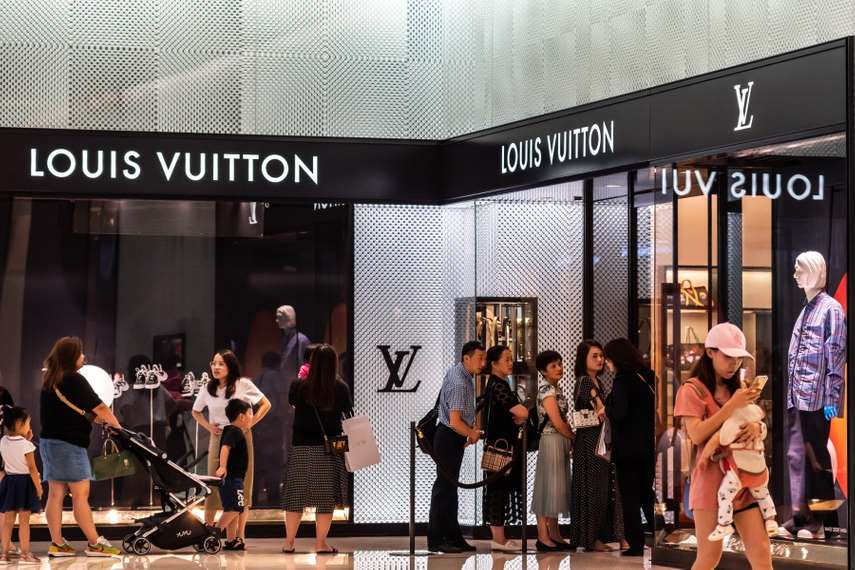
As China's affluent consumers mature, a there is a shift in the luxury market. The days of conspicuous consumption and Western-centric status symbols are fading. A new ‘Neo-Luxury Era’ has emerged, driven by a demand for depth, authenticity, and cultural resonance. At the heart of this transformation is the concept of jingzhi, a philosophy of refinement that emphasizes quality, craftsmanship, and meaningful experiences.
The rise of Jingzhi
Jingzhi, rooted in centuries of Chinese cultural heritage, originally embodied meticulous refinement and exquisite detail. In modern China, it has evolved to signify a lifestyle that values authenticity, depth, and cultural continuity. This shift is due to several factors:
Mindful consumption: Younger generations prioritize quality over quantity, seeking products that reflect their personal values and align with sustainability and authenticity.
Cultural confidence: Consumers are moving away from Western status symbols and embracing homegrown cultural aesthetics, celebrating Chinese craftsmanship and traditional designs.
Experience-driven living: There is a growing emphasis on experiences that enrich well-being and identity, such as wellness retreats, cultural tourism, and niche hobbies.
Year 2025 marks a critical turning point for brands in China's luxury market. They must adapt to these shifting priorities or risk irrelevance.
Key trends shaping the neo-luxury era
One major trend is the travel resurgence. The global luxury travel market is projected to reach $1.2 trillion by 2027, with Chinese outbound tourism spending expected to surpass $400 billion by 2033. This resurgence presents a lot of opportunities for luxury brands to engage Chinese consumers globally and create immersive experiences that align with the jingzhi lifestyle.
China's health and wellness economy too is booming, with the market expected to surpass $1.6 trillion by 2030. Consumers are seeking premium wellness solutions that blend functionality with aspiration and sophistication, driving demand for luxury wellness retreats, high-performance skincare, and personalized Traditional Chinese Medicine treatments.
While traditional Tier-I cities remain important, new Tier-I cities and lower-tier cities are emerging as key growth markets. By 2030, over 70 per cent of China's middle-class and affluent consumers will be from Tier-III cities and below. Luxury brands are increasingly exploring these markets, recognizing the growing purchasing power and willingness to spend among residents.
The growing divide between affluent luxury buyers and price-sensitive mass consumers is pushing brands to adopt multi-tiered pricing strategies. While high-net-worth individuals continue to drive luxury spending, middle-class consumers are exhibiting more cautious purchasing behavior.
The Jingzhi blueprint for brands
To thrive in this evolving landscape, brands must embrace the six pillars of the ‘Jingzhi Success Framework’:
Craftsmanship: A dedication to heritage, innovation, and social responsibility.
Quality: Excellence across all consumer touchpoints, ensuring a refined experience.
Authenticity: A commitment to cultural sincerity and localized engagement.
Commitment: Long-term investment in sustainability, innovation, and community.
Intelligence: Deep market understanding, strategic agility, and data-driven adaptation.
Vision: A clear, forward-thinking ambition that aligns with the future of Chinese luxury.
Several brands are already successfully embodying the principles of jingzhi. For example, Loewe has elevated China's cultural heritage by intertwining traditional Chinese artistry with contemporary design. Documents the fragrance brand crafts its collections using traditional artisanal techniques and creates experiential retail spaces that immerse consumers in Eastern philosophical and aesthetic traditions.
Harrods the department store partnered Chinese designers to showcase Eastern aesthetics for global audiences, honoring Chinese heritage and positioning it on a global stage. Similarly, Moncler the luxury fashion brand redefined luxury as a cultural dialogue, merging avant-garde design with localized heritage and demonstrating a long-term commitment to China. ICICLE the fashion brand established itself by focusing on refined, sustainable fashion rooted in Chinese culture and craftsmanship.
The Jingzhi Imperative is clear: brands must move beyond surface-level adaptation and fully integrate the six pillars of jingzhi into their business strategies. By embracing craftsmanship, quality, authenticity, commitment, intelligence, and vision, brands can achieve meaningful, sustainable, and culturally resonant growth in China's Neo-Luxury Era and beyond.
Next Big Opportunity for Indian Textile &Apparel: Strategic focus on key product categories for US market share

A compelling analysis by Sanjay K Jain, Chairman of the ICC National Textile Committee at the Indian Chamber of Commerce, shines a spotlight on a transformative opportunity for India's textile and garment export sector. His analysis into the top textile and apparel items imported by the USA from China in 2024 reveals a significant price advantage for India, fuelled by reciprocal tariffs between the US and China. This price gap, even with potential future adjustments, positions India favourably to capture a substantial portion of the US market, currently dominated by Chinese suppliers. Jain emphasizes that securing consistent access to essential raw materials for Indian garment exporters is the linchpin to realizing this potential.
Untapped Potential: India's miniscule share in high-value US imports
Despite its robust textile manufacturing base, India's current share in the US imports of these high-demand categories is surprisingly low compared to China. Jain's analysis underscores this disparity, highlighting the immense untapped potential waiting to be unlocked.
"The data speaks volumes about the opportunities we are missing," states Sanjay K Jain. "The tariff advantage provides a crucial window, but we must address the fundamental need for readily available and competitively priced raw materials for our garment manufacturers to truly capitalize on this situation."
Strategic Focus: Identifying high-potential product categories
Jain's analysis goes beyond a general overview, pinpointing specific Harmonized System Nomenclature (HSN) codes and product categories where India possesses a particularly strong potential to increase its market share in the USA.
Key Data on USA Imports from China (2024) and India's Position
|
HS Code |
Commodity |
USA's Imports from World (US$ Mn) |
USA's Imports from China (US$ Mn) |
China's Share (%) |
India's Share (%) |
|
|
1 |
630790 |
Made-up articles of textile materials, incl. dress patterns, n.e.s. |
5,170.70 |
3,453.72 |
66.80% |
2.90% |
|
2 |
630710 |
Blankets and travelling rugs of synthetic fibres (excl. electric, table covers, bedspreads, etc.) |
1,374.37 |
1,261.70 |
91.80% |
2.20% |
|
3 |
611596 |
Full-length or knee-length stockings, socks and other hosiery, incl. footwear |
1,532.77 |
1,095.28 |
71.50% |
2.50% |
|
4 |
611020 |
Jerseys, pullovers, cardigans, waistcoats and similar articles, of cotton, knitted or crocheted |
7,411.20 |
1,043.15 |
14.10% |
5.80% |
|
5 |
611030 |
Jerseys, pullovers, cardigans, waistcoats and similar articles, of man-made fibres, knitted |
4,837.28 |
995.51 |
20.60% |
0.60% |
|
6 |
620462 |
Women's or girls' trousers, bib and brace overalls, breeches and shorts of cotton (excl. knitted) |
4,011.92 |
674.59 |
16.80% |
3.10% |
|
7 |
630232 |
Bedlinen of man-made fibres (excl. printed, knitted or crocheted) |
782.96 |
653.39 |
83.50% |
6.30% |
|
8 |
621210 |
Brassieres of all types of textile materials, whether or not elasticated, incl. knitted |
2,119.78 |
579.47 |
27.30% |
1.30% |
|
9 |
630392 |
Curtains, incl. drapes, and interior blinds, curtain or bed valances of synthetic fibres |
1,129.38 |
559.08 |
49.50% |
1.10% |
|
10 |
620443 |
Women's or girls' dresses of synthetic fibres (excl. knitted or crocheted and petticoats) |
1,131.78 |
511.95 |
45.20% |
9.90% |
|
11 |
611610 |
Gloves, mittens and mitts, impregnated, coated, covered or laminated with plastics or rubber |
852.01 |
502.45 |
59.00% |
1.20% |
|
12 |
620240 |
Women's or girls' overcoats, car-coats, capes, cloaks, anoraks, incl. ski jackets, wind-cheaters |
1,346.76 |
456.27 |
33.90% |
0.60% |
|
13 |
610832 |
Women's or girls' nightdresses and pyjamas of man-made fibres, knitted or crocheted |
994.75 |
446.52 |
44.90% |
1.60% |
|
14 |
620140 |
Men's or boys' overcoats, car-coats, capes, cloaks, anoraks, incl. ski jackets, wind-cheaters |
1,466.97 |
440.03 |
30.00% |
1.30% |
|
15 |
630260 |
Toilet linen and kitchen linen, of terry towelling or similar terry fabrics of cotton |
2,121.52 |
417.55 |
19.70% |
40.60% |
|
16 |
611430 |
Special garments for professional, sporting or other purposes, n.e.s., of man-made fibres |
1,023.99 |
404.08 |
39.50% |
0.90% |
|
17 |
620343 |
Men's or boys' trousers, bib and brace overalls, breeches and shorts of synthetic fibres |
2,300.22 |
377.44 |
16.40% |
0.90% |
|
18 |
611012 |
Jerseys, pullovers, cardigans, waistcoats and similar articles, of hair of Kashmir 'Cashmere' |
511.99 |
354.15 |
69.20% |
0.00% |
Source: Analysis by Sanjay K Jain, ICC National Textile Committee, based on 2024 USA Import Data.
Made-up Articles of Textile Materials (HSN Code 630790): This category, encompassing a wide array of textile products including dress patterns, showcases a massive import volume from China ($3.45 billion) with India's share being a meager 2.9%. The significant price difference post-tariffs makes this a prime target for Indian manufacturers, provided they have access to diverse textile raw materials.
Blankets and Travelling Rugs of Synthetic Fibres (HSN Code 630710): With China commanding a 91.8% share of the US import market in this segment, the potential for India is substantial. The high import volume ($1.26 billion from China) coupled with the tariff advantage could make Indian exports significantly more competitive, assuming availability of synthetic fibre raw materials.
Jerseys, Pullovers, Cardigans, Waistcoats (Knitted - HSN 611020 & Man-Made Fibres - HSN 611030): While India has a slightly better footing in cotton knitted garments (5.8% share), its presence in man-made fibre knitted garments is negligible (0.6%). Given the substantial US imports from China in both categories ($1.04 billion and $995.51 million respectively), focusing on strengthening the supply chain for both cotton and synthetic yarns could yield significant gains.
Women's or Girls' Trousers of Cotton (HSN Code 620462) & Synthetic Fibres Dresses (HSN Code 620443): These apparel categories also present considerable opportunities. China's strong hold ($674.59 million and $511.95 million respectively) contrasts sharply with India's smaller shares (3.1% and 9.9%). Access to quality woven cotton and synthetic fabrics will be crucial for Indian manufacturers to effectively compete.
The Raw Material Imperative: The key to unlocking India's export potential
Jain emphasizes that the tariff advantage alone is insufficient. The ability of Indian garment exporters to effectively compete hinges on consistent access to high-quality raw materials at competitive prices.
A Call to Action: Seizing the moment for economic growth
Jain's analysis serves as a clear call to action for the Indian textile industry and policymakers. By strategically focusing on the identified high-potential product categories and addressing the critical need for readily available raw materials, India can transform the current trade dynamics and significantly increase its share in the lucrative US market.
"This is a pivotal moment for the Indian textile sector," concludes Sanjay K Jain. "We have a unique opportunity to leverage the changing global trade landscape to our advantage. By working collaboratively to strengthen our raw material base and empower our garment exporters, India can finally realize its true potential in the global textile arena." The question remains whether India will seize this golden opportunity or allow it to slip away, as has happened in the past.
Twelve years after Bangladesh’s Rana Plaza tragedy, legal protection for workers still lags
On Thursday, April 24, the world marks twelve years since the Rana Plaza collapse in Bangladesh, where at least 1,138 garment workers lost their lives. Despite early promises from global fashion brands to reform supply chains, meaningful progress has mostly relied on binding agreements like the Bangladesh Accord. Clean Clothes Campaign is urging brands to move beyond empty pledges and adopt enforceable commitments.
The tragedy exposed deep-rooted structural issues in the garment industry poverty wages, unsafe conditions, and suppression of union rights. Brands initially responded with sweeping promises, like H&M’s pledge for living wages within five years. Yet, wages remain insufficient, and workers still face intimidation when organizing for better pay.
While the Accord has improved factory safety, some brands including Amazon, IKEA, and Walmart continue to rely on ineffective self-monitoring or avoid participation altogether. Furthermore, recent governance shifts under the RMG Sustainability Council (RSC) and labor code amendments have weakened safety oversight at the factory level, prompting fresh concerns from labor leaders.
New challenges, such as climate-related risks like heat stress and flooding, make the Accord's proactive expansion even more critical. Injury compensation remains limited, although the Employment Injury Scheme pilot launched in 2022 marks a key step forward.
Minimum wage reforms in recent years have failed, leading to mass protests and violent crackdowns. Despite some legal victories, many workers still face unresolved charges. Labor leaders argue that only binding wage commitments and robust union protections will ensure real change.
As the European Union’s landmark Corporate Sustainability Due Diligence Directive faces threats of dilution, activists warn that without strong legal mandates, the systemic abuse that led to Rana Plaza remains dangerously unaddressed. They call on both global brands and Bangladesh’s interim government to prioritize workers’ rights through enforceable legislation.
Turkish textile leaders unite for fair, green future with Istanbul Declaration under StitchTogether
On 8-9 April 2025, key social partners in Turkiye’s textile and clothing sector gathered in Istanbul under the EU-funded StitchTogether project to address the industry’s transformation amid digital, green, and social challenges. The event culminated in the presentation of the Istanbul Declaration a joint commitment by employers and trade unions to promote social dialogue and shared responsibility in navigating change.
The seminar brought together representatives from the Turkish employer association TTSİS, national trade unions including Teksif, Oz İplik İş and DİSK Tekstil, as well as global brands, the Ministry of Labour, the International Labour Organisation (ILO), and the Social Labour Convergence Programme. Discussions focused on upskilling the workforce, implementing responsible business conduct, and supporting just transition initiatives.
The Istanbul Declaration calls on the Turkish government and the European Union to strengthen support for regional development, sustainability, and fair labour practices in the industry. Social partners agreed on a shared roadmap to boost competitiveness while safeguarding workers rights.
IndustriAll Europe’s General Secretary Judith Kirton-Darling emphasised solidarity with over one million Turkish textile workers, highlighting the need for freedom of association and collective bargaining. Euratex Director General Dirk Vantyghem noted that constructive dialogue is essential to help companies remain flexible and competitive in a rapidly changing landscape.
Tiruppur knitwear exporters anticipate 25% rise in shipments in FY26
Having achieved exports worth Rs 400 billion in FY25, the knitwear industry in Tirupur, anticipates these exports to rise by around 25 per cent in the upcoming fiscal year. This optimistic outlook is fueled by international buyers seeking to diversify their sourcing away from Bangladesh and China due to political instability and the ongoing US tariff disputes.
According to the Apparel Export Promotion Council (AEPC), buyers are increasingly placing orders with Indian companies. Dr A Sakthivel, Vice Chairman, AEPC, notes, domestic firms are experiencing a growth in orders from the US and the UK, two crucial export markets for Tirupur.
This increase is attributed to expectations of favorable terms arising from India's ongoing bilateral trade discussions with these two nations. India is currently engaged in trade negotiations with the US, with a deal anticipated to be finalized later this year.
India’s comprehensive presence across the entire supply chain, from raw materials to finished goods, coupled with quicker order execution and recent enhancements in quality, has boosted the confidence of international buyers in Indian suppliers. This is also contributing significantly to the rise in order volumes, states Dr Sakthivel. This positive trend is expected to continue despite prevailing global uncertainties, he adds.
In FY25, the Tirupur knitwear cluster recorded a 20 per cent rise in exports reaching Rs 400 billios. Around 45 per cent of these shipments were destined for Europe, and 30 per cent for the United States. RMG exports from India grew by 10 per cent to Rs 1.36 trillion in FY25. Notably, knitwear exports constituted 49 per cent of this total, marking a significant increase from the previous year.
Temu, Shein to raise products’ prices from April 25, 2025
With President Trump’s crackdown on low-value imports and sweeping tariffs raising the operational costs of their low-priced products, Chinese online marketplace Temu and fast-fashion retailer Shein plan to increase their products’ prices from next week.
Both the firms plan to raise the prices of their products from April 25, 2025. Hence, they have urged shoppers to purchase their desired products at today’s rates
Retailers of products ranging from fasion, toys to smartphones, both Shein and Temu experienced a rapid growth in the US market owning to the ‘de minimis’ exemption, which enabled to keep their prices low.
However, a recent executive order by US President Donald Trump eliminates the earlier trade benefit of allowing them to import products from China and Hong Kong duty free into the United States. The order is likely to be implemented from May 2, 2025.