


FW
GoodWeave adds to board
GoodWeave has added Siddharth Kara and Jacqueline Joudo Larsen to its board of directors.
This is part of the organization’s ongoing effort to ensure a balanced and diverse group of stakeholders participate in decision-making forums that influence GoodWeave’s work.
Kara is a leading researcher and activist on modern slavery and child labor, and the author of several books. Joudo Larsen is deputy director and head of global research at Walk Free, an international human rights organization working to end modern slavery, and a co-author of several editions of the Global Slavery Index.They are expected to help GoodWeave strengthen its impact on human rights, gender equality and wages, among other pressing issues.
GoodWeave, a nonprofit founded in 1994, works at stopping child labor in global supply chains through a market-based system and holistic approach. GoodWeave partners with companies and local producer communities to bring visibility to hidden supply chains, protect workers’ rights, provide assurance that no child, forced or bonded labor has been used in the making of carpet, home textile and apparel products. The GoodWeave certification label can be found on rug and home textile products. Standards Committee members represent a cross section of stakeholders including nonprofit and nongovernmental organizations and industry representatives.
Fabrics dominate Chinese textile H1 exports
Fabrics constituted 78 per cent of the total textile exports of China during the first half of 2022.
China is the world’s largest textile exporter. Numerous small garment-exporting countries are dependent on China for upstream products.China prefers exporting value-added products. The country’s yarn exports in the relevant period were 17 per cent of its total textile exports. And its fiber exports were a mere 4.03 per cent of its total textile exports. China’s exports of manmade textile products in the first half of 2022 were 64 per cent of its total textile exports.
This shows the dominance of China in the manmade textile industry. Manmade textiles mainly comprise polyester, viscose, and acrylic products.China’s cotton textiles exports were 21 per cent in the period under review. Exports of textiles made from wool and animal hair were two per cent, silk one per cent, flax 0.82 per cent, true hemp 0.01 per cent and others at nine per cent.
China’s garment and accessory exports during January 2022 to August 2022 grew by 11 per cent. In the same period the country’s textile exports grew by ten per cent.
The EU countries, the US, Japan and Asean countries are still the major destinations for China’s textile and apparel exports.
Indian cotton output may rise 12 per cent
India’s cotton production in the 2022/2023 season is likely to be up 12 per cent from a year ago.
One reason is that farmers have expanded the crop area. The rise in output in the world’s biggest producer of cotton could weigh on global prices that have corrected sharply after rising earlier this year to their highest in a decade.
The cotton crop area has increased by around ten per cent. India started the new season with carry forward stocks of 3.19 million bales, down from last year's 7.18 million bales. The country’s cotton consumption, which was affected by lower stocks and higher prices, could improve to 32 million bales in the new season from 31.8 million bales a year ago. Exports could fall to 3.5 million bales in the new season from 4.3 million bales a year ago.
India faces challenges in cotton yields though perhectare yields are likely to rise this year. While the yield in India is at 460 kg per hectare, it is at about 1,850 kg per hectare in China, Brazil and Turkey. Initiatives under consideration in India include promoting high density planting, drip irrigation, rainwater harvesting, inter-cropping.
Globally, farmers are working on artificial intelligence-based technology to improve productivity and spraying operations since the cotton crop is more sensitive to pest attacks.
Inditex may quit Russia, Zara to be renamed
Inditex may leave Russia and hand over its Russian assets to partners in some other country.
So Massimo Dutti, Oysho and Zara Home will leave the Russian market altogether, while the rest of the brands, including Zara, will open under new names and with new collections no earlier than spring 2023.
Days after the war began, Inditex decided to close its 502 shops in Russia, its second largest market after Spain, with more than 9,000 employees, and to suspend online sales in the country as a result of the Russian invasion of Ukraine. Of the 502 stores, 86 were Zara shops.Russia accounts for around eight per cent of the group's global net operating income.
In the first half of 2022 Inditex’s sales rose by 24 per cent. Store and online sales were up 11 percent year-on-year.Profits were up 41 percent and gross margin was up 57 percent, marking the strongest first half in seven years. Inditex has a nunique fashion proposition, an increasingly optimized shopping experience for customers and a focus on sustainability. In the face of possible supply chain tensions entering into the second half of the year, Inditex accelerated the current-season inventory flow.
Lanka September exports up 4%, outlook grim
Sri Lanka’s apparel exports in September 2022 were up by four per cent compared to September 2021.
This year on year growth was the lowest in six months. Prior to September, apparel exports had grown year on year by a high of 39 per cent (June) and a low of 19 per cent (August). In March export growth was flat.
Exports to the US in September 2022 were down by four per cent while shipments to the EU were up by 15 per cent. Exports to the UK were up three per cent and other markets up 13 per cent. Apparel exports in the first nine months of 2022 were up 18 per cent year on year.
Despite impressive exports so far in 2022 the industry envisages a 30 per cent decline in the remainder of the year. This is because the economic downturn is impacting future orders from the US and EU while the war in Ukraine has pushed up logistics and energy costs. The US, EU and the UK comprise about 86 per cent of Sri Lanka’s total apparel exports.
For the period of January 2022 to August 2022, merchandise exports increased by 12 per cent. Apparel and textile exports increased by 19 per cent.
Lenzing partners with European consortium
Lenzing is a member of Cisutac. Cisutac (Circular and Sustainable Textile and Clothing) is a project co-funded by the EU that was established to support the transition to a circular and sustainable textile sector.
The aim of the consortium is to prevent, identify and eliminate barriers to the circularity of the clothing chain. Cisutac aims at removing current bottlenecks in order to enhance textile circularity in Europe. Its goal is to minimize the sector’s total environmental impact by developing sustainable, novel and inclusive large-scale European value chains.
Lenzing is reinforcing its commitment to circularity by becoming a partner with Cisutac and is focusing on the development of recycling processes for cellulose fibers in line with its own corporate strategy.As a pioneer of circularity, Lenzing is making crucial progress in this field thanks to its expertise.
Lenzing provides specialty fibers for the textile and nonwoven industries. Change is urgently required in the textile and clothing industry as it is one of the most harmful sectors to the environment, generating 40 million tonnes of waste every year.In recent years, Lenzing has set itself the target of actively promoting circularity, reducing the consumption of resources, avoiding environmental pollution and waste, increasing value creation and resource efficiency, and mitigating the negative social impact on people.
Pakistan quarterly textile exports up 3%
Pakistan’s exports of textile goods increased by three percent during the first quarter of the current fiscal year.
Among the textile products, exports of cotton cloth grew by four percent while exports of knit wear increased by 15 percent. Exports of tents, canvas and tarpaulin increased by 40 per cent, readymade garments by five percent, art, silk and synthetic textiles by 0.35 percent. Exports of cotton (carded or combed) declined by 85 percent, yarn (other than cotton yarn) by four percent, bedwear by two percent, towels by one percent, made-up articles (excluding towels, bedwear) by eight percent, while exports of all other textile materials went down by one percent. Textile goods’ exports increased by two percent in September 2022 against exports in September 2021.Textile goods’ exports however declined by three percent in September 2022 when compared to exports in July 2022.
The overall trade deficit fell by 21 percent with a considerable decline in imports and an upward trend in exports during the first quarter of the current fiscal year as compared to the corresponding period of last year. Exports during July to September grew by one percent.
Workwear uses Discover PLM
Workwear Outfitters has partnered with Discover e-Solutions. Workwear will use Discover’s Product Lifecycle Management software for streamlining and centralizing its lifecycle management and managing its large and complex product assortments across apparel, footwear, and accessories.
Workwear needed a single solution, and chose Discover’s PLM for its flexible blend of features ideal to remove process silos and centrally manage all of its product development. Agile configuration, in-depth line planning, advanced costing, and similar company purposes are standout reasons why Workwear chose Discover e-Solutions as its enterprise PLM partner. And Discover is proud of the new partnership with Workwear Outfitters and looks forward to supporting the brand’s ongoing technology improvements.
Workwear Outfitters, based in the US, is a supplier of innovative and authentic work apparel and footwear. The company employs more than 5,800 people in facilities spanning the globe.
Discover e-Solutions, founded in 2002, and having locations in the United States and Turkey, is a market leader in digital transformation solutions including integrated end-to-end PLM software for the fashion, apparel, textile, footwear, and retail sectors. It offers a widerange of critical tools for today’s progressive and sustainability focused companies.Modular design provides flexibility and scalability to leverage digital technologies from SMB to enterprise level businesses.
Can collabs in luxury fashion be long term trend?
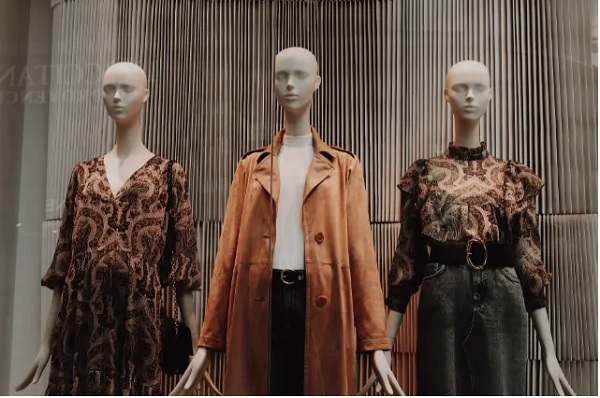
2021 was the year collaborations between luxury brands and popular brands helped refresh the luxury fashion scene and 2022 is turning out to be a bigger year for these fascinating fashion collabs as a host of them have been announced. From Balmain teaming up with Barbie and Dior’s entry with Technogym into the world of fitness or Prada’s recreating of Adidas classics; these limited- edition launches are setting the world of fashion ablaze. Of course, these provides fillip to both the collaborating brands, but can such collaborations be sustained for the long term or are designed just for one time experiences, remains to be seen.
Adidas by Prada
What could be more favored than one of the most popular sports brand teaming up with the cutting edge Italian luxury brand? Their cooperation has been such a success story that they've just unveiled their third portfolio. This time the focus has shifted - it isn’t just about trainers this time as the collab will be releasing their first ever capsule collection of co-branded apparel and accessories, centered forcefully around sustainability. Reimagining luxury sportswear with a sustainable outlook, all nylon will be removed out for Prada’s signature Re-Nylon fabric, which is made from recycled plastic waste collected from abysses. The 21- piece range will feature sportswear including tracksuits and anoraks, as well as bucket hats, bags and a reinvented, Prada- ingrained interpretation of Adidas’s Forum trainers.
Balmain x Barbie
Another traffic stopping, attention grabbing collab is the heritage French haute couture brand and the most popular doll in the world sashaying into the world of fashion. This is a sporty limited- edition collection, with the emphasis totally on fun. When there’s Barbie, there's plenty of her signature pink, with Olivier Rousteingusing a colour palette that ranges from the palest of blushes to bold fuchsia across over 50 pieces. Several of Balmain’s hand bags have been blended with Barbie packaging to produce quirky hybrids, while badges, t- shirts and hoodies have been designed to combine the doll’s distinctive aesthetic with the maison’siconic outlines. The genderless range was inspired by Barbie’s beau, Ken, too, and alongside the ready- to- wear pieces there will also be a series of Barbie and Ken NFTs that will be auctioned off online.
Charles & Keith x Shushu/ Tong
Accessories brand Charles & Keith had already partnered with famed Danish developer Cecilie Bahnsen in 2020. Charles & Keith just launched a new capsule collection with popular Gen Z brand Shushu/ Tong. The limited- edition collection consists of two bags and two pairs of shoes, all featuring Shushu/ Tong’s distinctly edgy style and centered on the rose. The iconic pieces are the square- toed patent leather Mary Janes in red and black, which feature distinctive rose detailing on the straps. Alongside these sit a classic box shoulder bag in red, with the distinctive rose print, while a black pair displays a single rose.
Dior Vibe and Technogym
Luxury French fashion house and fitness brand Technogym become collaborators for the Dior Vibe line. Excitement is in the air as Dior is all set to launch a series of pop- up stores to show their sleek and shiny new range of sportswear. From Dior’s Étoile and Oblique prints across leggings, sports bras and anoraks, the collection also includes accessories, shoes and bags. And Technogym inspired series limited edition workout equipment including drill bench to an exercise ball, printed with the Dior star.
Times are changing as heritage luxury and haute couture brands refresh themselves with collabs that the new Gen Z and late millennials can relate to. As their purchasing power impacts the sector, further brands will look for similar collabs to stay seductive and applicable.
To get better prices, B’desh needs to upgrade

Buyers pay lower prices to apparel suppliers in Bangladesh than they do to some of the country’s competitors.
In fact they often pay prices that are below factory costs whereas Vietnam, Indonesia, Turkey and Mexico are given higher than the average rates.For instance, men’s woven cotton trousers made in Bangladesh are sold for $7.01 per piece in 2020, which is 9.20 per cent below the global average of $7.72.Vietnam receives $10.76 per piece while Sri Lankan and Indian exporters get $8 and $8.41, respectively, for the same product.
Similarly, men's cotton jeans made in Bangladesh are sold at $7.81 apiece, again 7.20 per cent down from the global average of $8.41. Vietnam receives $11.55 by selling a similar item.Only two products -- women's cotton trousers and men's cotton T-shirts – manufactured in Bangladesh brings home a price that is slightly higher than the global average.
Made-in-Bangladesh women’s cotton trousers are sold at $6.43 per piece up 23 per cent from the world average of $5.22.Turkey takes home the highest, at $15.84, a staggering 203 per cent higher than the global average.Men's cotton T-shirts fetch $1.47 per piece for Bangladesh, which is 23 per cent higher than the global average of $1. Peru nets $8.46, the highest among suppliers around the world.Woven cotton jackets bring $10.10 per piece, which is 0.70 per cent below the global average. Thailand receives $48.86 and Mexico gets $34.11.
A bra made in Bangladesh from manmade fiber is sold at $3.19 per unit, which is 18 per cent below the international average. Vietnam gets $6.06.
Possible reasons
One reason prices of garment items made in Bangladesh are priced lower than the average world price is that manufacturers in Bangladesh are still strong in basic garment items. For instance, 80 per cent of Bangladesh's garment items are still confined to five cotton-made items and it has the problem of over-capacity.So, a hidden unhealthy competition has also kept the prices of the items lower. Because of excess capacity in the denim segment, prices are falling.
Competitors’ strengths
Garment manufacturing has evolved from a simple manufacturing operation into a complex service industry.The actual cut and sewing operations are the simplest and least remunerated tasks.First-generation garment producers in Asian cities such as Hong Kong, Singapore and Seoul have transformed from simple product makers to multinationals and they operate globally and invest in engineering, advanced information technology and cutting-edge technology.Yet most small and medium-sized garment manufacturers in developing countries, and especially least-developed countries, have not adapted to this changing industry and they remain focused on simple cut and sewing operations, provide few services and produce commodity-type garments.











