FW
India: Exports of children’s wear up 16 per cent
From January 2022 to September 2022 India’s exports of children’s wear increased by 16 per cent.
The US has a 36 per cent share in India’s export values in the category, followed by UK (15 per cent), UAE (six per cent), Germany (four per cent) and France (four per cent).
Clothing worn by children up 14 years is referred to as children’s wear. These garments are often composed of high-quality materials that provide comfort and breathability, and come in a wide range of colours and textures.
The children’s apparel market in India is growing at five percent a year.The market is primarily driven by the rising number of nuclear and double-income households in India. Strong economic growth in recent years and increasing purchasing power, along with the changing spending patterns of parents with an increasing inclination toward providing their children with enhanced comfort and convenience, is boosting the sales of branded and high-quality children’s apparel.
Additionally, children in the urban and semi-urban settings of the country are now being exposed to mass media, which has accelerated their active participation in purchase decisions. Along with this, several players are focusing on effective promotional strategies and modes of advertisements to gain prominence among their target consumers.
India’s cotton yarn exports down 70 per cent
India’s cotton yarn exports fell 70 per cent during September 2022.
Cotton yarn shipments to Bangladesh dropped by 71 per cent in September 2022, while shipments to Egypt and Portugal tumbled by 57 per cent and 79 per cent. However shipments to Italy and Sri Lanka increased by ten per cent and 37 per cent in September 2022.
The projection of India’s cotton crop was lowered from around 3.55 crore candy to 3.15 crore candy and it resulted in an unprecedented rise in cotton prices, reaching Rs. 1.10 lakh per candy from its traditional price of about Rs 45,000 per candy. The price of Indian cotton remained at least 20 per cent higher than that of other varieties and therefore Indian competitiveness against Turkey, Vietnam and China went down.
In fact, India imported about 10,000 tons of cotton yarn from Vietnam. The far-eastern country was earlier one of the major markets for Indian cotton yarn. The scarcity of cotton along with a comparatively higher price in India has resulted in a shift in its trade dynamics with Vietnam.Cotton prices in India are still ruling higher than those in the international market.But fiscal year 2022 had proved to be a great one for Indian cotton yarn exporters as they managed to tap 92 per cent growth on a yearly basis.
Almost 56% top fashion industry leaders expect a slowdown next year: says McKinsey-BOF The State of Fashion 2023 Report
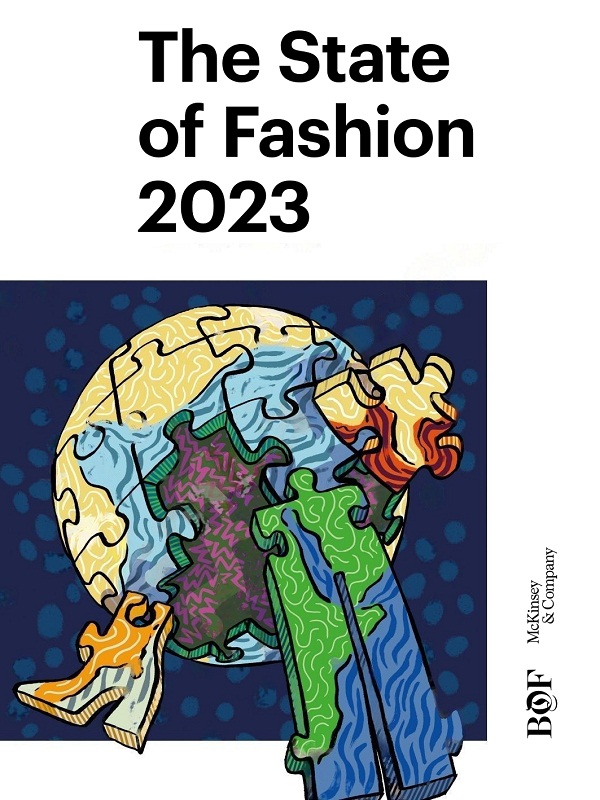
The Russia-Ukraine war, growing inflation and supply chain pressures are two of the biggest threats to the global fashion industry in the run-up to a challenging year, states The State of Fashion 2023 released by The Business of Fashion and McKinsey & Company today. The other key insights of the report are: the Middle East and North America are expected to have the highest growth potential in 2023 as executives deprioritise countries like China in the short term; and the industry will be buoyed by luxury, with global sales in this category expected to grow up to 10 per cent in 2023, compared to 3 per cent for the rest of the industry.
Predictions of an eminent slowdown in 2023
As per Imran Amed, Founder and CEO of The Business of Fashion: “The global economy is facing one of its toughest years ahead — with rising inflation, the cost of living crisis and the continued fallout from the war in Ukraine creating a ‘polycrisis’ requiring careful cost management and focused growth strategies to seize on pockets of opportunity in the luxury and in the Middle East, India and South Korea, as well as in resale and the discount market for customers who are trading down.”

The report released on day two on of BoF VOICES, BoF’s annual gathering for top thinkers in the sector, reveals the industry is headed for a global slowdown due to the Ukraine war, inflation and supply chain pressures which are combining to create an uncertain year ahead. Almost, 56 per cent of fashion executives expect conditions to worsen in 2023. Another 85 per cent predict inflation will continue to be a challenge next year and 58 per cent believe energy crisis will continue to weaken the market. Global GDP growth is expected to slow to approximately 2.2 per cent in 2023 and the threat of recession looms over many major economies.
However, the report also highlights some opportunities. Sales of luxury fashion is expected to grow globally between 5 and 10 per cent in 2023, compared to between negative 2 and positive 3 per cent for the rest of the industry. Fashion companies overall have been able to build robust foundations in 2021 and in the first half of 2022 to help them weather the storm; the proportion of “value destroying” companies (that is, those generating negative economic profit) is now at its lowest since 2013.
Consumer behaviour
Inflation has created a cost-of-living crisis in many countries and consumers are reassessing or changing their spending habits. Nearly three-quarters of US consumers sought out lower-cost brands or lower-priced products between April and July 2022. This puts the pressure is on brands to remain attractive given the tough economic environment.

Indeed, higher-income households will be less affected by this crisis and will continue shopping for luxury goods in particular; lower-income households will look to cut back or even eliminate discretionary spending on items like fashion. Many consumers will likely shop at value retailers and discounted stores.
What’s more among the 10 themes to shape fashion industry in 2023, fluid fashion is one of them, as the lines between menswear and womenswear are increasingly blurred, brands have an opportunity to rethink business processes and operations in order to tap into this evolution. Half of Gen-Z consumers have purchased fashion outside their gender identity. Also, formalwear is being reinvented. Formalwear for special occasions is expected to be the most resilient fashion category, as consumers rethink how they dress for the office and special events. Almost 39 per cent expect sales of occasion wear to be among the top three growth categories in 2023.
Another important takeaways is digital marketing costs are increasing as e-commerce growth rates normalise after pandemic highs, making it challenging to build a sustainably profitable online DTC business. One-third of fashion executives cite challenges to direct-to-consumer channels as one of the top themes that will impact their business next year.

Changing regional realities
The world map of growth opportunities for fashion brands has shifted, with regions like the Middle East and countries like the US emerging as priorities for the year ahead. Half of fashion executives expect to expand their companies’ footprint in North America in 2023. Notably, with Chinese economy expected to slow in 2023, some fashion executives are looking at opportunities elsewhere, at least over the short term. And the most preferred destination is the Middle East, almost 88 per cent executives cite the Middle East for a shift as the luxury market in the Gulf Cooperation Council (GCC) is expected to generate $11 billion of sales in 2023, with 60 per cent of luxury spending among GCC consumers occurring domestically. Also, 50 per cent executives are expected to increase their companies’ footprint in North America next year. Meanwhile, Japan and South Korea are renewing their reputations as dependable growth drivers in the Asia-Pacific region.
Focus on Greenwashing
The European Commission's strategic roadmap to make textiles more durable and recyclable by 2030 is homing in on greenwashing, while consumer watchdogs in Europe are keeping a close eye on the sustainability claims of fashion brands. Almost 79 per cent cite the lack of industry-wide standards to help them assess their sustainability performance as the greatest hurdle to improving how consumers perceive their efforts to reduce harm to the environment. Also, 65 per cent said they are considering nearshoring, to create new hubs dedicated to serving their domestic consumer markets. Two-thirds expect digitisation to be the most important capability to enable suppliers to grow in the year ahead.
October textiles exports a downer for India
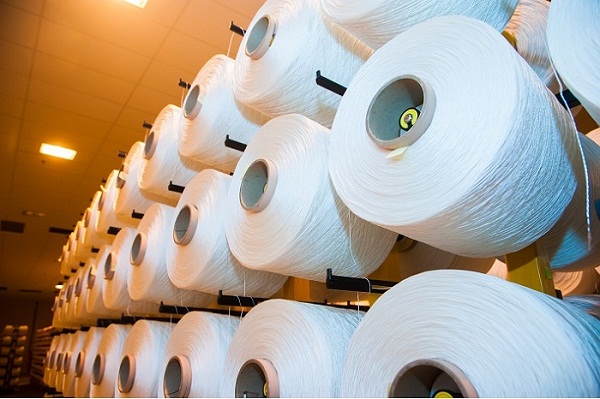
The world of international trading has been grappling with one challenge after the other since the pandemic, followed by the war theatrics Europe. Many sectors had roller coaster rides and are continuing to do so, trying their best to keep their heads above the water. For the Indian textile exporters, October 2022 was no season of festive delight as it experienced a crash of 41.53 per cent year-on-year. Clearly, the worldwide economic slowdown is hitting home big time. With high inflation and energy crisis, Europe is bracing for a winter of discontent. Consumers in the US too are weary as news of a looming recession is compounding on the fears that the pandemic-induced lockdown had gotten.
Figures don’t look good
This October, textile export share in total merchandise export registered at 7.68 per cent compared to 9.72 per cent in October 2021. The Ministry of Commerce & Industry also released some facts to corroborate this decline – whilst India exported textiles valued at $2220.30 million in October 2021, this October it just managed exports worth $1298.34 million. In October 2021, export of manmade yarn, fabrics and other associated products stood at $468.69 million and the same dropped to $350.56 million in October 2022. The most important figure was that in October 2021, $1,335.97 million worth of cotton yarn, fabric and made-ups were exported. This year in October the figure reads nearly half at $719.03 million.
In the last six months leading up to October, the decline has been a steady one of 20.78 per cent year on year, valued at $11348.46 million. If this trend continues, then the textile sector, both export and manufacturing, are bound to face enormous difficulties which in turn would affect local economies on the whole. Experts predict the slow down as imminent and a reality that needs to be addressed. However, some pundits are predicting a comeback as despite the adverse conditions in the US and Europe, markets are slowing picking up strength.
Financial analysts are advising that domestic consumption textile manufacturers will fare better than export-orientated ones in the short term. Figures indicate that giants like Siyaram Silk Mills Ltd., Raymonds and Welspun are gaining strength.
Emerging hope
India’s huge festive and wedding season represents hope as many manufacturers are busy establishing robust domestic sales. The other silver linings come in the form of the shifting of manufacturing bases from China to India, the favorably strong US dollar, and Indian government’s lowering of cotton import duties as well as offering production-linked incentive schemes. In fact, the government has set ambitious goals to help bolster textile exports by targeting a total of $100 billion of exports within the next five years and upgrade the total value of the sector as in export and domestic trade between $250 billion and $300 billion.
While India managed to become more cost efficient in terms of cotton production however, thanks to the higher depreciation of currencies in competing countries makes Indian cotton still more expensive. This is a challenging factor as it is stressing out profitability and margins factors and also telling on capacity utilization of plants, which in turn affects the work force.
The upheaval of this nature is challenging indeed and experts are advising a wait and watch strategy up until the release of the Q3 figures of fiscal Y23 are out before considering serious investments or big moves.
Unpredictable times for global brands as inflation, war hit consumer sentiment
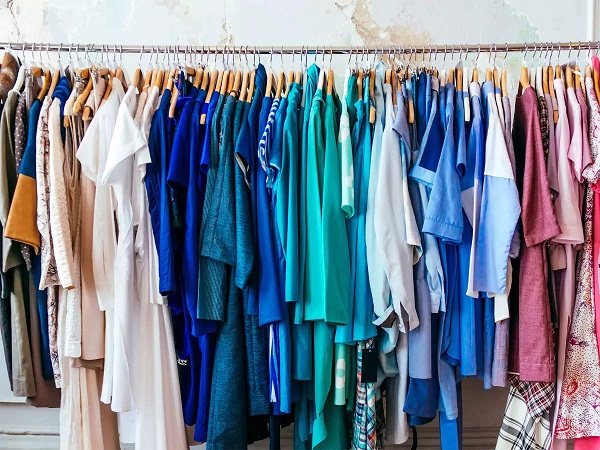
At the beginning of 2022, across the world few brands were surpassing their pre-Covid performances. They benefited from a burst of pent-up consumer demand that was expected to continue. But the Ukraine War, cost-of-living crisis and ongoing supply chain issues has eroded this optimism somewhat. Next year will likely be a continuation of what the fashion industry faced in the second half of 2022.
Challenging and unpredictable are the words most-frequently used. Fashion players are looking for clues about which direction consumer spending will head in the few months. But given the unpredictability and fragility in which the industry is operating, many will hold off drawing firm conclusions.Knowing now how fragile recoveries can be, any glimmer of hope may be fleeting, given the array of challenges that economies continue to face.
Inflation hits the Western economies
Though there are fleeting indications of a month on month recovery in consumer sentiment in the EU, confidence levels are still well below the long-term average.In the US, consumer confidence fell in October 2022 after two consecutive months of gains. November’s numbers may provide insight into whether the Federal Reserve will start easing the interest rate increases aimed at taming inflation.For months now, rising prices have cast a shadow over the fashion industry, seriously impacting consumer behavior, particularly among lower-income shoppers when it comes to spending on discretionary items, such as on apparel and footwear.
Increasing cost of living has long been one of the most feared phenomena in Western countries and now this fear has come true. In 2022, Europe, UK and other areas which had not experienced major inflationary for four decades registered record levels of inflation.
US suit imports up 105 per cent
American imports of suits from January 2022 to September 2022 grew by 105 per cent.
Of total suit imports, US imports from China grew by 158 per cent year on year. Suit imports from Vietnam and Indonesia grew by 148 per cent and 216 per cent. Suit imports from India grew by 93 per cent. And imports from Bangladesh grew by 142 per cent.
All through the pandemic and afterwards, suit was the product category that took most of the beating in apparel markets as people were staying at home and weren’t spending much on formalwear.However, the situation isn’t gloomy anymore for suit manufacturers. Bangladesh has ventured into suits and blazers. The country has been exporting winter wear to the developed world for around 30 years. Eighty per cent of the products made by the country's export-oriented apparel factories were for long limited to some traditional items like blankets and sweaters generally made of cotton.
Germany tops the countries that import large volumes of winter clothes from Bangladesh. Others are Europe, the US and Australia.Suits and blazers occupy a major slot in this list. They are viewed by manufacturers as highly promising value-added products. Apart from the traditional readymade garment sector, specialised tailoring houses are now engaged in making suits and blazers for export destinations.
Global high performance textile market up nine per cent
The global high-performance textile market is growing at nine per cent a year.
Growth in the global high-performance textile market is expected to be driven by increasing demand for advanced textiles offering excellent combinations of quality, functionality and physical properties for innovative and diversified high-tech applications to cater to various end users and consumers.
New trends such as 3D technology in high-performance textiles, increasing demand for premium cars and adoption of safety features in the automotive industry, new product developments in protective clothing and increasing awareness about sustainability are further expected to provide opportunities for the market to grow in the coming years.
Advances in high-performance textiles in the sports industry, technological advances in the manufacturing of high-performance textiles and the growing demand for high-performance textiles in aerospace and defense are the demand drivers for the global high-performance textile market.
However, the high cost of production and scarcity of skilled labour are some key restraining factors for the market.Performance Textiles, Toray Industries, High-Performance Textiles GmbH, Mitsui Chemicals, Inc, Baltex , DuPont, Freudenberg Performance Materials, Hexcel Corporation, High Performance Textiles are some of the leading players in this segment, who are coming out with innovative products that are a smart blend of fashion and functionality.
Sportswear market grows by six per cent
The global sportswear market is growing by six per cent a year. The rising demand for comfortable yet stylish apparel is driving the sports wearables market growth.
During the lockdown, consumption has increased even more. Besides, its use while playing sports and exercising, this comfortable apparel can be worn at and off home. Demand for joggers, hoodies, and sneakers has increased in large numbers and varieties by adults and children. The footwear segment holds a market share of 33 per cent. This is attributable to increased sports activities worldwide and growing awareness about various fitness programs.
Women’s involvement in sports such as basketball, football, athletics has increased over the years. This is expected to drive the sportswear market growth in upcoming years.
North America holds the highest global sportswear market share. This is because of the thriving recreational industry in the region. The US recreational sector revenue accounts for two per cent of its GDP. Additionally, the number of students inclined towards sport is rising.Asia Pacific too is expected to experience significant growth. Major sportswear companies are striving to maintain their position by focusing on facility expansion and acquisition.
Key players are adopting proactive strategies such as partnerships, mergers, and collaborations to favor the market’s growth in the upcoming years.
Cambodia T&A exim up till Sept, Oct’22 numbers down
Cambodia’s apparel exports in the first ten months of 2022 rose by 18 percent. Exports of apparel and clothing accessories (knitted) earnings surged 16 percent compared to the same period in the previous year. Exports of apparel and clothing accessories (not knitted) increased by 25 percent.
Export figures of October 2022 slumped due to sluggish demand from the global markets. Exports of knitted apparel and clothing accessories dropped 24 per cent in October 2022 from the same period in the previous year. Shipment of non-knitted apparel fell four per cent in October 2022. On the other hand, Cambodia’s knitted or crocheted fabric imports during January 2022 to October 2022 were four per cent higher than imports in the same period last year.
Similarly, manmade fiber imports rose by 12 per cent from January 2022 to October 2022 when compared with January 2021 to October 2021. Cotton imports fell one per cent. The US is Cambodia’s largest export market, accounting for over 40 percent of Cambodia’s total exports. Apparel, footwear, and travel goods make up most of US imports from Cambodia and employ over one million Cambodians, mostly women.
Top US exports to Cambodia include vehicles, animal feed and digital services.
Indian apparel displayed at Dubai fair
Indian apparel exporters are having a presence at International Apparel and Textile Fair, Dubai, November 28 to 30, 2022.
The aim is to showcase the best of India’s apparel designs and styles in line with the latest fashion trends in a wide range of traditional cotton and manmade fiber garments. Indian exhibitors are displaying organic, sustainable products, men’s andwomen’s sweatshirts, pants, night suits, blouses, jerseys, pullovers, men’s and boys’ trousers, women’s dresses, skirts, trousers, leggings, petticoats, loungewear, active wear, wind jackets, bras, baby garments and clothing accessories, shawls, scarves, mufflers, recyclable and ethnic garments.
The fair opens huge business opportunities for UAE clothing brands to source from India considering the strengths of the Indian garment industry in terms of the variety of raw material availability right from cotton, jute, silk, viscose, nylon, acrylic with abundant in house production. India is the second largest supplier of readymade garments to the UAE just after China. The UAE has traditionally been the topmost trading partner for Indian garment exports.
With the signing of the UAE-India CEPA agreement giving duty free access to Indian garment exports this share is expected to increase further. After having established itself in traditional garments, the Indian apparel industry has now moved on to diversifying itself into newer areas of manmade fiber garments.