


FW
Xianjiang cotton maybe pariah but apparel brand adherence still a grey area
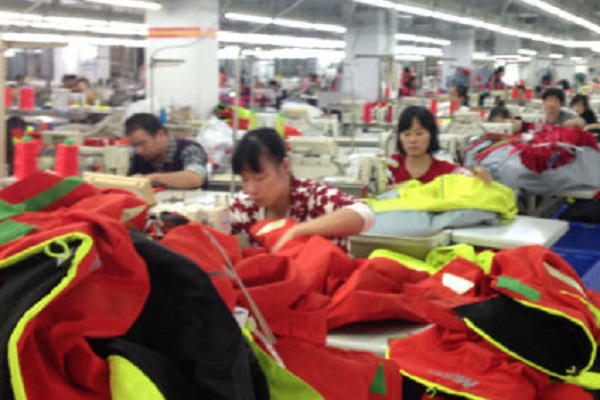
The US already has several restrictions in place for imports from Xinjiang, where rights groups say Uyghurs and other ethnic and religious minorities have faced a raft of human rights abuses, including being placed in mass internment camps. Under the Uyghur Forced Labor Prevention Act, passed in 2021, US Customs and Border Protection (CBP) blocked all imports made in the region. It blocked all goods made by firms outside the region whose links with Xinjiang companies or with Xinjiang’s government make them complicit in the Department of Commerce’s view on forced labor practices.
Of course, China hit back as a spokesperson of China’s Ministry of Commerce pointed out the Chinese government has laws in place that explicitly ban forced labour and the ban would not only hurt Chinese industries but also American retailers and consumers. Evidence gathered by human rights organizations directly contradict the Chinese Ministry’s claims about laws banning forced labour.
Banning Xianjiang-related products aren’t easy
America is in love with Chinese ultra-fast fashion brand Shein. As recent as November 22, Bloomberg conducted a research test on Shein garments shipped to the US and it was found that the clothing had Xianjiang cotton in them. Two batches of clothes purchased from Shein — one ordered in March and a second in July — were shipped to Agroisolab GmbH in Jülich, Germany for analysis. The clothes were chosen from about 60,000 items that turned up in a search for ‘cotton’ on Shein’s US website.
The fashion brand that is expected to reach revenues of $8 billion in sales in the US in 2022 is in the line of fire but the garments out in the US market haven’t been recalled yet as customers are on a buying spree. Bloomberg called out the loophole termed “de minimis” exemption which Shein used cleverly to escape the scrutiny of US Customs. This rule facilitates packages valued under $800 to be shipped to the US duty free and avoid the scrutiny of the US Customs. Shein spokespersons are yet to confirm the Bloomberg test results.
Similarly, German brands Adidas, Puma, Jack Wolfskin, Tom Tailor and Hugo Boss have also been accused of using Xianjiang-farmed cotton as tests revealed traces of strands from the region in some of their clothing items, particularly t-shirts, shirts and pullovers. This is in direct contradiction to these brands having promised to only source material that does not have the label of forced labour on them. Put under the spotlight, these five German brands have reiterated their commitment on their stance on sourcing from Xianjiang. A private auditing firm held an independent research amongst Chinese subcontractors supplying to major international fashion labels said that no matter what these brands claim about their stance on forced Uyghur labour, they cannot for certainty state that Xianjiang cotton is absent from their items as it is near impossible to monitor these subcontractors continuously.
Certification of cotton isn’t exactly a cakewalk. There are many cotton trading hubs including in Dubai where cotton is sold in bales, the provenance of cotton in the market gets mixed up. For example, readymade cotton garments from Bangladesh are made from a mix of cottons as Bangladesh imports raw cotton in entirety from wherever it gets at the lowest price. Therefore, checking samples of garments manufactured in China isn’t enough. Global Organic Textiles Standard (GOTS) is responsible for monitoring the provenance of the textile throughout its supply chain and the organisation doesn’t have Chinese manufacturers on its radar.
Meanwhile Xianjiang continues good production
Despite the global condemnation and the US ban, the north western Chinese province has seen a a growth of its crop output. The cotton yield in Xinjiang averaged 143.9 kg per mu in 2022, an increase of 7.5 kg per mu over the previous year. Government officials claim that 80 per cent of cotton farms in Xianjiang are mechanized and no longer rely on manual labour for the pickings. This counter-claim is a direct refute to the West’s claim of exploitation of Uyghur labour forces.
Kingpins begins in New York
Kingpins is on at New York, January 11 to 12, 2023. The global specialized denim insiders’ show is ready to disclose all novelties for spring/summer 2024.
The event is hosting about 80 exhibitors including specialised insiders and denim manufacturers like Advance Denim, Arvind, Bossa, Calik, Cone Denim, Diamond Denim by Sapphire, Orta, Raymond UCO, Saitex and Lycra.
Lots of get together and events will enliven the show. Key events of the show include trend seminars, talks and discussions on the hottest topics from the industry. The Amsterdam Kingpins held in October 2022 provided a stage for mills, trims, technology companies and chemical suppliers to present their new concepts for spring/summer 2024. While consumers are enthralled with jeans with an authentic stonewashed look, the industry is working overtime to give them what they want without reverting to the unhealthy dry finishing processes used in the 90s to achieve the effect.
Rudolf’s Dry Way is made without sand or other silica-containing compound. To add softness to the fabric, a new laundry aid that works in the dryer replaces traditional fabric softening. Dry Way allows for significant and measurable water and energy savings and is usable with any type of machinery. Technology company Tonello unveiled updates to its Laundry (R)Evolution that increases transparency, traceability and productivity.
India’s FTA to boost exports to Australia
Various Indian products, including textiles and apparel, will have preferential market access to the Australian market with zero customs duty.
So far 70 per cent of India’s textile products and 90 per cent of apparel products faced duty on export to Australia. Tirupur accounts for about 60 per cent of India’s garment exports to Australia. And Australia’s zero import duty access to India (earlier five per cent) would likely level the playing field for the Indian textile industry with other countries like Bangladesh, China, and Vietnam.
In fiscal year 2022 and during the first seven months of fiscal year 2023, Australia accounted for about two per cent of India’s apparel exports, compared to about one per cent in fiscal year 2015. Going forward, the share is expected to increase further on account of the added advantages of the free trade agreement.
The Australian market presents good potential for Indian exports of home textiles like bed and bath linen, toilet and kitchen linen, curtains, pillow covers, quilts and comforters, cotton bags, and readymade garments as well as carpets and flooring.
Tirupur in India to focus on active wear
Tirupur hopes to be able to achieve 40 per cent growth in exports in the next three years mostly in active wear.
Tirupur can be a global sourcing hub for such products if knitters, dyers, processors, machine suppliers, dyes and chemical suppliers etc work collectively to make this possible. Due to the performance and comfort benefits of activewear, consumers are moving from conventional products to high-performance, flexible, breathable and versatile apparel made with polyester filament yarns.
Dope dyed polyester filament yarns and technology in this regard can be a game changer for Tirupur. Exporters can use Techno Sportswear’s state-of-the-art lab facilities to analyse their buyers’ fabrics. Knitwear exporters are being encouraged to diversify into manmade fiber quickly since there are encouraging signals as revival of knitted apparel exports is expected in the near term.
This is the best time for Tirupur exporters to invest in technology, R&D and capacity to get the maximum benefits of the second edition of the production linked scheme. Garment exporters in Tirupur are hopeful of bagging more orders in 2023. They expect a 30 per cent growth in orders once the trade agreement between India and the UK is signed. This is expected to bring orders to knitwear exporters all through the year.
Denim major adopts new technology
R&B Denims has installed new air jet looms. With this the company has started to manufacture luxury levels of denim fabric with a width of 85 inches. It is expected that the company will generate very good margins from the current operating margins with this technology.
By adopting this new technology, the company will be able to gain an advantage over its competitors, as it is not available to many denim manufacturers. It will provide the company with an advantage in serving both domestic as well as international consumers.
R&B Denims is a textile house with integrated textile manufacturing facilities of over 30 million meters of denim. Despite a decrease in revenue in the first quarter the company maintained profits by focusing on cost reduction, flexible working capital management, and improving productivity and efficiencies.
With the new machine installations, the company is expecting a significant increase in revenue and profitability in the fourth quarter.R&B Denim has a robust business model and the ability to navigate through challenging times. Denim products are attracting more and more people, regardless of age and gender, and it is anticipated that the denim industry will grow at a rapid pace in the near future.
Robotics in apparel making could impact global apparel industry in many ways

The buzzword across industries from high-tech to low-tech is automation as this leads to greater workplace safety, improved production line efficiencies as nothing does repetition better than automation and complex processes flow seamlessly into one another at a greater speed. As Eugen Slojow who heads an automated clothes manufacturing unit in San Francisco by Siemens points out clothing was the last bastion of a trillion dollar industry that had not been automated. As per Statista, the clothing sector worldwide stands at $1.52 trillion, so the opportunities are huge.
The idea came to fruit at the onset of supply chain disruptions at the onset of the Covid pandemic. Many big clothing brands and technology companies including Levi Strauss & Co. and Siemens AG have already started working on developing automated clothing manufacturing. The lesson that the pandemic taught was it might be better for large consumption markets to stop relying on supplies from distant countries and start manufacturing clothes on nearer home.
Experiments underway
The US has once again taken the lead and many companies have started experimenting. One problem the experimental robotics has encountered is sewing in which robots lack the finesse of human hands and whilst work is being done to acquire this skill, it seems far off. Sewing is the most costly and labor-intensive process in garment manufacturing, accounting for more than half of the total labor input per garment. Sewing also remains the most difficult part of the process to automate or robotize, given the difficulties in handling fabric using robotic arms.
However, several recent ground-breaking innovations in sewing technology enable robots to easily handle fabric for producing simple T-shirts. Existing technology now, in fact, makes it possible to automate 90 per cent of sewing for a T-shirt. Currently, experiments are focusing on replicating the other aspects of clothing manufacture to close the cost gap between units in the US and that of developing nations that supply RMG.
Sewbo Inc., a San Francisco-based unit that chemically hardens or stiffens fabric was chosen as the ideal experimental company by Siemens to test robotic clothing manufacturing. The German multinational technology company tied up with Pittsburgh-based Advanced Robotics for Manufacturing (ARM) Institute for the experimentation with Sewbo Inc. Sewbo’s hardened fabrics can be handled by these robots to fasten metal rivets on jeans and staple zips into place. The ARM institute also financed a $1.5 million grant for Bluewater Defense LLC., a small US-based military clothing manufacturer to experiment with robots and hard fabrics.
Saitex is a Los Angeles-based factory that started experimenting with robotic manufacturing of blue jeans in September 2022. Owner Sanjeev Bhalla is happy with the progress. He feels once the experiments yield right commercial results, there is no need for the US to import readymade jeans from Asia as they can well manufacture them locally. There are other efforts to automate sewing factories. Software Automation Inc., a startup in Georgia, has developed a machine that can sew clothing by pulling the cloth over a special table, for example.
Global economic and political impact
As the US experiments with robotics in production lines, other Western nations who are large consumers of readymade garments from Asia and Latin America are following the progress keenly so they too can automate production if the experiments meet commercial feasibility. However, the news is not being publicized much as it has political connotations and economic impact in many parts of the world where garment manufacturing sector has not only drawn in huge investments but also support the livelihood of millions of people. In a world where trade relations are forming allies and nexuses, this may be seen as a major disruption in relationships that can cause power imbalances globally.
IIT Delhi to host recycling event
A conference on textile recycling will take place at IIT Delhi, February 9, 2023. It is being organised by academia and industry from India and Sweden and will bring together an eminent group of representatives from the textile and clothing industry, including Indian and European fashion brands and recyclers, government and ministry delegations, and leading academicians to brainstorm and concretize clear pathways for valorizing the Europe-India cross-border recycling value chain with a particular focus on mechanical recycling. Wazir Advisors is the knowledge partner for the conference.
The event will have dedicated panel discussions on exploring the textile recycling business potential and product market opportunities, technological breakthroughs and advances in industry standards, highlight the necessary intermediations required from governmental and regulatory bodies, and finally weaving out a radical pathway that needs to be adopted for developing such a circular recycling ecosystem.
Globally less than one per cent of the fiber produced for clothing is being recycled back into new fibers or for other high-value applications. The largest part of Europe’s recycled textile waste is mainly down-cycled for low-value uses. On the other hand, India is transforming into a major powerhouse of recycling, and is one of the largest recipients of global post-consumer textiles.
Panipat in Haryana, India is the largest hub for mechanical recycling of textiles with over 900 recycling units and four million informal workers processing textile waste.
Vietnam units shift to Indonesia
Textile factories from Vietnam are moving to Indonesia.
One reason is that wages and other cost components in Vietnam are already relatively high. For Vietnamese companies Indonesia is competitive in terms of raw material prices and salaries.
For the last few years, Indonesia has been a net importer of clothing products from Vietnam. Vietnam’s textile and garment export turnover to Indonesia reached 10.057 million USD in September 2022, more than four times that of the previous month. The figure was 2.354 million USD in August, 5.257 million USD in July, 3.801 million USD in June, 1.232 million USD in May and 2.719 million USD in April.The increasing trend was recorded in the third quarter of 2022 when the figure neared 17.7 million USD, up from 7.753 million USD in the second quarter, and 15.972 million USD in the first quarter.Last year, the figure was 13.308 million USD in the fourth quarter, 51 million USD in the third quarter, and 12 million USD in the second quarter.Indonesia’s garment and textile imports from Vietnam reached 53.543 million USD in 2021 and 41.611 million USD in 2020. As it happens Indonesia is a significant importer of used clothes.
Turkey to hold trade show in the US
“Textile show of the world” will take place January 17 and 18, 2023, United States. This is a Turkish trade show and caters to the needs of potential buyers in the US.
The event will host selected and high quality suppliers and mills from all over Turkey, specializing in a wide range of product groups.This special show will provide an opportunity for American professionals to meet Turkish exporters, selected among top manufacturers.
By successfully carrying out all production stages from raw material to final product, the Turkish textile sector has a privileged position on a global scale with its integrated production power of $90 billion.
The sector follows global trends and puts them into practice quickly, owing its success to its dynamic infrastructure.Reducing water consumption from cotton to final product, minimizing energy consumption, zero waste, corporate social responsibility, and reducing carbon footprint are among the most important priorities of the sector.Turkish textile companies are exporting their products to more than 200 countries.
Turkey is well known for near-shore manufacturing capabilities that are of high quality. Turkey’s apparel exports grew by around five per cent from January 2022 to November 2022. The export revenues earned by Turkey in the first eleven months of 2022 are the highest ever.
UK retail footfalls move up
In December 2022 UK retail footfall was at its highest level since the start of the pandemic.
This was despite rail disruption and the cold snap keeping many shoppers from visiting town centers and high streets in the last week before Christmas.The five weeks from November 27, 2022, to December 31, 2022, saw footfall that was down only 7.3 per cent compared to three years ago, which was six percentage points better than in November 2022, and also better than the three-month average decline of ten percent.
Total UK footfall last year was only 11.8 per cent below pre-pandemic levels, a big improvement on 2021 when footfalls remained down 33 per cent on the pre-Covid period. In December 2022, high street footfalls declined nine per cent against three years ago while retail parks were down only five percent compared to the last buoyant December before the global health crisis hit.Shopping center footfall was down a heftier 19 per cent.
However, Northern Ireland saw the shallowest footfall decline of all UK nations and regions at three per cent followed by England at 8.7 per cent and Wales at 9.6 per cent. Scotland saw the steepest decline at 9.9 per cent. On a one-year basis, total footfall increased by 15.1 per cent with high streets up 19.7 per cent and shopping centers up 13.4 per cent. Retail parks were down, but only by 1.6 per cent.











