FW
Regulatory norms for e-commerce sector in focus among WTO members
E-commerce is fast emerging the most preferred channel for trading and retailing, be it business to business trade or business to consumer retail. Having become a worldwide transactional platform, there is an urgent need for the rules and regulations to be standardized so that they can be applicable across countries.
WTO’s role
A group of 71 WTO members agreed at the 11th Ministerial Conference in December 2017 to initiate exploratory work towards future WTO negotiations on trade-related aspects of e-commerce. Open to all member-states, as of January 2021, the total number of participating nations was 87, accounting for 90 per cent of global trade. At the behest of member-states, the WTO had launched this joint initiative to achieve a high standard outcome that builds on existing WTO agreements and frameworks with the participation of as many WTO members as possible.
The negotiations are based on textual proposals from members, made available to whole WTO membership. They are conducted through a combination of plenary sessions, focus groups and small group meetings. The issues raised in members' submissions are discussed under six main themes: enabling electronic commerce, openness and electronic commerce, trust and digital trade, cross-cutting issues, telecommunications, and market access. Throughout the negotiations, participants have been encouraged by the co-conveners to consider the opportunities and challenges faced by members, including developing and least-developed countries, as well as by small businesses.
India’s two non-binding proposals to WTO
As per an AT Kearney report, India has emerged a big e-commerce player. It stated while the total value of e-commerce was $4 billion in 2019, by 2030 India’s e-commerce will grow tenfold to be worth $40 billion. As a leading player, India has an important seat at the WTO-87 member-state joint initiative table. India submitted two proposals, pushing the agenda towards broader discussions consumer protection and digital infrastructure in e-commerce.
Since most of the 87 members participating in this joint initiative are developed nations, India represents the voice of developing and under-developed nations that are facing the impact of worldwide e-commerce and its rapid increase as the preferred transactional platform. The two proposals from India has received due attention with member states agreeing to review the discussion points, ensuring situations in developing and under-developed countries are given equal importance whilst formatting the regulatory practices.
India’s proposal on consumer protection tabled in December 2022 is a comprehensive list of challenges that consumers face relating to misleading ads, online payment security, unfair terms, data protection and dispute resolution. It has emphasized on the need to jointly address these issues by countries owing to rapid growth of cross border e-commerce, besides pointing to the wide gaps in the level and standards of consumer protection across the world.
The second proposal was tabled in January 2023 and the first round of discussions will commence in the fourth week of February 2022. This proposal discusses the digital public infrastructure that facilitates e-commerce and India brings forward the challenges that limits the adoption of e-commerce including the domination of a few large corporates and limited access to digital solutions due to copyright and proprietary issues. The proposal urges participants to closely look at how these affect developing and under-developed nations who can benefit with more accessible and user-friendly regulations.
Need to review e-commerce consumer protection
As India experiences economic boom, e-commerce will be a critical component. Millions of online shoppers are added every year. And the current scenario is no longer about entry-point items as people are making high-value items online. The government has begun work on a ‘India-specific model’ for big sellers to collaborate with new ones. The move is a part of the government’s review of the draft consumer protection rules for e-commerce.
The Ministry of Commerce and Consumer has been in dialogue with e-commerce giants of Indian and international origin, to understand the draft guidelines. The draft clearly lists consumer concerns as well as the concern of international entities vis-à-vis local sellers. The ministries engaged in this dialogue are clear that consumer protection will never be compromised while ensuring conflict of interest for sellers is avoided.
Western brands circumvent and continue Russia operations
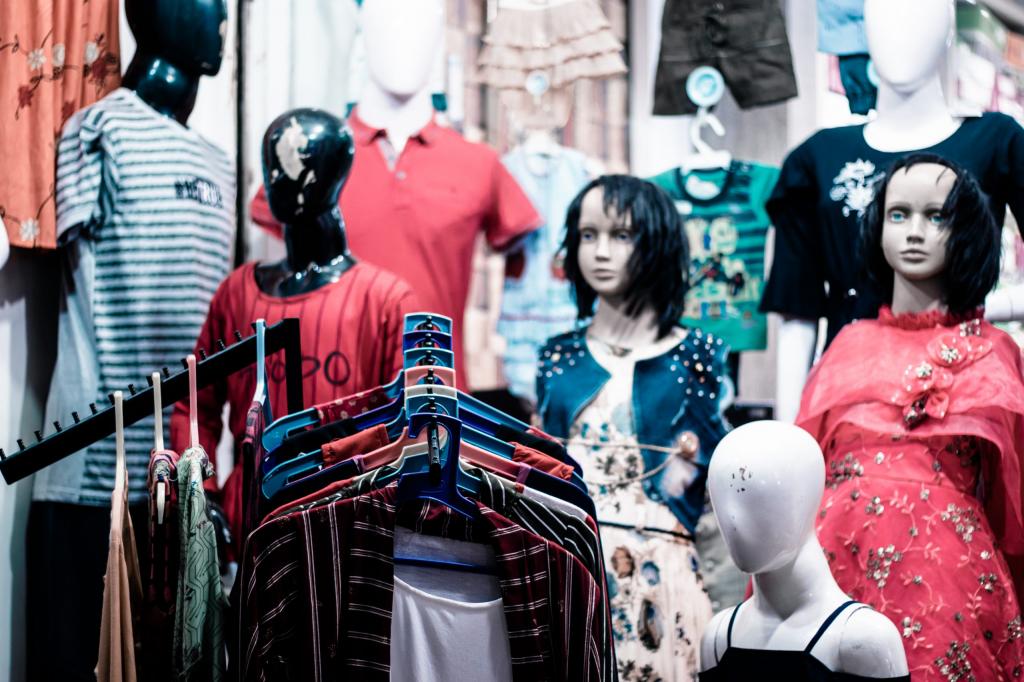
Many western brands are continuing to do business in Russia. But the widespread outrage over the war in Ukraine means these companies have to resort to sly methods. For instance, they are reopening businesses under new names. Many foreign brands are importing goods for the Russian market through other countries like the UAE and Singapore.
Russian chain stores that shut down due to the war are reopening under different brand names. There has been limited retreat of EU and G7 firms from Russia. So the impression that there has been a vast exodus of western firms is a mistake. Less than 10 per cent of EU and G7 companies with Russian subsidiaries have divested. When Russia invaded, there were 1,404 EU and G7-based companies and a total of 2,405 subsidiaries active in Russia. But only about 120 of these companies have divested at least one subsidiary in Russia.
There were more confirmed exits by US-based companies than those based in Europe and Japan. But even among the US companies fewer than 18 per cent subsidiaries operating in Russia have been completely divested since the invasion began. By contrast, 15 per cent of Japanese firms and only 8.3 per cent of EU firms have divested from Russia. Of those who have left their Russian subsidiaries in place, 19.5 per cent are German and 12.4 per cent are US-owned.
Exiting western firms account for only 6.5 per cent of the total profit before tax of EU and G7 firms with active commercial operations in Russia.They, meanwhile, accounted for 15.3 per cent of the total number of employees working for such firms in Russia.This indicates that, on an average, the exiting firms tended to have lower profitability and larger workforce than the firms that remain in Russia. These findings call into question the willingness of western firms to decouple from economies their governments now deem to be geopolitical rivals. Opportunities for Bangladesh
However western brands reopening businesses under new names in Russian markets have spelled optimism and opportunities for Bangladesh apparel exporters. H&M and Inditex have launched business offices in Dubai under new names to circumvent the political pressure and these new companies are doing business with Bangladesh.
They source fabrics from and import goods made in Bangladesh through third countries like Turkey. Bangladesh’s apparel exports to Turkey and the United Arab Emirates increased 83 per cent and 22 per cent respectively between July to December in fiscal year 2023 over the same period last year. But despite buyer’s interest of doing business through an alternative route, it is risky as Bangladesh’s exporters receive delayed payments.
Vietnamese textile and apparel exports gain 14.7 per cent YOY in 2022

There was much concern in Vietnam about textile and apparel exports during the pandemic as the country’s textile and garment products account for a global market share of 5.2 per cent, making Vietnam the world’s third largest textile exporter. As per Vietnamese General Department of Custom stats, the sector recovered with a 14.7 per cent increase in 2022 compared to 2021. The sector closed November 2022 at $37.57 billion.
Textiles and garments are the Southeast Asian country's second-largest export earner, after smartphones. The country is among the world's largest manufacturers for brands like Nike, Calvin Klein, Mango, Zara and H&M. The overall performance in 2022 has enabled the sector to recover from the gloom of 2020 and 2021. As per the Vietnamese Textile and Apparel Association, the export target for textile, apparel and yarn was set at $43 billion and due to decrease in yarn export by 13.6 per cent the target was under question.
In terms of Vietnam’s traditional export markets, US remains its biggest importer of textiles and apparel, up 7.9 per cent in 2022 and valued at $17.36 billion. The European Union and Japan registered a significant growth with an increase of 34.7 per cent and 25.8 per cent in imports from Vietnam respectively, valued at $4.46 billion and $4.07 billion. Neighboring South Korea’s textile and apparel import in 2022 from Vietnam was valued at $3.05 billion.
Mixed bag of results in 2022
Despite the 14.7 per cent growth, some of the big names in the sector posted large losses and recovery seems a bit way off for them. CAFEF, Vietnam’s leading financial-trading-securities information center compiled data from 15 leading listed textile and apparel companies to show that the total consolidated tax in the fourth quarter of 2022 was $18.7 million, down a whopping 63 per cent from the fourth quarter of 2021.
One of the main reasons was of course the dramatic drop of the Vietnamese Dong against the US dollar in 2022, combined with declining demand as most global markets stepped cautiously into 2023, bracing themselves against economic crises, inflation and recession. Local newspaper Quan doi nhan dan reported local businesses executives indicate that up until mid-2023, the main factors affecting the garment and textile sector would be high interest rates and inflationary pressure.
Leading company Vinatex created a record of sorts for itself by registering its first quarterly loss of VND 5 billion. Last year its profit after tax was VND 450 billion. However, for the whole of 2022, Vinatex still made a profit of more than VND1 trillion, down 20 per cent year-on-year thanks to the large profit in the year's first half. Vinatex was particularly let down by the near-zero market liquidity in yarns and its subsidiary fiber units also performed poorly.
Garmex Saigon Corporation also suffered a loss of approximately VND59 billion in the fourth quarter, while it posted a profit of nearly VND35 billion in 2021.Garmex was particularly unfortunate due to quality-related issues that led to shutting down and renovating its production process in August 2022, leading to a large pile up of inventory that had been tagged for their quality issues. Other reputable manufacturers such as Song Hong Garment, Century Synthetic Fiber Corporation, and Everpia experienced profit decrease of about 40 to 50 per cent over 2021.
On the other hand, the Phong Phu Corporation turned out to have the most profitable 2022 with VND 99 billion profit after tax. This was a 42 per cent increase from 2021. The Thanh Cong Textile Garment Investment Trading also experienced phenomenal profit after tax in 2022 which valued at VND 60 billion was a 140 per cent increase.
2023 will be a year of challenges
As the jubilation of 2022 settles down, Vietnamese textile and apparel sector look at a year filled with challenges. Input costs, labour costs and a looming economic recession could stretch up until at least the middle of the year and many fear that it will go beyond that. With domestic demand in high-value markets like the US, the EU, Japan and South Korea shrinking in fear of impending recessions, Vietnamese manufacturers may have to cut down on production lines and labour.
Indian yarn exporters to Turkey fear the worst
Indian businesses that export manmade fiber and spun-cotton yarns to Turkey fear the devastating earthquake there will impact supply chains and their businesses.
The disaster is going to impact Indian businesses and many will see their turnover hit.India exports synthetic and other yarns to textile manufacturing centers in Turkey, including Gaziantep and Kahramanmaras, where they get turned into carpets, formal wear and fast fashion and exported to Europe and elsewhere.
Gaziantep province was the epicenter of the first major earthquake and Kahramanmaras province was where the second struck. How many of these factories are still standing is unknown. Some textile factories are known to have been wiped out. Those that have survived are using the open end yarn to make hospital bandages and mattresses.
So the sentiment in Turkey for exports from India has clearly gone down.No one has gone back to work in the factories as there is no power.A lot of owners have left the earthquake areas and gone to stay elsewhere, so no one knows how the factories will function now.
Indian yarn exporters are slowing down production until the situation improves. As of now the situation has definitely brought pressure on yarn prices.
UK show, Pure London gets thumping response
Pure London is on in the UK, February 12 to 14, 2023. This is a showcase for women’swear, accessories, shoes, and jewellery brands.
Visitors can discover an enticing collection of British and global fashion designers and brands, inspirational trend presentations and show-stopping catwalk shows.
Pure London is showcasing a carefully curated selection of conscious exhibitors leading the way in addressing their environmental and social impact that will raise the profile of ethical and sustainable fashion across the entire event.
To cater to independent fashion retailers in the UK, a toolkit has been created which provides a step-by-step guide on everything from reducing carbon footprint and energy consumption to sustainable packaging. Retailers can have a free consultancy session with a sustainability expert. A panel is discussing the future of sustainable fashion.
Pure London is championing brands that prioritise sustainable production and ethical standards and supports retailers on their journey to become more sustainable. Pure London has a reputation for attracting some of the industry’s most compelling business personalities and change makers and this season is no exception. In today’s challenging retail environment, it wants to encourage conversations about building business, utilising modern technology and producing ethically. The event has had a great response from buyers and the industry.
India: Gokaldas Q3 profit up 34 per cent
For the third quarter Gokaldas Exports’ consolidated net profit was up by 34 per cent.
Consolidated revenues during the quarter were up by 0.8 per cent compared to the corresponding quarter of the previous year.For the nine months of the current fiscal profit after tax was up 123 per cent higher than the same period of the last fiscal.The company will continue to focus on optimal resource utilisation and drive operational excellence in the coming quarters.
Gokaldas Exports is an apparel manufacturer and exporter. The company exports garments to more than 50 countries. The company has improved its bottom line from incurring a loss to a profit and has grown substantially over the last five or six years. The emphasis on operational improvements and the increased focus on value-added pricing have helped Gokaldas gain better realisation from customers.
With all these factors, it has been able to deliver better bottom lines. Gokaldas Exports is building three new manufacturing facilities. These will be in Madhya Pradesh, Tamil Nadu, and Bangladesh. The new facilities will add an extra five million pieces annually to the company’s existing yearly production capacity of 30 million pieces.
Currently, Gokaldas Exports operates 19 manufacturing units.
Trends drive global denim fabric market, up 4.4 per cent
The global denim fabric market is growing at 4.4 per cent a year. So says Allied Market Research. The obtainability of denim fabric at reasonable prices and new socio-economic trends are driving the growth of the global denim fabric market.
The rise of biodegradable denim fabric has opened new prospects. But price instability of cotton and ecological risks related with the use of synthetic dyes confine the market to some level. The Covid outbreak impacted the overall supply chain, thereby upsetting the overall growth of the global denim fabric market. The rise in the prices of raw materials, especially cotton and cotton yarn, cut the production of denim fabric, especially during the early phase. Moreover, the dropping income of customers has given way to a reduction in the demand for premium denim products.
The Asia Pacific region got the highest revenue share in 2020, getting nearly four-fifths of the entire market share, and is projected to continue its central lead by 2030.
From January to September 2021 Bangladesh’s denim exports to the US registered a whopping 31.40 per cent yearly increase. As the world slowly goes back to normal, fashion item consumption is once again showing signs of growth.
Japanese buyers attend fair
Upnext India was held in Gurugram, February 10 to 11, 2023.
The aim was to foster trade ties with Japan. This Japan-focused edition of the reverse buyer seller meet hostedapparel and fashion accessories exporters, providing them a platform to engage with Japanese brands and buyers. More than 80 prominent Japanese buyers including trading companies and retail chains/ stores were in India to source their requirements from the 112-odd Indian exhibitors who displayed a diverse range of readymade garments reflecting Japanese taste.
Japan is the fourth largest readymade garment importer in the world. India has duty-free access to the Japanese market and so is anxious to tap this huge trade potential in the readymade garment sector. Japan presents strong business opportunities for India since China, which has been a dominant garment supplier to Japan, has witnessed a decline in the past five years.
Japan has two competitive advantages as an apparel sourcing base: sourcing cost and flexibility and agility. Indian suppliers can cater to both small size customised orders of 300 pieces to large orders as huge as three lakh pieces of one style. Apparel imports into Japan have witnessed a positive uptick in the last three years despite Covid, which allows India’s apparel industry a huge opportunity.
India expects to raise apparel exports to Japan
India’s apparel exports to Japan are expected to grow by 20 per cent to 25 per cent year on year.
Indian readymade garments have duty-free access to Japan following the Indo-Japan Comprehensive Economic Partnership Agreement (CEPA).
As of now India’s share in Japan’s readymade garment imports is just 0.9 per cent. China, Vietnam, Bangladesh, Cambodia, Indonesia, Italy, Myanmar and Thailand are ahead of India in terms of garment exports to Japan. India has only a 1.63 per cent share of Japan’s home textile imports. India’s exports of textile products like yarn, fabrics and fiber to Japan are also negligible. So to begin with India is considering sending vessels directly to Japan so that logistics time and costs are reduced.
India and Japan signed the Comprehensive Economic Partnership Agreement (CEPA) in 2011.Indian textiles have not really penetrated the Japanese market. One opinion is that Indian exporters are unable to meet quality standards of Japanese buyers, which is the core issue. At India Trend Fair, held in Japan, July 20 to 22, 2022, around 150 Indian businesses showcased their latest collections to Japanese buyers, wholesalers, importers, and retailers. Businesses presented products specially designed to suit Japanese customer demand and local market trends.
As many as 84 prominent Japanese buyers, including trading companies and retail chains/stores, are in India to source their requirements from the 112-odd Indian exhibitors who have displayed garments at Upnext India 2023.
Adidas expects sales to decline
Adidas expects a high single-digit decline in sales in 2023. The sporting goods maker’s revenue grew by one per cent in currency-neutral terms in 2022.
Writing off the inventory altogether would lead to an additional 500 million euro drop in operating profit along with one-off costs in 2023 of up to 200 million euros as part of a review to return to profitable growth in 2024.
In 2022, Adidas revenues increased one per cent in currency-neutral terms.In reported terms, sales were up six per cent. The company’s gross margin reached a level of 47.3 per cent. In 2021 it was 50.7 per cent. In 2022 operating margin was three per cent. The company expects 2023 to be a year of transition to set the base to again be a growing and profitable company. Full focus will be put on the consumer, retail partners and employees.
The company’s underlying operating profit is projected to be around the break-even level.While the company continues to review future options for the utilization of its Yeezy inventory, this guidance already accounts for the significant adverse impact from not selling the existing stock. This would lower revenues and operating profit for this year.