


FW
Another USA fashion retail giant downsizes, lays off jobs
Several major retailers are downsizing their workforces as they struggle to adapt to changing consumer behavior and increased competition from e-commerce companies. The pandemic has had a profound impact on the retail industry, with many companies struggling to adapt to the shift towards online shopping and changes in consumer behavior. Data from the US Department of Labor reveals that the retail sector has lost over 500,000 jobs since the start of the pandemic in early 2020.
Apparel retailer Gap Inc is the latest to announce a substantial number of job cuts, following in the footsteps of Meta Platforms, Clorox, and Wayfair. The move is reportedly a response to concerns of an impending recession in the US, with many companies seeking to reduce costs and streamline operations.
According to sources familiar with the matter, Gap's current round of job cuts will focus on its international sourcing division, and is expected to exceed the roughly 500 corporate roles eliminated. The company had a workforce of approximately 95,000 employees, and has been notifying affected employees since April 18.
Gap, which operates over 3,800 stores worldwide, has been hit particularly hard by the pandemic, reporting a net loss of $665 million in 2020. In response, the company has been focusing on e-commerce and digital sales, which have seen rapid growth in recent years. Despite this, brick-and-mortar stores remain a significant part of Gap's business, with over 1,000 stores across the US, Europe, and Asia.
The job cuts at Gap come amidst concerns of a potential recession in the US, driven by inflation, supply chain disruptions, and other economic factors. As companies seek to prepare for a possible downturn, more downsizing efforts and operational restructuring are likely in the coming months. The impact of Gap's job cuts on the company's performance and future growth prospects remains to be seen.
Optimism prevails as HKTDC’s trade shows successfully make strong comeback”, as per exhibitors, buyers
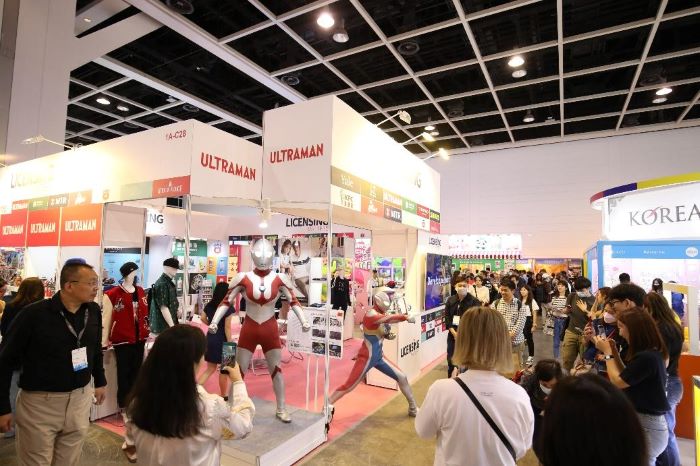
Trade shows are back in business and exhibitors are excited about the positive impact that relaxed quarantine measures and the restoration of business travel will have on their sales and business.
HKTDC successfully organised recently concluded seven shows including, the Hong Kong Gifts & Premium Fair; Home InStyle; the Hong Kong International Home Textiles and Furnishings Fair; Fashion InStyle; the Hong Kong International Printing & Packaging Fair as well as the Hong Kong International Licensing Show.
According to a survey conducted by an independent research agency commissioned by HKTDC, over 52% of the respondents expected a positive impact on their sales and business, while nearly 70% expected sales to be back to pre-pandemic levels within 6 to 18 months.
Hong Kong and the mainland were the top choices for trade-fair participation among buyers, with 85% and 60% of respondents, respectively. Respondents also identified Northern & Western Europe (21%) and ASEAN countries (15%) as their new target markets in the next two years, indicating that they are optimistic about the growth prospects.
In terms of product trends, sleek and simple designs were predicted to be in high demand by respondents at Home InStyle (41%), while sustainable products (61%) were expected to be a market trend according to respondents at the Gifts Fair.
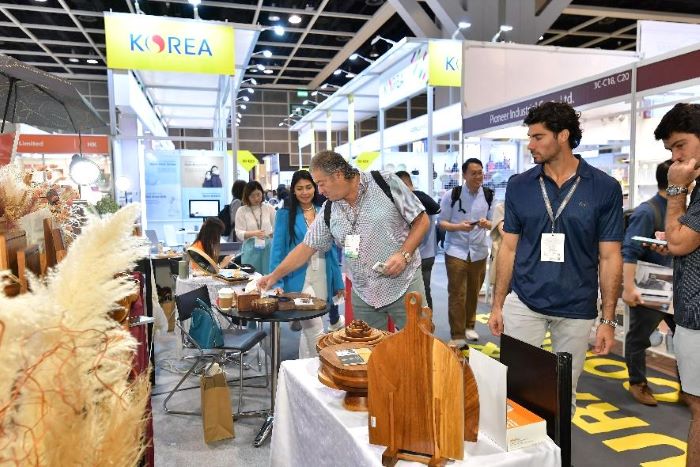
The Hong Kong Gifts & Premium Fair and Home InStyle launched a brand-new Cultural & Creative Corner, which attracted the attention of buyers looking for unique products with cultural characteristics. Many exhibitors, including Beijing Enamel Factory, expressed their satisfaction with the exhibition's traffic and successfully connected with buyers from Hong Kong and Mainland China.
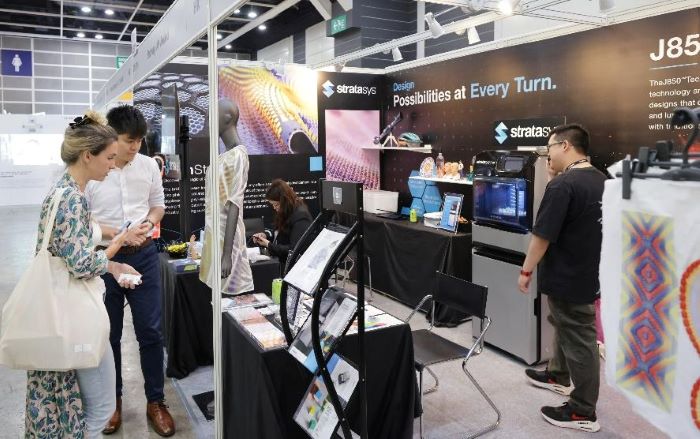
The Hong Kong International Licensing Show also featured more than 550 diverse licensing projects and brands, including art, culture, entertainment, and design. Many licensees expressed satisfaction with the exhibition's traffic and successfully signed cooperation agreements. Innovative technology is also bringing revolutionary changes to various industries. Exhibitors such as Stratasys said showcased their PolyJet 3D printing technology, which enables direct-to-textile printing on garments, footwear, and luxury accessories like hats and bags. Buyers from Hong Kong, India and Mainland China showed strong interest in their products, and the exhibition proved to be a great platform to drive their expansion in Asia. The joint exhibitions held under one roof provided buyers with a one-stop sourcing platform, and many visitors placed onsite orders. Exhibitors such as TVS spa showcased their eco-friendly collection to global buyers and new distributors, while buyers from Poland identified six potential mainland suppliers during their Home InStyle visit. Overall, the exhibitors are optimistic about the prospects of trade shows and are looking forward to future events.
Creative hub status of Hong Kong reaffirmed by HKTDC's successful lifestyle shows
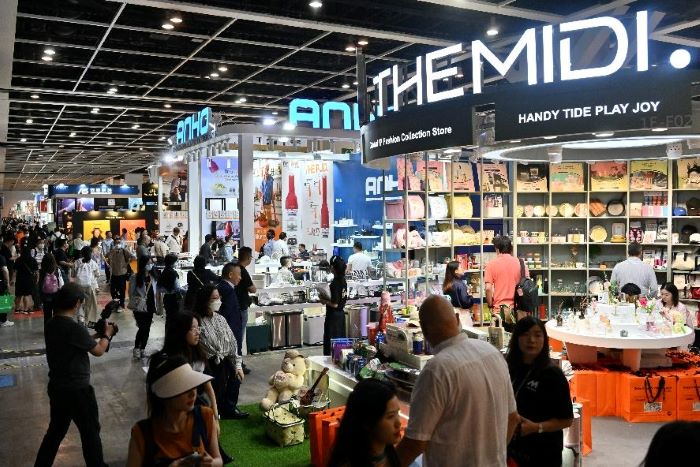
HKTDC successfully organised recently concluded seven shows including, the Hong Kong Gifts & Premium Fair; Home InStyle; the Hong Kong International Home Textiles and Furnishings Fair; Fashion InStyle; the Hong Kong International Printing & Packaging Fair as well as the Hong Kong International Licensing Show.
The shows attracted close to 56,000 buyers from over 130 countries and regions, about 60% buyers were non-local coming from mainly Mainland China, Association of Southeast Asian Nations(ASEAN), Taiwan, the United States, Japan and Korea.
For the first time in April, the HKTDC held seven major lifestyle and licensing events concurrently. The Hong Kong Houseware Fair and the Hong Kong Fashion Week were rebranded as Home InStyle and Fashion InStyle respectively, offering more diverse creative products to international buyers; while the Licensing Show was repositioned to cover multiple lifestyle categories, bringing greater synergies and opening up more collaboration possibilities across industries.
“The development of the creative and knowledge-based economy has become a major driving force for global economic growth. Hong Kong is an important hub for promoting creativity and intellectual property trade in the region, with the advantage of being close to the mainland while connected to the world. We are happy to see that many exhibitors were able to secure on-site orders, which is very encouraging” said Sophia Chong, Deputy Executive Director, HKTDC emphatically.
Exhibitors and buyers optimistic on growth prospects
Commissioned by the HKTDC, an independent research agency interviewed around 850 exhibitors and buyers during the events reflecting optimism about expected business and sales to be back to pre-pandemic levels within 6 to 18 months.
Cultural, creative design and AI projects in focus
The Hong Kong Gifts & Premium Fair and Home InStyle launched a brand-new Cultural & Creative Corner, featuring more than 80 exhibitors. “The Cultural & Creative Corner has attracted the attention of buyers who are looking for unique products with cultural characteristics. We have connected with buyers from Hong Kong and Mainland China. We hope to develop long-term cooperation with them”, said Xie Yanhua, The Chairman of first-time participant Beijing Enamel Factory.
September to see CENTRESTAGE and Watch & Clock Fair
The HKTDC organised a series of exhibitions and conferences this spring, covering various lifestyle sectors. Given the success of these events, the HKTDC hopes to seize more opportunities from the Regional Comprehensive Economic Partnership (RCEP) and ASEAN markets, as well as the global market, by organising more large-scale international exhibitions, including CENTRESTAGE and the Hong Kong Watch & Clock Fair in September, further strengthening Hong Kong’s role as a global sourcing hub.
Yarn Expo Autumn 2023 to showcase latest yarn collections in China
After a hiatus due to COVID-19 restrictions, Yarn Expo Autumn, Asia's leading yarn and fiber trade fair, is set to return to China from August 28-30, 2023.
The event will take place at the National Exhibition and Convention Centre in Shanghai, China, and will feature a range of natural and blended yarns, including cotton, wool, flax/regenerated flax, and man-made fibers and yarns. Specialty products such as elastic, fancy, and blended yarns will also be showcased by suppliers from Asian and European countries.
The trade fair is expected to attract garment manufacturers, trading companies, import and export corporations, department stores, and other related companies, as well as designers and trade associations.
Concurrent events at Yarn Expo Autumn 2023 will include the Intertextile Shanghai Apparel Fabrics - Autumn edition, PH Value, and CHIC. The 2023 edition will also feature a trend forum, fancy yarn vision, fashion show, seminar, product presentation, and online and tailor-made business matching programs as fringe events.
Yarn Expo Autumn 2021 had attracted 429 domestic and international exhibitors and 13,037 professional visitors from around the world.
According to event organizer Messe Frankfurt, Yarn Expo is an ideal trade fair for exhibitors to meet new customers and maintain relationships with old ones.
Textile industry impacted as U.S. imports from low-cost Asian countries shift away from China
The share of U.S. imports of manufactured goods from 14 low-cost Asian countries and regions, including the Chinese mainland and Hong Kong, decreased from 53.5% in 2021 to 50.7% in 2022, according to Kearney's Reshoring Index report.
While, U.S. imports from these 14 countries increased by 11% to more than $1 trillion in 2022, China's share continued to decline as many companies moved their manufacturing out of the nation.
Apparel and textile industry has accelerated its move away from China due to increasing labor costs, supply chain bottlenecks, and social concerns.
As the manufacturing exodus from China continues, traditionally less industrialized nations such as Cambodia, along with Thailand, Vietnam, and India, are also early beneficiaries of the move of manufacturing away from China.
Online clothing rental market growth driven by designer apparel, budget-conscious individuals
The global online clothing rental market size has reached US$ 2.0 Billion in 2022, and is expected to grow at a CAGR of 9.78% during 2022-2028, reaching US$ 3.5 Billion by 2028, according to Research and Markets report.
Online clothing rental services allow consumers to rent garments for a limited period of time, providing access to a wide range of designer apparel, footwear and accessories in different sizes, colours and brands. These services are particularly popular among budget-conscious individuals who seek to wear premium branded products for special events, such as weddings, theme parties, photoshoots and filmmaking.
The market growth is mainly driven by the thriving online retail industry and the rising urban population with higher fashion consciousness. Additionally, the emerging trend of wearing designer apparel without actually owning them, especially among millennials, is contributing to the growth of the market.
The increasing awareness regarding sustainable clothing and positive environmental effects of sharing and reusing apparels is also favoring the market growth, as more consumers are opting for sustainability approaches such as reusing pre-owned apparel and using recyclable, renewable and production resources efficiently.
Furthermore, the increasing adoption of subscription-based models, rising internet penetration rates and inflating disposable income levels are projected to drive the market further.
Aii reduces one ton CO2e costs to $17, compared to $67
Clean By Design programmes by Apparel Impact Institute (Aii) have proven to be cost-effective in reducing CO2e emissions in the fashion industry.
The group’s recently published 2022 Impact Report shows that the average cost of reducing one ton of CO2e with its programmes is $17, compared to an average of $67 with alternative decarbonisation strategies. The report also highlights the expansion of Aii’s carbon reduction key interventions.
Aii’s impact has been significant, with 56,346 tonnes of GHG emissions saved in 2022 alone. The group’s programmes are now active in 600 facilities across 28 regions worldwide.
To further accelerate decarbonisation efforts, Aii launched the $250m Fashion Climate Fund in 2022, which aims to unlock $2bn in capital by 2023.
Mental health and nature inspire Cone Denim's new collection
US denim manufacturer Cone Denim launched a new collaboration called "Wander" featuring 13 garments made from Cone Denim fabrics.
The collection is a partnership with garment finisher Tonello, videographer Eduard Nijgh, and AMK Atelier, a creative studio in Amsterdam run by Swedish designer Maria Gunnarsson.
The designs were inspired by the outdoors and the mental health benefits of being in nature. Each garment carries a J.R.R. Tolkien quote "All who wander are not lost" and a Cone Denim Mental Health Awareness selvedge.
The collection highlights the importance of mental well-being and is part of The Cone Community Collection of fabrics, which supports worthy causes.
Cone Denim donates a portion of sales from this collection to Child Mind Institute, a US non-profit association. The Wander collection showcases the power of nature to positively impact our well-being.
Sri Lanka, B’desh eye 25% increase in bilateral trade through textile trade agreement
Bangladesh and Sri Lanka are currently in talks to establish a Preferential Trade Agreement (PTA) that could have significant implications for the textile industry in both countries.
The global trade of textiles and clothing was valued at $706 billion in 2020, and Bangladesh was the second-largest exporter of clothing after China. Meanwhile, Sri Lanka has a strong presence in the high-end clothing and textiles market. The PTA could provide opportunities for both countries to diversify their export markets and reduce their dependence on a few key markets.
Besides the economic benefits, the proposed PTA could also strengthen the diplomatic ties between the two countries. Both countries have a history of friendly relations and are members of the South Asian Association for Regional Cooperation (SAARC). However, the negotiations will need to address potential challenges, such as different priorities and interests when it comes to trade negotiations and concerns about the impact of increased trade on domestic industries and employment.
According to data from the Sri Lanka Apparel Exporters Association (SLAEA), Sri Lanka's apparel exports to Bangladesh were worth $16.72 million in 2020, while Sri Lanka's imports of textiles and clothing from Bangladesh were worth $196.8 million. The proposed PTA could potentially increase the volume of trade between the two countries, leading to a 25% increase in bilateral trade within five years, according to a study by the Bangladesh Institute of Development Studies (BIDS).
The textile industry is a significant contributor to the economies of both countries, with the apparel industry accounting for around 40% of Sri Lanka's total exports and whereas apparel industry accounts for around 84% of Bangladesh's total exports. Both countries have faced challenges in the textile industry, including the withdrawal of the European Union's GSP+ trade concession for Sri Lanka and criticism over working conditions and worker rights in Bangladesh's garment factories.
The proposed PTA between Bangladesh and Sri Lanka has the potential to provide significant benefits for both countries, particularly in the textile industry. Careful negotiation and consideration of potential challenges will be necessary to ensure a mutually beneficial outcome.
Japan's "China-plus policy" boosts Bangladesh's apparel exports
Bangladesh's ready-made garment (RMG) industry has seen robust growth in exports to Japan, crossing the billion-dollar mark during the first nine months of the current fiscal year, according to official data.
The growth is attributed to entrepreneurs' relentless efforts to meet the Japanese standard and the government's policy support, as well as Japan's "China-plus policy" and relaxation in its rules of origin.
Bangladesh's locally-made knit and woven items have been enjoying a duty-free facility in the Japanese market since April 2011 and April 2014, respectively.
Apparel exports to Japan doubled in the last decade, despite a decline for two consecutive fiscal years beginning in 2019-20. This year, Bangladesh exported apparel items worth $1.22 billion to Japan, marking a 43.79% growth during the July-March period.
Experts credit the growth to the country's ability to produce quality products and offer competitive prices, as well as Japan's cautious and quality-focused buyers. They expect shipments to Japan to rise further in the coming months.











