


FW
Amazon Fashion x Ronny Kobo marks milestone collaboration in the fashion industry
Renowned contemporary designer Ronny Kobo is set to broaden her reach by launching a shop-in-shop within the Amazon Fashion store.
The highly anticipated debut of the Ronny Kobo shop-in-shop is scheduled soon, featuring Kobo's captivating spring collection.
Kobo's collection is celebrated for its cutting-edge designs, unique prints, and alluring silhouettes, catering to the fashion-forward individual. Following The Drop, customers will have the opportunity to explore and purchase Kobo's collection directly from the brand store.
Kobo's summer collection is poised to captivate fashion enthusiasts with its enticing offerings. From jumpsuits and crochet knits to tie-dye dresses and white suiting separates, the collection seamlessly transitions from day to night or from the beach to the backyard.
For Kobo, this partnership marks a significant milestone, as Amazon Fashion stands as one of the world's largest e-commerce retailers and has been steadily expanding its presence in the fashion industry.
Luxury vegan men's fashion market set to skyrocket to USD 63.52 Bn by 2033
The global luxury vegan men's fashion market was valued at USD 17.5 billion in 2022 and is expected to reach USD 63.52 billion by 2033, growing at a CAGR of 13.75% over the forecast period, according to a new report published by Market.biz.
The growth of the luxury vegan men's fashion market can be attributed to the rising demand for cruelty-free and eco-friendly fashion products. Consumers are becoming more conscious of the impact of their purchases on the environment and animal welfare. This trend is expected to drive the demand for luxury vegan men's fashion products, such as shoes, bags, and clothing, in the coming years.
North America is expected to dominate the luxury vegan men's fashion market during the forecast period, owing to the high demand for sustainable and eco-friendly products in the region. Europe and Asia-Pacific are also expected to witness significant growth in the luxury vegan men's fashion market due to the increasing awareness of ethical and sustainable fashion.
The luxury vegan men's fashion market is set to witness remarkable growth in the coming years, driven by the increasing demand for eco-friendly and cruelty-free fashion products.
Zippers market set to grow with increasing demand for innovative and fashionable clothing
The global Clothing Fasteners, also known as Zippers, market size was valued at USD 4.2 billion in 2020 and is projected to witness significant growth at a CAGR of 13.6% during the forecast period, according to Reliable Business Insights.
The market is being driven by the growing demand for innovative and fashionable clothing, the rise in e-commerce sales, and an increase in consumer disposable income.
The market is segmented into two types, disposable and reusable, with products like snap buttons, hooks, and pins falling under the disposable category, while zippers, buckles, and buttons are included in the reusable category. The application segmentation includes apparel, footwear, and accessories, with the apparel segment being further divided into tops, bottoms, and others.
The Asia-Pacific region is expected to dominate the Clothing Fasteners market, accounting for almost 50% market share by 2025, with China and India being the primary drivers due to the increasing demand for fashionable clothing. North America and Europe are also expected to witness significant growth, with their mature fashion markets and high demand for premium-quality Clothing Fasteners.
The market is highly competitive, with various multinational companies operating in the industry. The key players in the market provide high-quality, durable, and efficient fastening solutions that enhance the functionality and aesthetics of clothing items
To keep up with the growing demand for eco-friendly clothing fasteners, the report recommends investing in research and development for sustainable and eco-friendly fasteners. With the rise of e-commerce, there is also a need for clearer labeling of the actual material used for the fasteners, ensuring transparency in the supply chain.
Growing health awareness fuels explosive growth in tracksuit market, growing at CAGR of 7.6%
The global market size of tracksuits reached USD 9.37 billion in 2022 and is projected to grow at a compound annual growth rate (CAGR) of 7.6 percent from 2023 to 2029, reaching USD 15.95 billion during the forecast period, according to the report by Maximize Market Research.
The tracksuit market has experienced substantial growth in recent years, driven by several factors. Tracksuits, consisting of a jacket or sweatshirt and matching pants, are versatile apparel ensembles primarily designed for athletic or casual wear. Their comfort, flexibility, and style have made them increasingly popular among individuals engaged in sports activities, fitness enthusiasts, and those seeking trendy and relaxed outfits.
The growing emphasis on health and wellness has been a significant driver of the tracksuit market. As people become more health-conscious, there has been a surge in sports and fitness activities, resulting in a higher demand for suitable clothing such as tracksuits.
In terms of regional analysis, North America emerged as the dominant player in 2022, fueled by the exponential growth in the demand for tracksuits within the sports industry. The region has witnessed a rise in the adoption of active lifestyles and fitness trends, leading to an increased interest in sports, gym workouts, and outdoor activities.
The tracksuit market can be further segmented based on fabric type, end-users, and sales channels. Cotton tracksuits hold the largest market share, thanks to their exceptional comfort, durability, and moisture-wicking properties. The male segment dominates the market, driven by men's preference for comfortable yet attractive clothing. Supermarkets and hypermarkets currently dominate the sales channel, but e-commerce is rapidly gaining importance in the tracksuit market.
India's T&A industry faces setback with decline in apparel exports and imports of raw material
India's textile and garment industry faced a significant setback in April 2023, signaling a challenging start to the new fiscal year.
The current figures underscore the challenges confronting India's textile industry, as both exports and imports in various textile categories experienced a considerable decline, according to the latest data from India's Ministry of Commerce and Industry.
In April 2023, India's RMG exports witnessed a sharp decline of 23.10 percent, plummeting to $1,210.66 million compared to the corresponding period of the previous fiscal year, where it stood at $1,574.37 million. This downturn indicates a considerable drop in demand for Indian RMG in international markets.
Furthermore, the export of cotton yarn, fabrics, made-ups, and handloom products experienced a similar decline, with a decrease of 23.42 percent. The value fell to $887.89 million in April 2023 from $1,159.49 million in the same period of the previous fiscal year. Additionally, carpet exports contracted by 15.85 percent, amounting to $105.19 million, compared to $125 million in the previous year. Similarly, the exports of man-made yarn, fabrics, and made-ups witnessed a decline of 13.93 percent, reaching $393 million in April 2023, down from $456.59 million in April 2022.
Concurrently, India's imports of textile, yarn, fabric, and made-up articles also faced a downturn, decreasing by 17.06 percent to $161.38 million in April 2023, compared to $194.58 million in the corresponding period of the previous fiscal year. The import of cotton raw material and waste experienced a decline of 13.81 percent, reaching $45.3 million in April 2023, down from $52.56 million in the previous year.
Examining the previous fiscal year, the exports of RMG and all textile products observed a modest increase of 1.10 percent, totaling $16,191.47 million in FY23. Notably, garment exports alone accounted for $16,014.84 million in 2021-22.
The contraction in RMG and textile exports during April 2023 highlights the urgent need for measures to enhance the competitiveness and performance of the sector in order to overcome these difficulties.
US T&A imports decline, China's market share hits new lows indicating shift in sourcing strategies
In March 2023, the United States experienced a significant decline in textile and apparel imports, marking a decrease of 23.6% compared to the previous year. However, there was a notable increase of 23.4% compared to the previous month, with the import volume reaching its highest level in the past five months. The import value amounted to $8.32 billion, indicating a year-on-year decline of 31.7% but a month-on-month increase of 4.1%.
Specifically, apparel imports accounted for 1.86 billion square meters, reflecting a 40.2% decline compared to the previous year. Nevertheless, there was a 2.6% increase compared to the previous month. The import value of apparel reached $6.25 billion, representing a year-on-year decrease of 33%, but a month-on-month increase of 5%.
Among the countries exporting textiles and apparel to the United States, China's numbers were significant. In March, the U.S. imported 1.7 billion square meters of textile and apparel from China, indicating a substantial year-on-year decrease of 40.3%. The import value from China was $1.46 billion, reflecting a 45% decline compared to the previous year. Specifically, apparel imports from China amounted to 500 million square meters, down 45% year-on-year, with a value of $940 million, marking a 45.7% decrease compared to the previous year.
These figures highlight a continued decline in China's market share of U.S. textile and apparel imports. Since May 2022, China's share has fallen below 30%, reaching 23.8% in March 2023. Similarly, China's share of U.S. apparel imports hit a new low of 26.6% in March, representing the lowest level since April 2020.
The decrease in overall textile and apparel imports to the United States suggests a potential shift in sourcing strategies, with other countries possibly gaining prominence in the market.
Visionary entrepreneur Miguel McKelvey acquires US apparel brand Proto, boosting American manufacturing
Miguel McKelvey, former WeWork co-founder, has made a strategic move to acquire Proto, a renowned US apparel brand known for its sneakers.
McKelvey's acquisition of Proto, along with his controlling stake in American Giant, demonstrates his commitment to revitalizing American manufacturing and boosting its economic significance. This visionary entrepreneur aims to make a meaningful impact in various industries by aligning his fashion company ownership with his larger goal of rejuvenating American factories.
Proto, a collective focused on producing shoes in the US, was created through McKelvey's collaboration with shoe designers. This venture contributes to the revival of domestic shoe production, which has faced challenges such as outsourcing, automation, and global competition over the past few decades. McKelvey's investment and partnership in Proto showcase his determination to counter these obstacles and strengthen American manufacturing.
Manufacturing plays a crucial role in the US economy, fostering job creation, innovation, and overall economic growth. According to the National Association of Manufacturers (NAM), it supports approximately 12.3 million jobs, accounting for 8.6% of employment. Moreover, the manufacturing sector contributes significantly to the country's GDP, representing around 11.9% of the US GDP in 2020, totaling approximately $2.33 trillion.
The trend of reshoring or bringing manufacturing back to the United States has gained momentum in recent years. Factors such as rising labor costs in overseas markets, technological advancements, and an increased focus on quality control have contributed to this resurgence. The COVID-19 pandemic further emphasized the importance of resilient domestic supply chains, renewing the emphasis on domestic manufacturing.
Kenya unveils plans to revitalize cotton industry
The Kenyan government has recently announced its ambitious plans to rejuvenate the country's cotton industry and enhance the textile sector by significantly increasing cotton production.
In a collaborative effort involving the State Department for Industrialization, the Ministry of Agriculture, and Rift Valley Textile, farmers will receive complimentary chemicals and training to improve crop management techniques and maximize their yields. The government's ultimate goal is to ensure a sufficient supply of raw materials for local textile industries as well as for export purposes.
Presently, the annual cotton output stands at a meager 28,000 bales, which is a stark contrast to the required amount of 140,000 bales. Consequently, the government aims to address the issues plaguing the collapsed cotton value chain. To support this revitalization endeavor, the government has allocated a substantial amount of Sh7 billion to modernize the Rift Valley Textile mills (Rivatex) and resurrect the Luanda ginnery in Busia. Due to the broken cotton value chain, these facilities currently operate below their full capacity, compelling the industry to outsource approximately 80% of its raw materials from India, China, and other East African countries.
The government's initiatives also encompass the establishment of County Aggregated Industrial Parks (CAIPs) across the nation, with a particular focus on the 24 counties where cotton and textiles are poised to become flagship industries.
According to a survey conducted by the Kenya National Bureau of Statistics (KNBS), the decelerated growth of the cotton industry can be attributed to several factors, including high production costs, intense competition from low-cost imports, insufficient agricultural output, and the adverse effects of the COVID-19 pandemic.
Unreasonable demands from global exporters affect Bangladesh RMG makers
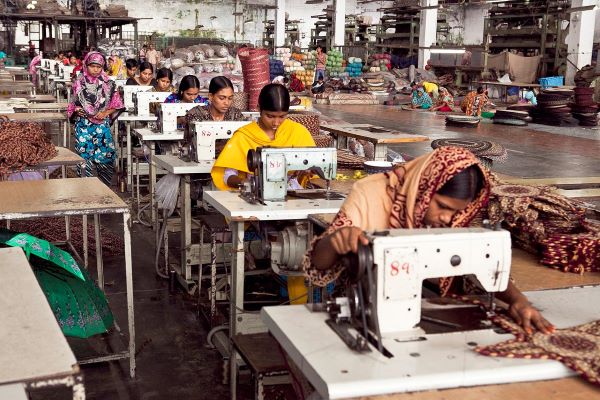
Things do get worse before they get better and the Bangladesh RMG segment is counting on that as their current profit margins sink deeper with international clothing brands demanding further discounts to place orders from their local apparel retailers. Global big and small clothing brands are now demanding up to 5 per cent more discount from Bangladesh’s apparel exporters, without caring it may be the last straw on the camel’s back in an economy already under pressure with constant natural disasters, political turmoil and a volatile global economic scenario.
During Covid years, Bangladesh had to tackle unsold inventory and face order cancellation from global brands citing logistics problems in transportation and an uncertain demand-supply in their respective countries to pay up and take delivery.
Manufacturers need profit margins over 20% to stay afloat
Just when things were finally shaping up in post-pandemic days, this jolt comes after local suppliers spent billions of dollars to strengthen workplace safety in line with the recommendations of Accord and Alliance, the two factory inspection agencies backed by global buyers and government unions to improve factory labor standards.
To highlight these issues, a recent business event was organized by The Her Net Foundation in Dhaka. Abdullah Al Mamun, VP, Bangladesh Textile Mills Association pointed out the Bangladesh apparel segment was getting one of the lowest prices globally from international buyers. This despite paying higher taxes for utility bills like gas, water and electricity, a big portion of the costs in RMG factories and spending heavily to have globally approved safe and hygienic factories.
The event called upon global retailers and brands to show more concern and ethical buying prices from local manufacturers who are already hitting poverty levels due to the lower prices and sometimes even selling below their production costs just to retain these global orders for the future. Mohammad Hatem, Executive President, Bangladesh Knitwear Manufacturers and Exporters Association points out, under the current cost of production situation, local manufacturers need a profit margin of 20 to 25 per cent instead of the current 10-15 per cent for manufacturers to pay living wages. However, profit goes slump down to 2 per cent if the gross profit stands at 10-15 per cen.
Bangladesh second only to China in apparel exports
With all this efforts, Bangladesh has managed to retain second position in apparel shipments to the EU in Jan-Feb 2023 with a 22.75 per cent share of the trade bloc's overall garment imports, after China. EUROSTAT stats show, the EU's overall apparel imports for January and February declined $322 million, or 2.03 per cent compared to the corresponding period in 2022. However, in contrast, its apparel imports from Bangladesh increased 5.47 per cent year-on-year, or $183 million, during the Jan-Feb period. Apparel imports from China had already fallen by 13.11 per cent year-on-year to $4.08 billion at this time with shipments from China having decreased 16.42 per cent or 32 million kgs.
However, the fact that Bangladesh has been performing relatively better than other global competitors in this period is not that it has suddenly become the most-preferred destination but more to do with the inflated raw material prices and subsequent hikes in the production cost as the value of goods exported rose although overall volume fell.
With global apparel trade scenario currently low-key, the cash-rich EU market has also been greatly affected. Local manufacturers in Bangladesh need to focus on alternative global markets while reducing dependence on single markets or products and ensure balanced investment plans for now and the near future to keep the country’s economy from falling further.
UK students struggle to afford sustainable sportswear amid rising cost of living
Students in UK are facing challenges in purchasing expensive activewear due to the rising cost of living. Finding sportswear that is both affordable and sustainable has become crucial but difficult.
One major hurdle is the tight budget many students face, making it challenging to find affordable and sustainable sportswear. On average, students in the UK spend £100 per year on activewear. Meanwhile, the cost of living in the country has seen a significant rise of 5.4% over the past year. With an average student debt of £1,200 and an overall increase in the cost of living by 6.2%, students are feeling the financial pressure.
However, choosing affordable activewear doesn't mean sacrificing sustainability. In fact, this approach contributes to sustainability efforts by extending the lifespan of clothing items. By opting for more budget-friendly shopping experiences, students can support brands that prioritize sustainable practices while still meeting their financial constraints.
Ultimately, striking a balance between affordability and sustainability is crucial for students struggling with the rising cost of living. With a range of brands offering reasonably priced activewear, students have the opportunity to find products that meet their needs without compromising on their financial well-being or environmental consciousness.











