


FW
Guatemala's Garment Source Fair, showcases a thriving textile sector
The Garment Source Fair, now in its thirtieth edition, is set to showcase the vibrant and thriving garment and textile sector in Guatemala. As a key player in the country's export market, this sector has experienced remarkable growth, with projected exports reaching an impressive US$2,258 million in 2022, accounting for 16.8% of Guatemala's total exports, according to the Bank of Guatemala.
The fair is the most significant annual opportunity for companies to unveil their latest innovations, new products, and unique offerings. Exhibitors from diverse sectors within the industry, including textiles, services, machinery, screen printing, and sublimation, will participate in this highly anticipated event.
Attendees will have the opportunity to witness the latest technological breakthroughs, such as water-based inks, high-productivity printing technologies, and modern machinery. Workshops and seminars will also be conducted, focusing on leveraging these new technologies to maximize the value of garments.
Guatemala takes pride in its position as a leader in the Central American region, with the highest added value in clothing production, currently standing at an impressive 52%, as confirmed by departmental data. The country's strategic location, with access to both coasts of the United States, makes it an ideal destination for nearshoring production orders, further enhancing its attractiveness to the industry. The thirtieth edition of APSS is also aligning with sustainability efforts by aiming to be a zero-waste event. Through collaboration with Recicla Gt, waste segregation and recycling initiatives will be promoted throughout the fair.
For over three decades, apparel trade fairs have played a pivotal role in promoting the industry, creating new business opportunities, and boosting exports. APSS stands out as the sole regional exhibition in Central America, attracting companies from various sectors including spinning, textiles, apparel, machinery, and accessories.
Global menswear market to reach USD 988.24 Bn by 2032, fueled by fashion consciousness and e-com boom
The global menswear market is anticipated to achieve a valuation of USD 988.24 billion by 2032, exhibiting a strong compound annual growth rate (CAGR) of 6.20% during the forecast period. The market, which was valued at USD 575.1 billion in 2022, is expected to witness significant growth fueled by increasing fashion concerns among males and the widespread adoption of e-commerce platforms, according to a recent report by Market Research Future (MRFR),
The modern consumer class, propelled by rapid development and urbanization, has experienced a surge in disposable income, leading to a growing interest in contemporary fashion. Consumers, particularly millennials, are inclined towards investing in trendy clothing, including occasion-specific outfits and sleepwear. The desire for a luxurious lifestyle has also influenced the purchasing power of individuals, enabling them to opt for high-end fashion brands.
One of the key drivers of the menswear market is the expanding reach of the internet and e-commerce platforms, which has enhanced fashion awareness and made luxury brands and unique products more accessible to consumers. Market players have recognized the growing purchasing power in emerging markets such as China and India and shifted their focus towards men's apparel. Companies are leveraging various marketing techniques, including celebrity endorsements, promotional discounts, and seasonal sales, to attract customers and boost sales in the industry.
The convenience, time-saving benefits, and ease of online shopping have resulted in an increase in the volume of online transactions and the average amount spent by users. Luxury brands are forming alliances with technology companies to enhance the online shopping experience and cater to the evolving preferences of their customers. This trend contributes to the overall revenue of the menswear market.
Regionally, the North American menswear market is expected to dominate, driven by the rising demand for luxury items, strong purchasing power, and celebrity endorsements. The Asia-Pacific region, particularly China and India, is projected to witness the fastest growth in the menswear market. The expansion of the menswear industry in these countries can be attributed to the increasing economic development, rising urban middle-class consumers, brand awareness, and the preference for high-quality garments. China holds the largest market share, while India's menswear market is experiencing the highest growth rate in the Asia-Pacific region.
Premium jeans market on a high, projected to touch $12 bn by 2027: Study
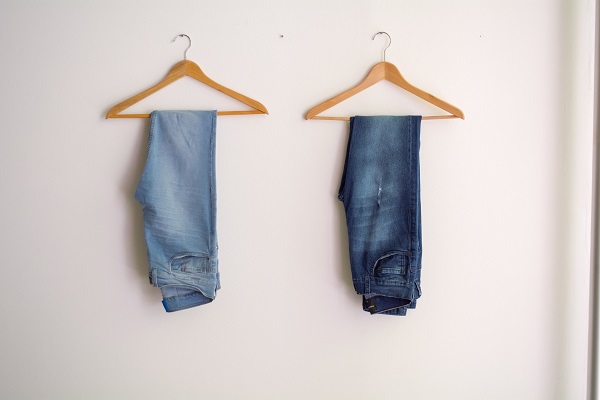
Premium jeans are more a statement than the standard pair of denims. As Claire Dupuis, Senior Product Trend Forecaster at Cotton Incorporated and a denim specialist explains, the basic difference between a premium and a regular pair is the price with the lowest starting point being $100 for the former. It’s all in the brand, Dupuis emphasizes.
A recent report ‘Premium Denim Jeans Market: Global Industry Trends, Share, Size, Growth, Opportunity and Forecast 2022-2027’ by the IMARC Group forecasts the market for 2022-27. The premium denim jeans market valued at $8.5 billion in 2021 and is expected to reach $12 billion at the end of forecast period that is 2027. The CAGR is expected to be around 6 per cent. That the of premium jeans category has been gaining popularity is evident from brand launches and collaborations. For example, popular denim brand Levi’s has collaborated with San Francisco-based designers to launch the trendy and premium jeans portfolio labeled MistakesAreOk.
Consumers love the durability
Representing the highest quality available in denim wear, premium jeans are preferred because they stand for quality and durability. The enhanced quality of denim used is softer, more comfortable and better styled. Compared to budget jeans, premium ones are not only more durable but also stand out in aesthetic. Premium jeans come in all standard styles and are available across all retail platforms including e-commerce. Other criteria that women considered in labeling a jean premium is the fabric or fiber, the feel or texture, the color or wash, comfort, trendiness and stitching, indicating that the premium designation is both personal and individual choice. Chad Jackson, a spokesperson for Evisu, a leading denim label, points out premium denim must boast of a specialty that the wearer can see, feel and appreciate, and for every woman, that’s something different.
Market and growth trends
Major factors contributing to the growth of premium denim jeans are an increase in the number of retail chains, and a shift in lifestyles and better purchasing power. Increase in e-commerce retail market providing special discounts and availability of a wide range of products in different colours and shades is fuelling demand for premium denim jeans.
Vendors are constantly attracting consumers with innovative designs that are more comfortable, making them flexible to compressions and stretches, moisture management, thermoregulation, and UV protection. In line with this, the development of online retail portals that provide a hassle-free shopping experience while offering several products is acting as another significant growth-catalyst.
Women drive premium jeans growth
The women segment is expected to dominate through. As denim jeans for women acquire a three-fifth market share, it is expected to grow at 3.3 per cent CAGR through the forecast period. Around 34 per cent of sales are to women consumers. Men and children combined to hold 41 per cent market share which is expected to grow at 2.1 per cent CAGR through the forecast period. Europe and North America hold around 60 per cent market share in the men’s segment.
Asia Pacific region is expected to dominate the premium denim jeans market and it is one of the fastest-growing regional markets. North American region is expected to show gradual growth due to the affordability of fabric and durability of denim material. Whilst India is emerging as one of the largest markets globally for all kinds of denim jeans, the premium jeans category is still in its nascent stage and limited to urban elites.
USA: Textile and Apparel imports drop by 23.8% compared to last year
Textile and apparel imports experienced a continued decline in March, with several traditional suppliers witnessing year-over-year decreases, according to data from the Department of Commerce's Office of Textiles and Apparel.
The overall imports of textiles and apparel reached 7.14 billion square meter equivalents (SME) in March 2023, marking a 23.5 percent increase from February but a 23.8 percent decrease from the same period last year.
Breaking down the numbers, textile imports accounted for 5.23 billion SME, showing a monthly growth of 33.0 percent but a year-on-year decline of 15.7 percent. Meanwhile, apparel imports stood at 1.86 billion SME, reflecting a 2.8 percent increase from February but a significant drop of 40.1 percent compared to the previous year.
The cumulative imports of textiles and apparel for the year until March were reported at 19.7 billion SME, indicating a decline of 24.3 percent compared to the previous year. Textile imports accounted for 13.9 billion SME, experiencing a decrease of 21.5 percent, while apparel imports fell by 30.1 percent to 5.83 billion SME.
Looking at the broader picture for the year ending in March, the total imports of textiles and apparel decreased by 2.9 percent to 99.5 million SME. Textile imports witnessed a marginal decline of 0.7 percent, reaching 70.9 billion SME, while apparel imports experienced a more significant drop of 8.1 percent, totaling 28.6 billion SME.
These statistics highlight the ongoing challenges faced by the textiles and apparel industry in terms of import volumes. The downward trend observed in both monthly and cumulative imports suggests a potential slowdown in consumer demand or changes in sourcing patterns.
USA: Garment workers in Downtown LA secure protections in DTLA 2040 plan
Garment workers in downtown Los Angeles (DTLA), who were initially excluded from the development planning process, have finally secured protections and amendments to the DTLA 2040 plan.
The plan, which aims to set the city's development priorities for the next two decades, had raised concerns among garment workers about potential displacement and job losses due to increased residential zoning and the encroachment of housing developments into traditional garment industry areas.
After seven years of being left out of the planning process, garment workers became aware of the plan through allies in the hotel workers' union in 2021. However, recent amendments to the plan have brought relief to an estimated 20,000 downtown garment workers. The changes include increased manufacturing space requirements for new housing developments in the Fashion District, as well as the inclusion of freight elevators and loading docks for manufacturing purposes.
The Los Angeles garment industry, which employs around 40,000 workers and accounts for 83% of the nation's cut-and-sew manufacturing, is a vital sector for the city's economy and the fashion industry as a whole. Furthermore, the industry has shown potential for growth, with many fashion brands responding to the rising demand for sustainable fashion.
The amendments to the DTLA 2040 plan represent a significant victory for the garment industry and its workers, highlighting the importance of considering the needs and preserving the livelihoods of essential industries when formulating development plans.
Chinese consumers drive domestic luxury boom, ditching global brands
Chinese consumers have significantly shifted their luxury consumption habits to the domestic market during the three-year-long pandemic, and this trend appears to be irreversible.
Despite the reopening of international borders, local shoppers are now choosing to splurge on luxury goods within their own country. Data compiled by alternative data provider Sandalwood Advisors reveals that in April, 62 percent of luxury spending by Chinese consumers occurred domestically, a significant increase compared to the 41 percent recorded during the same period in 2019.
This shift in consumer behavior is reflected in the robust sales performance of domestic high-end retailers. Industry experts believe that Chinese consumers are reevaluating their lifestyles in the aftermath of the pandemic.
This change in mindset has been reinforced by the increasing number of luxury stores and marketing activations in China, as well as global price adjustments, which have dampened Chinese consumers' enthusiasm for shopping abroad. In 2021, China accounted for 55 percent of all new luxury store openings, with a further 41 percent in 2022, according to a report by global real estate services provider Savills.
Recognizing this shifting consumer landscape, luxury brands such as Hermès are prioritizing their presence in China.
Another factor contributing to the preference for domestic luxury consumption is the importance of service. Luxury brands are responding to this demand by upgrading their retail presence in China.
Indian Chamber of Commerce appoints new office bearers for National Expert Committee on textiles
The Indian Chamber of Commerce (ICC) recently announced the appointment of new office bearers for its prestigious National Expert Committee on Textiles. This move reflects the chamber's commitment to strengthening the textile industry in India and promoting sustainable growth in the sector.
Sanjay Kr. Jain, MD, TT Limited, has been reappointed as the Chairman of the committee. Another notable appointment is that of Ajay Sardana, President & Head Strategy & Business Development-Polyester at Reliance Industries Limited (RIL), who has been appointed as Co-Chairman (North) of the committee.
Furthermore, ManMohan Singh, the accomplished Chief Marketing Officer of Grasim Industries Limited, has been elected as Co-Chairman (West) of the committee.
With a focus on policy matters and sustainable practices, the newly appointed office bearers are well-equipped to address the challenges and opportunities faced by the industry.
Alarming situation looms as garment exports from Bangladesh experience steep fall
Bangladesh's garment industry, a crucial pillar of the country's economy, is currently grappling with a troubling situation due to a significant decrease in the volume of garment exports to major destinations. This decline has raised concerns about the industry's future.
Faruque Hassan, the President of the Bangladesh Garment Manufacturers and Exporters Association (BGMEA), has highlighted during a press conference, the potential crisis looming over the industry, particularly concerning exports to the United States and the European Union (EU).
While garment export earnings exhibited positive growth until February, both the US and EU experienced a decline in imports. The months of March and April witnessed alarmingly negative growth in garment shipments, and this trend is expected to continue into May.
According to the BGMEA's report, there was a 12.65% year-on-year decline in garment exports to the US in terms of US dollars between November 2022 and April 2023. In terms of quantity, the decline amounted to approximately 25.95%. However, the value per unit of garment items increased by 17.94%. This increase in unit price can be attributed to the rising costs of raw materials and freight charges. As a result, international retailers and brands have been compelled to adjust their pricing strategies.
In contrast, garment exports to the EU increased by 7.10% in terms of US dollars. However, there was a decline of 4.12% in terms of quantity. The value per unit of garment items increased by 11.70%.
To address these challenges, Hassan called upon the government to implement several measures. These included reducing the source tax to 0.5%, lowering corporate tax on subcontracting incomes to 12%, and withdrawing the 10% tax on cash incentives for export earnings. Furthermore, he urged the government to provide a special 10% stimulus for the export of garments made from manmade fibers (MMF) and emphasized the importance of diversifying the types of garment items exported.
Hassan emphasized the high global demand for non-cotton items, as 75% of all garment items sold worldwide are made from non-cotton fibers. Encouraging investment in MMF-based garments could enable Bangladesh to capture a larger share of the global garment market.
Mango brings European fashion to the US with major expansion plans
Mango, the renowned European fashion brand, is embarking on a significant expansion in the United States in 2023. With a focus on the western and southern regions of the country, Mango plans to open more than fifteen new stores, including its debut in states like Georgia, Texas, and California.
As Mango celebrates the successful first year of its flagship store on New York's Fifth Avenue, the company is determined to establish a strong presence in the US market. This endeavor involves the launch of new stores in cities where Mango currently has no presence, such as Los Angeles, San Diego, Houston, Dallas, San Antonio, Atlanta, Glendale, and McAllen. Furthermore, the brand aims to enhance its existing presence in states like Florida.
This strategic expansion demonstrates Mango's dedication to expanding its brand and reaching a broader customer base across the United States.
The planned store openings for this year include several locations in the state of Texas. Mango will open stores in prominent shopping malls such as The Shops at La Cantera in San Antonio, Galleria Dallas in Dallas, La Plaza Mall in McAllen, Memorial City Mall and Baybrook Mall in Houston, among others.
Mango's expansion also extends to the state of California, where the brand plans to establish new stores in Glendale Galleria in Glendale and Fashion Valley in San Diego. Additionally, four stores will open in Los Angeles: Brea Mall, Victoria Gardens, Los Cerritos, and Beverly Center, located in Beverly Hills, the exclusive neighborhood frequented by Hollywood stars.
These new stores will exclusively carry the Mango Woman collection, except for the store in the state of Georgia. Located in the Perimeter Mall in Atlanta, this store will have a selling space of 570m2 and will offer products from both the Woman and Man lines.
All of the new stores will showcase Mango's Mediterranean-inspired store concept, New Med, which reflects the brand's spirit and freshness.
Scotch & Soda gets acquired, brand to expand retail presence in the US
Bluestar Alliance, a brand management company based in New York, has announced that one of its affiliates has acquired the wholesale and retail business assets of Dutch fashion brand Scotch & Soda in the United States.
This acquisition allows Scotch & Soda and its products to be sold in a network of retail stores across the country. It follows a previous acquisition by another Bluestar Alliance affiliate, which obtained the worldwide licensing and distribution rights for the Scotch & Soda brand. With this addition, Bluestar Alliance strengthens its position as a leader in the brand management industry, complementing its portfolio of consumer brands that includes Hurley, Bebe, and Tahari.
To oversee and expand the Scotch & Soda brand, Bluestar Alliance has appointed Anthony Lucia as the Global President of its Scotch & Soda USA and Global Business Operations. Lucia brings extensive experience from his tenure at fashion brands such as Hugo Boss, G-Star, and Escada.
Under Lucia's leadership, Scotch & Soda's strategy will focus on maintaining its premium retail distribution, which includes operating physical stores and a successful e-commerce platform. Lucia will oversee a smooth transition across the brand's retail footprint and global operations, optimizing the business for further expansion and profitability.
Bluestar Alliance plans to drive the growth of the Scotch & Soda brand by attracting new consumers and promoting the free spirit of Amsterdam and self-expression.
The company intends to invest in marketing initiatives that enhance brand awareness and foster strong consumer engagement worldwide.











