


FW
Brother to go beyond garment printing at FESPA 2024
Going beyond direct-to-garment (DTG) printers, Brother plans to expand its reach at FESPA 2024. Aiming to become a ‘one-stop solution provider, the brand has created new solutions to address evolving industry needs by combining and refining existing products.
Known worldwide for its excellent technology, Brother will unveil products based on four themes including innovation, excellent quality, connectivity, and compact desktop solutions at FESPA 2024.
The Excellent Quality Zone at the trade show will feature Brother’s latex wide format printer, WF1-L640. This printer has been chosen to produce original copies for the 50-year anniversary exhibition of Kunio Okawara, a legendary mechanic designer who designed ‘Mobile Suit Gundam’ who made significant contributions to Japanese animation culture.
The Connectivity Zone in the trade will feature end-to-end automation solutions and Myze workflow management software designed to maximise productivity for end-users.
The Innovation Zone will showcase groundbreaking prototypes for direct-to-film (DTF) printing while the Compact Desktop Solutions zone will display sleek embroidery machines and versatile printers to expand your offerings.
Renowned for its excellent technology, Brother prioritises delivering top-notch results. The brand develops new products and solutions continuously to stay ahead of the curve. It is also committed to responsible practices throughout its operations.
Mango expands US presence with new San Diego store
Leading Spanish fashion brand, Mango continues its ambitious expansion in the United States with the opening of a new store in San Diego's Fashion Valley shopping district. This marks another step in the brand’s goal to reach 40 stores across the country by 2024-end.
Dedicated solely to the women's line, the San Diego store embodies Mango's signature ‘New Med’ design concept. This Mediterranean-inspired aesthetic features warm neutral tones and natural materials like ceramics, wood, and leather, creating a welcoming and inviting shopping experience.
Daniel Lopez, Director-Expansion and Franchises, says, the US is a strategic market for Mango and the brand aims to position it among its top five revenue-generating markets.
Mango is also strengthening its online presence in the country through its own platform and partnerships with major marketplaces. This multi-pronged approach ensures their fashion reaches a wider audience across the US.
Mango's US journey began in 2006, gaining momentum in 2017 with a flagship store renovation in New York and a partnership with Macy's. Since then, the brand has strategically expanded into various regions, including Florida, Texas, Georgia, California, and now San Diego.
Stringent government restrictions exacerbating MEG scarcity in Indonesia: APSyFI
Stringent government import restrictions are exacerbating the scarcity of mono-ethylene glycol (MEG), a crucial component in Indonesia’s polyester industry, leading to numerous factories across the country.
Farhan Ail, Secretary, The Association of Indonesian Spun and Filament Yarn Producers (APSyFI), says, linked to the Trade Ministerial Regulation No. 36/2023, the restrictions are a having a devastating impact on production and jobs. The factory closures may the broader supply chain across the country besides impacting the national economy, warn experts.
The issue is jeopardising not only production but also the livelihoods of countless workers employed in the sector, say industry stakeholders. They urge the government to reconsider the import restrictions and find solutions to ensure a stable supply of raw materials.
Turkish Textile & Apparel Industry: Navigating challenges and embracing opportunities in 2024
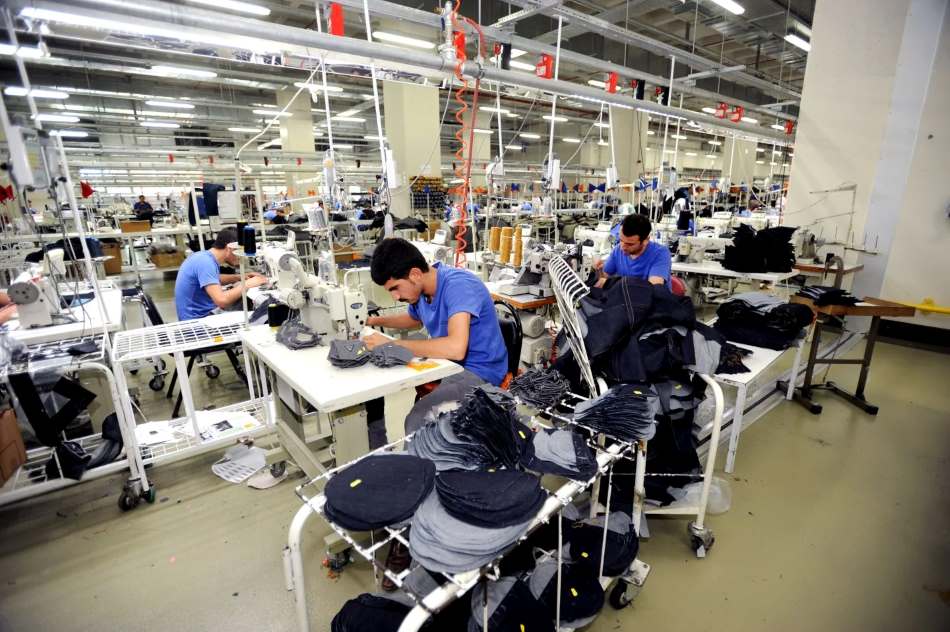
Despite a tough 2023, marked by declining exports and shrinking employment, Turkish textile and apparel industry remains cautiously optimistic for 2024. While acknowledging ongoing challenges like high inflation, increasing production costs, and slow European market, industry leaders point out to strategic advantages and proactive measures that could lead to a positive second half.
Global significance
An export powerhouse Turkey’s textile export was worth $11 billion in 2023 (down 10 per cent from 2022) and garment and apparel business was worth $19.2 billion (down 10.7 per cent from 2022). As per Statista, Turkey is the fourth largest exporter of textiles worldwide, with over 4 per cent of the global market share. The value of both textile and clothing exports has more than tripled since 2000. The EU remains the primary destination for Turkish textiles and apparel, accounting for around 65 per cent of total exports. However, exports to Europe saw a 17.6 per cent dip in 2023. Germany and Spain are the top two European buyers, contributing over $7.5 billion in 2021 as per Kohantextilejournal.com. In fact, Turkey managed to maintain its market share despite export decline.
Textiles exports ($ billion)
|
Year |
Export Value |
Change from Previous Year |
Market Share |
|
2021 |
12.2 |
- |
- |
|
2022 |
12.4 |
1.60% |
- |
|
2023 |
11 |
-11.30% |
Maintained |
Garment and apparel exports ($ billion)
|
Year |
Export Value |
Change from Previous Year |
Market Share |
|
2021 |
21.4 |
- |
- |
|
2022 |
21.5 |
0.50% |
Maintained |
|
2023 |
19.2 |
-10.70% |
Maintained |
Sources: Turkish Exporters Assembly (TIM); Istanbul Textile and Raw Materials Exporters' Association (İTHİB)
Turkey is also a leading cotton importer. It is the world's 5th largest cotton importer, ensuring a reliable raw material supply for its textile industry. Turkey also boasts of a well-developed yarn production base, catering to diverse customer needs and offering flexibility in fabric manufacturing. Growing focus on technical textiles like geotextiles and medical textiles presents new opportunities for diversification and value addition.
Over 65,000 textile and clothing companies operate in Turkey, ranging from small, family-run businesses to large-scale enterprises. This showcases a dynamic and adaptable industry structure. While the apparel industry is dominated by small and medium-sized firms, the technology-intensive textile production is increasingly undertaken by large-scale companies embracing innovation. Turkey possesses the complete value chain, enabling quality control and customization across production stages. Moreover, its long history in garment manufacturing has fostered a skilled workforce and efficient production infrastructure.
Beyond exports the domestic retail market flourishes as well. In 2022, Turkish households spent a record 12 million Turkish Lira per month on clothing, reflecting a 158 per cent increase compared to 2019, reveals Statista data.
Growth challenges and new opportunities
Despite its significance, and importance, Turkey’s textile and apparel industry has been facing several headwinds. Notwithstanding its proximity to Europe, exports to the continent have gone down. Moreover rising production costs are a bane. The labor-intensive sector is impacted by minimum wage increases and exchange rate fluctuations. The country is also facing stiff competition from Asian producers who pose challenges with increasing freight costs to Europe.
Even though it recorded a slight dip in exports, the industry anticipates an improvement in the latter half of 2024. It’s looking at new markets and focusing on regions like Mexico, Colombia, and Australia for export diversification. It’s actively organizing delegations to new markets to establish connections and explore opportunities.
And to move ahead it also needs to put right strategies in places. Focusing on brand value and differentiation in its product offerings is one way. Emphasizing on branding, technological advancements, and adaptation to changing market demands is the need of the hour. Turkey also needs to work on a regional minimum wage to address competitiveness concerns and potentially create jobs. Industry leaders like Ahmet Öksüz, Chairman of Istanbul Textile and Raw Materials Exporters' Association (İTHİB), acknowledges the difficulties but remains hopeful. He highlights these strategic advantages, particularly the proximity to Europe for both textiles and apparel, as Turkey navigates market fluctuations. He emphasizes, the importance of exploring new markets, embracing branding, and undergoing industry-wide transformation to ensure long-term competitiveness.
While the road ahead may not be smooth, the Turkish textile and apparel industry demonstrates resilience and a proactive approach to overcoming challenges and capitalizing on emerging opportunities. The success of these efforts, coupled with its strategic position in both textiles and apparel, will be crucial in shaping the industry's performance in 2024 and beyond.
British Wool re-elects English Northern Board Member
Carl Stephenson, a Bishop Auckland farmer, reclaims his seat as British Wool’s English Northern Regional Board Member for a fresh three-year term, starting April 1st.
Representing since 2015, Stephenson manages 400 acres, tending to Limousin and Beef Shorthorn cows alongside Swaledale, Bluefaced Leicester, and North of England Mule ewes.
Stephenson, expressing joy and honor at his re-election, looks forward to continuing his service and tackling upcoming challenges in the English Northern region.
AATCC launches exclusive Corporate Member News platform
AATCC is set to elevate its Corporate Membership experience with the launch of a dynamic marketing platform tailored exclusively for its corporate partners: Corporate Member News. This initiative underscores AATCC's commitment to providing tangible benefits and enhanced visibility to its Corporate Members.
Driven by feedback from its corporate partners, AATCC has transformed its Whitepaper Benefit into a modern and efficient news feed. Corporate Member News offers a comprehensive platform where members can showcase a diverse array of content, including videos, brochures, blog posts, staff updates, and more. Hosted on AATCC Communities, this exclusive resource enables Corporate Members to directly market their offerings to both AATCC Members and the public.
Meanwhile, AATCC encourages members to remain engaged on AATCC Communities, where they can access various resources and participate in upcoming activities. Members are also invited to share their feedback through surveys to shape future enhancements to the platform.
Lacoste appoints Philippe Gautier as new Executive VP for Global Finance
French sportswear brand Lacoste has appointed Philippe Gautier as its new Executive Vice President Global Finance. Armed with over 30 years of experience in the fashion and luxury industry, Gautier will be responsible for overseeing all financial aspects of the company.
Gautier joins Lacoste from beauty and wellness website Waldencast, where he served as CFO and COO. He boasts of a proven track record of success, having held key financial positions at renowned brands like SMCP, Kering (formerly PPR), Puma, and Sergio Rossi. His in-depth knowledge combined with his extensive international experience and expertise in major projects, will prove invaluable in driving Lacoste’s future growth, says Thierry Guibert, CEO, Lacoste and the MF Brands Group.
Some of Gautier’s major achievements include transforming the retail group PPR for over six years, overseeing the acquisition of Cobra Golf and developing a new e-tail platform, managing the sale of Italian luxury footwear brand Sergio Rossi and playing an instrumental role in the group's stock market listing and acquisition of De Fursac, significantly expanding its reach in key markets like the US and China.
Gautier's appointment comes at a pivotal moment for Lacoste, which aims to further solidify its international presence. With his expertise and leadership, the company is poised for continued success in the global fashion landscape.
GSMPL unveils Rs 1,250 investment plan in a new FDY plant
Owned by The Chatterjee Group (TCG), textile giant Garden Silk Mills (GSMPL) has unveiled a major expansion plan with a Rs. 1,250 crore investment in a new Fully Drawn Yarn (FDY) plant. This move marks TCG's ambitious plan to become a key player in the Polyester Downstream (PTA) segment.
Located in Jolwa, the state-of-the-art plant will boast a production capacity of 272 tons of FDY yarn per day. It will utilise cutting-edge Oerlikon Barmag Wings+ machines renowned for producing the highest quality yarn for various applications.
Extending beyond this initial expand TCG aims to boost operations in various segments of the polyester industry by supporting GSMPL even amidst the current industry downturn. The company also aims to conform to sustainability standards and incorporate hybrid renewable power in the new plant to reduce its carbon footprint. In future, the company plans to more facilities for industrial yarn and geotextiles.
This expansion marks a significant step forward for GSMPL and TCG, solidifying their position as a leader in the textile industry with a focus on innovation and sustainability.
Women’s hosiery exports from Turkey fall by 5.8% in November
Marking a second consecutive month of decline, export of women's hosiery items from Turkey fell by 5.8 per cent to 30 million pairs in November 2023 from the peak of 36 million in September.
However, despite a dip in the volume of hosiery exports from Turkey, export value remained steady at around $86 million during the month. The growth in the value of hosiery exports from Turkey was led by Germany with exports worth $18 million followed by Sweden, Netherlands, US, and Italy which collectively accounted for 16 per cent of Turkey’s hosiery exports during the month.
Among major destinations, import of hosiery items by Sweden from grew by 4.3 per cent CAGR in volume and 3.1 per cent in value over the past year. Other leading markets showed more moderate growth.
The average price of hosiery export per pair increased by 2.8 per cent to $2.9 compared to October. However, the overall price trend remained flat, with June 2023 marking the peak at $3.2.
New leather jackets collection by Da Milano redefines winter season
The new Winter Apparel Collection by Da Milano redefines the winter season with its stunning range of leather jackets.
The jackets in the collection have been made from two types of luxurious leather; the supple napa and the velvety suede. They have been designed in classic black, timeless brown, and a neutrals palette. These jackets blend comfort with style, which makes them an essential item in customers’ closets.
The Men's Jacket range offers eight beautifully-designed styles ranging from biker jackets, quilted vests, suave blazer jackets, to versatile zipper jackets. Making a bold statement, each of these styles personifies embodies the unique style of its wearer.
The women’s jackets range in the collection symbolises femininity as it blends comfort with couture. Each piece of the collection represents the core of womanhood. The range offers three exclusive garments including a edgy zipper jacket, a suede shirt anda tailored ladies’ trousers.
Sahil Malik, Da Milano says, each piece in the collection represents a unique style, be it the edgy zipper jacket, chic suede shirt, tailored ladies' trousers, or the diverse range of men's articles.











